
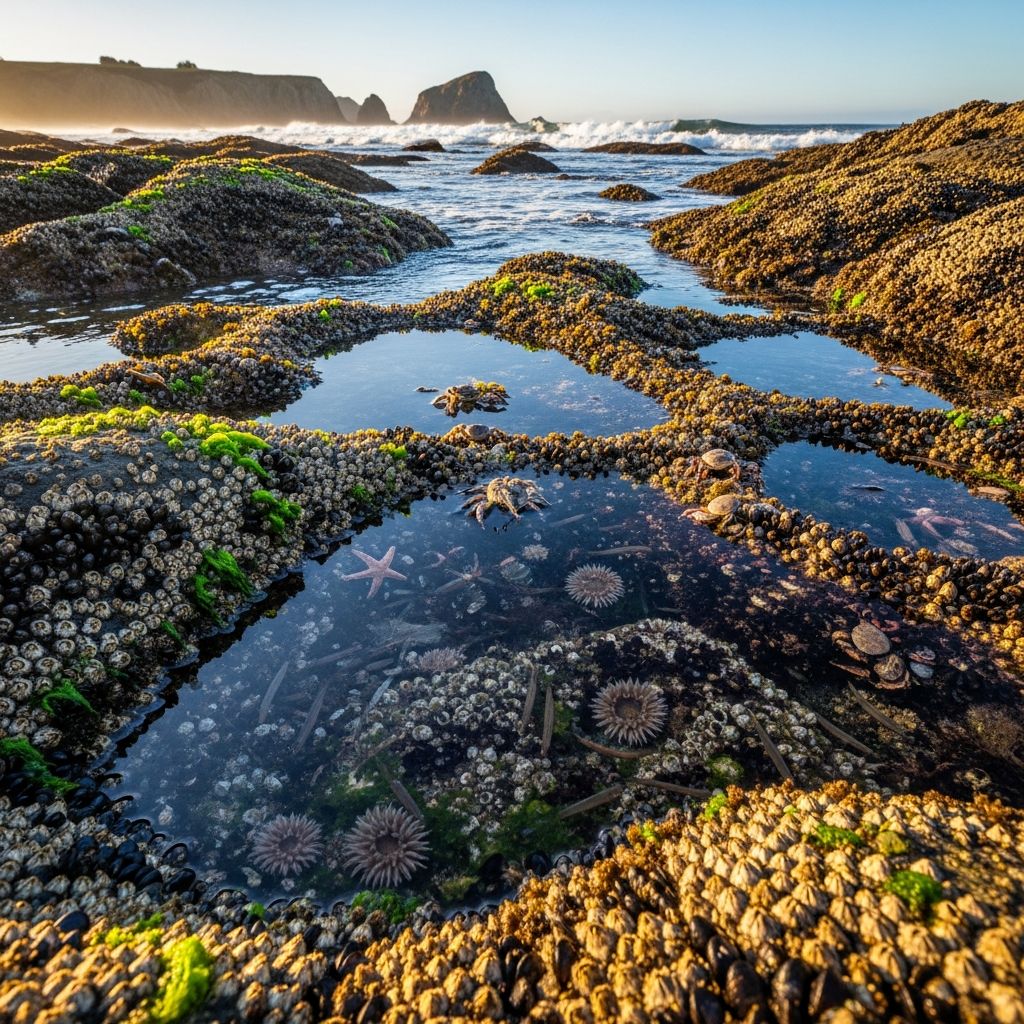
The intertidal zone represents a remarkable boundary where ocean and land collide, creating a pulsating ecosystem shaped by the relentless rhythm of tides. This coastal strip, submerged and exposed twice daily, hosts an extraordinary array of life forms uniquely equipped to endure extreme fluctuations in water coverage, temperature, salinity, and wave forces.
Defining the Coastal Frontier
Stretching from the highest high-tide mark to the lowest low-tide line, the intertidal zone—also called the littoral zone—varies dramatically by geography. On rugged cliffs, it forms narrow bands; on sandy shores or mudflats, it expands into vast expanses. Tides, driven by gravitational pulls of the moon and sun, dictate its character, with some regions experiencing ranges up to 12 meters.
Beyond this core area lies the peritidal zone, slightly broader, reaching above supreme high tides and below extreme lows, influenced by wave splash. These zones serve as nutrient highways, channeling marine riches onto land and terrestrial inputs seaward, fostering high productivity.
Vertical Layers of Tidal Realms
The intertidal landscape divides into distinct horizontal bands, each defined by immersion duration and exposure intensity. These strata reveal a gradient of conditions, from desiccation-prone upper reaches to perpetually moist lower expanses.
- Splash or Supratidal Zone: Rarely submerged, this uppermost band endures spray and runoff. Sparse lichens and hardy algae dominate, tolerating prolonged dryness and UV exposure.
- Upper Intertidal (High Tide Zone): Covered only at peak tides, it features barnacles, limpets, and periwinkles that seal themselves against evaporation.
- Middle Intertidal Zone: Alternately wet and dry, this bustling layer supports mussels, anemones, and algae, where competition for space peaks.
- Lower Intertidal (Low Tide Zone): Mostly submerged, it teems with sea stars, urchins, and kelps, benefiting from constant nutrient flow and oxygenation.
These divisions aren’t rigid; wave exposure, substrate type (rock, sand, mud), and local tides modify them profoundly. Rocky shores host vertical zonation clearly, while soft sediments blend seamlessly.
Adaptations for Extreme Survival
Intertidal dwellers evolved ingenious strategies to combat tidal hardships. Sessile organisms like barnacles cement with potent glue, their plates clamping shut to retain moisture. Gastropods such as chitons and snails retract into shells, using mucus to prevent desiccation.
Mobile species navigate risks adeptly. Crabs scuttle into crevices at low tide; sea stars pry open bivalves with hydraulic tube feet. Algae anchor via holdfasts, resisting dislodgement, while their blades harness sunlight during exposure. Thermal regulation involves behavioral retreats or physiological tolerances, like antifreeze proteins in some mollusks.
Reproduction adapts too: many spawn during high tides for larval dispersal; others brood internally to shield offspring. Osmoregulation maintains internal balance amid salinity swings from freshwater runoff or evaporation.
Biodiversity Hotspot Unveiled
Intertidal zones brim with species from multiple phyla, creating compressed, observable communities ideal for ecological study. Rocky shores feature poriferans, cnidarians, annelids, mollusks, arthropods, and echinoderms.
| Zone | Key Species | Adaptations |
|---|---|---|
| Upper | Barnacles, Limpets | Tight-sealing opercula, low metabolism |
| Middle | Mussels, Anemones, Seaweed | Byssal threads, stinging tentacles, holdfasts |
| Lower | Sea Stars, Urchins, Crabs | Tube feet, spines, nocturnal foraging |
| Mudflats | Worms, Clams, Shorebirds | Burrowing, siphons, probing beaks |
Soft-sediment flats nurture infauna like lugworms and tellins, aerating mud and filtering nutrients. Migratory birds, fish, and seals visit transiently, amplifying connectivity. Macroalgae drive primary production, fueling herbivores and beyond.
Ecosystem Dynamics and Food Webs
Nutrient cycling thrives here: tides deliver plankton and dissolved organics, spurring algal blooms that underpin food chains. Primary producers like phytoplankton and seaweeds support grazers (urchins, periwinkles), which sustain predators (stars, whelks).
Disturbance fosters resilience; waves clear space for succession, allowing opportunistic settlers. High turnover enables rapid observation of community shifts, unlike slower terrestrial systems. Biomass buffers erosion, stabilizing shores against storms.
In upwelling regions, seasonal nutrient surges boost productivity, supporting oversized growth in sheltered coves. Mangroves and saltmarshes in peritidal extensions moderate microclimates.
Human Pressures on Fragile Shores
Despite resilience, intertidal habitats face escalating threats. Coastal development, pollution, and harvesting disrupt zonation. Trampling crushes sessile life; armored shores block nutrient exchange. Climate change intensifies: rising seas shift zones upward, warmer waters stress thermophiles, ocean acidification dissolves shells.
Invasive species outcompete natives; plastic debris entangles wildlife. Yet, these edges yield ecosystem services: fisheries nurseries, coastal defense, tourism revenue.
Conservation Imperatives
Protecting intertidal zones demands integrated action. Marine protected areas limit extraction; restoration replants algae, rebuilds oyster reefs. Public education promotes low-impact tide pooling: tread lightly, observe without touching.
Monitoring tracks biodiversity via transects and photoquadrats, informing policy. Global efforts like UNESCO biosphere reserves safeguard key sites. Sustainable practices balance human needs with ecological integrity.
Frequently Asked Questions (FAQs)
What causes tidal zonation in intertidal areas?
Tidal zonation arises from varying submersion times, influencing moisture, predation, and competition, creating species-specific bands.
Which animals dominate rocky intertidal shores?
Barnacles, mussels, sea stars, anemones, and crabs prevail, each occupying niches defined by tolerance limits.
How does wave action shape intertidal life?
Waves deliver nutrients and oxygen but dislodge weak attachments, favoring robust holdfasts and flexible forms.
Why are intertidal zones biodiversity hotspots?
Nutrient influx, diverse microhabitats, and edge effects compress varied species into accessible, productive bands.
What conservation steps protect these ecosystems?
Establish no-take zones, reduce pollution, monitor climate impacts, and educate visitors on minimal disturbance.
Exploring Safely: Tips for Tide Pool Enthusiasts
Venture at low tide with charts; wear sturdy shoes. Poke gently with sticks; replace rocks carefully. Leave no trace to preserve this wonder.
References
- Intertidal zone — Wikipedia. 2023-10-15. https://en.wikipedia.org/wiki/Intertidal_zone
- Intertidal zone ecosystems: what are they and why are they under threat — Green Earth. 2023-05-20. https://www.green.earth/blog/intertidal-zone-ecosystems-what-are-they-and-why-are-they-under-threat
- The intertidal zone — Living Levels. 2022-11-10. https://www.livinglevels.org.uk/the-intertidal-zone
- Intertidal zonation — UCLA EPSS Faculty. 2019-09-01. https://faculty.epss.ucla.edu/~schauble/EPSS15_Oceanography/Lab_8_reading_F19.pdf
- Intertidal Ecology — UNH COLSA. 2002-01-01. https://colsa.unh.edu/sites/default/files/media/2019/03/projoceanog2002intertidalintro.pdf
- Exploring the Intertidal Zone — Prince of Whales. 2023-07-12. https://princeofwhales.com/exploring-the-intertidal-zone/
- On the Edge: The Curious Lives of Intertidal Organisms and How We Monitor Them — U.S. National Park Service. 2023-04-05. https://www.nps.gov/articles/000/on-the-edge-the-curious-lives-of-intertidal-organisms-and-how-we-monitor-them.htm
- What is the intertidal zone? — NOAA National Ocean Service. 2023-08-22. https://oceanservice.noaa.gov/facts/intertidal-zone.html

- Integrated M.A. in Applied Linguistics, University of Hyderabad
- 5+ years in editorial, instructional, SEO, and research-based writing
Sneha is a relationships and lifestyle writer with a strong foundation in applied linguistics and certified training in relationship coaching. She brings over five years of writing experience to theskillvault, crafting thoughtful, research-driven content that empowers readers to build healthier relationships, boost emotional well-being, and embrace holistic living. Her writing and insights reflect the belief that beauty, happiness, and wellness…