
Understanding the Stakes of Interview Dining
When an employer invites you to a meal as part of the interview process, the significance extends far beyond sharing food. This dining occasion represents a critical evaluation moment where your professional demeanor, social awareness, and interpersonal skills are being assessed in a less formal environment than a traditional office setting. The casual atmosphere of a restaurant creates an opportunity for hiring managers and recruiters to observe how you conduct yourself when the usual corporate boundaries are relaxed.
During these meals, you are not simply being judged on your qualifications or interview responses. Instead, interviewers are evaluating whether you would be a good cultural fit, how you treat service personnel, your ability to engage in meaningful dialogue, and your overall professionalism in social contexts. This represents an extension of the evaluation process where your authentic behavior becomes visible in ways that might not emerge during a structured office interview.
Preparing for the Occasion: Appearance and Punctuality
Your arrival and appearance establish the initial impression before you even sit down at the table. The way you present yourself should align with the formality level of both the restaurant and the position you are pursuing. For positions requiring frequent client interaction or leadership responsibilities, opt for formal business attire such as a tailored suit or professional dress. For more casual industries or networking events, business casual clothing—such as dress pants with a blazer or a professional dress—is typically more appropriate.
Timing your arrival demonstrates respect for the host’s schedule and the restaurant’s operations. Plan to arrive approximately five minutes before the reservation time, which provides a buffer for unexpected delays while demonstrating punctuality. If you happen to be the first to arrive, notify the restaurant staff so they can prepare the table promptly for the rest of your party.
Navigating the Physical Environment
Seating and Posture Fundamentals
Wait for clear direction from your host or the serving staff before selecting your seat. Once seated, maintain an upright posture with both feet planted on the floor. This positioning demonstrates attentiveness and confidence while allowing you to engage comfortably with others at the table. Avoid rocking in your chair or leaning back excessively, as these movements can appear casual or disrespectful in a professional context.
Your hands deserve particular attention throughout the meal. When not actively eating or using utensils, keep your hands positioned in your lap. This placement prevents distracting gestures and demonstrates that you are focused on the conversation and the dining experience. Elbows should remain off the table while you are eating; however, brief moments between courses when no plate is in front of you allow for relaxed positioning while still maintaining professionalism.
Understanding Table Settings and Utensil Usage
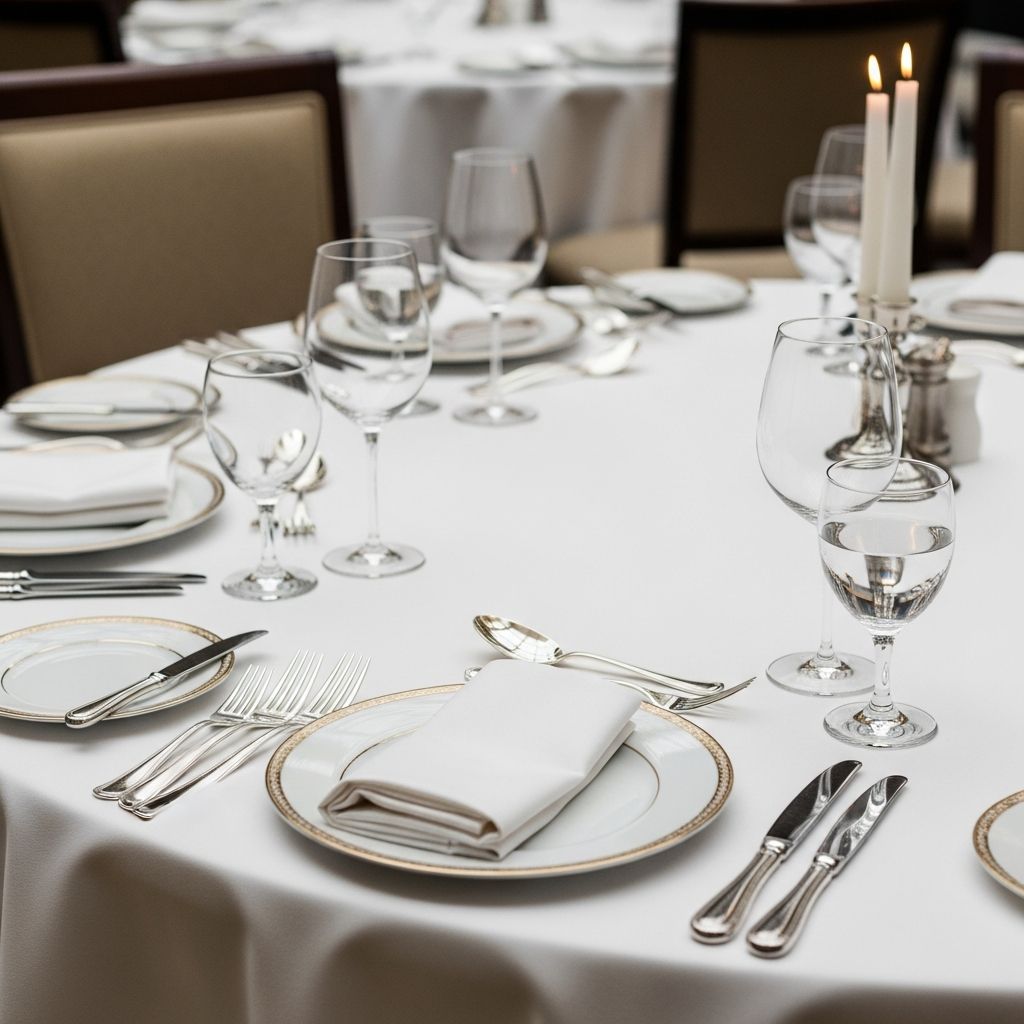
Professional dining environments often feature multiple utensils, glasses, and place settings that can appear intimidating to the uninitiated. The fundamental rule for navigating this complexity involves working from the outside toward the center. Utensils positioned farthest from your plate are intended for the first course, while those closer to the plate are used for subsequent courses. This logical progression eliminates guesswork and allows you to move confidently through the meal.
When you finish eating a particular course, position your fork and knife in a specific manner to signal to servers that you are ready for the next course. Rest your knife horizontally across the top of your plate with the blade facing inward, while placing your fork in the lower right portion. When completely finished with the meal, bring both utensils down to rest side by side in the lower right corner of your plate. This clear signaling prevents awkward moments where servers are uncertain whether you are still eating.
Beverage Choices and Consumption Practices
Selecting appropriate beverages requires awareness of both your personal preferences and professional context. Water remains the safest choice throughout a professional meal, serving as a neutral option that keeps you hydrated and focused. If the host orders alcohol, you may choose to do the same, but this decision should be made carefully. Never consume alcohol at a level that could impair your judgment or professionalism, and always ensure you are eating substantial food alongside any alcoholic beverages.
When consuming any beverage, wait until you have completely swallowed your food before taking a drink. Attempting to drink while food remains in your mouth can result in unsightly spilling or leaving food remnants on the glass rim. Similarly, avoid using water as a mechanism to quickly wash down large amounts of food; instead, pace your eating to allow for natural transitions between bites and sips. Chewing and spitting ice back into your glass represents unacceptable behavior in any professional dining setting.
Strategic Food Selection and Eating Practices
Choosing Appropriate Menu Items
Your menu selections should prioritize foods that can be consumed neatly and confidently without creating distraction or mess. Opt for items that can be easily managed with standard utensils such as forks and knives. Avoid foods that are characteristically messy, such as ribs with bones, finger foods that require hand consumption, or exotic dishes with which you are unfamiliar and uncertain how to eat. Pasta dishes, salads, and grilled proteins represent solid choices that allow you to eat while maintaining conversation and focus on the business discussion.
Price point awareness is equally important when selecting your meal. Avoid ordering the most expensive items on the menu, as this can create an uncomfortable dynamic with your host. If uncertain about the appropriate price range, observe what your host orders and select something in a similar range. This consideration demonstrates respect for your host’s budget and shows financial awareness that reflects well on your professional judgment.
Timing and Pace of Consumption
Begin eating only after your host or the person in charge of the meal has picked up their utensils. This respect for hierarchy and social norms shows cultural awareness and consideration. As you eat, maintain a pace that allows you to remain engaged in conversation while not appearing rushed or overly leisured. Finishing your meal at approximately the same time as others at the table demonstrates awareness of group dynamics and prevents awkward silences while waiting for others to complete their meals.
Remember that the primary purpose of interview dining is business discussion and relationship building, not consumption of food. Your focus should remain on the conversation, the information being shared, and the opportunity to demonstrate your communication skills and professional judgment. Eating should complement the discussion rather than dominate your attention.
Mastering Professional Conversation
Building Rapport and Establishing Connection
Initial conversation during a meal should remain light and personal, focusing on topics that help you and your dining companions become acquainted. Appropriate subjects include travel experiences, family background, hobbies, and interests outside the workplace. These conversational starting points allow you to demonstrate personality while maintaining professionalism. By asking thoughtful questions about your host’s experiences and interests, you show genuine curiosity and active listening skills that are highly valued in professional environments.
Your interviewer or host has spent considerable time in their role and likely has fascinating professional insights to share. By asking intelligent questions about their career path, their experiences within the organization, or their perspective on industry trends, you accomplish multiple objectives simultaneously. You gather valuable information about the position and company, you demonstrate that you have researched the organization thoroughly, and you show authentic interest in learning from their expertise.
Topics to Avoid and Conversation Guidelines
Certain subjects have no place in professional dining conversations, regardless of your personal comfort level discussing them socially. Religion, politics, and controversial current events should be avoided entirely, as these topics can create discomfort and reveal personal beliefs that may bias evaluation of your candidacy. Similarly, avoid jokes or attempts at humor unless you are absolutely confident in the audience’s receptiveness, as humor is highly subjective and what one person finds funny, another might find offensive.
After establishing rapport and allowing the meal to progress, you may gradually introduce business-related discussion. This gradual transition feels natural rather than forcing business conversation from the start of the meal. By following your host’s lead regarding when to transition to work-related topics, you demonstrate social intelligence and respect for the conversational flow they are establishing.
Interactions with Restaurant Staff
Your treatment of servers and restaurant personnel reveals significant information about your character and professionalism. Consistently use courteous language such as “please” and “thank you” when interacting with staff members. Make eye contact when addressing service personnel, and use polite phrases like “excuse me” to gain their attention rather than snapping fingers or making demands. These small courtesies demonstrate respect for all individuals, regardless of their position, which reflects positively on your personal values and workplace behavior.
Tipping practices also communicate professionalism and appreciation. Standard tipping for sit-down service is approximately twenty percent of the pre-tax bill, which acknowledges the server’s effort and expertise in enhancing your dining experience. This financial acknowledgment, combined with your courteous behavior, creates a positive impression that extends beyond your interaction with your interviewer.
Behavioral Expectations and Professional Boundaries
Personal Device Management
Before entering the restaurant, ensure that all personal electronic devices are silenced or turned off completely. Cell phones, pagers, and beepers have no place on the dining table or in active use during a professional meal. Checking your phone during the conversation signals disrespect for your companion and demonstrates that you are not fully present in the interaction. This practice is particularly critical during interview dining, where your full attention and engagement are being evaluated.
Table Cleanliness and Organization
Maintain an organized and clean place setting throughout the meal. Keep personal items such as purses, jackets, and briefcases off the dining table where they can interfere with the meal or create clutter. If you need to excuse yourself temporarily, place your napkin on your chair rather than the table, signaling that you plan to return to your seat. Upon your return, replace the napkin in your lap and resume participation in the conversation seamlessly.
Following Your Host’s Leadership
Your host’s behavior throughout the meal serves as a template for appropriate conduct. Observe when they sit down, begin eating, order beverages, and transition between conversational topics. By following their lead, you demonstrate adaptability and awareness of social dynamics. If your host orders only water or non-alcoholic beverages, you should similarly refrain from ordering alcohol, regardless of your personal preferences. This alignment shows respect for the tone they are setting for the occasion.
Pay attention to the level of formality your host maintains and the pace at which they progress through the meal. Some hosts may prefer to conduct business immediately after ordering, while others may wait until the meal is well underway. Respecting their preferred timing demonstrates flexibility and emotional intelligence that translates well to workplace relationships.
Frequently Asked Questions
Q: What should I do if I accidentally spill something during the meal?
A: Remain calm and composed. Politely signal a server and quietly explain what happened. Most establishments have experienced this situation countless times. Apologize briefly if appropriate, but then move forward in conversation without dwelling on the incident. Your graceful handling of the mishap demonstrates professionalism and composure under pressure.
Q: How do I handle dietary restrictions or food allergies at a professional meal?
A: Inform your host in advance if possible, or discreetly communicate your restrictions to the server when ordering. Most restaurants can accommodate dietary needs. Select an alternative item that feels comfortable for you rather than pretending to eat something you cannot or should not consume. Prioritize your health and be straightforward without making the restriction seem like a burden.
Q: What if I don’t know how to eat a particular dish that arrives?
A: Observe how your host approaches the dish and mirror their technique. Most people understand that unfamiliar foods can be challenging. If you remain uncertain, it is better to cut small pieces and proceed slowly than to struggle obviously. Alternatively, you can politely ask your server for guidance if the food is particularly complex.
Q: Is it appropriate to order dessert or coffee?
A: Follow your host’s lead regarding dessert and after-dinner beverages. If they order dessert, you may do the same. If they decline, it is perfectly acceptable to do likewise. These items can be helpful for extending the conversation if business discussion is still ongoing, or they signal the natural conclusion of the meal.
Q: How should I handle payment and the check?
A: If your host has extended the invitation, they typically intend to cover the bill. Do not reach for the check or offer to split payment unless explicitly invited. Allow your host to handle payment gracefully. If you later host a meal, you should be prepared to manage the bill smoothly yourself.
Key Takeaways for Success
Professional dining during interviews represents an opportunity to demonstrate your character, judgment, and social awareness beyond the traditional interview setting. By mastering the fundamentals of table manners, maintaining appropriate conversation, treating all individuals with respect, and following your host’s lead, you position yourself as a polished professional worthy of serious consideration. Remember that employers use these occasions to evaluate how you represent the organization in client meetings, business lunches, and networking situations. Your careful attention to dining etiquette communicates that you are thoughtful, considerate, and prepared to represent the company professionally in any setting. With preparation and awareness, interview dining becomes not a source of anxiety but an opportunity to strengthen your candidacy and make a memorable positive impression.
References
- Professional Dining Etiquette — Huntsman School of Business, Utah State University. https://huntsman.usu.edu/acct/files/ProfessionalDining.pdf
- 10 Ways To Demonstrate Your Business Dinner Etiquette (With Tips) — Indeed Career Advice. Updated July 24, 2025. https://www.indeed.com/career-advice/career-development/business-dinner-etiquette
- Dining Etiquette — University of California, Riverside Career Center. https://careers.ucr.edu/sites/default/files/2023-09/2023-24_dining_etiquette.pdf
- 14 Dining Etiquette Rules For Your Next Business Dinner — American Express Business Trends and Insights. https://www.americanexpress.com/en-us/business/trends-and-insights/articles/14-dining-etiquette-rules-you-need-to-know/
- Students Sharpen Workplace Etiquette Over Dinner — University of Dayton. Updated January 2025. https://udayton.edu/blogs/business/2025/25-etiquette-dinner.php
- Dining & Business Etiquette Guide — University of Tennessee, Knoxville Student Success. https://studentsuccess.utk.edu/career/wp-content/uploads/sites/8/2022/07/Dining-and-Business-Etiquette-Guide.pdf

- Integrated M.A. in Applied Linguistics, University of Hyderabad
- 5+ years in editorial, instructional, SEO, and research-based writing
Sneha is a relationships and lifestyle writer with a strong foundation in applied linguistics and certified training in relationship coaching. She brings over five years of writing experience to theskillvault, crafting thoughtful, research-driven content that empowers readers to build healthier relationships, boost emotional well-being, and embrace holistic living. Her writing and insights reflect the belief that beauty, happiness, and wellness…