
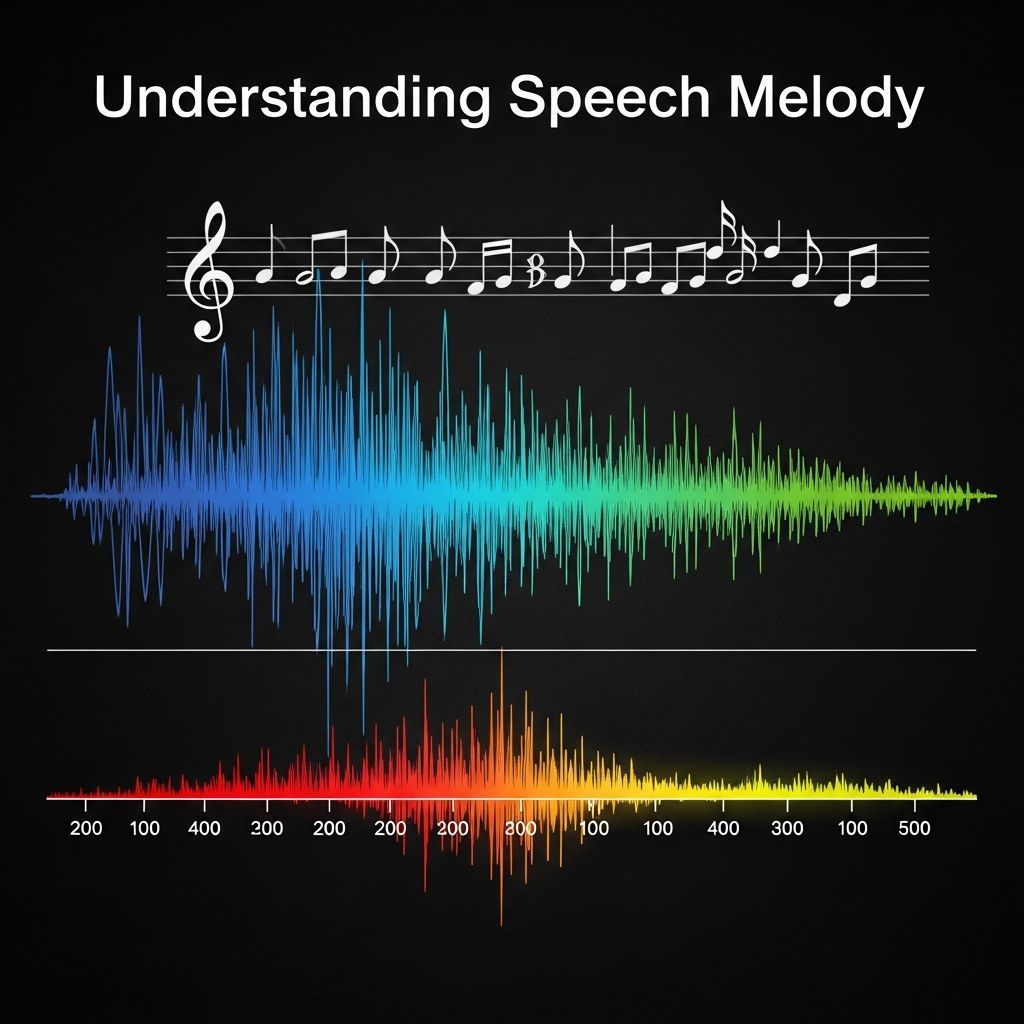
Exploring the Musical Dimension of Human Speech
Every time we speak, we unconsciously employ a complex system of pitch variations that extends far beyond the mere pronunciation of individual words. This musical quality of language—sometimes called the “melody of speech”—represents one of the most fascinating yet underappreciated aspects of human communication. At its core lies a phenomenon that linguists refer to as intonation contour, a sophisticated acoustic pattern that carries meaning, emotion, and structural information encoded in the rising and falling of our vocal pitch throughout utterances.
The ability to manipulate pitch in systematic ways allows speakers to accomplish remarkable communicative feats. A single sentence can be transformed from a statement into a question, from certainty into doubt, or from neutral reporting into emotional emphasis, all without changing a single word. This flexibility demonstrates that intonation contours operate as a fundamental dimension of language structure, distinct from but deeply intertwined with grammar and vocabulary.
The Acoustic Mechanics Behind Intonation Contours
To understand intonation contours, it helps to first grasp the acoustic principles that underpin them. At the most basic level, intonation involves the systematic variation of pitch across segments of speech. Pitch itself is perceived as a direct result of fundamental frequency, abbreviated as F0, which measures the vibrational cycles of the vocal folds. When vocal folds vibrate more rapidly, listeners perceive higher pitch; slower vibrations produce lower pitch sensations.
Intonation contours represent far more than random pitch fluctuations. They constitute phonologically contrastive, systematic configurations of pitch movement that are fundamentally language-specific. This means that the particular ways in which pitch rises, falls, or remains level carry linguistic significance and are recognized by native speakers as meaningful patterns, even if they cannot explicitly articulate the rules governing them.
The acoustic realization of intonation involves sequences of F0 changes that collectively create perceptible pitch movements. These movements typically extend across multiple syllables rather than operating on isolated sound units, allowing intonation to shape the prosodic contour of entire phrases and sentences. The domain of an intonation contour thus exceeds individual phonetic segments, functioning at the level of words, phrases, and complete utterances.
Structural Components of Intonation Contours
A complete intonation contour comprises several distinct structural elements that work together to create the overall pitch pattern of an utterance. Understanding these components provides insight into how speakers layer meaning through prosodic variation.
The most prominent pitch movement within an intonation contour typically initiates at the focal accent of an utterance—the syllable bearing primary stress. In English, this focal accent generally coincides with the most prominent and frequently the final accent within a phrase or clause. From this pivotal point, the intonation contour extends across subsequent syllables toward the end of the unit, creating the characteristic pitch trajectory that listeners recognize.
Beyond the major pitch movement originating from the focal accent, complete intonation configurations incorporate additional acoustic information. Prior to the focal accent, speakers often produce pitch jumps or movements associated with secondary accents, creating step-ups or step-downs in pitch level. The terminal pitch level—the absolute pitch height at which an utterance concludes—represents another crucial parameter of the overall intonational gesture.
These components combine into what researchers term the “whole intonational configuration,” a gestalt phenomenon wherein listeners perceive the integrated result of multiple pitch movements rather than attending to each element independently. This holistic perception explains why intonation contours function so powerfully in human communication despite operating largely below conscious awareness.
Primary Pitch Contour Patterns in Speech
Across languages and dialects, speakers employ a limited set of primary pitch contour patterns that recur frequently and carry consistent communicative functions. These fundamental patterns provide the building blocks from which more complex intonational variations emerge.
The rising pitch contour, wherein pitch ascends throughout or toward the end of an utterance, serves multiple communicative purposes. Rising intonation frequently signals interrogativity, conveying that a speaker is asking a question rather than making a declarative statement. However, rising pitch patterns also appear in contexts where the speaker seeks confirmation, expresses uncertainty, or continues a thought that will be elaborated further.
Falling pitch contours, conversely, typically accompany declarative statements, expressions of certainty, and utterance completion. When pitch descends from higher to lower frequencies across an intonational phrase, listeners conventionally interpret this pattern as signaling definitiveness and closure. Falling intonation contours thus play a crucial role in organizing discourse structure and signaling that a communicative turn is nearing its conclusion.
A third primary pattern, the level or sustained pitch contour, involves maintaining relatively consistent pitch heights across an utterance or portion thereof. This pattern, less common than rising or falling contours, may signal neutrality, enumeration within lists, or continuation with maintained emphasis.
More complex patterns emerge through combination of these basic movements. Rising-falling contours, wherein pitch first ascends and then descends, often convey emotional intensity, skepticism, or emphasis. Falling-rising patterns may indicate dependency or incompleteness, suggesting that more information remains to follow.
The Communicative Functions of Intonation Contours
Intonation contours serve multiple crucial functions within human communication systems, operating simultaneously to convey information about the speaker’s attitudes, emotional states, grammatical intentions, and discourse organization.
One primary function involves signaling grammatical intent and sentence type. The same grammatical structure can be interpreted differently depending on its intonational realization. Consider a comparison: a sentence like “You’re leaving” becomes a statement when produced with falling intonation but transforms into a question or expression of surprise when delivered with rising intonation. This demonstrates that intonation operates independently of grammar, with both systems contributing distinct information to overall meaning.
Beyond grammatical disambiguation, intonation contours communicate the speaker’s attitudes and emotional states. Pitch range expansion—a wider variation between high and low pitch values—often correlates with heightened emotional engagement, enthusiasm, or emphasis. Conversely, compressed pitch ranges may suggest detachment, sarcasm, or diminished emotional investment. Similarly, the particular rate of pitch change and terminal pitch levels contribute to the emotional coloring of utterances.
Intonation contours also regulate discourse flow and turn-taking in conversation. By signaling through intonation whether an utterance is complete or continues, speakers facilitate the smooth coordination of conversational exchanges. Falling intonation at utterance ends typically indicates completion and invites the conversational partner to take a turn, while rising or sustained intonation patterns suggest that more contribution from the current speaker is forthcoming.
How Intonation Interacts with Other Prosodic Features
While pitch variation forms the foundation of intonation, the full communicative power of intonation contours emerges through interaction with additional prosodic dimensions. Duration, intensity, and tempo modifications accompany and reinforce pitch movements, creating multidimensional prosodic gestures.
Duration modifications—variations in the length of syllables and segments—interact closely with intonation. Stressed syllables, which often carry focal accents initiating intonation contours, typically exhibit lengthening compared to adjacent unstressed syllables. This durational extension coincides with pitch prominence, creating a multimodal marking of perceptually important syllables.
Intensity changes, representing variations in acoustic loudness or perceived volume, further support intonational meaning-making. Accented syllables generally exhibit increased intensity alongside pitch elevation and duration extension. These multiple acoustic cues—pitch, duration, and intensity—converge to create robust, redundant marking of prosodic prominence.
Tempo variations likewise interact with intonation contours. Speech rate modifications can accompany particular intonational patterns, with faster speech sometimes reinforcing rising intonation patterns and slower speech supporting falling or level contours. These interactions create the overall prosodic texture that characterizes different styles of speech and emotional expressions.
Language-Specific Characteristics of Intonation Systems
Although all languages employ intonation, the specific patterns and their communicative functions vary substantially across linguistic communities. English intonation systems differ meaningfully from those in German, Mandarin Chinese, Japanese, or Romance languages, reflecting different phonological priorities and cultural communication norms.
In tone languages like Mandarin Chinese, pitch variations at the syllable level carry lexical meaning—different tones change word identity. Intonation contours operate above this tonal layer, creating a complex multi-layered system wherein both lexical tones and intonation contribute to meaning. Non-tone languages like English and German employ intonation more exclusively for grammatical, pragmatic, and emotional functions without lexical-level pitch meanings.
Even among non-tone languages, substantial variation emerges. English speakers rely heavily on terminal pitch levels and overall contour shapes to signal grammatical intent, whereas some other language communities may employ different patterns. German speakers produce different intonation contours than English speakers for equivalent utterances, reflecting distinct phonological systems and communicative conventions.
These language-specific variations underscore that intonation systems represent culturally and linguistically conventional patterns. Learners of second languages must develop sensitivity to target-language intonation patterns, as native-language intonation contours often transfer inappropriately to new linguistic contexts, potentially creating misunderstandings or marking speakers as non-native.
Analyzing and Describing Intonation Contours
Researchers and educators employ various systems for representing and analyzing intonation contours. These descriptive frameworks allow precise documentation and discussion of pitch patterns beyond informal characterizations like “rising” or “falling.”
Traditional configurational approaches characterize intonation contours through their major pitch movements—the fundamental falling, rising, or level patterns initiated at focal accents. This approach emphasizes the perceptually salient overall shape of intonation contours and aligns well with how naive listeners conceptualize intonational patterns.
More detailed analytical systems assign specific tone labels to different pitch levels and transitions. Some frameworks recognize high (H) and low (L) tonal targets with intermediate levels and describe complex contours through sequences of these tonal elements. Additional notational systems incorporate “break indices” that mark boundaries between prosodic units, allowing representation of how intonation patterns organize larger structural units beyond individual syllables.
Acoustic analysis employs fundamental frequency measurements to characterize pitch movements quantitatively. F0 tracks—visual representations of pitch changes across time—allow precise documentation of intonation contours and facilitate comparison across speakers, languages, and utterance types. However, acoustic F0 measurements and perceptual intonational descriptions do not always correspond directly, as listeners’ pitch perceptions involve nonlinear scaling and contextual normalization.
Practical Applications in Language Teaching and Learning
Understanding intonation contours carries substantial practical importance for language educators and learners. Pronunciation instruction that addresses intonation alongside segmental pronunciation yields superior outcomes for intelligibility and native-like speech production.
For learners acquiring second languages, explicit attention to target-language intonation patterns proves beneficial. Many learners initially transfer first-language intonation patterns to the target language, creating utterances that, while grammatically correct, sound markedly non-native. Developing sensitivity to language-specific intonation conventions requires explicit instruction combined with extensive exposure and practice.
Effective pedagogical approaches draw learner attention to pitch variations through multiple modalities. Listening activities highlighting intonation differences improve perceptual discrimination. Imitation and repetition of model utterances with conscious attention to pitch patterning supports productive acquisition. Visual representations of pitch contours through technological tools can enhance learner awareness of otherwise abstract pitch patterns.
Beyond second-language learning, understanding intonation contours benefits individuals developing public speaking skills, voice acting expertise, or heightened communicative effectiveness. Conscious control of intonation patterns allows speakers to enhance clarity, emphasize important points, and convey intended emotional tone with greater precision and persuasiveness.
Common Intonation Patterns in English
English employs several recurring intonation patterns that carry culturally specific meanings and grammatical associations. Recognition of these patterns supports both comprehension and appropriate production in English communication contexts.
The calling contour, characterized by high pitch on the stressed syllable of a name followed by step-down to lower pitch at the end, serves to attract attention. Speakers of English recognize this distinctive pattern immediately and respond to its communicative intent across diverse contexts.
The teasing or chant intonation pattern, exemplified by playful utterances, involves characteristic pitch steps that virtually all English speakers recognize as marking mock-disapproval or lighthearted mockery. This pattern demonstrates how intonation contours carry social and emotional significance beyond referential meaning.
Yes-no question intonation typically involves rising pitch at the utterance end, cueing listeners that the speaker has produced a question rather than a statement. Alternative question intonation produces rising pitch on the first alternative and falling pitch on the final alternative, distinguishing this question type from yes-no questions through distinct intonational patterning.
Key Characteristics of English Intonation:
- Terminal pitch levels critically influence grammatical interpretation
- Focal accent placement determines major intonation contour initiation
- Pitch range variations convey emotional intensity and engagement
- Intonation interacts with grammar while maintaining independence
- Secondary accents create pitch jumps that refine overall contour shape
Intonation Contour Variations Across Different Discourse Contexts
Intonation patterns vary systematically depending on discourse context, relationship between speakers, and communicative intentions. Understanding these contextual variations supports more nuanced comprehension and more effective communication.
In formal institutional contexts like academic lectures, broadcast journalism, or official announcements, speakers typically employ intonation patterns emphasizing clarity and neutrality. Pitch ranges may be somewhat restricted compared to casual conversation, and intonation contours adhere closely to conventional patterns.
Conversational intonation demonstrates greater flexibility and personalization. Speakers may employ more extreme pitch ranges, more varied contour patterns, and more intricate secondary intonational movements that add layers of nuance and personality. Close relationships between speakers often correlate with more elaborate and variable intonation patterns.
Emotional contexts produce characteristic intonation modifications. Excitement or enthusiasm typically involves expanded pitch range and rapid pitch movements. Sadness or disappointment may correlate with compressed pitch ranges and falling terminal contours. Fear or surprise often produces sudden pitch jumps and rising intonation patterns.
Frequently Asked Questions About Intonation Contours
Q: Can intonation change the meaning of a sentence without changing any words?
A: Yes, absolutely. The same sequence of words can function as a statement, question, or expression of emotion depending entirely on intonation contour. For example, “You’re leaving” with falling intonation becomes a statement, while rising intonation transforms it into a question or expression of surprise.
Q: Is intonation the same across all English-speaking regions?
A: While fundamental principles remain consistent, English intonation varies across regions and dialect communities. British English, American English, and other varieties demonstrate different characteristic intonation patterns, though all employ rising and falling contours for similar basic functions.
Q: How can non-native speakers improve their intonation?
A: Explicit instruction, careful listening to native speakers, imitation practice with attention to pitch patterns, and feedback on intonation production all support improvement. Recording and comparing personal productions to native models proves particularly valuable.
Q: Does pitch always correspond to perceived intonation?
A: Not directly. While fundamental frequency provides the acoustic basis, listeners perceive intonation through nonlinear processing influenced by context, speaker characteristics, and listener expectations. Individual pitch values may be interpreted differently depending on surrounding acoustic context.
Q: How does intonation relate to stress and rhythm?
A: Intonation, stress, and rhythm interact closely as components of prosody. Stress often coincides with pitch prominence and duration extension. Rhythm patterns of stressed and unstressed syllables interact with intonation contours to create overall prosodic texture.
References
- Intonation (linguistics) — Wikipedia. Accessed 2026-04-05. https://en.wikipedia.org/wiki/Intonation_(linguistics)
- Intonation: Tune – Teaching Pronunciation with Confidence — Iowa State University PressBooks. Accessed 2026-04-05. https://iastate.pressbooks.pub/teachingpronunciation/chapter/chapter-9-intonation-tune/
- Intonation contour — EMCA Wiki. Accessed 2026-04-05. https://emcawiki.net/Intonation_contour
- Word-level intonation — International Speech Communication Association. Accessed 2026-04-05. https://www.conversationanalysis.org/word-level-intonation/
- The stylization of intonation contours — Grażyna Demenko & Agnieszka Wagner, Institute of Linguistics, Adam Mickiewicz University. Proceedings of Speech Prosody 2006. https://www.isca-archive.org/speechprosody_2006/demenko06_speechprosody.pdf

- Integrated M.A. in Applied Linguistics, University of Hyderabad
- 5+ years in editorial, instructional, SEO, and research-based writing
Sneha is a relationships and lifestyle writer with a strong foundation in applied linguistics and certified training in relationship coaching. She brings over five years of writing experience to theskillvault, crafting thoughtful, research-driven content that empowers readers to build healthier relationships, boost emotional well-being, and embrace holistic living. Her writing and insights reflect the belief that beauty, happiness, and wellness…