
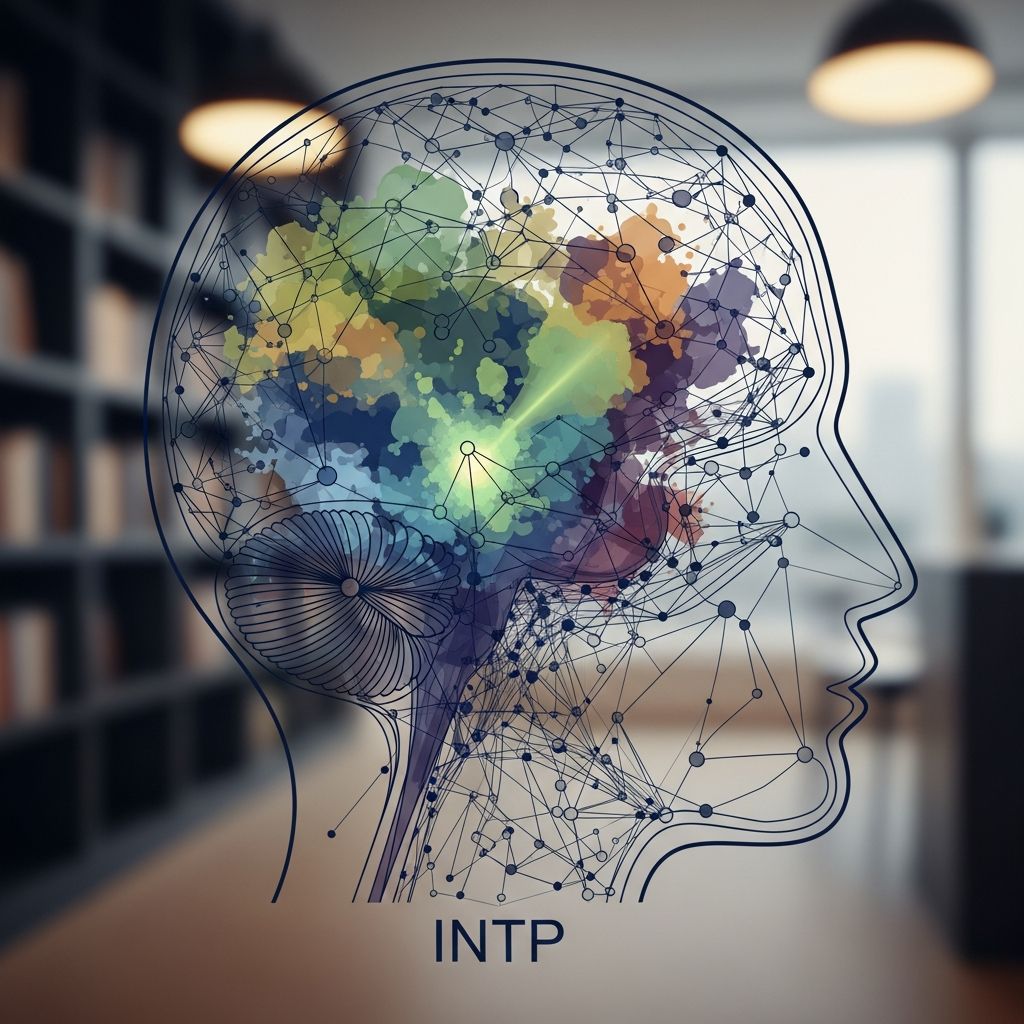
People with the Logician (INTP) personality type are often described as analytical, inventive, and fiercely independent thinkers. Yet beneath their cool, rational exterior lies a rich emotional life that can be surprisingly intense, private, and difficult for others to read. This article explores how Logicians relate to their emotions, what typically challenges them, and how they can grow toward emotional balance without sacrificing their love of logic.
Understanding the INTP Emotional Landscape
INTPs draw their nickname “Logician” from their strong preference for reason over sentiment when making decisions. To understand their emotional style, it helps to look at a few core patterns:
- Introversion (I) – Energy comes from ideas and inner reflection more than from social interaction.
- Intuition (N) – Focus on concepts, patterns, and possibilities rather than concrete details.
- Thinking (T) – Decisions guided by logical consistency and objectivity.
- Perceiving (P) – Preference for flexibility, spontaneity, and open-ended exploration.
This combination makes Logicians more comfortable analyzing emotions than feeling or openly expressing them. They often prefer to step back, observe their reactions as if from a distance, and try to understand what is going on logically.
Why Logicians May Seem Unemotional
Research suggests that people who favor thinking over feeling are more likely to value impersonal analysis, fairness, and principles over emotional harmony when resolving problems. As a result, INTPs may:
- Downplay their own emotional needs in favor of “objective” priorities.
- Appear detached, cool, or even indifferent in emotionally charged situations.
- Struggle to quickly identify or label what they feel in the moment.
This outward calm does not mean they lack emotions. Rather, they often process feelings internally, slowly, and in a highly private way.
How Logicians Typically Experience Emotions
Many INTPs experience emotions as data points rather than as a language they naturally speak. They often notice when something feels “off” but then immediately begin dissecting the feeling instead of simply sitting with it.
Cognitive Habits That Shape Emotional Life
Common internal habits for Logicians include:
- Intellectualizing emotions – Turning feelings into a problem to solve, a pattern to map, or a theory to refine.
- Delaying emotional responses – Having a strong emotional reaction hours or days after the event, once they have had time to reflect.
- Privatizing inner life – Sharing emotional experiences only with a trusted few, often after deep internal processing.
Psychological research on introverted personalities suggests that they often need more time and solitude to process complex experiences, including emotions, compared with more extraverted types. This is especially true for INTPs, who may prefer solitary reflection to external emotional discussion.
Common Emotional Strengths of Logicians
Despite stereotypes of being “unfeeling,” INTPs have several emotional strengths:
- Emotional independence – They rely on their own judgment and are less likely to be swept away by group moods.
- Nonjudgmental curiosity – They can listen to others’ experiences without rushing to moral condemnation.
- Capacity for deep loyalty – Once they truly care about someone, they often remain committed and honest, even if they struggle to show it in traditional ways.
Emotional Blind Spots and Typical Challenges
Like every personality pattern, the Logician type comes with predictable blind spots. Many of these show up most clearly in emotional situations.
1. Difficulty Recognizing Their Own Needs
Because they prioritize logic and autonomy, INTPs may:
- Ignore signs of stress, fatigue, or burnout until they become overwhelming.
- Tell themselves that emotional needs are “irrational” or burdensome.
- Underestimate how much connection or affirmation they actually want.
Studies on personality and stress coping suggest that people who favor thinking can be more prone to cognitive coping (analyzing, reframing, rationalizing) and less likely to seek emotional support, which can delay effective stress relief.
2. Appearing Cold or Insensitive
Others may interpret Logicians’ calm analysis during emotional conflicts as a lack of concern. Behaviors that can create misunderstandings include:
- Offering logical solutions when someone primarily wants comfort or validation.
- Questioning the “accuracy” of someone’s feelings or memories in the middle of a vulnerable moment.
- Changing the subject to ideas, theories, or abstractions when conversations become too emotionally intense.
3. Overthinking and Emotional Paralysis
INTPs excel in seeing multiple possibilities. In emotionally charged decisions—ending a relationship, changing careers, setting boundaries—this can morph into analysis paralysis, where they:
- Loop through endless “what if” scenarios.
- Struggle to act because no option feels perfectly rational or risk-free.
- Detach from their emotions so thoroughly that they lose touch with what they actually want.
Logicians in Relationships: Affection Behind the Abstraction
In close relationships, Logicians tend to value intellectual compatibility and honesty more than constant emotional reassurance. They often show affection in subtle, unconventional ways.
| Aspect of Relationships | How Logicians Often Show Up | How It May Be Misread |
|---|---|---|
| Communication | Direct, precise, focused on ideas and logic. | Seen as blunt, detached, or overly critical. |
| Affection | Shared interests, deep conversations, practical help. | Partner may miss emotional or romantic “signals.” |
| Conflict | Prefers calm debate, analysis, and problem-solving. | Others feel their emotions are being ignored or minimized. |
| Commitment | Loyal when intellectually and ethically invested. | Slow to express feelings can look like ambivalence. |
Emotional Needs of INTP Partners
Even though they may not say it openly, Logicians in relationships often need:
- Space to think without being pressured for instant emotional responses.
- Respect for their autonomy and dislike of controlling behavior.
- Intellectual engagement—discussions, debates, shared curiosity.
- Clear, honest communication more than subtle hints or emotional tests.
What Helps Loved Ones Connect With Logicians
Partners, friends, and family often build better connection with INTPs when they:
- Express emotions clearly and directly instead of expecting mind-reading.
- Frame emotional issues in terms of shared values, fairness, or long-term patterns.
- Recognize that the Logician’s calm tone does not equal a lack of care.
- Appreciate small acts of service, thoughtful insights, or problem-solving as forms of affection.
Stress, Overload, and Emotional Meltdowns
Under everyday conditions, Logicians appear composed and rational. Under chronic stress or sudden emotional shocks, though, their usual strategies can break down.
Signs a Logician Is Emotionally Overwhelmed
- Uncharacteristic irritability or sharp criticism over small issues.
- Withdrawal into solitary activities such as gaming, reading, or research to avoid interaction.
- Physical signs of stress such as sleep problems, headaches, or digestive issues.
- Sudden emotional outbursts after long periods of apparent calm.
Studies in personality psychology indicate that introverted, analytically oriented individuals may be more likely to internalize stress, which can increase risk of somatic symptoms if coping skills are limited.
Healthier Coping Strategies
Evidence-based stress management approaches that may resonate with INTPs include:
- Journaling – Writing about emotions in a semi-structured way provides data they can reflect on over time.
- Cognitive-behavioral techniques – Methods that link thoughts, feelings, and actions appeal to their love of systems and logic.
- Mindfulness practices – Simple breathing or awareness exercises help them stay in their bodies rather than only in their heads. Clinical guidelines increasingly highlight mindfulness as a way to regulate emotional reactivity and reduce stress.
- Seeking targeted support – Talking with a counselor or therapist can offer structured tools for emotional regulation, which research shows can improve well-being across personality types.
Growing Emotional Intelligence as a Logician
Emotional intelligence does not require abandoning logic. For INTPs, it means integrating feelings and reason so that both inform choices. Over time, many Logicians find that a more balanced approach improves their relationships, decision-making, and mental health.
Everyday Practices for Emotional Growth
- Name the feeling – Instead of immediately analyzing, pause and label the emotion: “I feel frustrated,” “I feel anxious,” etc. This simple step is associated with better emotion regulation and reduced reactivity in research on affect labeling.
- Check in with the body – Ask: Where do I feel this? Tight shoulders, racing heart, clenched jaw? This grounds emotions in concrete data.
- Separate facts from interpretations – Write down: “What happened?” vs. “What story am I telling myself about it?”
- Practice low-stakes vulnerability – Share small worries or disappointments with trusted people to build comfort with emotional openness.
- Set rational boundaries – Use logic to justify saying no, protecting time for rest, and declining draining interactions.
Balancing Head and Heart in Decisions
When major decisions intersect with emotional needs, Logicians can experiment with a two-column approach:
- In one column, list logical considerations: evidence, long-term consequences, opportunities.
- In another, list emotional information: energy levels, motivation, sense of meaning, impact on relationships.
By treating emotions as a legitimate form of data rather than as noise to be filtered out, INTPs can arrive at decisions that are both rational and personally sustainable.
Frequently Asked Questions (FAQs)
Q: Do INTP Logicians actually have strong feelings?
Yes. Many INTPs experience deep emotions but keep them private or express them indirectly. Their focus on analysis and logic can make them seem detached, even when they care a great deal.
Q: Why do Logicians struggle to talk about emotions in the moment?
In real time, they may not yet understand what they feel or why. Because they prefer well-thought-out responses, they often need time alone to analyze their reactions before discussing them.
Q: How can I support an INTP who is under stress?
Offer calm, non-intrusive support. Give them space to think, but also let them know clearly that you are available. Present practical options, avoid emotional ultimatums, and invite—rather than demand—sharing.
Q: Can Logicians become more emotionally expressive?
Yes. With practice, many INTPs learn to identify and communicate feelings more directly. Techniques such as journaling, mindfulness, and structured conversations can help them build emotional vocabulary and comfort.
Q: Are INTPs bad partners because they prioritize logic?
Not at all. When they value a relationship, Logicians can be loyal, honest, and intellectually engaging partners. The key is mutual understanding: they benefit from learning emotional skills, while partners benefit from recognizing and appreciating their quieter forms of care.
References
- INTP Personality (Logician) — 16Personalities. 2023-05-01. https://www.16personalities.com/intp-personality
- INTP Personality (Logician) — Simply Psychology. 2023-06-15. https://www.simplypsychology.org/intp-personality.html
- Personality and Stress: Individual Differences in Responses to Stressors — American Psychological Association. 2020-09-10. https://www.apa.org/news/press/releases/stress/2020/report
- Mindfulness-Based Interventions for Emotional Regulation — National Center for Complementary and Integrative Health (NCCIH). 2022-11-03. https://www.nccih.nih.gov/health/mindfulness
- Cognitive Behavioral Therapy Basics — National Institute of Mental Health (NIMH).

- Integrated M.A. in Applied Linguistics, University of Hyderabad
- 5+ years in editorial, instructional, SEO, and research-based writing
Sneha is a relationships and lifestyle writer with a strong foundation in applied linguistics and certified training in relationship coaching. She brings over five years of writing experience to theskillvault, crafting thoughtful, research-driven content that empowers readers to build healthier relationships, boost emotional well-being, and embrace holistic living. Her writing and insights reflect the belief that beauty, happiness, and wellness…