
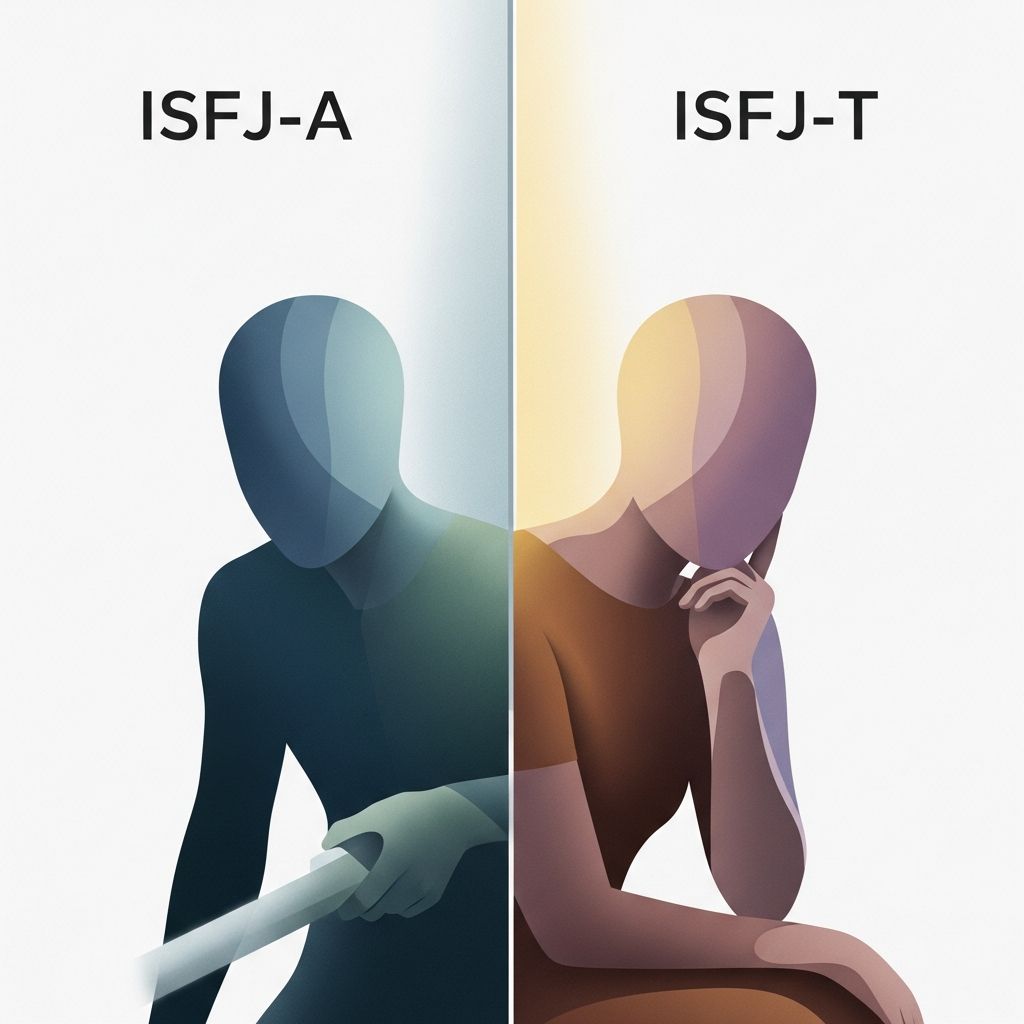
The ISFJ personality, often called the Defender, is known for loyalty, practicality, and a strong drive to care for others. Yet not all Defenders operate in the same way. The Identity dimension from the 16-type model adds a final letter that distinguishes Assertive (ISFJ-A) from Turbulent (ISFJ-T) Defenders. While both share the same core preferences (Introversion, Sensing, Feeling, Judging), their inner climate, confidence, and response to stress can feel very different in daily life.
This article explores how these two identities diverge in areas such as decision-making, emotional patterns, relationships, work life, and personal growth, helping you better understand your unique flavor of the Defender personality.
What the Assertive–Turbulent Identity Really Means
In the 16Personalities framework, the final letter -A or -T reflects how people relate to their own performance, feelings, and future possibilities. It is not a replacement for the ISFJ type but a layer that describes how someone shows up as an ISFJ.
- Assertive Identity (-A): More self-assured, even-tempered, and generally resistant to stress; less likely to dwell on regrets or criticism.
- Turbulent Identity (-T): More success-driven, perfectionistic, and sensitive to threats or failures; more likely to ruminate and push for improvement.
Research on personality suggests that this difference is broadly related to emotional stability vs. neuroticism in the Big Five model: Turbulent people tend to experience more negative emotion and worry, while Assertive people report fewer such reactions overall.
Shared ISFJ Foundations: What Does Not Change
Before focusing on the differences, it is helpful to remember that ISFJ-A and ISFJ-T share the same basic Defender tendencies:
- Introverted: They prefer meaningful one-to-one interactions over large groups and often need quiet time to recharge.
- Sensing: They focus on concrete details and practical realities rather than abstract theory.
- Feeling: They prioritize harmony, empathy, and the well-being of people when making decisions.
- Judging: They appreciate structure, planning, and closure, usually favoring routine over last-minute changes.
Both ISFJ variants often appear dependable, patient, and generous. The Identity letter shapes how confidently they express these traits, how deeply stress affects them, and what inner dialogue accompanies their acts of service.
Core Differences Between ISFJ-A and ISFJ-T
| Aspect | ISFJ-A (Assertive Defender) | ISFJ-T (Turbulent Defender) |
|---|---|---|
| Baseline Confidence | Generally self-assured and less prone to second-guessing. | More self-critical; often questions whether they did enough. |
| Stress Reactivity | Feels pressure, but tends to stay composed and optimistic. | More easily overwhelmed; stress can linger and fuel rumination. |
| Motivation Style | Steady pursuit of goals without intense inner pressure. | Drives hard for success and improvement, partly to ease self-doubt. |
| Focus Under Threat | Assumes things will work out; may under-prepare at times. | Notices risks and details; tends to plan carefully against failure. |
| Emotional Tone | More even-keeled, less visibly shaken by criticism or change. | More emotionally reactive and sensitive to interpersonal shifts. |
Decision-Making and Self-Trust
How ISFJ-A Approaches Decisions
Assertive Defenders generally trust their judgment. Once they have enough facts, they are inclined to decide and move forward without extensive second-guessing.
- They see mistakes as learning experiences rather than proof of inadequacy.
- They are less likely to replay old conversations or choices in their heads.
- They may project calm authority in family or workplace settings.
How ISFJ-T Approaches Decisions
Turbulent Defenders often make decisions carefully and may need more reassurance along the way.
- They anticipate what could go wrong and seek to minimize risk.
- They are more inclined to ask for input before finalizing choices.
- They may replay decisions mentally, searching for overlooked details.
This vigilant style can yield thorough, well-considered outcomes, but it can also generate decision fatigue and reluctance to act when certainty is impossible.
Stress, Emotion, and Inner Narratives
ISFJ-A: Calm in the Storm
People with Assertive Identity report feeling more confident facing everyday difficulties and tend to experience fewer stress-related symptoms overall.
- They usually bounce back faster after setbacks.
- They are less likely to dwell on perceived failures or criticism.
- They may maintain composure even when others are visibly anxious.
However, that same calm can slide into overconfidence. Assertive individuals sometimes underestimate problems or skip necessary preparation, assuming things will work out as they usually do.
ISFJ-T: Sensitive, Vigilant, and Driven
Turbulent Identity is associated with higher sensitivity to stress and negative emotion. For ISFJs, this often shows up as deep concern about the future and about other people’s feelings.
- They may feel anxiety more acutely when plans change or expectations are unclear.
- They often notice subtle signs of conflict or dissatisfaction and internalize them.
- Stress can become a powerful motivator, pushing them to refine, correct, and improve.
When balanced, this stress-fueled striving can lead to high-quality work and attentive care for others. When unbalanced, it risks chronic self-criticism and emotional exhaustion.
Relationships and Interpersonal Style
Shared Defender Themes in Relationships
Both ISFJ-A and ISFJ-T are typically devoted partners, family members, and friends. They tend to show love through consistent actions: practical help, careful listening, and quiet loyalty. Differences emerge in how openly they share their own needs and how they interpret relational tensions.
ISFJ-A in Relationships
- More likely to assume the relationship is stable unless there is explicit evidence otherwise.
- Often provides a grounding presence when loved ones are overwhelmed.
- May under-communicate their own worries, believing they can handle things alone.
Their confidence can be reassuring, but if they dismiss smaller problems, issues may build beneath the surface.
ISFJ-T in Relationships
- Highly attuned to emotional undercurrents, tone, and facial expressions.
- More likely to worry about disappointing others or not doing enough.
- May apologize quickly and often, even for minor missteps.
This sensitivity can make them deeply empathetic and responsive, yet it can also lead to taking on other people’s emotions or misreading neutral signals as signs of rejection.
Work, Goals, and Achievement
ISFJ-A at Work
Assertive Defenders often appear reliable and calm under pressure.
- They are more comfortable assuming responsibility or leadership when needed.
- They usually maintain focus without excessive worry about potential errors.
- They pursue goals consistently but are less likely to drive themselves with perfectionism.
The main risk for ISFJ-A is overlooking subtle warning signs—process issues, team tensions, or emerging risks—because their confidence suggests things are under control.
ISFJ-T at Work
Turbulent Defenders often pair ISFJ diligence with a strong push for improvement.
- They may be meticulous about details and deadlines, double-checking their work.
- They are often motivated to meet or exceed expectations to quiet self-doubt.
- They can be especially sensitive to feedback and performance reviews.
In healthy contexts, this creates conscientious, quality-focused employees. In unsupportive environments, it can easily tip into burnout, especially if they feel undervaled despite their efforts.
Growth Opportunities for Each Defender Identity
Helpful Practices for ISFJ-A
- Invite feedback: Seek honest input before assuming everything is fine, especially on long-term projects.
- Plan for contingencies: Balance optimism with deliberate risk assessments, particularly for important decisions.
- Honor emotions: Make space for your own stress and uncertainty instead of glossing over it.
Helpful Practices for ISFJ-T
- Set realistic standards: Distinguish between “good enough” and “perfect”; not every task deserves maximum energy.
- Challenge catastrophic thoughts: Ask whether your fears match the evidence available, a core idea in cognitive-behavioral approaches to anxiety.
- Celebrate progress: Regularly note what went well before focusing on what still needs work.
Both identities can benefit from evidence-based stress management tools—such as structured problem-solving, relaxation strategies, and supportive relationships—which have been shown to improve psychological resilience.
Balancing Strengths: Neither Variant Is “Better”
Personality research and practitioner commentary highlight that Assertive and Turbulent identities come with trade-offs rather than simple advantages.
- Assertive styles may enjoy greater emotional stability yet sometimes underestimate real risks or interpersonal issues.
- Turbulent styles may grapple with anxiety yet often catch problems early and pursue excellence with persistence.
For Defenders, the goal is not to switch identities but to integrate the most helpful aspects of each: the steadiness of the Assertive approach with the attentiveness and conscientiousness of the Turbulent approach.
Practical Tips to Use Your Defender Identity Wisely
- Know your default reaction: Notice whether you tend to jump in confidently (-A) or scan for mistakes (-T) when something goes wrong.
- Pair up with complements: In teams or relationships, an ISFJ-A may benefit from someone who questions assumptions, while an ISFJ-T may benefit from someone who normalizes imperfection.
- Design routines that match your identity:
- ISFJ-A: Add checkpoints to review details and gather feedback.
- ISFJ-T: Add boundaries around work hours and rumination, such as set times to plan and then consciously disengage.
- Stay curious about change: Both identities can widen their comfort zones by gradually experimenting with new roles, hobbies, or responsibilities.
Frequently Asked Questions (FAQs)
Q: Does ISFJ-A vs ISFJ-T change my core personality type?
No. Both identities are still ISFJ Defenders. The four-letter code describes your basic preferences, while the -A or -T indicates how you relate to your own emotions, performance, and stress.
Q: Can someone shift from ISFJ-T to ISFJ-A over time?
Identity scores are based on tendencies, not fixed labels. Major life events, therapy, coping skills, and environment can affect how stressed, confident, or self-critical you feel, so your test results may shift, even if your underlying type remains ISFJ.
Q: Which is healthier: Assertive or Turbulent Defender?
Neither variant is inherently healthier. Well-being depends more on how you manage your traits. Assertive ISFJs benefit from realistic self-reflection, while Turbulent ISFJs benefit from self-compassion and anxiety management.
Q: Are Turbulent ISFJs always anxious and Assertive ISFJs always relaxed?
No. Identity describes a general pattern, not a constant state. An ISFJ-A can feel anxious in some contexts, and an ISFJ-T can feel calm and confident when prepared or supported.
Q: How can I support an ISFJ-T loved one?
Offer clear appreciation, specific reassurance, and realistic expectations. Encourage breaks, share responsibility, and make it safe for them to express worries instead of silently carrying the emotional load.
References
- Identity: Assertive (-A) vs. Turbulent (-T) — 16Personalities. 2023-05-10. https://www.16personalities.com/articles/identity-assertive-vs-turbulent
- The Difference Between an Assertive versus Turbulent Personality Type — Truity. 2020-08-12. https://www.truity.com/blog/difference-between-assertive-versus-turbulent-personality-type
- ISFJ-A (Assertive) vs. ISFJ-T (Turbulent) Defender Differences — BrainManager. 2023-09-02. https://brainmanager.io/blog/personality/mbti-isfj-t-vs-isfj-a-differences
- Turbulent (T) vs. Assertive (A) Personality: Neuroticism & the Myers-Briggs — Personality Junkie. 2017-06-01. https://personalityjunkie.com/04/turbulent-t-vs-assertive-a-neuroticism-myers-briggs-highly-sensitive-person-hsp-traits/
- Assertive vs. Turbulent: See the Difference — Dictionary.com. 2022-04-05. https://www.dictionary.com/compare-words/assertive-vs-turbulent
- Anxiety Disorders — National Institute of Mental Health (NIMH). 2022-06-01. https://www.nimh.nih.gov/health/topics/anxiety-disorders

- Integrated M.A. in Applied Linguistics, University of Hyderabad
- 5+ years in editorial, instructional, SEO, and research-based writing
Sneha is a relationships and lifestyle writer with a strong foundation in applied linguistics and certified training in relationship coaching. She brings over five years of writing experience to theskillvault, crafting thoughtful, research-driven content that empowers readers to build healthier relationships, boost emotional well-being, and embrace holistic living. Her writing and insights reflect the belief that beauty, happiness, and wellness…