
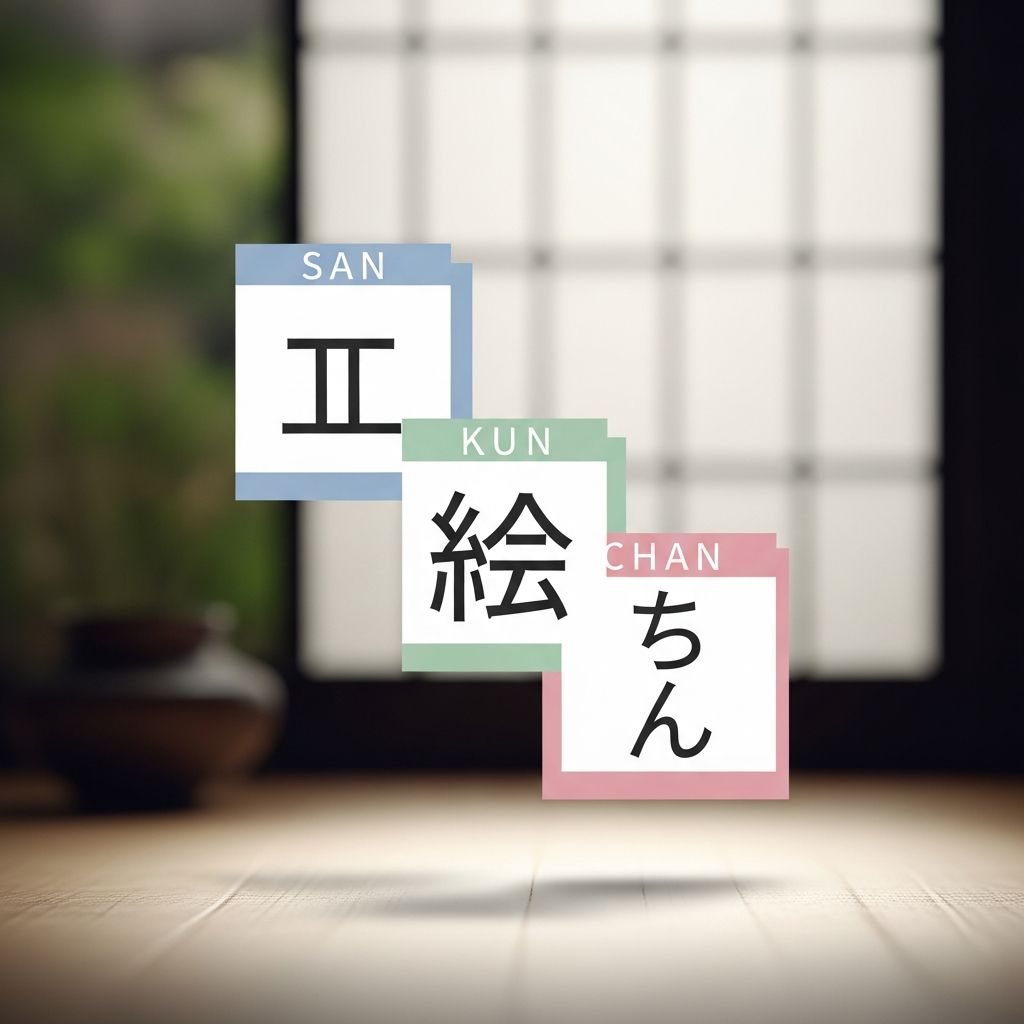
Japanese communication hinges on subtle markers of respect and intimacy, with honorific suffixes playing a pivotal role. These endings, attached to names or titles, signal social dynamics, hierarchy, and emotional closeness, making them indispensable for anyone engaging with the language.
Why Honorifics Matter in Japanese Culture
At the heart of Japanese society lies a profound emphasis on harmony and hierarchy. Honorifics, known as keigo in broader terms, reflect this by adjusting speech based on the listener’s status relative to the speaker. Unlike English, where titles like ‘Mr.’ or ‘Ms.’ are optional and formal, Japanese suffixes are nearly always used in polite settings, even among strangers.
Mastering them prevents awkwardness or offense. For instance, omitting an honorific with a superior can seem rude, while overusing casual ones with elders might appear disrespectful. They also evolve with relationships: a colleague might start as ‘Tanaka-san’ and become ‘Tanaka-kun’ after building rapport.
Breaking Down the Core Honorifics
Let’s examine the most frequently used suffixes, starting with the versatile san.
The Universal Choice: San (さん)
San serves as the default polite suffix, akin to ‘Mr.’, ‘Ms.’, or ‘Mrs.’ in English, but far more ubiquitous. It’s gender-neutral and suitable for nearly everyone outside intimate circles—friends, colleagues, strangers, or even businesses like ‘pan-ya-san’ for a bakery.
Use san when uncertain: it’s safe for adults of any age or status, conveying respect without excessive formality. Avoid it for yourself, as self-application sounds presumptuous. Examples include ‘Suzuki-san’ for a peer or ‘Gakko-san’ for a school in casual reference.
Casual Masculine Marker: Kun (くん)
Kun denotes familiarity, often for males, especially juniors or equals. Superiors like teachers or bosses apply it to male students or subordinates, while male peers use it among themselves for camaraderie.
Women occasionally use kun for close male friends or partners, but it’s rare otherwise. Context is key: ‘Yamada-kun’ might address a young boy from his teacher or a classmate from a buddy. Its informal tone links to ‘kimi’ (you), emphasizing lowered politeness.
Affectionate Diminutive: Chan (ちゃん)
Chan exudes cuteness and endearment, primarily for children, girls, pets, or loved ones. It softens names, turning ‘Hana’ into ‘Hana-chan’ for a little girl or pet.
Adults use it playfully among intimates, like friends or spouses, and it’s common for female celebrities or even figures like ‘Shuwa-chan’ for Schwarzenegger in affectionate media. Caution: deploying chan with non-close adults risks infantilizing them.
Advanced Suffixes for Specific Contexts
Beyond basics, Japanese offers nuanced options for professions, hierarchies, and reverence.
- Sama (さま): Elevated respect for superiors, customers, or idols, like ‘O-kyaku-sama’ (honored customer). It’s formal, echoing utmost deference.
- Sensei (先生): For teachers, doctors, artists—anyone with expertise. ‘Tanaka-sensei’ honors skill over status.
- Senpai (先輩) and Kohai (後輩): Senior/junior in schools or workplaces, fostering group bonds.
These expand expression, attaching to surnames usually, though first names signal closeness.
Gender, Hierarchy, and Regional Variations
Usage bends with gender: kun skews male, chan female, but exceptions abound in close ties. Hierarchy dictates choice—higher status uses casual forms downward.
Regions vary slightly; urban Tokyo favors standard forms, while dialects tweak them. Anime/manga amplify playful uses, like chan for adults, influencing global perceptions.
| Suffix | Primary Use | Gender Lean | Formality Level |
|---|---|---|---|
| San | General politeness | Neutral | Medium |
| Kun | Juniors, males | Male | Casual |
| Chan | Children, affection | Female | Very casual |
| Sama | High respect | Neutral | High |
This table summarizes quick references for selection.
Real-Life Applications: Scenarios and Examples
Consider a workplace: greet a new boss as ‘Manager Yamamoto-san.’ Peers become ‘Sato-kun’ over time. Family uses chan for kids: ‘Taro-chan!’.
In romance, lovers swap kun/chan: ‘Darling-kun.’ Public settings stick to san, like store clerks saying ‘Customer-san.’
For foreigners, Japanese often use san generously, easing entry. Reciprocate by mirroring their choice.
Frequent Errors and How to Dodge Them
Learners falter by:
- Self-honorifics: Never ‘Watashi-san’—omit for humility.
- Over-casual: Chan for bosses offends.
- Ignoring hierarchy: Use kun upward wrongly.
- Forgetting context: Anime styles don’t always fit reality.
Tip: Observe natives and ask preferences. When unsure, default to san.
Frequently Asked Questions (FAQs)
Can I use honorifics with first names?
Yes, first names + suffix indicate intimacy, like ‘Kenji-kun’ for friends, versus surname + san for distance.
Is ‘san’ ever dropped?
Rarely in casual peer talk or family, but include it for politeness with non-intimates.
Do animals get honorifics?
Often chan for pets: ‘Neko-chan’ shows affection.
How do honorifics work in writing?
Same as speech, in emails or letters, matching tone.
What’s the polite default for everyone?
Surname + san until invited otherwise.
Elevating Your Skills: Practice and Resources
Practice via language exchanges, watching subtitled dramas, or apps simulating dialogues. Note shifts in shows: formal openings relax intimately.
Advanced learners explore compound forms or dialectal twists. Consistent use builds fluency, enhancing cultural immersion.
Honorifics weave politeness into Japan’s social fabric, demanding nuance over rules. By grasping san, kun, chan, and kin, you’ll navigate conversations gracefully, forging genuine bonds.
References
- Japanese Honorifics: Using San, Kun, Sama, Chan & More! — Coto Academy. 2023-05-15. https://cotoacademy.com/san-sama-kun-and-chan/
- Sama, san, kun, chan: the many Japanese honorifics — Go! Go! Nihon. 2022-11-20. https://gogonihon.com/en/blog/sama-san-kun-chan-the-many-japanese-honorifics/
- Japanese Honorifics: San, Chan, Kun and Beyond — Busuu. 2024-03-10. https://www.busuu.com/en/japanese/honorifics
- Japanese Honorifics Guide: San, Kun, Chan, Sama and More — JapanesePod101. 2016-07-11. https://www.japanesepod101.com/blog/2016/07/11/japanese-honorifics-guide-san-kun-chan-sama-and-more/
- Titles and Honorifics in Japanese (san, kun, chan, senpai…) — Kanpai Japan. 2023-08-05. https://www.kanpai-japan.com/learn-japanese/titles-honorifics-san-kun-chan-senpai

Medha Deb is an editor with a master's degree in Applied Linguistics from the University of Hyderabad. She believes that her qualification has helped her develop a deep understanding of language and its application in various contexts. Medha specializes in the areas of beauty, health, sports, and wellness and is committed to ensuring that the content on the website is…