
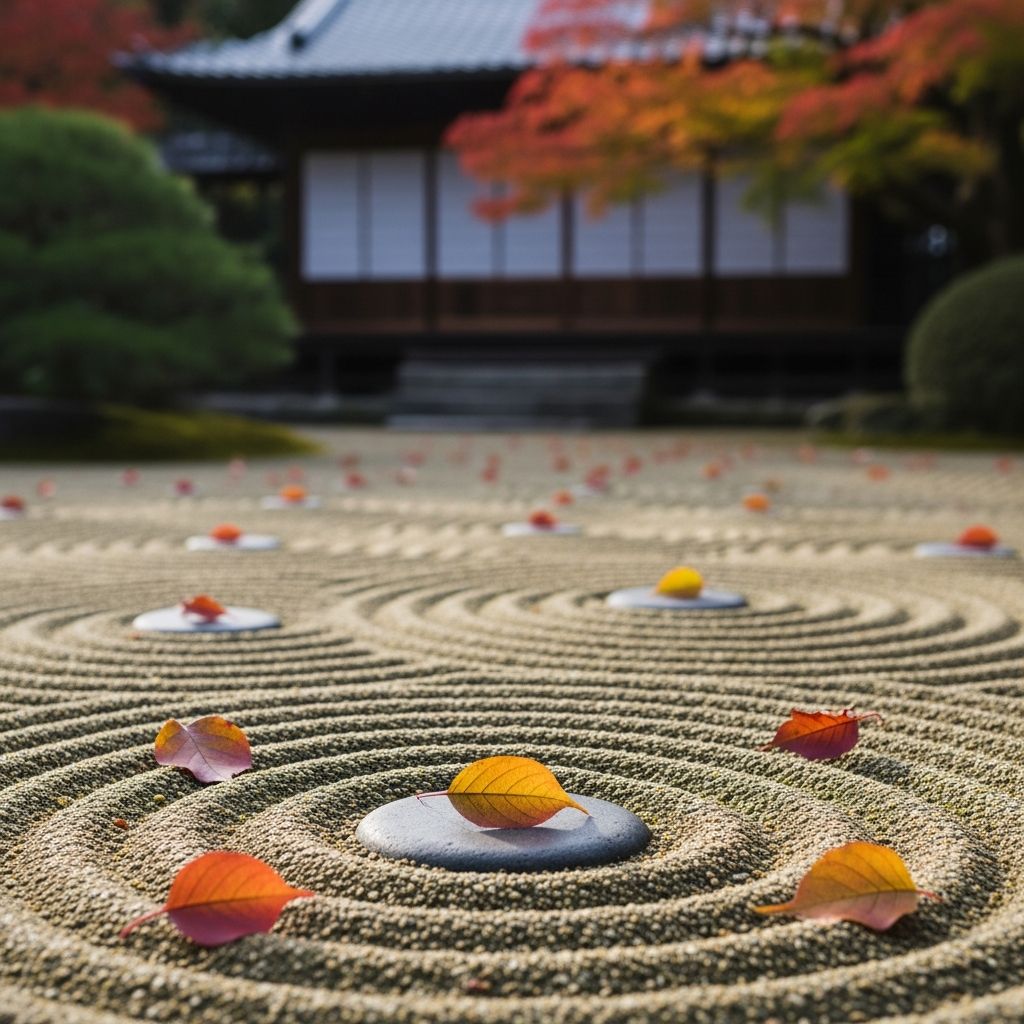
Japan is often described as a country of contrasts: deeply traditional yet highly innovative, reserved yet remarkably expressive through art, design, and rituals. To understand how people in Japan think, feel, and behave, it helps to look at the cultural values, historical influences, and social expectations that quietly guide everyday life.
Although there is no single “Japanese personality,” recurring patterns such as politeness, group orientation, and emotional restraint are easier to understand when seen through the lens of culture, rather than as fixed character types.
The Cultural Foundations of Japanese Personality
Centuries of philosophical, religious, and social influences have shaped what is often perceived as the “Japanese way” of thinking and behaving. These foundations continue to affect how people in Japan relate to authority, handle emotions, and interact with strangers and close friends alike.
Harmony and Collectivism
One of the most important concepts in Japanese culture is wa, often translated as harmony. It reflects the belief that social peace and group cohesion should come before individual preference.
- Group-first mindset: Individuals are encouraged to consider how their actions affect the group, whether that group is the family, a classroom, or a company.
- Conflict avoidance: Open disagreement, especially in public or in front of outsiders, is seen as disruptive and impolite.
- Consensus building: Decisions are often made slowly, with attention to ensuring that everyone can accept the outcome.
Research in cultural psychology consistently classifies Japan as one of the more collectivist societies, in contrast to the stronger individualism found in many Western countries.
Religious and Philosophical Influences
Japanese values are not tied to a single religion. Instead, they reflect a blend of Shinto, Buddhism, and Confucian thought, which together inform ideas about purity, duty, and social roles.
- Shinto: Emphasizes purity, respect for nature, and ritual. The belief that spirits inhabit all things encourages careful handling of spaces, objects, and the environment.
- Buddhism: Introduces ideals such as impermanence, self-discipline, and inner calm, visible in practices like meditation and in aesthetic preferences for simplicity.
- Confucianism: Reinforces hierarchy, respect for elders, loyalty, and fulfilling one’s role within a social order.
These influences help explain why respect, self-restraint, and attentiveness to context are highly valued qualities across Japanese society.
From Isolation to Globalization
Japan spent long periods of history relatively closed to outside contact, followed by rapid modernization and globalization after the mid-19th century.
- Edo period isolation: Internal stability allowed refinement of arts, etiquette, and hierarchical structures.
- Meiji modernization: Western technology and institutions were quickly adopted, but adapted to fit Japanese priorities and values.
- Postwar transformation: After World War II, economic growth, urbanization, and mass education reshaped work and family life, while traditional values of effort and perseverance remained central.
The result is a culture that combines ancient rituals with cutting-edge innovation, often within the same city block.
Typical Personality Traits Often Associated with Japanese Society
Each person in Japan is of course unique, but certain traits are commonly noted by social scientists, visitors, and residents when describing prevailing social norms.
| Commonly Observed Trait | How It Appears in Daily Life |
|---|---|
| Politeness | Use of honorific language, bowing, careful greeting rituals, and strict attention to etiquette in public spaces. |
| Reserved demeanor | Limited public displays of emotion, measured tone of voice, and controlled body language, especially around strangers or superiors. |
| Punctuality | Trains, meetings, and social appointments start on time; lateness is seen as disrespectful to others’ schedules. |
| Conscientiousness | Strong work ethic, attention to detail, and willingness to persevere through challenges. |
| Consideration for others | Thinking ahead about how one’s behavior affects people nearby—such as speaking quietly on public transport or organizing trash precisely for recycling. |
Public Face and Private Self
Many observers highlight a distinction between the public self and the private self in Japan. Formal politeness and self-restraint are especially strong in public, at work, and in school, while people may be far more relaxed and expressive in private settings.
- Outward composure: Maintaining composure signals maturity and respect.
- Inner feelings: Close friends may see a very different side—humorous, talkative, or emotionally open.
- Context sensitivity: The same person may behave quite differently depending on location, company, and role.
Communication Styles in Japan
Understanding how communication works in Japan is essential for interpreting personality. What can be mistaken for shyness or indecision is often a deliberate choice to be indirect, tactful, or respectful.
Indirect and Nuanced Speech
Japanese communication tends to be high-context: meaning is conveyed not only through words, but also through tone, silence, and situational cues.
- Reluctance to say “no” directly: Clear rejection can be considered harsh; people often use soft phrases or vagueness instead.
- Reading the air: The expectation that one will understand unspoken feelings or intentions based on the situation.
- Polite ambiguity: Leaving room for interpretation can prevent embarrassment and preserve harmony.
For outsiders, this style can initially feel confusing, but for many in Japan it is a sign of sensitivity and maturity.
Nonverbal Signals and Etiquette
Nonverbal behavior carries a great deal of meaning in Japanese interaction.
- Bowing: Varies in depth and duration depending on status and context.
- Physical distance: Personal space is respected; casual hugging and kissing in public are relatively rare.
- Silence: Pauses are not necessarily awkward; silence can indicate respect, thoughtfulness, or disagreement without confrontation.
Family Life, Education, and Socialization
From an early age, children in Japan are guided to align their behavior with communal expectations. This socialization has a lasting impact on adult personality, especially regarding responsibility, perseverance, and cooperation.
Family Roles and Relationships
Although family structures are changing, some patterns remain influential.
- Respect for elders: Older family members are accorded deference, in part due to Confucian values.
- Intergenerational ties: Families maintain strong connections with ancestors through memorial rituals and visits to graves.
- Changing gender roles: Traditional expectations of men as breadwinners and women as primary caregivers are evolving, particularly in urban areas, but still influence many households.
Schooling and the Formation of Habits
Education in Japan is not only about academics; it explicitly teaches social responsibility and effort.
- Learning consideration: Concepts such as omoiyari (noticing and thinking of others) are introduced from early childhood.
- Emphasis on effort: Children learn that persevering and enduring difficulty (ganbaru, gaman) are more important than innate talent.
- Group activities: Students routinely clean classrooms and shared areas together, reinforcing responsibility and cooperation rather than individual privilege.
Over time, these experiences cultivate adults who are highly conscientious, socially aware, and skilled at functioning in groups.
Work Culture and Sense of Duty
Japan’s work culture is well known for its high standards, long hours, and strong corporate identity. Personality at work is shaped by a dense network of expectations about loyalty, diligence, and modesty.
Core Work-related Values
Many businesses highlight values that resonate with long-standing Japanese ideals.
- Loyalty to the organization: Historically, long-term employment and commitment to a single company were seen as signs of virtue.
- Doing one’s best: Workers are expected to give consistent effort and attention to detail.
- Knowing your role: Clarity about hierarchy and responsibility is considered essential to smooth collaboration.
Balancing Pressure and Belonging
These expectations can foster a strong sense of belonging and shared purpose, but can also create pressure.
- Positive side: Teamwork, reliability, and pride in one’s work are widely admired.
- Challenging side: Long working hours and reluctance to leave before superiors can affect work–life balance.
- Gradual shifts: In recent years, public debate and policy have focused more on mental health, overwork, and flexible practices, signaling an evolving understanding of well-being at work.
Tradition and Modernity in Everyday Personality
Modern Japanese life blends smartphones and anime with ancient shrines and seasonal festivals. This mix of old and new shapes how people express themselves and how they define a fulfilling life.
Old Ideals, New Contexts
Traditional values such as discipline, modesty, and respect continue to appear in modern contexts.
- Design and aesthetics: Minimalism, clean lines, and subtle detail in architecture and product design reflect long-standing preferences for simplicity and balance.
- Ritual in daily life: Annual festivals, New Year visits to shrines, and seasonal celebrations like cherry blossom viewing help maintain a sense of continuity.
- Innovation with restraint: Technological adoption often coexists with a careful concern for order and public comfort.
Diversity Within a Shared Framework
Although cultural patterns are strong, contemporary Japan is not monolithic.
- Regional differences: Attitudes and communication styles vary between regions, such as the more talkative reputation of some urban areas versus quieter rural communities.
- Generational change: Younger people may prioritize self-expression and mobility more than previous generations, while still navigating expectations around politeness and duty.
- Subcultures: Creative communities, fan cultures, and alternative lifestyles offer outlets for identities that sit alongside, rather than fully replace, mainstream norms.
Frequently Asked Questions (FAQs)
Q: Is there really such a thing as a typical “Japanese personality”?
A: No single personality type represents all people in Japan. However, cultural norms—such as valuing harmony, politeness, and group cohesion—encourage certain behaviors to appear more frequently, particularly in public and formal situations.
Q: Why do people in Japan often avoid direct confrontation?
A: Avoiding confrontation helps preserve social harmony, which is a core value in Japanese society. Indirect language, silence, or softening disagreement are preferred because they protect relationships and prevent others from losing face.
Q: Are Japanese people shy, or just reserved?
A: Many observers interpret reserved behavior as shyness, but it is often a conscious choice to be considerate, maintain decorum, and avoid imposing on others. In private settings with close friends, people may be much more expressive.
Q: How do children in Japan learn social values?
A: Children learn social values at home and in school through explicit teaching and shared practices. From a young age, they participate in group tasks, follow routines that emphasize cleanliness and order, and are encouraged to think about how their actions affect others.
Q: Is Japanese work culture changing?
A: While dedication and loyalty remain important, attitudes are slowly shifting. Government initiatives and public discussion increasingly address overwork, work–life balance, and mental health, and some organizations are experimenting with more flexible practices.
References
- A Brief Overview of Japanese Culture — JapanesePod101. 2021-04-23. https://www.japanesepod101.com/blog/2021/04/23/japanese-culture/
- Japanese Culture and Traditions — Maikoya / Tea Ceremony Japan. 2020-11-10 (approx.). https://mai-ko.com/travel/culture-in-japan/japanese-culture-1/
- Japanese Personalities & Culture: Getting Along in Japan — Japan Living Guide (Fujisawa City / Relocation Support). 2022-06-01 (approx.). https://www.japanlivingguide.com/expatinfo/japaneseculture/japanese-personalities-culture-getting-along/
- Cultural Values of Japan — Moon Travel Guides. 2019-03-15 (approx.). https://www.moontravelguides.com/travel/arts-culture/cultural-values-of-japan/
- Japan: Cultural Life — Encyclopaedia Britannica. 2024-01-10 (updated). https://www.britannica.com/place/Japan/Cultural-life

- Integrated M.A. in Applied Linguistics, University of Hyderabad
- 5+ years in editorial, instructional, SEO, and research-based writing
Sneha is a relationships and lifestyle writer with a strong foundation in applied linguistics and certified training in relationship coaching. She brings over five years of writing experience to theskillvault, crafting thoughtful, research-driven content that empowers readers to build healthier relationships, boost emotional well-being, and embrace holistic living. Her writing and insights reflect the belief that beauty, happiness, and wellness…