
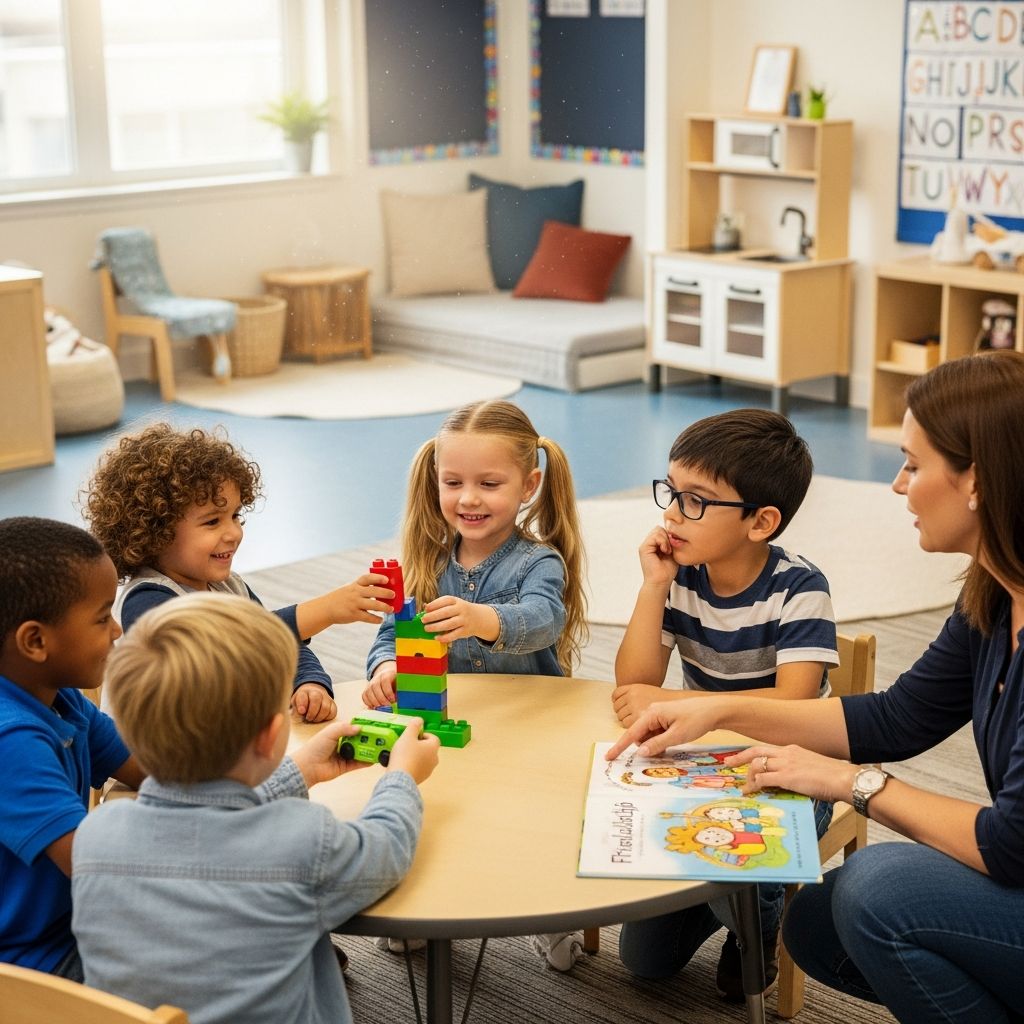
Kindergarten marks a pivotal transition in a child’s life, where social interactions become as critical as academic learning. Mastering foundational social competencies equips young learners to form bonds, navigate group dynamics, and thrive in structured environments. Research shows that children with strong social-emotional skills exhibit better academic outcomes and fewer behavioral challenges. This comprehensive guide explores age-appropriate social milestones, practical development strategies, and evidence-based activities tailored for parents and caregivers.
Why Social Skills Matter in Early Education
Social-emotional development underpins a child’s ability to understand themselves, manage feelings, and build positive relationships. According to experts, these skills enable children to follow directions, collaborate with peers, and persist through challenges, all vital for kindergarten readiness. Children proficient in social interactions are more likely to establish friendships, enhance speech and problem-solving abilities, and adhere to rules both at home and school.
Longitudinal studies reveal distinct growth patterns in social skills during kindergarten. Typically, abilities increase linearly, but trajectories vary: some children show high increases, others moderate gains, and a subset may decline without intervention. Factors like home environment, including avoidance of harsh punishment, significantly influence these paths, with boys often needing extra support. Early nurturing prevents isolation, anxiety, and low self-esteem later in life.
Core Social Milestones by Age Group
Understanding developmental stages helps parents gauge progress and intervene timely. Here’s a breakdown of expected social behaviors:
- Ages 3-4: Parallel play dominates, where children engage side-by-side without direct interaction, building initial social awareness through imitation and basic sharing.
- Ages 4-5: Emergence of cooperative play, empathy, turn-taking, and consideration for peers’ feelings.
- Ages 5-6: Formation of interest-based friendships, conflict navigation, compromise, and effective communication.
These milestones align with broader social-emotional domains like self-regulation, compliance, and adaptive behaviors, which predict lifelong learning and community engagement.
Key Social Skills Every Kindergartener Needs
Focus on these foundational abilities to prepare your child for kindergarten demands:
| Skill | Description | Kindergarten Benefit |
|---|---|---|
| Sharing | Willingly offering toys or materials during play | Promotes group harmony and free play participation |
| Taking Turns | Waiting patiently for one’s opportunity | Essential for classroom activities and games |
| Listening Actively | Attending to speakers and following instructions | Improves learning and rule adherence |
| Expressing Emotions | Identifying and articulating feelings appropriately | Reduces outbursts and builds empathy |
| Problem-Solving | Finding fair solutions to disagreements | Fosters independence and peer relations |
These skills form the bedrock of school success, intertwining with academic growth.
Practical Strategies to Foster Social Growth at Home
Parents play a central role in modeling and reinforcing social behaviors. Integrate these evidence-backed approaches daily:
1. Model Positive Interactions
Demonstrate turn-taking, empathy, and calm problem-solving in family settings. For instance, during meals, discuss fair ways to divide treats: “We both want the cookie—what’s equitable?” This teaches multiple solutions. Use “I” statements like “I feel sad when…” to advocate respectfully.
2. Create Structured Social Opportunities
Schedule playdates, group story times, or park outings. Post-activity, reflect: “You shared your toy—how did that feel?” Praise specific positive actions to reinforce them. Regular exposure builds comfort in peer interactions.
3. Incorporate Movement and Play Routines
Blend physical activities with relaxation for holistic development. Indoor/outdoor games boost empathy and teamwork, making children more expressive and collaborative. Board games teach waiting and rule-following naturally.
4. Use Literature to Spark Discussions
Read friendship-themed books, then analyze characters’ actions. Books depicting kindness, inclusion, and conflict resolution prompt talks on alternative behaviors, enhancing perspective-taking.
5. Practice Role-Playing Scenarios
Simulate real-life situations like sharing disputes or greeting peers. This builds confidence for unstructured kindergarten play.
Consistency yields results; routines combining play and reflection accelerate gains.
Addressing Common Social Challenges
Some children face hurdles like difficulty making friends or handling rejection. Signs include withdrawal or frequent conflicts. Intervene early:
- Guide structured play to practice interactions.
- Praise initiations like inviting others to join.
- Maintain a playdate calendar for steady exposure.
Teach acceptance of “no” gracefully and following rules during transitions. For emotional regulation, name feelings and model coping: deep breaths or counting. If struggles persist, consult educators for tailored support.
The Role of Physical Activity in Social Development
Movement isn’t just physical—it’s social glue. Group games like tag or relay races teach cooperation, while yoga sessions promote emotional awareness. Studies link active routines to heightened empathy and reduced behavioral issues. Alternate high-energy play with calm periods to mirror school schedules.
Preparing for Kindergarten: A Parent Checklist
Assess readiness with this actionable list:
- Can your child share toys without prompting?
- Do they wait for turns in games?
- Can they follow 2-3 step directions?
- Do they express needs verbally?
- Can they resolve simple peer disputes?
- Are they comfortable in group settings?
Track progress weekly, adjusting activities as needed.
Long-Term Benefits of Strong Social Foundations
Investing now pays dividends. Socially adept children concentrate better, innovate confidently, and form enduring bonds. They evolve into collaborative adults skilled in conflict resolution and teamwork. Early intervention breaks negative cycles, ensuring holistic success.
Frequently Asked Questions (FAQs)
What if my child struggles with sharing?
Use timers for turns and praise generosity. Role-play scenarios to normalize it.
How do I teach empathy?
Discuss others’ feelings during books or play: “How do you think they felt?” Model compassionate responses.
Can social skills improve academic performance?
Yes, studies link better social-emotional competence to higher grades and fewer issues.
How much playtime is ideal daily?
Aim for 60 minutes of mixed structured/unstructured social play.
When to seek professional help?
If isolation or aggression persists despite home efforts, consult a pediatrician or counselor.
References
- How to Develop Your Child’s Social Skills — Philadelphia YMCA. Accessed 2026. https://www.philaymca.org/news/how-to-develop-your-childs-social-skills
- 4 Simple Ways to Build Your Child’s Social Skills for Kindergarten — Sunshine House. Accessed 2026. https://sunshinehouse.com/blog/4-simple-ways-to-build-your-child-s-social-skills-for-kindergarten/
- Social/Emotional Skills for Kindergarten Readiness — National Heritage Academies. Accessed 2026. https://www.nhaschools.com/en/social-emotional-skills
- Social Emotional Development’s Vital Role in Kindergarten Readiness — Help Me Grow Washington. 2024-09-03. https://helpmegrowwa.org/social-emotional-developments-vital-role-in-kindergarten-readiness
- Development of Social Skills in Kindergarten: A Latent Class Growth Modeling Approach — PMC (Peer-reviewed). 2021. https://pmc.ncbi.nlm.nih.gov/articles/PMC8534973/
- The Importance of Social Skills in Early Childhood Development — Collaborative for Children. Accessed 2026. https://collabforchildren.org/resources-for-families/resource-library/the-importance-of-social-skills-in-early-childhood-development/
- Essential Social Skills for Kindergarten Success — Counselor Keri. 2019-08-21. https://www.counselorkeri.com/2019/08/21/kindergarten-social-skills/

Medha Deb is an editor with a master's degree in Applied Linguistics from the University of Hyderabad. She believes that her qualification has helped her develop a deep understanding of language and its application in various contexts. Medha specializes in the areas of beauty, health, sports, and wellness and is committed to ensuring that the content on the website is…