
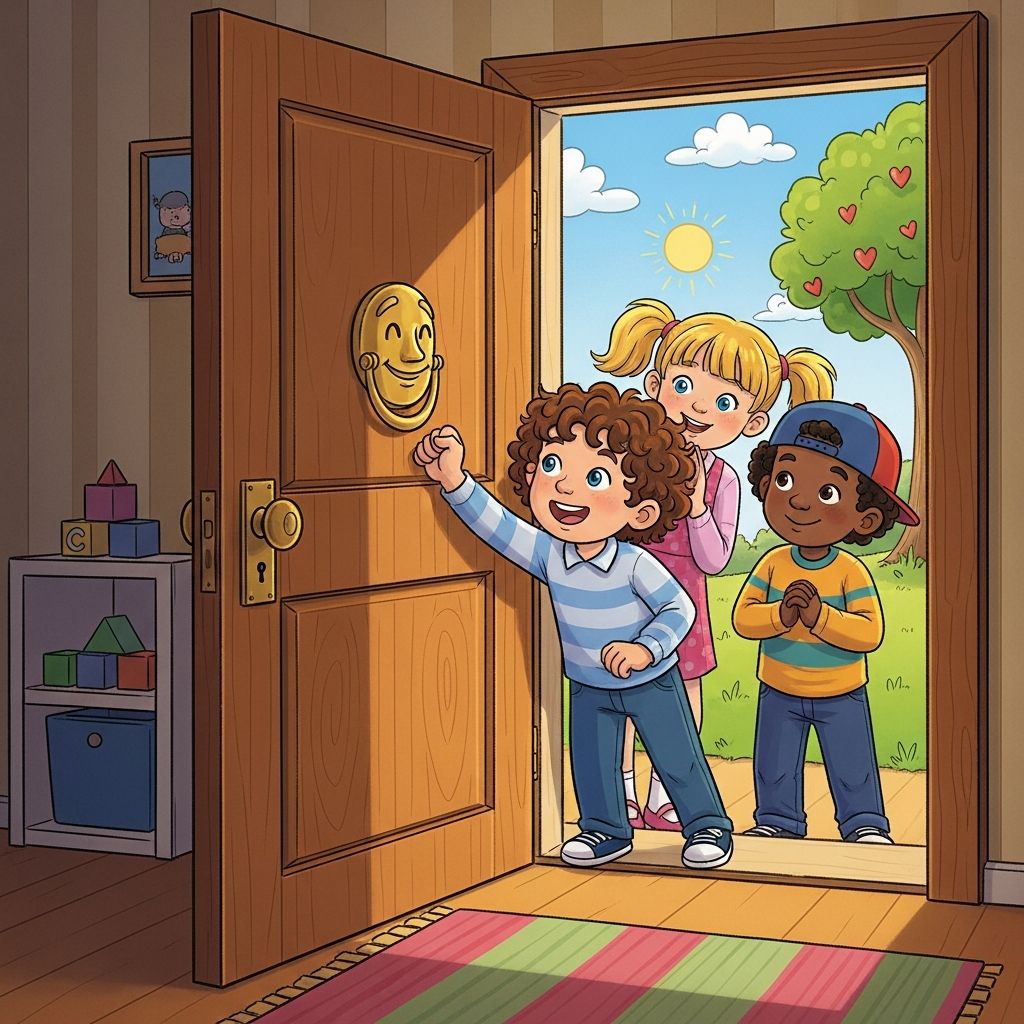
The Enduring Appeal of Knock-Knock Jokes for Young Audiences
Knock-knock jokes have maintained their position as a cornerstone of childhood humor for generations, transcending cultural boundaries and evolving with each new generation of young comedians. These simple, structured jokes provide an accessible entry point into the world of comedy, allowing children to experience the joy of making others laugh while developing their own sense of humor. The predictable format creates a safe space for children to engage with wordplay and puns, building confidence in social situations and creating shared moments of joy with peers and family members.
The mechanics of a knock-knock joke are elegantly simple, yet remarkably effective. The standardized structure allows children to quickly grasp the pattern, making it easy for them to both understand and remember jokes. This accessibility has contributed significantly to their staying power in popular culture, particularly among younger demographics who are just beginning to explore comedic timing and audience engagement.
Understanding the Structure and Format
The foundation of every knock-knock joke relies on a repetitive, call-and-response format that creates anticipation and builds toward a punchline. The initiator begins with “Knock, knock,” prompting the listener to respond with “Who’s there?” This opening exchange establishes the rhythm and creates a predictable framework that children find comforting and easy to follow.
The exchange continues as the joke-teller provides a name, object, or concept, which the listener repeats with the addition of “who?” This final question sets up the delivery of the punchline, which typically involves a play on words, a homophone, or a clever twist on the initial clue. The beauty of this format lies in its universal adaptability—jokes can be created on nearly any topic imaginable, from animals to vegetables to abstract concepts.
- Initial setup: “Knock, knock”
- First response: “Who’s there?”
- Introduction of the premise: Typically a name or word
- Second response: Repetition of the premise plus “who?”
- Punchline delivery: The joke’s payoff, usually involving wordplay
Why Children Find These Jokes Hilarious
The humor in knock-knock jokes operates on multiple levels, appealing to the developing sense of comedy in children. The predictability of the format creates a comfortable rhythm that children can anticipate, and when the punchline subverts expectations through wordplay or unexpected connections, the contrast generates laughter. This mechanism of setup and surprise is fundamental to how children process and enjoy humor.
Developmental psychologists recognize that children’s humor preferences evolve as their cognitive abilities mature. Knock-knock jokes represent an ideal transitional form of humor, bridging the gap between simple slapstick comedy that appeals to very young children and more complex, abstract humor that older children begin to appreciate. The jokes require enough cognitive engagement to feel satisfying without being so complex as to frustrate younger listeners.
Additionally, the social aspect of joke-telling contributes significantly to the enjoyment. When a child successfully delivers a knock-knock joke and receives laughter from an audience, it provides positive reinforcement and builds social confidence. The shared experience of anticipating the punchline creates bonding moments between the joke-teller and the listener.
Classic Examples That Resonate Across Generations
Certain knock-knock jokes have achieved timeless status, remaining recognizable and amusing to audiences regardless of how many times they have been told. These classics often feature the most straightforward and satisfying wordplay, relying on homophones or unexpected logical twists that feel both surprising and obvious once revealed.
The animal-themed variations have proven particularly enduring. Jokes featuring cows, owls, and other creatures often incorporate animal sounds or characteristics into their punchlines, creating multi-sensory humor that appeals to children’s love of sounds and physical comedy. Food-based jokes similarly maintain popularity, as children can easily visualize and relate to common fruits, vegetables, and snacks.
Jokes built around sounds and onomatopoeia hold special appeal for younger audiences who are delighted by the vocal elements of humor. Sneezing sounds, animal noises, and other phonetic humor trigger genuine laughter while reinforcing the performative aspects of joke delivery. These auditory components transform the joke from a purely linguistic exercise into a more engaging, full-bodied comedic experience.
Creating Original Knock-Knock Jokes with Children
One of the most valuable aspects of knock-knock jokes is their potential as a creative exercise. Children can experiment with creating their own jokes, exploring how wordplay functions and testing their ideas on willing audiences. This creative process develops linguistic awareness and encourages children to think about language in new ways.
When guiding children in joke creation, the most successful approach begins with identifying a strong pun or wordplay opportunity. The joke-teller might start with a word that has multiple meanings or sounds like other words, then construct the setup and punchline around that linguistic foundation. This process mirrors creative writing in miniature, requiring children to think about audience expectations and how to surprise listeners while still maintaining logical coherence.
Encouraging children to experiment with different categories helps them understand how the knock-knock format adapts to various topics. Whether crafting jokes about occupations, locations, objects, or abstract concepts, the fundamental structure remains consistent while the content possibilities expand infinitely. This flexibility helps children appreciate the elegance of the format while stretching their creative thinking.
The Educational Value Beyond Entertainment
While knock-knock jokes are primarily vehicles for entertainment, they serve important educational functions in language development and social learning. The jokes introduce children to homophones, puns, and linguistic flexibility—concepts that strengthen vocabulary and language comprehension skills. As children work to understand why a joke is funny, they engage in critical thinking about language and meaning.
The performance aspect of telling jokes builds public speaking skills and confidence. Children learn about timing, delivery, and audience awareness as they practice presenting their jokes to different listeners. These foundational communication skills transfer to classroom presentations, social interactions, and future professional contexts. The immediate feedback from audience reactions provides valuable learning about what resonates with listeners and why.
Furthermore, knock-knock jokes facilitate social connection among peers. Children use these jokes as social currency, sharing them to build friendships and navigate group dynamics. The ability to make others laugh contributes to social status among children and provides opportunities for positive peer interaction centered on humor rather than competition.
Knock-Knock Jokes in Educational Settings
Educators have long recognized the value of incorporating humor into classroom environments. Knock-knock jokes provide a low-stress way to introduce linguistic concepts while maintaining an atmosphere of fun and levity. Teachers can use jokes to teach about homophones, puns, and other literary devices in contexts that feel playful rather than academic.
During transitions between activities or as attention-getters, knock-knock jokes serve practical classroom management functions. A well-timed joke can redirect a restless class, bridge between different lessons, and create positive associations with learning. The shared laughter strengthens classroom community and makes the learning environment feel more welcoming and enjoyable.
Some educators use joke-telling as an assignment, asking students to research, understand, and perform jokes for their classmates. This structured approach to humor leverages students’ natural enjoyment of jokes while developing skills in information literacy, public speaking, and creative expression. The assignment legitimizes humor as a worthy academic focus while producing demonstrable learning outcomes.
Variations and Adaptations for Different Age Groups
Knock-knock jokes remain versatile enough to appeal across a broad age range, though the specific content and complexity adjust appropriately for different developmental stages. Very young children (ages 3-5) enjoy the simplest versions, particularly those featuring animal sounds or physical comedy elements. The repetitive structure and predictable rhythm appeal to this age group’s emerging understanding of humor.
Early elementary-aged children (ages 6-8) begin to appreciate more sophisticated wordplay and can understand basic puns. Jokes featuring homophones or words with double meanings become increasingly funny to this age group as their linguistic development supports these more complex humor mechanisms. They also enjoy jokes with absurdist elements or unexpected logical twists.
Older children (ages 9+) can appreciate more subtle wordplay and jokes requiring broader background knowledge or cultural references. They may also begin creating more original jokes as their understanding of language mechanics deepens. At this stage, children often enjoy the meta-humor of joke formats themselves, understanding how the structure works to set up surprises.
Technology and Knock-Knock Jokes in Modern Times
Despite the digital revolution, knock-knock jokes have successfully transitioned into online environments and social media platforms. Digital communities share collections of jokes, allowing children to discover new material and share their favorites with peers across geographic boundaries. Video platforms feature animated or performed versions of knock-knock jokes, introducing new generations to classics while offering fresh interpretations.
Interactive digital tools and apps have emerged around joke-telling, sometimes gamifying the experience of discovering, creating, and sharing jokes. These platforms extend the social aspects of joke-sharing into digital contexts where children can build reputations as humor-makers and receive feedback from larger audiences. The fundamental appeal of knock-knock jokes translates effectively to digital formats while maintaining their core entertainment value.
Family Bonding Through Shared Humor
Knock-knock jokes create opportunities for family connection and shared laughter across generational boundaries. Parents who grew up with these jokes can share them with their children, creating bridges between childhood memories and present-day family experiences. The simplicity of the format allows even very young children and elderly family members to participate together, making knock-knock jokes genuinely inclusive entertainment.
Family joke-telling sessions establish traditions and create lasting memories. The repetition of favorite jokes reinforces family bonds through shared references and inside humor. When family members recall funny moments of joke delivery or their reactions to particular jokes, they strengthen family identity and create narratives that define family culture.
These informal humor exchanges model important lessons about entertainment, social interaction, and emotional expression. Children learn that making others happy through humor is valued, that laughter is a positive social activity, and that their efforts to entertain family members are appreciated and reciprocated.
Tips for Maximum Impact When Delivering Jokes
The effectiveness of a knock-knock joke depends not only on the content but also on the delivery. Successful joke-tellers understand the importance of pacing and timing, delivering the setup with appropriate enthusiasm while allowing sufficient pause before revealing the punchline. This rhythm creates anticipation and maximizes the surprise element when the punchline arrives.
Audience awareness significantly influences joke delivery success. Tailoring jokes to the specific audience—considering their age, interests, and familiarity with existing knock-knock jokes—helps ensure optimal reception. A joke-teller who understands their audience can gauge whether to deliver familiar classics that will trigger recognition and nostalgia or introduce newer variations that feel fresh and surprising.
Confidence and commitment to the performance matter tremendously. Joke-tellers who embrace the somewhat silly nature of knock-knock jokes and deliver them with genuine enthusiasm tend to receive better responses than those who seem embarrassed or half-hearted. The joke-teller’s energy and attitude significantly influence whether listeners laugh at or with the material.
Common Themes and Categories
The most successful knock-knock jokes tend to cluster around certain themes that prove reliably funny across different audiences. Animal-based jokes leverage children’s interest in animals and their sounds, creating natural opportunities for onomatopoeia and unexpected twists. Food-themed jokes appeal to universal experiences and allow for creative associations between food names and punchline concepts.
Jokes based on homophones—words that sound identical but have different meanings—represent the foundational wordplay mechanism of knock-knock humor. These jokes work because they create a logical transition from the setup to the punchline once the alternate meaning is revealed. The satisfying “aha!” moment when listeners understand the wordplay reinforces the enjoyment of the joke.
Absurdist jokes that violate logical expectations also perform well, particularly with slightly older children who appreciate humor built on incongruity. These jokes work by establishing an apparent pattern, then violating it in unexpected ways. The cognitive engagement required to process the violation generates humor through surprise rather than traditional wordplay.
Frequently Asked Questions
Q: At what age do children typically start enjoying knock-knock jokes?
A: Children generally begin enjoying knock-knock jokes around age 3-4 when they can understand the repetitive format and simple concepts involved. The enjoyment typically peaks during early elementary years (ages 6-8) when their understanding of wordplay and puns develops more fully.
Q: Why are knock-knock jokes considered educational?
A: Knock-knock jokes teach children about homophones, puns, and wordplay while developing language comprehension skills. They also build public speaking confidence, social skills, and critical thinking about how language works.
Q: How can I encourage my child to create original knock-knock jokes?
A: Start by exploring words with multiple meanings or sounds like other words. Have your child brainstorm potential punchlines first, then work backward to create the setup. Celebrate attempts even if they don’t perfectly land, as this encourages creative expression.
Q: Are knock-knock jokes appropriate for all settings?
A: Yes, knock-knock jokes are generally appropriate for any context where humor is welcome, including classrooms, family gatherings, and social situations. Their family-friendly nature makes them universally suitable.
Q: What makes some knock-knock jokes funnier than others?
A: The best knock-knock jokes feature clear, clever wordplay or unexpected logical twists that feel both surprising and obvious once revealed. Effective delivery, audience appropriateness, and the joke-teller’s confidence also significantly impact humor reception.
References
- 65 Hilarious Knock Knock Jokes for Kids — Find A Babysitter. Accessed April 2026. https://www.findababysitter.com.au/articles/65-hilarious-knock-knock-jokes-for-kids
- 75+ Hilarious Knock, Knock Jokes for Kids — Frugal Fun for Boys. Accessed April 2026. https://frugalfun4boys.com/knock-knock-jokes-for-kids/
- 155 Funny Knock Knock Jokes for Kids And Adults Who Love to Laugh — Good Housekeeping. Accessed April 2026. https://www.goodhousekeeping.com/life/parenting/g36198919/knock-knock-jokes-for-kids/
- 15 Absolutely Hilarious Knock Knock Jokes For Kids — Momtastic. Accessed April 2026. https://www.momtastic.com/parenting/714775-knock-knock-jokes-for-kids/
- 40+ Knock-Knock Jokes That Will Make Kids LOL! — Entertain Your Toddler. Accessed April 2026. https://entertainyourtoddler.com/knock-knock-jokes-for-kids/
- 75 Knock-Knock Jokes for Kids — Let’s Roam. Accessed April 2026. https://www.letsroam.com/explorer/knock-knock-jokes-for-kids/

- Integrated M.A. in Applied Linguistics, University of Hyderabad
- 5+ years in editorial, instructional, SEO, and research-based writing
Sneha is a relationships and lifestyle writer with a strong foundation in applied linguistics and certified training in relationship coaching. She brings over five years of writing experience to theskillvault, crafting thoughtful, research-driven content that empowers readers to build healthier relationships, boost emotional well-being, and embrace holistic living. Her writing and insights reflect the belief that beauty, happiness, and wellness…