
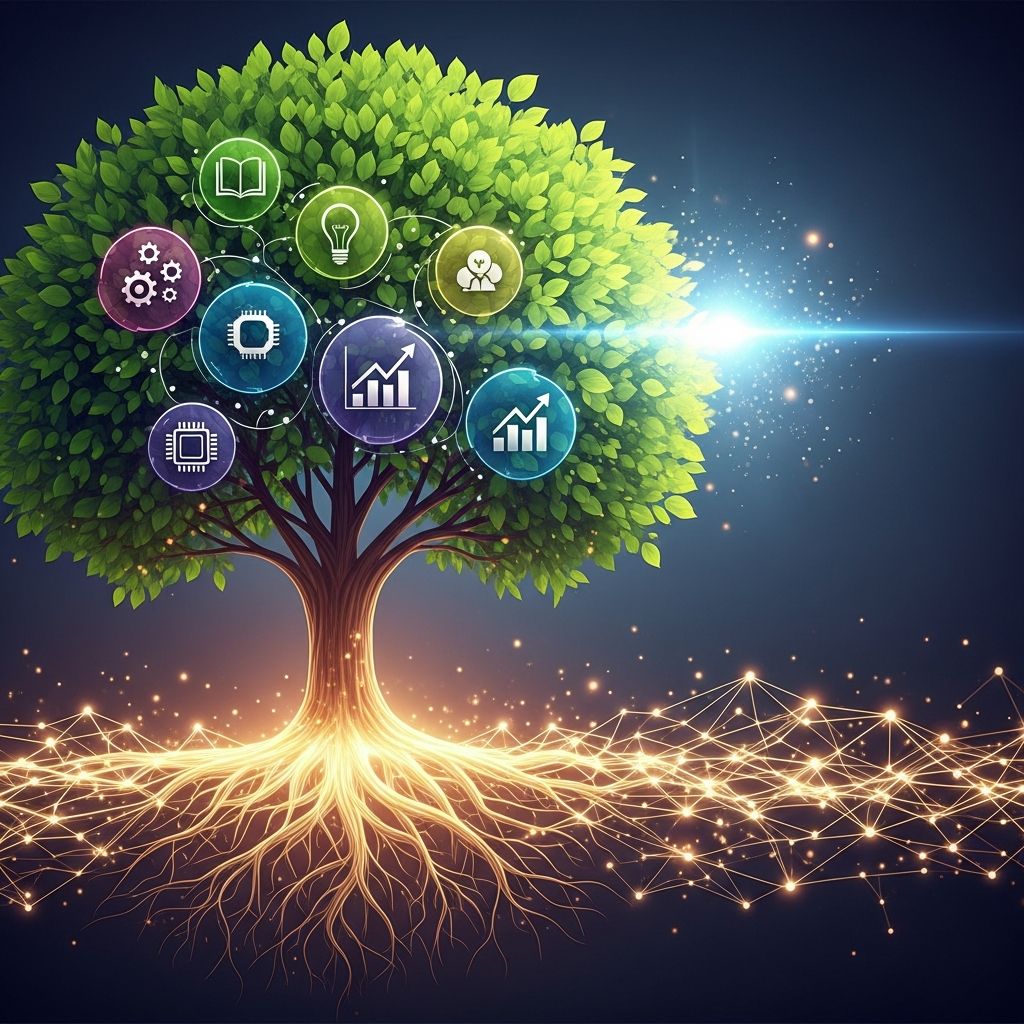
The knowledge economy represents a fundamental shift where intellectual capital, data, and technology drive growth more than traditional physical resources. In this landscape, success hinges on creating, sharing, and applying knowledge effectively. As economies evolve, individuals must adapt by building versatile skills, embracing digital tools, and staying ahead of disruptions like artificial intelligence (AI).
Defining the Core of Modern Economic Value
At its heart, the knowledge economy prioritizes information processing, innovation, and human ingenuity over manual labor or raw materials. Jobs increasingly demand cognitive abilities such as problem-solving, creativity, and data analysis. This transition has accelerated with digital transformation, where sectors like technology, finance, healthcare, and education lead the charge. Organizations now compete on their ability to harness data and foster learning environments that amplify human potential.
Workers who excel here treat knowledge as a renewable asset, continuously updating their expertise to remain relevant. Traditional roles are fragmenting into task-based components, allowing for hybrid human-AI teams that optimize efficiency. This model not only boosts productivity but also opens doors to personalized career paths tailored to individual strengths.
Key Drivers Reshaping Work in 2026
Several forces are propelling the knowledge economy forward. AI adoption stands out, with projections indicating domain-specific models will dominate enterprise use by 2027, enabling targeted applications rather than broad experimentation. Economic pressures, including slowing growth and rising unemployment, are prompting realignments in hiring and operations.
Workplace culture also plays a pivotal role. Surveys reveal that while 93% of employees view culture as vital to their experience, only 36% believe theirs is well-defined and performance-oriented. This gap underscores the need for purposeful cultures that emphasize recognition, flexibility, and clear AI strategies to combat burnout and disengagement.
- AI Expansion: Leaders are scaling AI for business-specific outcomes, redefining literacy across roles.
- Skills Polarization: Access to AI tools and training varies starkly by hierarchy, with 87% of executives using AI versus 27% of workers.
- Hybrid Work Evolution: Full return-to-office mandates face resistance, prolonging hiring by 23% due to talent attrition.
- Learning Revolution: AI-driven platforms personalize training, but gaps persist, with 75% of employees feeling unprepared.
Essential Competencies for Knowledge Workers
To succeed, professionals must cultivate a blend of technical, analytical, and interpersonal skills. AI literacy emerges as foundational, evolving into domain-specific proficiency. Beyond tech savvy, deep expertise in niche areas (35% priority) and cross-functional knowledge (29%) rank high for career growth.
| Skill Category | Description | Why It Matters |
|---|---|---|
| AI and Data Literacy | Understanding tools, ethics, and applications | Enables productivity gains; 39% report improvements from AI. |
| Critical Thinking | Strategic analysis and decision-making | Shifts focus as AI handles routine tasks. |
| Soft Skills | Communication, leadership, adaptability | 22% prioritize for collaboration in hybrid teams. |
| Domain Expertise | Specialized knowledge in industry | Top choice for advancement amid job redesign. |
| Continuous Learning | Self-directed upskilling | Essential as skills depreciate rapidly. |
Employers are responding by redesigning jobs, breaking them into tasks assignable to humans or AI, backed by workflow data. This wholesale redesign demands accurate skills inventories to inform decisions.
Navigating AI’s Dual Impact on Careers
AI acts as both accelerator and divider. While it enhances workflows, unequal access creates divides: two-thirds of executives receive AI training, compared to one in six workers. In tech sectors, clear communication yields 37% engagement boosts from generative AI, far above other industries.
To bridge gaps, organizations invest in reskilling—Accenture, Walmart, and JPMorgan Chase launched programs in 2025. Individuals should seek in-flow learning, where AI tutors provide real-time coaching and personalized content. The World Economic Forum estimates 1 billion workers need reskilling by 2030 due to AI and automation.
Proactive steps include experimenting with tools ethically, pursuing certifications, and advocating for training. Those who master AI will access high-value roles in strategy, oversight, and innovation.
Strategies for Personal Career Positioning
Positioning yourself requires intentional action. Start with self-assessment: map your skills against emerging demands using free online audits. Then, build a learning portfolio incorporating micro-credentials from platforms integrated with AI feedback.
- Upskill Deliberately: Dedicate time weekly to AI tools relevant to your field.
- Network Strategically: Join communities blending trades, tech, and knowledge work for diverse insights.
- Adapt to Flexibility: Hone remote collaboration skills amid hybrid dominance.
- Focus on Human Strengths: Emphasize creativity and empathy that AI can’t replicate.
- Monitor Trends: Track reports from credible sources for proactive pivots.
In skilled trades, shortages create opportunities; partnerships with education groups offer on-the-job training pipelines. Knowledge workers should similarly pursue work-based learning to blend theory with practice.
Organizational Imperatives for Talent Retention
Companies must prioritize inclusive AI strategies to avoid turnover. Transparent policies on impacts build trust, while recognition addresses burnout—cited by 32% of employees, up from 17%. Flexibility remains key, as rigid policies drive attrition.
Investing in culture yields results: purposeful environments top employee wish lists at 31%. New roles like AI overseers (25% of orgs) signal evolution toward human-AI symbiosis.
Future Outlook: Resilience Amid Disruption
By 2026, the knowledge economy will demand adaptability over rigidity. AI contraction focuses on practical scaling, while economic consolidation favors resilient firms. Success lies in balancing tech adoption with human-centered leadership.
Workers embracing continuous learning and employers fostering equity will lead. This era rewards those who view change as opportunity, turning disruption into durable advantage.
Frequently Asked Questions
What is the knowledge economy?
It is an economic model where knowledge, information, and high-skill services drive production and growth, surpassing reliance on agriculture or manufacturing.
How is AI changing job roles?
AI automates routine tasks, redesigns jobs into hybrid models, and widens skills gaps, necessitating upskilling for all levels.
Which skills should I prioritize?
AI literacy, critical thinking, domain expertise, and soft skills top lists for 2026 career growth.
Will remote work disappear?
Hybrid models are prevailing, as full RTO causes talent loss and longer hiring times.
How can I start upskilling today?
Use free AI platforms for personalized learning, seek employer programs, and track progress with skills portfolios.
References
- 10 must-know workforce trends for 2026 — Dayforce. 2026. https://www.dayforce.com/blog/10-workforce-trends-for-2026
- 2026 Forecast — Workplace Intelligence. 2025-10. https://workplaceintelligence.com/wp-content/uploads/2025/10/2026-Forecast.pdf
- Workforce Trends Report 2026 — DHR Global. 2026. https://www.dhrglobal.com/insights/workforce-trends-report-2026/
- The future of jobs: 6 decision-makers on AI and talent strategies — World Economic Forum. 2026-01. https://www.weforum.org/stories/2026/01/how-ai-will-affect-work-in-different-industries/

- Integrated M.A. in Applied Linguistics, University of Hyderabad
- 5+ years in editorial, instructional, SEO, and research-based writing
Sneha is a relationships and lifestyle writer with a strong foundation in applied linguistics and certified training in relationship coaching. She brings over five years of writing experience to theskillvault, crafting thoughtful, research-driven content that empowers readers to build healthier relationships, boost emotional well-being, and embrace holistic living. Her writing and insights reflect the belief that beauty, happiness, and wellness…