
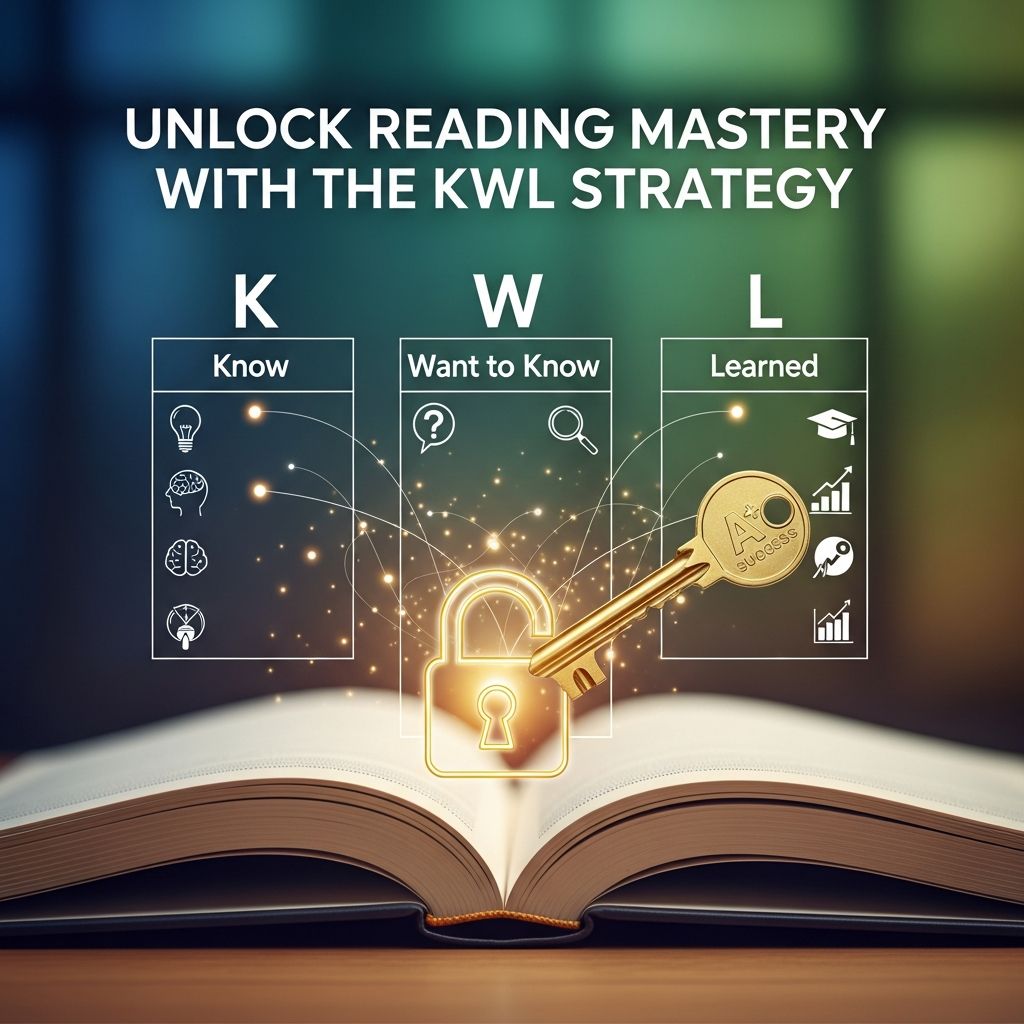
The KWL strategy stands as a cornerstone in modern reading instruction, offering a structured yet flexible framework to enhance comprehension and foster lifelong learning habits. Developed to bridge the gap between existing knowledge and new information, it empowers readers of all ages to approach texts with purpose and reflection.
Understanding the Foundations of KWL
At its core, KWL represents three pivotal stages: Know, Want to Know, and Learned. This method shifts passive reading into an active process, where learners construct meaning through personal connection and inquiry. Research highlights its role in activating schemata—pre-existing mental frameworks—that make new content more accessible and memorable.
Originating from educational psychology principles, KWL aligns with constructivist theories, positing that knowledge is built rather than merely absorbed. By integrating personal experiences with textual analysis, it promotes deeper cognitive engagement, particularly beneficial for diverse learners including those with varying interests and backgrounds.
Breaking Down the Three Core Phases
The beauty of KWL lies in its simplicity and adaptability. Each phase serves a distinct purpose in the reading journey, creating a seamless flow from anticipation to assimilation.
Phase 1: Activating What You Know
Begin by brainstorming everything you already understand about the topic. This pre-reading activation taps into background knowledge, reducing cognitive overload and setting a purposeful tone. For instance, before tackling a passage on ecosystems, list concepts like food webs or predator-prey dynamics. Encourage substantiation: ‘How do you know this?’ This probes deeper thinking and prepares the mind for validation or correction during reading.
- Conduct individual or group mind maps to visualize connections.
- Discuss sources of knowledge to build credibility.
- Limit lists to key ideas to maintain focus.
Phase 2: Generating Questions You Want to Know
Transition to curiosity by formulating specific questions. This ‘Want to Know’ step defines reading goals, transforming vague interest into targeted inquiry. Questions might range from factual (‘What causes climate change?’) to analytical (‘How do human activities impact biodiversity?’). It instills ownership, motivating readers to seek answers actively.
In practice, use question stems like ‘Why?’, ‘How?’, or ‘What if?’ to guide generation. This phase not only sharpens purpose but also highlights knowledge gaps, making the reading process more efficient and engaging.
Phase 3: Reflecting on What You Learned
Post-reading, populate the ‘Learned’ column with insights gained. Compare against initial knowledge and questions, noting confirmations, surprises, or unresolved queries. This reflection reinforces retention and encourages further exploration, turning reading into a dynamic pursuit rather than a one-off task.
- Mark answered questions and explain new understandings.
- Address misconceptions from the ‘Know’ phase.
- Plan extensions, like additional research for unanswered items.
Implementing KWL in Educational Settings
Teachers can deploy KWL via simple worksheets or digital tools, making it versatile for classrooms, homeschooling, or self-study. Start with a three-column chart on paper or apps like Google Sheets for collaboration.
| Phase | Activities | Tools |
|---|---|---|
| Know | Brainstorming, mind mapping | Whiteboard, paper |
| Want to Know | Question generation, discussion | Worksheets, sticky notes |
| Learned | Summary writing, reflection | Digital charts, journals |
For group settings, project a shared chart to pool collective wisdom, fostering peer learning. Individual use suits independent study, promoting self-regulation.
Scientific Evidence Supporting KWL Effectiveness
Empirical studies affirm KWL’s impact on reading outcomes. A quantitative analysis compared KWL-taught groups to conventional methods, revealing significant gains: experimental post-test means reached 69.41 versus 62.26 for controls, with a gain differential of 0.1753. This demonstrates superior comprehension through active strategies.
Further, KWL enhances recall, enthusiasm, and higher-order skills by organizing information visually, aligning with cognitive load theory. It nurtures critical awareness, flexible reading, and content acquisition—key goals in literacy development.
Advantages Across Learning Environments
KWL’s benefits extend beyond comprehension:
- Increased Engagement: Curiosity-driven questions boost motivation.
- Improved Retention: Visual structuring aids memory.
- Skill Development: Promotes inference, context clues, and critical evaluation.
- Inclusivity: Accommodates kinesthetic and visual learners via graphic organizers.
- Multidisciplinary Application: Useful in science, history, and literature.
Particularly for high-interest students, KWL outperforms direct instruction, tailoring to intrinsic motivation.
Practical Examples in Action
Consider studying renewable energy:
- Know: Solar panels convert sunlight; wind turbines generate power.
- Want: What are efficiency rates? How do they compare to fossil fuels?
- Learned: Solar efficiency ~20%; policies drive adoption. Unresolved: Storage challenges.
In literature, pre-reading a novel excerpt on historical events activates context, questions plot drivers, and post-reading synthesizes themes.
Adapting KWL for Digital and Advanced Use
Modernize with tools like Padlet for collaborative charts or Notion for expandable entries. For advanced learners, extend to KWHL by adding ‘How’ for action plans, promoting application.
Challenges like misconceptions are opportunities: explicitly revise ‘Know’ entries to model metacognition.
Frequently Asked Questions (FAQs)
What age groups benefit most from KWL?
KWL suits elementary through adult learners, scaling complexity with age.
Can KWL be used for non-fiction only?
No, it’s effective for fiction by questioning characters, plots, and themes.
How long does a KWL session take?
Typically 10-15 minutes pre/post-reading, integrated into 45-60 minute lessons.
Does KWL work for ESL students?
Yes, it activates schemata and builds vocabulary contextually.
What if questions remain unanswered?
Encourage independent research, emphasizing learning as ongoing.
Overcoming Common Pitfalls and Maximizing Impact
Avoid superficial lists by probing depth. Teachers should model think-alouds to demonstrate processes. Regular use builds habit, yielding compounding benefits in critical reading and inquiry skills.
Incorporate feedback loops: revisit charts in future lessons to track growth, reinforcing long-term retention.
References
- Using KWL charts to improve reading comprehension — Bedrock Learning. 2023. https://bedrocklearning.org/literacy-blogs/how-to-use-a-kwl-chart-to-improve-reading-comprehension/
- The Effectiveness Of KWL Technique To Increase Students’ Reading Comprehension — ERIC. 2021-06-01. https://files.eric.ed.gov/fulltext/EJ1304478.pdf
- Know – Want to Learn – Learn Interactive Strategy (KWL) — New Jersey City University. 2022. https://www.njcu.edu/doc/mjwinstructionaltechniquespdf
- KWL – Teaching strategies for reading comprehension — QCAA. 2023. https://www.qcaa.qld.edu.au/downloads/aciq/general-resources/ac_gc_lit_texts_kwl.pdf
- The KWL Strategy — LD@School. 2024. https://www.ldatschool.ca/the-kwl-strategy/

Medha Deb is an editor with a master's degree in Applied Linguistics from the University of Hyderabad. She believes that her qualification has helped her develop a deep understanding of language and its application in various contexts. Medha specializes in the areas of beauty, health, sports, and wellness and is committed to ensuring that the content on the website is…