
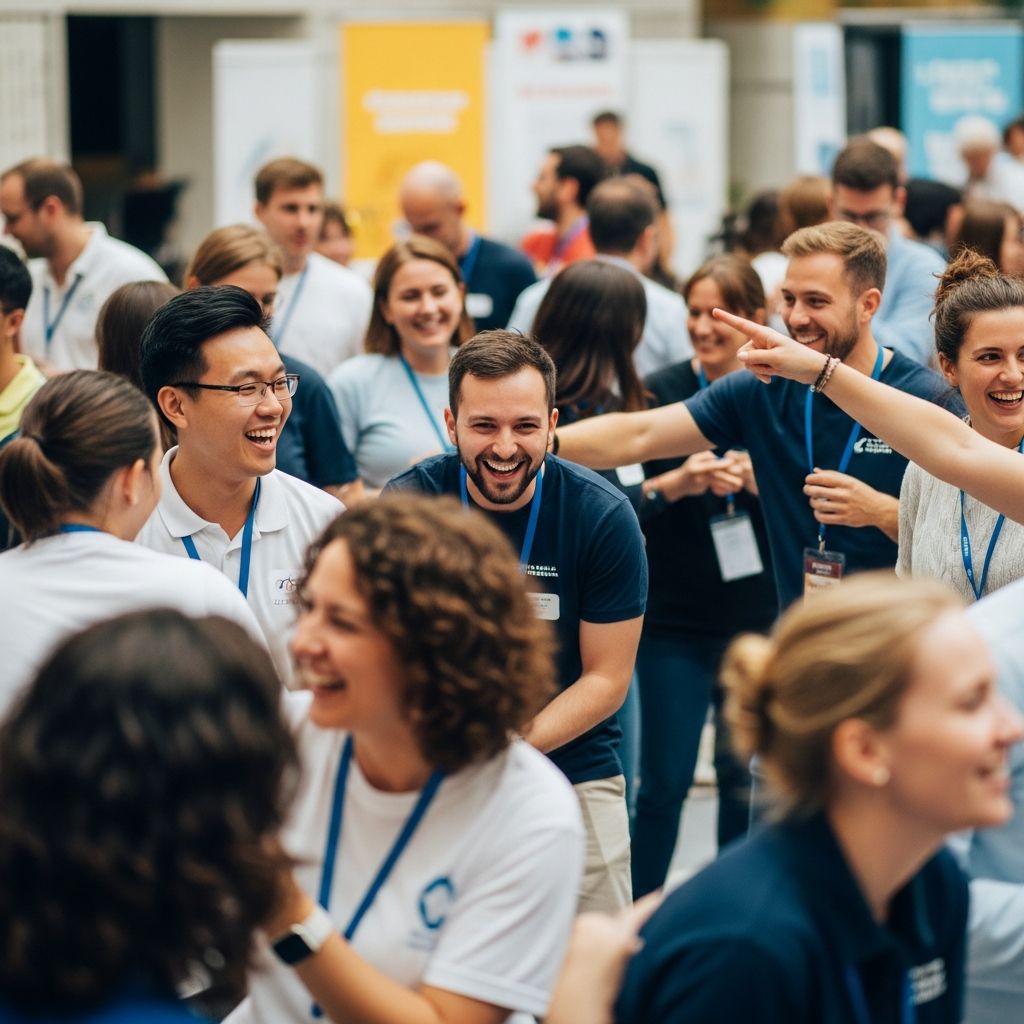
Orchestrating Successful Large Group Experiences
Facilitating activities with substantial numbers of participants presents unique challenges that require thoughtful planning and strategic implementation. Whether you’re an educator managing a classroom of thirty students, a trainer leading a corporate workshop, or an event coordinator organizing a community gathering, the ability to create meaningful experiences for large groups is an invaluable skill. The key to success lies not merely in selecting an activity, but in understanding how to structure, adapt, and facilitate it in ways that maintain engagement across diverse participants with varying interests and comfort levels.
Large group activities serve multiple purposes beyond entertainment. They build community connections, reinforce academic or professional learning, encourage collaboration, and create memorable shared experiences. However, the larger the group, the more complex the logistics become. This comprehensive guide explores evidence-based approaches to designing and implementing group activities that work effectively regardless of group size.
Understanding the Fundamentals of Group Dynamics
Before selecting or designing a large group activity, it’s essential to recognize that group size fundamentally changes how people interact and participate. Research in group dynamics indicates that activities suitable for fifteen people may require substantial modification to work well for one hundred people. The challenge intensifies because individual participation opportunities decrease proportionally as group size increases, which can lead to decreased engagement if activities aren’t thoughtfully structured.
The most successful large group facilitators understand that perceived anonymity in larger groups can actually be advantageous. Some participants who might hesitate to speak up in small settings feel more comfortable participating when they’re part of a larger collective. Conversely, others may feel overwhelmed or invisible in large groups. Recognizing these dynamics allows facilitators to design activities with flexibility that accommodates different personality types and participation preferences.
Categories of Large Group Activities and Their Benefits
Large group activities generally fall into several categories, each with distinct benefits and application contexts:
- Collaborative Problem-Solving Activities: These require groups to work together toward a shared objective, developing communication and strategic thinking skills while building group cohesion.
- Movement-Based Activities: Physical activities that incorporate motion, rhythm, and spatial awareness promote engagement and help participants remain focused and energized.
- Creative Expression Activities: These allow participants to express themselves through art, music, drama, or other creative outlets, supporting emotional engagement and self-esteem.
- Competitive Games and Challenges: Structured competitions can motivate participation and create excitement, though facilitators must ensure they remain inclusive and appropriately challenging for all skill levels.
- Discussion and Reflection Activities: These focus on verbal interaction, idea sharing, and collective reflection, particularly valuable for reinforcing learning and building community understanding.
- Interactive Discovery Activities: These encourage participants to explore environments, solve riddles, or complete missions, combining physical activity with cognitive engagement.
Essential Planning Considerations Before Implementation
Successful large group activities don’t happen by accident; they result from careful preparation and consideration of multiple factors. The first consideration involves understanding your specific group. Demographics including age, cultural background, physical abilities, and prior relationships significantly influence activity selection and modification. A group of university students will respond differently to the same activity as a group of elementary school children or corporate employees.
Space availability represents another critical planning element. Activities suitable for a gymnasium differ dramatically from those appropriate for a classroom or outdoor park. Likewise, the time available fundamentally constrains your options. A five-minute energizer requires different activities than a forty-five-minute session. Material and resource availability also matters considerably. Some activities require minimal setup while others demand specific equipment or supplies.
Safety considerations cannot be overlooked, particularly when activities involve physical movement or require sustained standing or sitting. Facilitators must assess potential injury risks, ensure adequate space and padding where necessary, and have contingency plans for participants with mobility limitations or health concerns.
Interactive Engagement Techniques for Maximizing Participation
One of the most effective approaches for managing large groups involves breaking them into smaller units. This strategy, sometimes called “nested groups,” maintains the benefits of large group energy while creating manageable participation opportunities. For instance, a group of sixty people can be organized into teams of five or six, allowing each smaller unit to collaborate while remaining connected to the larger group experience.
Another powerful technique involves using think-pair-share methodology. This approach sequences participation in layers: individuals first reflect independently on a prompt, then discuss their thoughts with a partner, and finally share insights with the broader group. This structure ensures that everyone engages at their comfort level while building toward larger group discussion.
The following strategies enhance engagement in large group settings:
- Establishing clear, simple instructions that can be understood quickly and completely
- Demonstrating expected behaviors or providing examples before asking the full group to begin
- Incorporating time limits to maintain momentum and focus
- Creating opportunities for voluntary rather than mandatory participation
- Ensuring that roles are distributed equitably among group members
- Providing frequent feedback and acknowledgment of participation
- Building in reflection time to consolidate learning and processing
Physical Activities That Energize Large Groups
Movement-based activities prove particularly effective for large groups because they redirect restless energy constructively, increase blood flow and oxygen to the brain, and provide everyone with simultaneous participation opportunities. These activities work especially well as transitional activities between more sedentary segments of a program.
Physical activities for large groups share common characteristics: they typically require minimal equipment, have simple rules that can be learned quickly, and accommodate participants of varying physical abilities. Many can be modified to include or exclude elements of competition, allowing facilitators to emphasize collaborative versus competitive dimensions based on group needs and contexts.
Effective large group physical activities often incorporate an element of coordination or synchronization. When participants must coordinate their movements with others, even in large group settings, it creates a sense of unified purpose and connection. Activities emphasizing rhythm, pattern recognition, or sequential movement often prove more engaging than random physical exertion.
Incorporating Problem-Solving and Strategic Thinking
Activities that challenge groups to solve problems collaboratively serve multiple purposes simultaneously. They maintain engagement through intellectual stimulation, build communication and leadership skills, create memorable experiences, and often generate significant laughter and positive social connection. The most successful problem-solving activities for large groups share several characteristics: they have clear success criteria, reasonable but challenging difficulty levels, and time constraints that create appropriate urgency without overwhelming participants.
When designing problem-solving activities, facilitators should consider whether the goal is to solve the actual problem or to experience the collaborative process. Often, the journey proves more valuable than the destination. An activity that takes twenty minutes and successfully solves a challenge may be less valuable educationally than one requiring thirty minutes where groups struggle, attempt different strategies, communicate about their approaches, and ultimately may or may not solve it—but learn substantially more through the struggle.
Creating Inclusive Experiences for Diverse Participants
Large group settings encompass tremendous diversity. Participants vary in physical abilities, sensory capabilities, language proficiency, cultural backgrounds, comfort with physical contact, and personality types. Truly effective large group facilitators design and adapt activities to ensure genuine inclusion rather than nominal participation for all attendees.
Providing choice represents one powerful inclusion strategy. Rather than mandating participation in a specific activity, facilitators might offer two or three options that accomplish similar goals but accommodate different preferences. Some participants might prefer competitive activities while others prefer collaborative ones. Some enjoy physical activity while others prefer creative or verbal engagement. Some feel comfortable with high visibility while others prefer background roles.
Another important consideration involves cultural responsiveness. Activities carry cultural meanings and significance that vary across communities. What seems like neutral fun in one cultural context may feel uncomfortable or inappropriate in another. Facilitators who understand and respect diverse cultural backgrounds can modify activities to remain culturally appropriate and genuinely welcoming to all participants.
Technology Integration in Large Group Facilitation
Modern technology offers new possibilities for managing and enhancing large group activities. Digital tools can facilitate participation from people unable to attend physically, enable real-time polling and feedback, create interactive experiences, and help manage complex logistics. However, technology serves as a tool to enhance engagement rather than replace authentic human connection. The most effective large group experiences balance technological innovation with face-to-face interaction and genuine human engagement.
Assessment and Reflection Strategies
Concluding large group activities with structured reflection amplifies their educational and developmental value. Reflection helps participants consolidate learning, make connections to their lives and work, and build collective meaning from shared experiences. Simple reflection techniques work effectively in large group settings: asking participants to write briefly about their experience, discussing in pairs before sharing highlights with the larger group, or completing sentence stems such as “One thing I noticed was…” or “This activity reminded me of…”
Facilitators can gather feedback about which activities worked well and which fell flat, which participants felt genuinely engaged versus merely compliant, and what modifications might improve future sessions. This continuous improvement mindset ensures that large group facilitation skills develop and strengthen over time.
Handling Challenges and Unexpected Situations
Even well-planned large group activities sometimes encounter challenges. Groups may move faster or slower than anticipated, participants may become disruptive or disengaged, or external circumstances may require adaptation. Successful facilitators prepare contingency plans for common challenges. Having backup activities available, understanding how to modify activities on the fly, and remaining calm when situations deviate from expectations proves invaluable.
Managing energy levels in large groups presents particular challenges. Some groups become overstimulated and chaotic while others grow lethargic and disengaged. Experienced facilitators recognize these states early and adjust accordingly, potentially shifting from active to calming activities or vice versa as circumstances dictate.
Frequently Asked Questions About Large Group Activities
Q: How do you handle participants who refuse to participate?
A: Participation should generally be voluntary or offered with meaningful alternatives. Forcing unwilling participants often backfires, creating resentment and resistance. Instead, invite participation while explicitly stating that observation or modified participation represents acceptable options. Often, reluctant participants become interested once they observe others enjoying the activity.
Q: What’s the ideal group size for activities?
A: This depends entirely on the activity type. Collaborative discussion activities work well with groups of 15-30, while large-scale games can accommodate 50-200+ participants. Most activities can be adapted across a range of sizes through modifications like creating smaller subgroups or adjusting competition structures.
Q: How much time should you allocate for large group activities?
A: Allow adequate time for explanation and demonstration (often underestimated), the activity itself, and reflection. A simple activity might require 10-15 minutes while more complex ones may need 30-45 minutes. Always plan for transitions between activities.
Q: How can you manage noise and energy levels?
A: Use clear signals to gain attention (raising hand, ringing bell), start with energetic activities when groups are fresh, transition to calmer activities as energy peaks, and establish ground rules about noise levels at the beginning. Physical space arrangement also influences energy management.
Q: What should you do if an activity isn’t working?
A: Stop gracefully and either adapt the activity on the spot or transition to something else. Continuing with a clearly unsuccessful activity frustrates everyone. Brief, positive acknowledgment (“Let’s try something different”) and smooth pivot maintains group engagement.
References
- 17 Fun Team Building Activities for Kids in Your Classroom — Prodigy Game. Updated 2024. https://www.prodigygame.com/main-en/blog/team-building-activities-for-kids
- 11 Easy Large Group Activities (No Awkward Games) — Montana Nights. Updated 2024. https://montananights.com/blog/11-easy-large-group-activities
- Group Activities That Reinforce Academic Skills — Center for Responsive Schools. https://www.responsiveclassroom.org/group-activities-that-reinforce-academic-skills/
- Activities for Large Classes — University of Waterloo Centre for Teaching Excellence. https://uwaterloo.ca/centre-for-teaching-excellence/catalogs/tip-sheets/activities-large-classes
- 5 x Team Building Activities for Students That Are 100% Fun — Playmeo. Updated December 2024. https://www.playmeo.com/team-building-activities-for-students-2/

- Integrated M.A. in Applied Linguistics, University of Hyderabad
- 5+ years in editorial, instructional, SEO, and research-based writing
Sneha is a relationships and lifestyle writer with a strong foundation in applied linguistics and certified training in relationship coaching. She brings over five years of writing experience to theskillvault, crafting thoughtful, research-driven content that empowers readers to build healthier relationships, boost emotional well-being, and embrace holistic living. Her writing and insights reflect the belief that beauty, happiness, and wellness…