
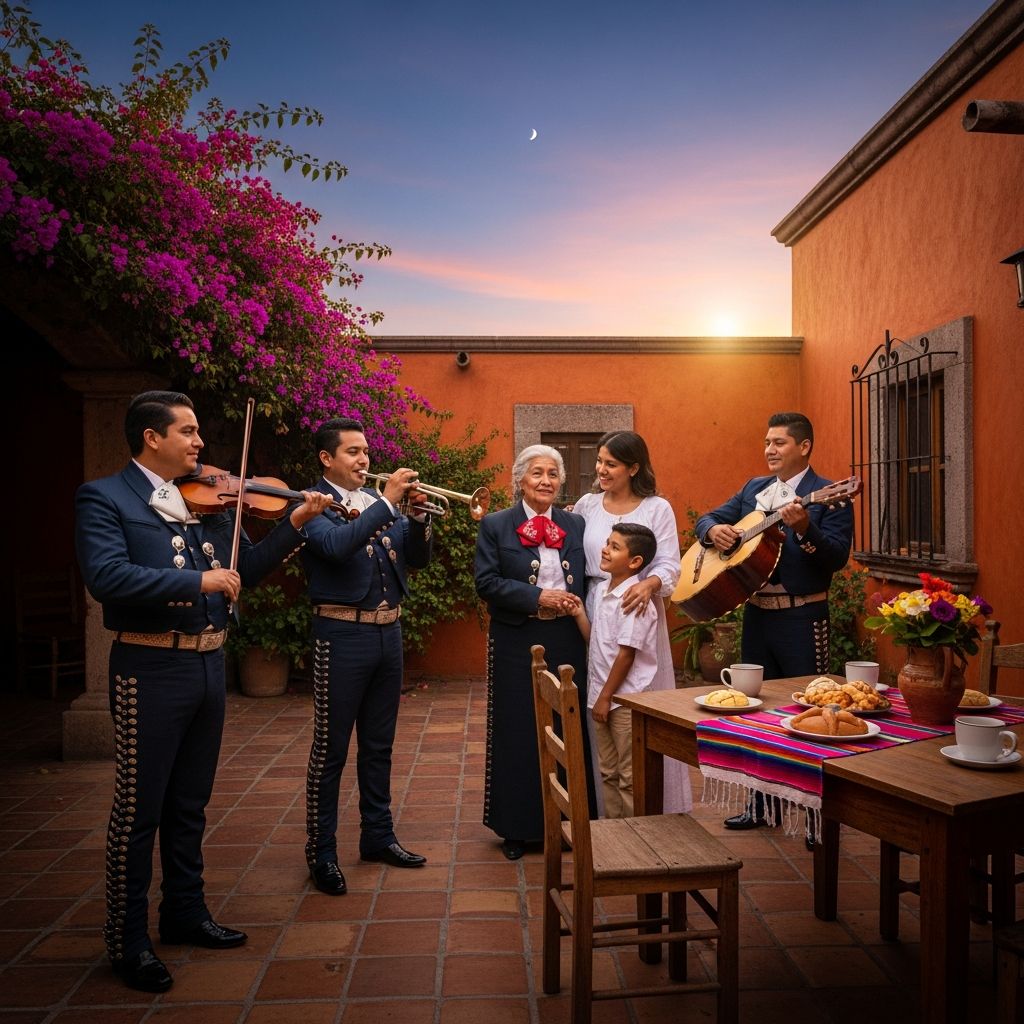
Las Mañanitas stands as one of the most cherished traditions in Mexican culture, a melodic wake-up call that fills the air with joy on birthdays and special occasions. This serenade, often performed at the break of dawn, encapsulates the warmth of community and familial love, blending ancient musical influences with modern festivities.
Deep Roots in History: From Colonial Echoes to National Treasure
The story of Las Mañanitas begins centuries ago, weaving through colonial Mexico’s vibrant musical landscape. Its melody traces back to influences from Sephardic Jewish communities in medieval Spain, merging with Spanish romanza styles that missionaries brought to the New World as tools for evangelization. Indigenous populations embraced these tunes, infusing them with local rhythms and themes, transforming them into a unique Mexican expression.
By the 19th century, during Mexico’s push for independence, mañanitas evolved from a broad genre of romantic and complimentary songs into structured pieces honoring personal milestones. Composers like Alfonso Esparza Oteo penned lyrics that captured this essence, while Manuel M. Ponce, a pioneer of Mexican musical nationalism, refined and popularized the version known today. Ponce’s arrangements helped solidify its place in the national repertoire, much like his work on other folk-inspired pieces.
Originally, mañanitas were not exclusively birthday songs but a style akin to corridos, praising virtues, lovers, or heroes. Over time, specific compositions for celebrations gained prominence, leading to the unified birthday anthem sung across generations. This evolution reflects Mexico’s cultural synthesis, where European imports met indigenous vitality, creating enduring symbols of identity.
Lyrics That Stir the Soul: Decoding the Words
The lyrics of Las Mañanitas paint a poetic dawn scene, urging the honoree to rise and embrace the new day. Here’s the classic version:
Despierta, mi bien, despierta,
Ya los pajarillos cantan,
La luna ya se metió.¡Qué lindo está el cielo!
Se han levantado ya las estrellas,
Ya vienen las mañanitas,
¡Ay, qué lindo está el cielo!
Translated, it evokes: “Wake up, my dear, wake up, the little birds are already singing, the moon has already set. How beautiful the sky is! The stars have already risen, here come the morning songs, oh how beautiful the sky is!” These words symbolize renewal and joy, mirroring ancient rituals greeting the sunrise.
Variations exist, with some stanzas personalizing the tribute, such as adding the celebrant’s name or references to flowers and seraphim. This flexibility allows the song to adapt to contexts like quinceañeras or saint’s days, enhancing its versatility.
The Dawn Ritual: When and How It’s Sung
True to its name—’mañanitas’ meaning ‘little mornings’—the song is traditionally performed just before sunrise. Friends and family gather outside the celebrant’s window, armed with guitars, maracas, and voices, creating an impromptu serenata. This surprise element amplifies the emotion, often leading to tears of delight as the birthday person awakens to the harmonious chorus.
- Birthday Celebrations: The core use, sung before cake-cutting or piñata-breaking.
- Mother’s Day: A nationwide tradition honoring mothers with early morning tributes.
- Quinceañeras: Marking a girl’s 15th birthday, blending song with waltzes and dances.
- Saint’s Days: Personalized for name days, tying personal faith to festivity.
Beyond personal events, massive gatherings amplify the tradition. Annually on December 12, pilgrims at Mexico City’s Basilica of Guadalupe join artists in singing to the Virgin, a practice sparked accidentally in 1955 during a televised event when announcer Rafael Solana improvised the announcement, birthing a beloved custom.
Cultural Significance: More Than a Song
Las Mañanitas transcends music, embodying Mexican values of communal joy, respect for elders, and spiritual devotion. It fosters bonds, drawing families together in shared song, reinforcing heritage in a globalized world. The Real Academia Española recognizes it as a Mexican musical form in 3/4 time, typically sung to women on birthdays, underscoring its formal cultural status.
In diaspora communities across the U.S., Canada, and Latin America, the song maintains ties to roots, performed at parties from Los Angeles to Buenos Aires. Its spread highlights Mexican music’s influence, akin to mariachi or ranchera.
Famous Interpretations: Voices That Immortalized It
Countless artists have lent their timbre to Las Mañanitas, each adding nuance. Vicente Fernández’s robust rendition captures ranchero passion, while Ana Gabriel infuses soulful depth. Pedro Infante’s classic recording evokes golden-era cinema charm, and modern stars like Thalía offer pop-infused takes.
| Artist | Style | Notable Feature |
|---|---|---|
| Vicente Fernández | Ranchera | Powerful, traditional vocals |
| Ana Gabriel | Balada | Emotional intensity |
| Pedro Infante | Golden Age | Cinematic nostalgia |
| Modern Pop Artists | Contemporary | Fusion with current beats |
These versions ensure the song’s relevance, bridging generations and genres.
Global Reach and Adaptations
Though Mexican at heart, Las Mañanitas resonates worldwide. In Spain, Portugal, and Central America, similar dawn songs exist, but Mexico’s version dominates Latin celebrations. U.S. Mexican-Americans sing it at posadas and parties, exporting culture via media.
Recordings on platforms like YouTube garner millions of views, teaching lyrics to global audiences. Educational sites preserve its history, ensuring oral traditions endure digitally.
Preserving the Tradition in Modern Times
Urbanization challenges the dawn serenade, yet apps and social media revive it—families coordinate virtual sing-alongs or share recordings. Schools teach it as cultural patrimony, safeguarding against dilution.
Its UNESCO intangible heritage candidacy underscores global recognition, paralleling other folk traditions.
Frequently Asked Questions (FAQs)
What is the origin of Las Mañanitas?
It blends Sephardic, Spanish romanza, and indigenous influences from colonial Mexico, popularized by composers like Ponce and Esparza Oteo.
Why is it sung at dawn?
The lyrics celebrate morning’s arrival, echoing ancient sunrise rituals, making the early surprise a heartfelt tradition.
Is Las Mañanitas only for birthdays?
No, it’s also for Mother’s Day, quinceañeras, saint’s days, and the Virgin of Guadalupe, showcasing its versatility.
Who are the key composers?
Alfonso Esparza Oteo wrote key lyrics; Manuel M. Ponce arranged the standard melody, advancing Mexican nationalism.
Can non-Mexicans sing it?
Absolutely—its global popularity invites all to join, fostering cultural exchange.
Learning to Sing: Tips for Beginners
Start with the 3/4 waltz rhythm on guitar. Practice verses slowly, emphasizing poetic flow. Record yourself against famous versions for accuracy. Group practice builds harmony, perfect for authentic serenatas.
References
- Las Mañanitas – Lyrics, Meaning & Video — NurseryRhymes.info. Accessed 2026. https://nurseryrhymes.info/las-mananitas/
- The origin of the mañanitas – Sung not only by King David — Yolo Camotes (YouTube). Accessed 2026. https://www.youtube.com/watch?v=BoBRCwogXL8
- El Origen de Las Mañanitas — Taller De Música Online (YouTube). Accessed 2026. https://www.youtube.com/watch?v=bRX3qS7XwM0
- Mexican Birthday Song (Las Mañanitas) — TheCrazyGorilla (YouTube). Accessed 2026. https://www.youtube.com/watch?v=6WzLoix6rIE

- Integrated M.A. in Applied Linguistics, University of Hyderabad
- 5+ years in editorial, instructional, SEO, and research-based writing
Sneha is a relationships and lifestyle writer with a strong foundation in applied linguistics and certified training in relationship coaching. She brings over five years of writing experience to theskillvault, crafting thoughtful, research-driven content that empowers readers to build healthier relationships, boost emotional well-being, and embrace holistic living. Her writing and insights reflect the belief that beauty, happiness, and wellness…