
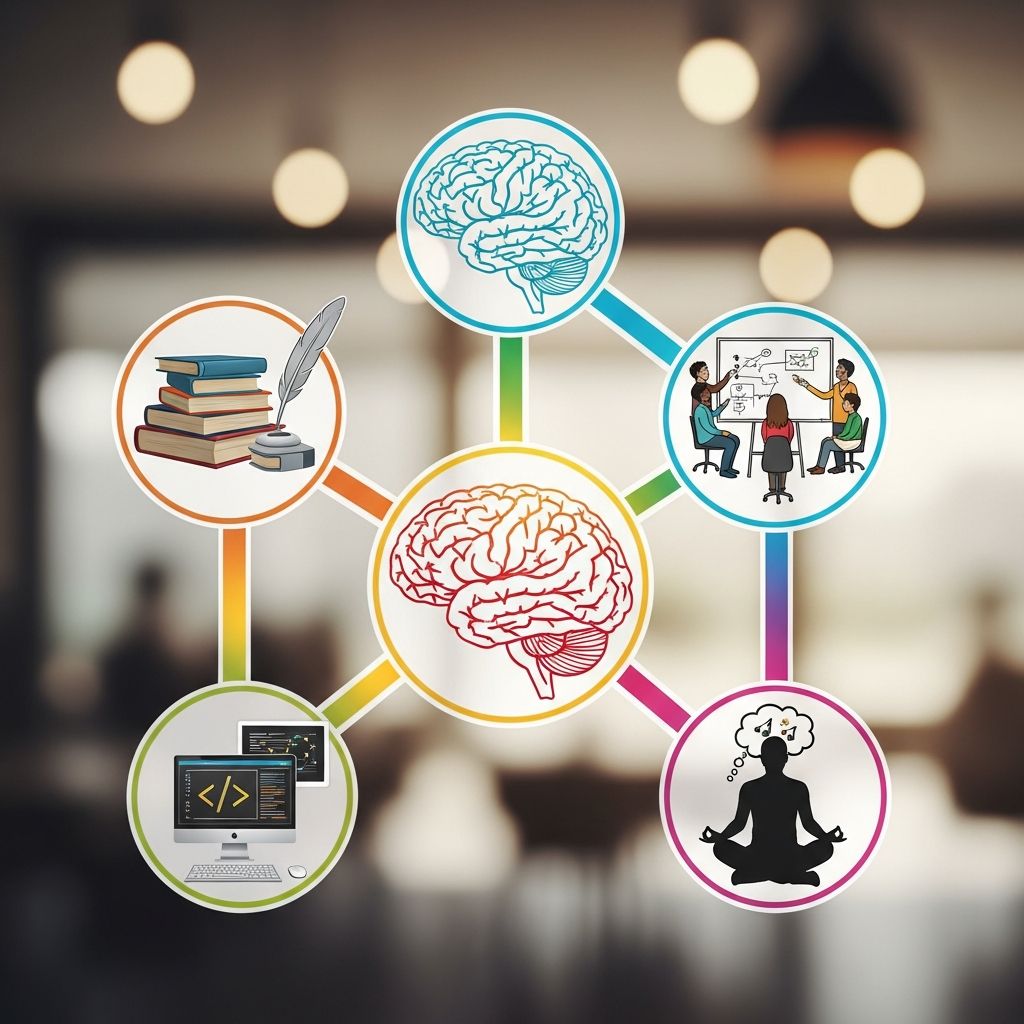
Introduction to Individual Learning Preferences
Every student enters a classroom with a unique cognitive makeup. While traditional education often employs a one-size-fits-all teaching approach, research increasingly demonstrates that individuals absorb and retain information through different mechanisms. Understanding these fundamental differences in how people process information can significantly enhance academic outcomes and make learning more engaging and effective.
The concept of learning preferences has evolved substantially over the past several decades. Rather than viewing education as a uniform transmission of knowledge, modern educational theory recognizes that students benefit from instruction tailored to their strengths and preferences. This recognition has prompted educators to develop various frameworks for identifying and accommodating different learning modalities in classroom settings.
The Primary Channels Through Which We Learn
Research has identified several dominant pathways through which individuals typically acquire and process information. These pathways represent different sensory and cognitive preferences that influence how students most effectively engage with educational material. Understanding these channels helps both educators and learners optimize instructional design and study techniques.
Visual Processing and Spatial Learning
Individuals who demonstrate a visual learning preference tend to think in images and spatial relationships. These learners process information most effectively when it is presented through visual representations such as diagrams, charts, graphs, photographs, and illustrations. Visual learners often exhibit strong abilities in recognizing patterns, understanding spatial relationships, and mentally manipulating visual information.
Students with visual preferences typically benefit from incorporating multiple visual strategies into their study regimen. Creating concept maps, color-coding notes, organizing material through flowcharts, and reviewing video content all leverage visual processing strengths. These learners may experience difficulty with purely verbal instruction and often prefer written directions over spoken explanations.
Characteristics commonly associated with visual learners include:
- Strong sense of color and appreciation for aesthetically organized materials
- Preference for seeing demonstrations and observing processes rather than hearing descriptions
- Ability to remember faces and visual details from images
- Often possess artistic abilities and fine motor control
- May experience difficulty processing spoken information without visual support
Auditory Learning and Verbal Processing
Auditory learners prefer acquiring information through listening and verbal communication. These individuals think in words and process sequential, linear information most effectively when delivered orally. Auditory learners often excel in discussions, lectures, and verbal explanations, and they typically remember information they have heard.
This learning preference manifests in several observable ways. Auditory learners may talk through problems aloud, benefit from study groups and peer discussions, and remember information better when they have explained it verbally to someone else. These students often have strong language skills and may demonstrate musical abilities or sensitivity to auditory nuances.
For students who prefer auditory input, effective study strategies include:
- Recording lectures and reviewing audio recordings of study materials
- Participating actively in classroom discussions and study group conversations
- Reading notes aloud during review sessions
- Seeking verbal explanations and asking clarifying questions in classroom settings
- Using podcasts, audiobooks, and verbal instruction resources
Kinesthetic and Tactile Learning Experiences
Kinesthetic learners acquire and retain information most effectively through physical engagement and hands-on experience. These individuals think in movements and sensations, preferring to learn by doing rather than observing or listening. Kinesthetic learners often demonstrate coordination and may excel in physical activities, athletics, and practical problem-solving situations.
Students with kinesthetic preferences struggle with passive learning environments and benefit tremendously from active, experiential instruction. Laboratory work, project-based learning, role-playing activities, and real-world applications transform abstract concepts into tangible, understandable experiences for these learners. Interestingly, research has demonstrated that certain subjects inherently require kinesthetic approaches regardless of student preference—for instance, mastering practical chemistry skills such as dilutions necessitates hands-on experiential learning for all students.
Kinesthetic learners typically demonstrate these characteristics:
- Preference for hands-on activities and physical engagement with material
- Ability to assemble and construct without requiring detailed written instructions
- Difficulty remaining seated for extended periods; need frequent movement breaks
- Often athletically gifted or highly coordinated
- Learn through trial-and-error and physical experimentation
The Four-Dimensional Solomon-Felder Framework
One of the most comprehensive and widely-adopted models for understanding learning preferences is the Solomon-Felder framework, specifically designed for use with college and university students. This model organizes learning preferences across four distinct dimensions, each presenting two opposing approaches to processing and understanding information.
Rather than suggesting that individuals fall exclusively into one category, the Solomon-Felder model recognizes that all learners use every preference at different times, but with varying levels of confidence and comfort. This nuanced perspective acknowledges the complexity of human cognition and avoids rigid categorization that may limit educational flexibility.
Sensing Versus Intuitive Processing
The first dimension contrasts those who prefer concrete, factual information with those who seek theoretical frameworks and interpretive understanding. Sensing learners focus on specific details, facts, and practical applications. They prefer step-by-step instructions and tend to be careful and methodical in their approach.
Conversely, intuitive learners seek to understand how facts connect through broader theoretical frameworks. These individuals are drawn to abstract concepts, theoretical discussions, and discovering underlying patterns and meanings. Intuitive learners may overlook important details while focusing on the bigger picture, whereas sensing learners may miss conceptual connections while concentrating on individual facts.
Visual Representation and Information Intake
Students at the visual end of this spectrum strongly prefer receiving information through pictures, diagrams, graphs, schematics, photographs, and flowcharts. These learners benefit from visual representations that organize complex information into comprehensible graphical formats. Incorporating visual elements into study materials significantly enhances information retention for these individuals.
The visual dimension encourages learners to:
- Organize and reorganize information into concept maps
- Review video animations and visual demonstrations
- Implement color-coding systems for notes and study materials
- Create or locate visual representations of abstract concepts
Identifying Your Preferred Learning Approach
Various assessment tools and questionnaires have been developed to help students identify their learning preferences. These instruments typically ask questions about study habits, problem-solving approaches, and reactions to different instructional methods. By analyzing patterns in responses, assessment tools reveal which modalities resonate most strongly with individual learners.
Common Assessment Instruments
Educators and researchers employ several well-established assessment tools to help identify learning preferences:
- The VARK Questionnaire – A widely-used tool that categorizes learners into Visual, Aural, Read/Write, and Kinesthetic preference groups through targeted questions about study habits and information processing
- Myers-Briggs Type Indicator (MBTI) – A comprehensive personality and cognitive style assessment that provides broader insights into learning preferences alongside other personality dimensions
- Kolb’s Learning Style Inventory – An assessment examining how learners prefer to experience and process information across concrete experience, reflective observation, abstract conceptualization, and active experimentation
Observational and Informal Assessment Methods
Beyond formal questionnaires, educators can identify learning preferences through direct observation and student communication. Watching how students engage with different activity types—such as their participation in demonstrations versus discussions—reveals valuable information about their preferences. Additionally, seeking direct feedback from students about their own perceived learning strengths and challenges provides valuable insights that can shape instructional decisions.
Practical Application in Academic Settings
Understanding learning preferences becomes most valuable when this knowledge translates into actionable classroom strategies and study techniques. Rather than viewing learning styles as limiting categories, educators should leverage preference information to enhance instruction and help students develop effective study strategies aligned with their strengths.
Tailoring Study Strategies to Learning Preferences
| Learning Preference | Recommended Study Strategies | Resource Types |
|---|---|---|
| Visual | Create flowcharts, concept maps, and infographics; use color-coding; watch instructional videos; organize materials with diagrams | Videos, diagrams, photographs, charts, illustrations, animated content |
| Auditory | Participate in study groups; record lectures; explain concepts aloud; join discussion forums; use audio resources | Podcasts, audiobooks, recorded lectures, discussion groups, verbal explanations |
| Kinesthetic | Engage in hands-on projects; use manipulatives; take frequent movement breaks; practice problem-solving through experimentation | Laboratory work, models, simulations, role-playing activities, hands-on projects |
Important Research Considerations About Learning Preferences
While understanding learning preferences provides valuable insights for educational planning, it is important to consider research findings about the relationship between learning preferences and academic outcomes. A significant study examining the “matching hypothesis”—the idea that matching instruction to learning preferences improves comprehension—found that matching instruction type to learning style did not produce statistically significant differences in student understanding of material.
This finding does not diminish the value of considering learning preferences; rather, it suggests that while accommodating preferences may increase student engagement and comfort, certain material requires specific instructional approaches regardless of individual preference. For example, mastering chemistry lab techniques requires hands-on experiential engagement for all students, regardless of whether their preference leans toward auditory or visual modalities.
Effective teaching thus requires a balanced approach that recognizes both learning preferences and content-specific instructional requirements. Educators should employ varied instructional methods that expose all students to multiple modalities while maintaining flexibility to adapt instruction based on student preference data and content demands.
Implementing Multi-Modal Assessment in Educational Settings
Contemporary educational best practices emphasize using multiple assessment approaches to capture a comprehensive understanding of student learning and development. Incorporating diverse assessment methods supports different learning preferences while providing educators with richer information about student understanding.
Assessment diversity includes:
- Diagnostic Assessments – Tools administered at the beginning of instruction to identify prior knowledge and learning gaps, allowing teachers to tailor instruction appropriately
- Performance-Based Assessments – Tasks requiring students to demonstrate knowledge and skills through real-world applications such as projects, presentations, portfolios, and hands-on experiments
- Self-Assessment – Opportunities for students to reflect on their own learning, strengths, and areas for growth
- Peer Assessment – Activities where students provide feedback to classmates, developing critical evaluation skills
Helping Students Develop Balanced Learning Capabilities
While honoring individual learning preferences strengthens engagement and motivation, supporting students in developing proficiency across multiple modalities enhances their overall learning capacity and adaptability. Students who cultivate skills in visual, auditory, and kinesthetic learning become more versatile learners capable of succeeding in diverse educational and professional environments.
Educators can encourage this balanced development by:
- Deliberately incorporating multiple instructional modalities even when addressing student preferences
- Encouraging students to challenge themselves by engaging with less-preferred modalities
- Teaching explicit strategies for learning through non-preferred channels
- Emphasizing that learning preference reflects typical strength, not permanent limitation
Frequently Asked Questions About Learning Styles
Q: Are learning styles scientifically validated?
A: Learning preferences are observable and can be measured, but research suggests that matching instruction exclusively to learning style may not significantly improve comprehension. However, considering learning preferences remains valuable for engagement, motivation, and instructional planning.
Q: Can learning styles change over time?
A: Learning preferences can shift based on context, subject matter, experience, and developmental growth. While individuals typically maintain consistent preference patterns, flexibility and adaptation are important components of becoming an effective lifelong learner.
Q: Should instruction be entirely tailored to individual learning styles?
A: While considering learning preferences in instructional design supports engagement, certain subjects and skills require specific teaching approaches regardless of individual preference. The most effective instruction balances preference accommodation with content-appropriate methodology.
Q: How can I help a struggling student using learning style information?
A: First identify the student’s learning preference through observation or assessment. Then implement study strategies aligned with that preference while also ensuring exposure to multiple modalities. Consider whether learning difficulties stem from preference mismatch, specific skill gaps, or other factors.
Q: Do people have just one learning style?
A: Most individuals demonstrate preferences across a spectrum rather than exclusively favoring one modality. Many students effectively use combinations of learning approaches, and context often determines which preference emerges most strongly.
References
- Understanding Learning Styles in Education — Tulane University, Master of Education Online. https://masterofed-sopa.tulane.edu/articles/learning-styles-in-education/
- Understanding Your Learning Style: The Soloman-Felder Model — University of Waterloo, Centre for Teaching Excellence. https://uwaterloo.ca/centre-for-teaching-excellence/catalogs/tip-sheets/understanding-your-learning-style
- Assessing Student Learning: 6 Types of Assessment and How to Use Them — Strobe Education. https://strobeleducation.com/blog/assessing-student-learning-6-types-of-assessment-and-how-to-use-them/
- Learning Style Assessments Resource Packet — Georgia Department of Education, Technical College System of Georgia. https://www.tcsg.edu/wp-content/uploads/2020/04/Learning-Style-Assessments-Resource-Packet.doc

Medha Deb is an editor with a master's degree in Applied Linguistics from the University of Hyderabad. She believes that her qualification has helped her develop a deep understanding of language and its application in various contexts. Medha specializes in the areas of beauty, health, sports, and wellness and is committed to ensuring that the content on the website is…