
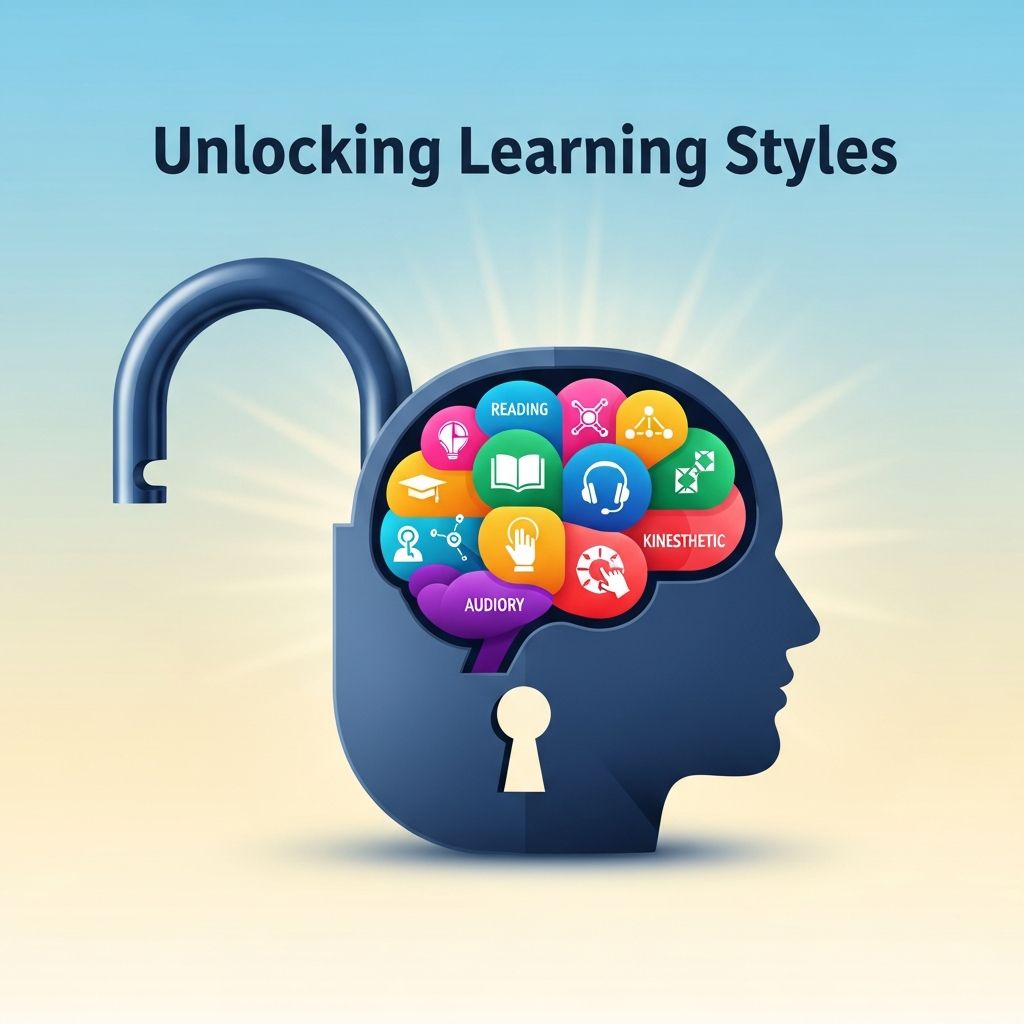
Learning styles represent the unique ways individuals process, absorb, and retain new information. Recognizing these preferences allows students, educators, and professionals to tailor approaches for maximum efficiency and engagement. This article delves into prominent models, their core types, practical applications, and strategies to optimize learning outcomes.
Core Concepts of Learning Styles
At its essence, a learning style is an individual’s preferred sensory or cognitive mode for comprehending material. Theories like the VARK model categorize these into distinct groups, emphasizing that while most people blend styles, identifying a dominant one sharpens focus. Research indicates combinations often yield the best results, with auditory and kinesthetic modes prevalent among learners.
Cognitive elements, such as sequential versus global processing, further influence preferences. Sequential thinkers excel with linear steps, while global learners grasp overarching concepts first. Factors like attention span and memory also play roles in shaping effective methods.
The VARK Framework: A Foundational Model
Developed by Neil Fleming and expanded by others, the VARK model identifies four primary styles: Visual, Auditory, Read/Write, and Kinesthetic. This system provides actionable insights for diverse educational settings.
- Visual Learners: Thrive on images, diagrams, charts, and spatial representations to visualize connections. They benefit from color-coded notes and infographics.
- Auditory Learners: Absorb information through sound, excelling in lectures, discussions, and verbal repetition. Podcasts and group debates enhance their retention.
- Read/Write Learners: Prefer textual formats like lists, reports, and manuals. They excel at note-taking and summarizing in writing.
- Kinesthetic Learners: Learn via touch and movement, favoring hands-on tasks, experiments, and role-playing. Physical engagement cements concepts.
A 2014 study highlighted auditory and kinesthetic as most common, urging multimodal strategies.
Beyond VARK: Expanded Learning Typologies
While VARK dominates, other models offer deeper insights. Howard Gardner’s Multiple Intelligences theory inspires seven styles: Visual, Aural, Kinesthetic, Social, Solitary, Verbal, and Logical. These incorporate social dynamics and senses.
| Style | Key Traits | Optimal Methods |
|---|---|---|
| Social (Interpersonal) | Excels in groups, empathetic, notices moods | Debates, team projects, peer teaching |
| Solitary (Intrapersonal) | Independent, self-reflective, intuitive | Journaling, solo study, personal projects |
| Verbal | Strong in language, debates, writing | Discussions, storytelling, essays |
| Logical | Analytical, pattern-seeking | Puzzles, math problems, categorizing data |
Kolb’s Experiential Learning Theory proposes a cycle: Concrete Experience, Reflective Observation, Abstract Conceptualization, and Active Experimentation. It yields four styles—Accommodating, Assimilating, Diverging, Converging—stressing balanced engagement for optimal learning.
Characteristics and Identification Tips
Spotting Visual Preferences
Visual individuals often doodle, recall images vividly, and struggle with purely verbal instructions. They shine in subjects like geography or design. Test via quizzes asking preferred formats for new info.
Auditory Traits in Action
These learners hum tunes to memorize, excel in oral exams, and replay conversations mentally. They falter in silent reading-heavy environments.
Read/Write and Kinesthetic Profiles
Read/write fans highlight texts and rewrite notes extensively. Kinesthetics fidget, build models, and prefer field trips over lectures. Self-assessments like Fleming’s inventory help pinpoint styles.
Practical Strategies for Each Style
Tailoring methods boosts retention. Visuals use mind maps; auditives record lectures; read/write compile glossaries; kinesthetics simulate scenarios. Multimodal blending—pairing visuals with discussion—proves most effective.
- For Visuals: Convert text to flowcharts; watch educational videos.
- For Auditves: Join study groups; use text-to-speech tools.
- For Read/Write: Create bullet summaries; teach via essays.
- For Kinesthetics: Role-play history events; use lab kits.
In classrooms, educators mix media: projectors for visuals, talks for auditives, handouts for readers, activities for movers.
The Science and Debates Surrounding Learning Styles
Though popular, learning styles face scrutiny. A review in Journal of Postgraduate Medicine supports multimodal efficacy over rigid matching. Kolb emphasizes cycling through modes situationally. Evidence from cognitive psychology favors evidence-based techniques like spaced repetition over style-matching alone. Nonetheless, self-awareness aids metacognition, enhancing adaptability.
Applying Styles in Real-World Contexts
In workplaces, understanding styles informs training: visuals prefer slides, kinesthetics hands-on demos. Parents adapt home study—audio stories for auditory kids, building blocks for kinesthetics. Online platforms like Coursera offer style quizzes and customized paths.
Educators benefit from universal design: lessons incorporating all VARK elements ensure inclusivity. For instance, a biology class might use diagrams (visual), explanations (auditory), notes (read/write), and dissections (kinesthetic)[10].
Tools and Assessments for Self-Discovery
Free VARK questionnaires online reveal preferences quickly. Kolb’s Learning Style Inventory assesses experiential styles. Track habits: Do you sketch concepts or discuss them? Adjust accordingly for peak performance.
Frequently Asked Questions
Can learning styles change over time?
Yes, styles evolve with experience, age, or context. Multimodal flexibility is key.
Is matching teaching to styles scientifically proven?
Partial evidence supports awareness aiding strategies, but broad methods outperform rigid matching.
How do I identify my child’s learning style?
Observe reactions to activities: engagement with books vs. movement indicates read/write or kinesthetic.
Do all models like VARK and Kolb agree?
No, but they converge on sensory and experiential diversity.
What’s best for adult learners?
Self-paced multimodal courses blending preferences.
Empowering Lifelong Learning
Mastering learning styles unlocks potential across academics, careers, and hobbies. Experiment, reflect, and adapt—personalization drives success.
References
- Learning styles: definition, types and examples — Founderz. 2023. https://founderz.com/blog/learning-styles/
- Types of Learning Styles: The Value in Holistic Strategies — Southern New Hampshire University. 2024-10-15. https://www.snhu.edu/about-us/newsroom/education/types-of-learning-styles
- Learning styles — Wikipedia (citing primary models). 2026-04-01. https://en.wikipedia.org/wiki/Learning_styles
- What Are The 7 Different Learning Styles And Do They Work? — Avado Learning. 2023. https://www.avadolearning.com/blog/the-7-different-learning-styles-and-what-they-mean/
- 8 Types of Learning Styles | The Definitive Guide — Bahçeşehir University. 2024. https://bau.edu/blog/types-of-learning-styles/

- Integrated M.A. in Applied Linguistics, University of Hyderabad
- 5+ years in editorial, instructional, SEO, and research-based writing
Sneha is a relationships and lifestyle writer with a strong foundation in applied linguistics and certified training in relationship coaching. She brings over five years of writing experience to theskillvault, crafting thoughtful, research-driven content that empowers readers to build healthier relationships, boost emotional well-being, and embrace holistic living. Her writing and insights reflect the belief that beauty, happiness, and wellness…