
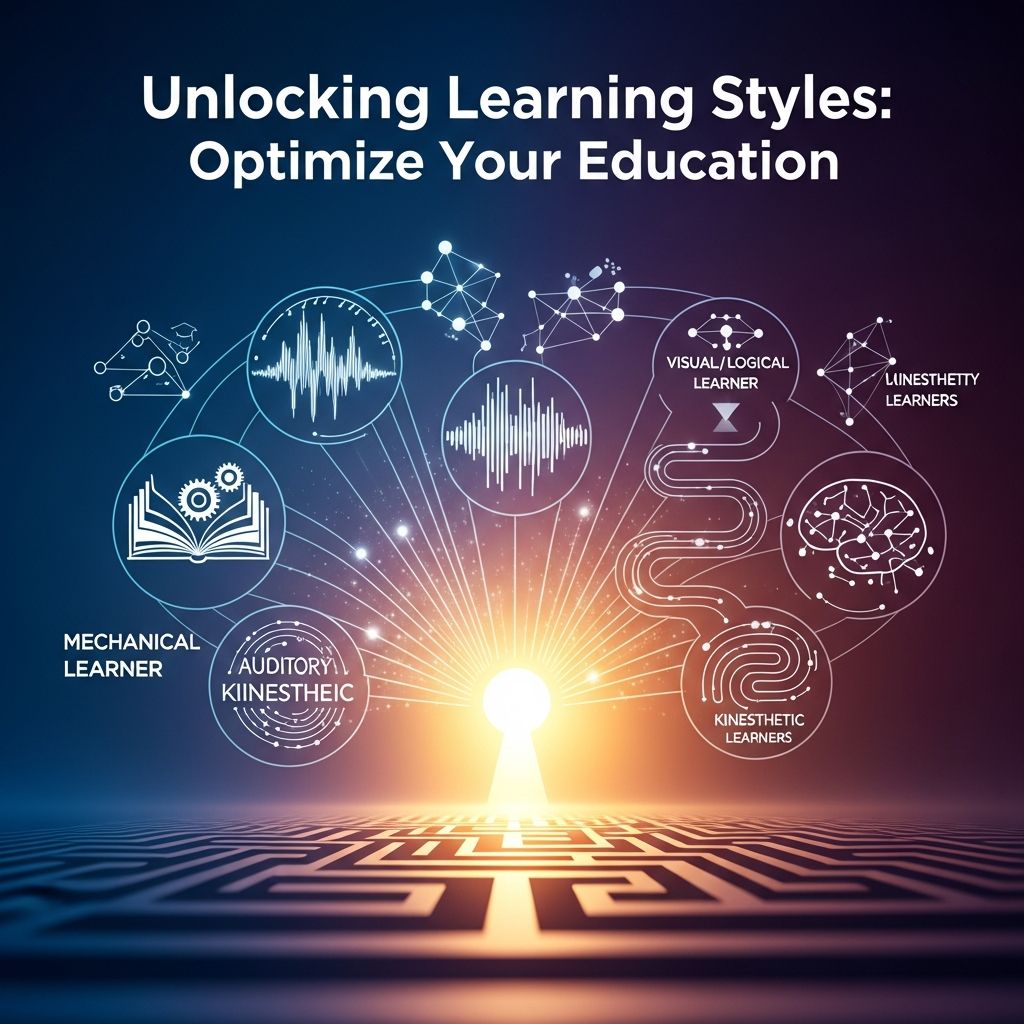
Understanding how individuals process and retain information is fundamental to effective education. Learning styles refer to the preferred methods through which people absorb, comprehend, and remember new knowledge. While traditional models categorize learners into distinct groups, modern research emphasizes flexibility and combination of approaches for optimal results. This article delves into the core concepts, practical applications, and evidence-based strategies to help educators and students alike harness these insights for improved outcomes.
Why Learning Styles Matter in Modern Education
Every classroom comprises diverse learners with unique preferences for engaging with material. Recognizing these differences allows teachers to design inclusive lessons that cater to multiple needs, fostering higher engagement and retention. Research indicates that aligning instruction with varied preferences not only boosts academic performance but also enhances motivation and confidence. For instance, students mismatched with teaching methods may exhibit lower participation or behavioral issues, underscoring the need for adaptive strategies.
In practice, incorporating a range of activities ensures no student is left behind. This holistic approach promotes equity, as it provides equal opportunities for success regardless of dominant style. Studies show that diverse instructional methods lead to better test scores and deeper understanding, particularly when students actively participate in their learning process.
Core Categories of Learning Styles
The most widely recognized framework is the VARK model, which identifies four primary modes: Visual, Aural/Auditory, Reading/Writing, and Kinesthetic. These categories help pinpoint how learners best interact with content, though most individuals blend multiple styles.
Visual Learners: Mastering Through Imagery
Visual learners thrive on graphical representations. They excel when information is presented via diagrams, charts, videos, and color-coded notes. Spatial awareness is key; mind maps and infographics help them organize complex ideas. To support them, educators can use slides with high-contrast visuals and symbolic representations rather than dense text.
- Preferred tools: Flowcharts, animations, photographs.
- Strengths: Excellent at recalling images and patterns.
- Challenges: May overlook purely verbal explanations.
Auditory Learners: Learning by Sound
Auditory learners absorb information best through listening. Lectures, podcasts, group discussions, and mnemonic rhymes suit them perfectly. They often verbalize concepts to reinforce memory and benefit from rhythmic or musical elements.
- Preferred activities: Debates, audio recordings, verbal explanations.
- Strengths: Strong listening skills and verbal communication.
- Challenges: Difficulty focusing in visually cluttered environments.
Reading/Writing Learners: Power of Text
These learners prefer written words. Textbooks, lists, reports, and note-taking are their domain. They excel at summarizing in essays and benefit from structured written feedback.
- Preferred methods: Bullet points, dictionaries, written assignments.
- Strengths: Superior comprehension of written instructions.
- Challenges: Struggle with abstract or non-textual content.
Kinesthetic Learners: Hands-On Mastery
Kinesthetic learners need physical involvement. Building models, role-playing, lab experiments, and movement-based tasks engage them fully. They connect concepts through touch and action.
- Preferred experiences: Simulations, field trips, crafting.
- Strengths: Problem-solving via manipulation.
- Challenges: Restlessness in sedentary settings.
Multimodal Learning: The Power of Combination
Rather than rigid categories, most people exhibit multimodal preferences, blending styles for comprehensive learning. A 2014 study found auditory and kinesthetic modes most prevalent, with visual least common among participants. Educators should vary activities to develop underutilized styles, creating adaptable learners.
| Style Combination | Example Strategies | Benefits |
|---|---|---|
| Visual + Kinesthetic | Interactive diagrams, model-building | Enhanced retention through sight and touch |
| Auditory + Reading/Writing | Listen and note-take podcasts | Reinforced via hearing and documentation |
| All Four (Multimodal) | Project-based lessons with media | Comprehensive engagement, flexibility |
This table illustrates how blending styles maximizes effectiveness. Instructors who diversify methods report improved performance across the board.
Practical Strategies for Educators
To implement learning styles effectively, teachers can assess student preferences using inventories like VARK questionnaires or Kolb’s model. These tools reveal dominant modes without labeling students rigidly.
Key tactics include:
- Diverse Lesson Plans: Rotate formats—start with a video (visual), discuss (auditory), write summaries (reading/writing), and apply hands-on (kinesthetic).
- Flexible Environments: Offer quiet zones for reading/writing and active spaces for kinesthetic tasks.
- Technology Integration: Use apps for interactive simulations and audio resources.
- Group Dynamics: Form mixed-style teams to leverage collective strengths.
Project-based learning exemplifies this: students tackle real-world problems using preferred methods, leading to significant gains in critical thinking.
Student Self-Assessment and Growth
Learners benefit from self-discovery. Encourage quizzes to identify styles, then experiment with new ones. A growth mindset—believing abilities improve with effort—complements this, empowering students to expand their repertoire.
Techniques for students:
- Create personalized study guides matching your style.
- Combine methods: Visualize notes while discussing aloud.
- Track progress to refine approaches.
Debunking Myths: Evidence Over Assumptions
The notion of fixed ‘learning styles’ where matching style to content guarantees better outcomes lacks robust evidence. Preferences exist, but no substantial proof shows style-specific teaching superior. Instead, varied instruction works because it engages multiple pathways universally.
Focus on evidence-based practices: active recall, spaced repetition, and multimodal exposure outperform style-matching alone. This shift promotes flexible, resilient learners.
Frequently Asked Questions (FAQs)
What is the VARK learning model?
The VARK model categorizes learning into Visual, Aural, Reading/Writing, and Kinesthetic preferences, helping tailor education to individual strengths.
Can learning styles change over time?
Yes, styles are not fixed; they evolve with experience and can be developed through varied practice.
Is it better to match teaching to one style?
No, multimodal approaches yield better results by accommodating preferences and building versatility.
How do I identify my learning style?
Take a VARK questionnaire or reflect on effective past study methods.
Do learning styles affect academic performance?
Indirectly yes—through adaptive strategies that boost engagement and retention.
Advanced Frameworks Beyond VARK
While VARK is foundational, other models enrich understanding. Kolb’s experiential cycle emphasizes concrete experience, reflection, conceptualization, and experimentation—ideal for kinesthetic growth. Myers-Briggs ties personality to cognitive preferences, aiding personalized planning.
Appreciative inquiry builds on strengths, using storytelling to foster metacognition (learning about learning). Cultivating a growth mindset counters fixed beliefs, encouraging persistence.
Challenges and Solutions in Implementation
Large classes pose logistical hurdles, but scalable solutions exist: digital platforms deliver mixed media, flipped classrooms allow self-paced style-matching. Teacher training is crucial—professional development on these topics enhances efficacy.
Addressing myths prevents wasted effort; prioritize evidence like studies showing heuristic strategies improve math skills via alternative paths.
Future Directions in Learning Style Research
Ongoing studies explore neuroscience, revealing brain plasticity supports style development. AI tools now customize content dynamically, promising personalized education at scale. As research evolves, emphasis remains on inclusive, flexible methods over rigid categories.
References
- Types of Learning Styles: The Value in Holistic Strategies — Southern New Hampshire University (SNHU). 2023-10-15. https://www.snhu.edu/about-us/newsroom/education/types-of-learning-styles
- Discover Your Learning Style: The Definitive Guide — Education Corner. 2023-01-01. https://www.educationcorner.com/learning-styles/
- Understanding Learning Styles in Education — Tulane University. 2024-02-20. https://masterofed-sopa.tulane.edu/articles/learning-styles-in-education/
- Exploring The 4 Most Common Learning Styles — Washington Technology Institute. 2023-05-10. https://www.washingtontech.edu/the-science-of-learning-exploring-the-4-most-common-learning-styles/
- Accommodating students’ learning styles differences in English — PMC (PubMed Central). 2023-07-12. https://pmc.ncbi.nlm.nih.gov/articles/PMC10319179/
- The lingering ‘learning styles’ myth — Evidence Based Education. 2024-01-08. https://evidencebased.education/resource/the-lingering-learning-styles-myth/

Medha Deb is an editor with a master's degree in Applied Linguistics from the University of Hyderabad. She believes that her qualification has helped her develop a deep understanding of language and its application in various contexts. Medha specializes in the areas of beauty, health, sports, and wellness and is committed to ensuring that the content on the website is…