
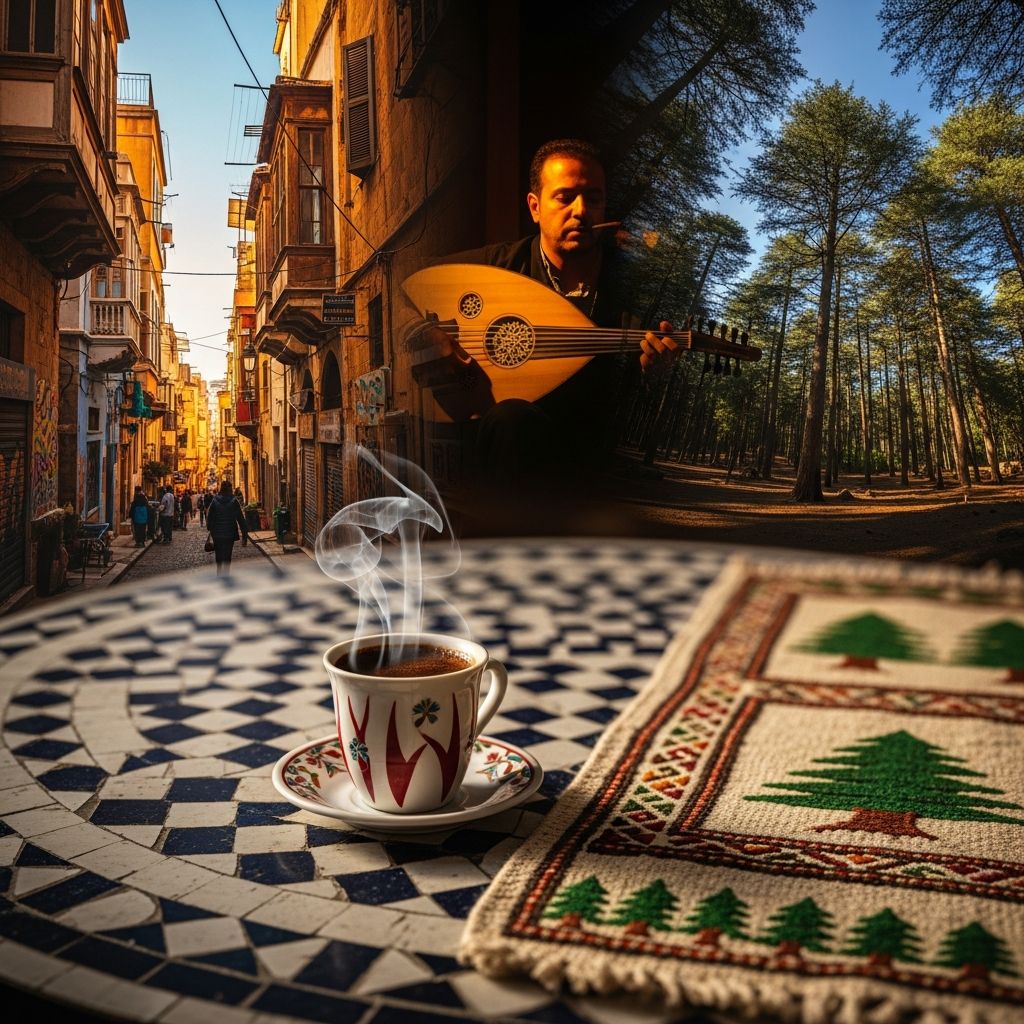
Lebanon is often described as a meeting point of worlds: Mediterranean and Middle Eastern, ancient and modern, tradition and experiment. This blend does not only appear in architecture, cuisine, or politics; it also shapes the way people think, relate, and see themselves. Looking at Lebanon through a personality-focused lens highlights how history, diversity, and daily pressures influence the way Lebanese people work, socialize, and imagine their future.
1. A Land of Contrasts: Setting the Scene
To understand common Lebanese attitudes and behaviors, it helps to start with the country’s unique context. Lebanon’s small territory hugs the eastern Mediterranean, with coastal cities, mountain villages, and fertile valleys only short drives apart. Over centuries, it has seen Phoenician traders, Roman builders, Arab empires, Crusaders, Ottoman administrators, and French rulers, each leaving traces on language, institutions, and cultural habits.
Today, Lebanese society is marked by:
- Religious diversity, with major Muslim (Sunni and Shi‘i) and Christian (especially Maronite, Greek Orthodox, and other communities) populations, as well as Druze and smaller groups.
- Urban–rural contrasts between cosmopolitan cities like Beirut and more conservative small towns or villages.
- A large global diaspora whose members maintain family ties, send remittances, and influence ideas and aspirations inside the country.
- Persistent economic and political volatility, which encourages both adaptability and caution in everyday decision-making.
This environment creates powerful incentives to be socially astute, resilient, and skilled at navigating difference—traits that strongly color Lebanese personality on the collective level.
2. Core Social Values and Everyday Priorities
Although Lebanese people differ widely as individuals, certain social values consistently surface in research, official descriptions, and everyday observations.
2.1 Family, Kinship, and the Extended Network
Family is often at the center of Lebanese life, shaping practical choices, emotional loyalties, and social identity.
- Extended families usually stay closely involved in major life events such as education, career steps, marriage, and migration.
- Elders typically receive strong respect and often hold considerable influence in resolving disputes or guiding decisions.
- Neighbors, cousins, and family friends form a wider network that can provide support, opportunities, and also social pressure.
People who grow up in this environment often develop a keen sense of relational awareness—reading moods, negotiating expectations, and preserving harmony within a dense web of relationships.
2.2 Hospitality and Social Warmth
Hospitality is not just a custom in Lebanon; it is closely linked to personal dignity and family reputation.
- Guests are typically offered coffee, sweets, and sometimes full meals, even on short notice.
- Refusing an invitation or a generous offering may be interpreted as distance or discomfort unless carefully explained.
- Spontaneous visits and long conversations around the table or “sofra” remain common in many communities.
These norms favor personality traits such as sociability, expressive communication, and comfort with frequent interaction. Even more introverted individuals often learn to navigate large gatherings and family events as part of everyday life.
2.3 Respect, Honor, and Social Image
Concepts of honor, reputation, and respect intersect with religion, family, and local tradition. In such a setting:
- Public behavior is carefully watched and interpreted, especially in smaller communities.
- Modesty in dress or conduct may carry different meanings depending on region, religion, and generation.
- Conflict is often handled indirectly to avoid public embarrassment; private mediation through elders or respected figures is common.
This encourages emotional self-control in some contexts and high emotional expressiveness in others—for instance, during celebrations or protests—resulting in a flexible but complex social style.
3. Communication Styles: Between Directness and Diplomacy
Lebanese communication is shaped by multilingualism, high-context social norms, and the need to negotiate sensitive issues within a diverse society.
3.1 Languages and Code-Switching
Arabic is the official language, while French and English are widely used in education, business, and everyday conversation. Many Lebanese people switch between languages within a single discussion, choosing whichever seems most precise, polite, or expressive at the moment.
| Language | Common Contexts | Personality Implications |
|---|---|---|
| Lebanese Arabic | Home, street, media, casual conversation | Facilitates emotional expressiveness and cultural nuance |
| French | Some schools, older legal and cultural contexts | Associated with formality, prestige, and tradition |
| English | Business, technology, higher education, youth culture | Linked to modernity, global engagement, and innovation |
This linguistic diversity encourages cognitive flexibility and situational awareness—switching codes to adapt to the audience, an ability that often extends beyond language into broader social behavior.
3.2 Indirectness and Reading Between the Lines
In many Lebanese settings, people rely heavily on tone, body language, and context to interpret meaning.
- Direct refusals may be softened or delayed to protect relationships.
- Compliments, polite exaggerations, and ritual phrases are used to affirm respect and goodwill.
- Humor and storytelling help broach sensitive topics or critique authority indirectly.
These habits encourage a strong capacity for empathy and social intuition but can also make communication challenging for people used to strict directness.
4. Work, Ambition, and Adaptability
Lebanon’s economic and political shifts have made adaptability a necessary survival skill. Many Lebanese people grow up expecting that they may need to change jobs, move abroad, or combine multiple income sources at some point in life.
4.1 Education and Drive
Education is widely valued as a path to mobility, both inside Lebanon and abroad.
- Parents often invest heavily in schooling and university degrees, even under financial strain.
- Multilingual education—especially in Arabic, French, and English—is common, equipping graduates for regional and international opportunities.
- Professional fields such as medicine, engineering, business, and design attract many ambitious students.
This environment tends to reward traits such as perseverance, pragmatism, and a willingness to juggle several projects at once.
4.2 Entrepreneurship and Informal Problem-Solving
Chronic uncertainty has also fostered a culture of improvisation and entrepreneurship.
- Small businesses, family enterprises, and freelance work are widespread.
- Resourcefulness—finding creative solutions with limited means—is often admired.
- Personal networks may be as important as formal institutions when seeking jobs, suppliers, or investors.
These conditions often bring out initiative and boldness, while also reinforcing the importance of trust and loyalty in professional relationships.
5. Tradition, Religion, and Everyday Spirituality
Religion strongly influences public holidays, family customs, and moral debates but it is practiced in diverse ways across regions and generations.
5.1 Religious Pluralism in Daily Life
Lebanon officially recognizes numerous religious communities, and both Christian and Muslim holidays are national events.
- Major Muslim celebrations include Eid al-Fitr, Eid al-Adha, and other occasions tied to the Islamic lunar calendar.
- Christian groups celebrate feasts such as Christmas and Easter, sometimes on different calendar dates depending on denomination.
- National holidays like Independence Day sit alongside religious feasts, reinforcing a shared civic identity.
Living with such pluralism often pushes individuals to refine their own beliefs and boundaries while learning to coexist with neighbors who observe different rituals.
5.2 Balancing Modernity and Tradition
Debates about gender roles, dress codes, personal freedom, and family responsibilities appear across Lebanese media and social discussions.
- In large cities, many people adopt cosmopolitan lifestyles, modern fashion, and global cultural trends.
- In rural areas, customs may remain more conservative, with stronger emphasis on modesty and clearly defined social roles.
- Young people frequently negotiate between personal aspirations and expectations from parents or religious authorities.
This tension can produce internal conflict but also fuels a dynamic public conversation about identity and change, particularly among the youth.
6. Food, Festivities, and Shared Joy
Lebanese culture is famous internationally for its food, festivals, and nightlife, all of which contribute to a strong orientation toward social connection and enjoyment.
6.1 Cuisine as Social Glue
Meals in Lebanon are often communal experiences rather than quick refueling stops.
- Typical gatherings feature multiple small dishes—salads, dips, grilled meats—shared across the table.
- National dishes often mentioned include kibbeh (a mix of meat and bulgur) and tabbouleh (a parsley-based salad), along with a rich variety of mezze.
- Desserts such as baklava-like pastries and fragrant puddings commonly appear at celebrations and family visits.
- Arak, an anise-flavored spirit, is considered a national drink and frequently accompanies extended meals.
The centrality of shared food reinforces group-oriented habits and offers a space for storytelling, negotiation, and emotional exchange.
6.2 Festivals, Music, and Dance
Lebanon hosts numerous cultural and music festivals, some staged in ancient ruins or historic sites.
- Events draw both local and international performers, sustaining a lively arts scene.
- Traditional instruments such as the oud and percussion coexist with contemporary pop and fusion styles.
- Group dances like dabke are common at weddings and celebrations, emphasizing teamwork and collective rhythm.
These settings encourage expressive personalities, openness to cultural experimentation, and strong emotional bonds rooted in shared experiences.
7. Challenges, Resilience, and Future Outlook
Lebanon has faced wars, displacement, economic crises, and institutional fragility, yet many Lebanese continue to emphasize humor, creativity, and solidarity in daily life.
7.1 Psychological Demands of Uncertainty
Living with frequent change can affect personality and mental health in complex ways.
- Some people become highly future-focused and mobile, ready to move countries or careers if needed.
- Others take a more present-focused approach, prioritizing family time, hospitality, and immediate joys.
- Community and religious networks often provide emotional and practical support when formal systems fail.
These conditions may increase anxiety and stress for some, but they also build a collective narrative of endurance and shared struggle.
7.2 Youth, Creativity, and the Global Stage
Lebanese youth in particular are navigating a world where opportunities may lie both at home and abroad.
- Many engage with global trends in technology, design, and entrepreneurship.
- Art, music, and digital media offer outlets for expressing frustration, identity, and hope.
- Members of the diaspora frequently play roles as mentors, investors, or connectors between Lebanon and other countries.
The resulting mindset often combines realism about current conditions with a desire to keep doors open, learn new skills, and maintain strong emotional ties to home.
8. Frequently Asked Questions (FAQs)
Q1: Are Lebanese people generally more extroverted or introverted?
Personality varies widely, but social expectations in Lebanon strongly favor sociability—hosting guests, attending gatherings, and staying closely involved with extended family. Even those who are naturally introverted often learn to adapt to frequent social interaction.
Q2: How important is religion for everyday Lebanese life?
Religion is institutionally and culturally significant in Lebanon, shaping holidays, family rituals, and aspects of personal identity. However, personal levels of religious observance range from highly devout to largely secular, especially among urban youth.
Q3: Do all Lebanese people speak multiple languages?
Not everyone is fully fluent in several languages, but many Lebanese have at least some exposure to Arabic, French, and English due to schooling, media, and business needs. Code-switching between languages in daily conversation is common.
Q4: Is it easy for foreigners to adapt to Lebanese social life?
Foreigners often find Lebanese hospitality and warmth welcoming, but they may need time to adjust to dense social networks, indirect communication styles, and the importance of family expectations. Learning a few key phrases in Lebanese Arabic and showing respect for local customs greatly helps integration.
Q5: How does Lebanon’s diaspora influence personality and culture at home?
The diaspora sends remittances, ideas, and cultural influences back to Lebanon, shaping aspirations around education, careers, and migration. Many families have members abroad, which normalizes international mobility and fosters a mindset that balances local belonging with global horizons.
References
- Lebanon — Encyclopaedia Britannica. 2024-01-05. https://www.britannica.com/place/Lebanon
- Culture of Lebanon — (Encyclopedic overview). 2023-07-10. https://en.wikipedia.org/wiki/Culture_of_Lebanon
- Lebanon – Language, Culture, Customs and Etiquette — Commisceo Global. 2022-06-15. https://commisceo-global.com/country-guides/lebanon-guide
- Lebanon Culture and Customs — RJ Travel. 2025-02-01. https://www.rjtravelagency.com/lebanon-culture/
- Culture of Lebanon — AFS-USA. 2021-09-01. https://www.afsusa.org/countries/lebanon/
- History and Culture — Embassy of Lebanon in the United States. 2020-03-10. https://www.lebanonembassyus.org/the-country-of-lebanon/history-and-culture/

- Integrated M.A. in Applied Linguistics, University of Hyderabad
- 5+ years in editorial, instructional, SEO, and research-based writing
Sneha is a relationships and lifestyle writer with a strong foundation in applied linguistics and certified training in relationship coaching. She brings over five years of writing experience to theskillvault, crafting thoughtful, research-driven content that empowers readers to build healthier relationships, boost emotional well-being, and embrace holistic living. Her writing and insights reflect the belief that beauty, happiness, and wellness…