
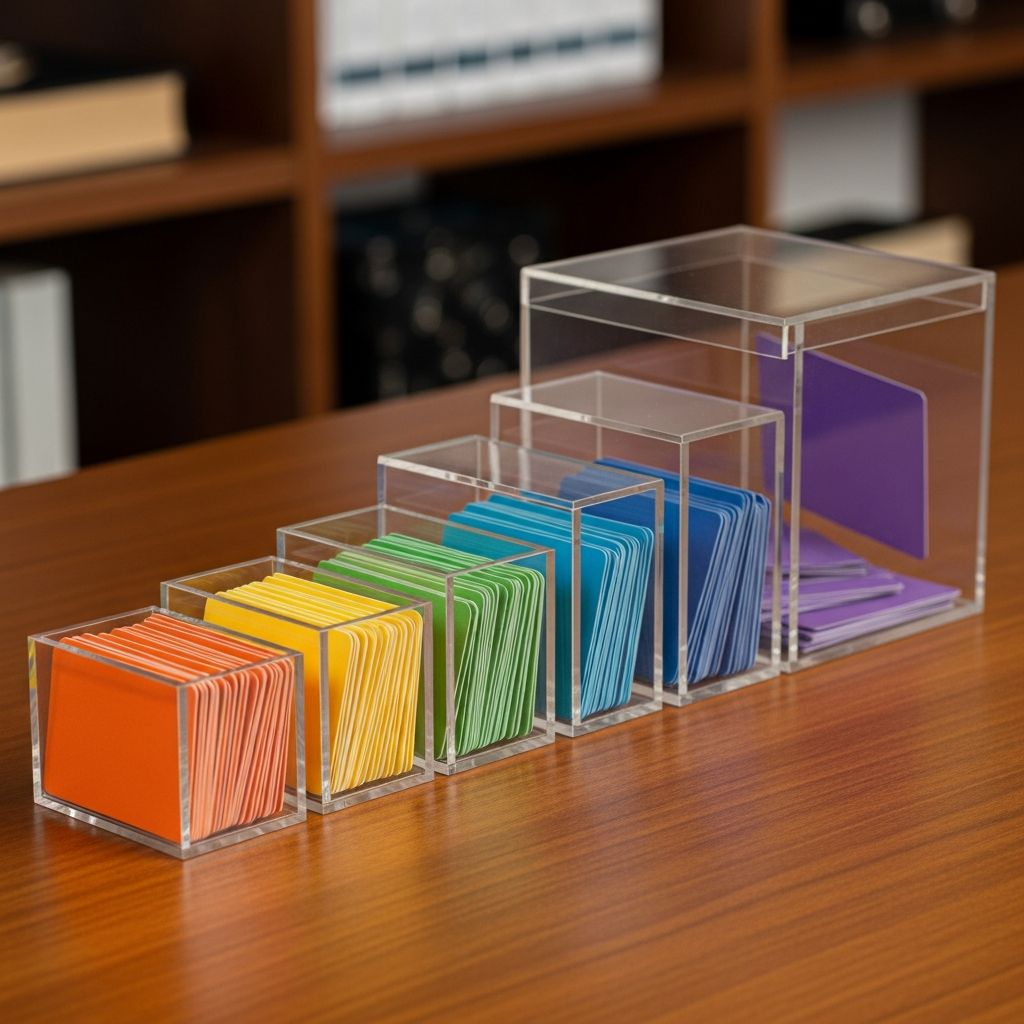
The Leitner System revolutionizes how students and lifelong learners approach memorization by leveraging spaced repetition to target knowledge gaps efficiently. Developed by German science journalist Sebastian Leitner in the 1970s, this method organizes flashcards into boxes based on mastery levels, ensuring frequent review of difficult concepts while spacing out reviews for well-known ones.
Understanding the Foundations of Spaced Repetition
At its core, the Leitner System builds on the psychological principle of spaced repetition, where information is reviewed at increasing intervals to strengthen memory retention. Unlike cramming, which leads to rapid forgetting, spaced repetition aligns with how the brain consolidates long-term memories through repeated activation of neural pathways.
This technique capitalizes on the spacing effect, a well-documented phenomenon where distributed practice outperforms massed practice. By reviewing material just as you’re about to forget it, the system reinforces recall without wasting time on overlearned items.
Core Principles Driving the Leitner Method
- Active Recall: Testing yourself with flashcards prompts retrieval from memory, which is more effective than passive rereading for building durable knowledge.
- Adaptive Scheduling: Flashcards move between boxes based on performance, automatically adjusting review frequency to your needs.
- Efficiency Focus: Time is allocated primarily to challenging items, minimizing redundant effort on mastered content.
These principles ensure that study sessions become progressively more productive, turning rote memorization into strategic learning.
Step-by-Step Guide to Implementing the Leitner System
Setting up the Leitner System requires minimal materials: flashcards (physical or digital) and 4-6 boxes or compartments labeled by review frequency. Here’s how to get started.
Step 1: Craft High-Quality Flashcards
Begin by creating flashcards that cover key concepts from your subject. Place a clear question or prompt on the front and a concise answer or explanation on the back. Phrase questions to demand active thinking, such as “Define photosynthesis and list its key stages” rather than simple terms.
- Use visuals or mnemonics where possible for complex topics.
- Limit to one idea per card to avoid overload.
- Aim for 50-100 cards initially, expanding as needed.
Step 2: Organize Your Boxes
Label boxes with increasing review intervals:
| Box | Review Frequency | Purpose |
|---|---|---|
| Box 1 | Daily | New or difficult cards |
| Box 2 | Every 2 days | Moderately familiar |
| Box 3 | Every 4 days | Good progress |
| Box 4 | Weekly | Strong recall |
| Box 5 | Bi-weekly | Mastered (maintenance) |
All new cards start in Box 1. Digital apps can simulate boxes with algorithms.
Step 3: Conduct Review Sessions
- Start with Box 1: Review all cards daily.
- Correct answer: Move forward one box.
- Incorrect answer: Return to Box 1.
- Progress to next boxes only after completing prior ones.
- For higher boxes, review on schedule; errors send cards back.
Each session should last 20-45 minutes to maintain focus. Track progress by noting box distributions weekly.
Sample Weekly Schedule for Optimal Results
A structured timetable maximizes the system’s benefits, especially for exams 2+ months away.
- Monday: Boxes 1-2
- Tuesday: Boxes 1, 3
- Wednesday: Boxes 1-2
- Thursday: Boxes 1, 4
- Friday: Boxes 1-3
- Weekend: Boxes 1, 5 + new cards
Adjust based on your pace, ensuring consistent daily engagement with Box 1.
Real-World Applications Across Disciplines
The Leitner System excels in fields requiring factual recall and conceptual understanding.
Language Learning
For vocabulary and grammar, cards with example sentences promote contextual recall. Review daily for immersion-like retention.
Medical and Science Students
Anatomy terms, drug interactions, or chemical formulas benefit from precise Q&A cards. Medical educators endorse spaced repetition for certification exams.
Professional Certifications
IT certifications like CompTIA or CPA reviews use Leitner to handle thousands of terms efficiently.
In history or law, use for dates, cases, and definitions, layering complexity across boxes.
Digital Tools to Enhance the Leitner Experience
While physical boxes offer tactile feedback, apps automate the process:
- Anki: Customizable spaced repetition software with Leitner-like algorithms.
- Quizlet: Flashcard platform with progress tracking.
- GoodNotes: Digital notebooks for handwritten cards with box organization.
These tools sync across devices, add multimedia, and provide analytics on retention rates.
Benefits That Transform Your Study Routine
Users report significant gains:
- Time Savings: Up to 50% less study time by skipping easy material.
- Motivation Boost: Visible progress as cards advance boxes builds confidence.
- Long-Term Retention: Spaced reviews combat the forgetting curve.
- Personalization: Adapts to individual strengths and weaknesses.
Potential Challenges and Proven Solutions
No method is flawless; address common hurdles proactively.
| Challenge | Solution |
|---|---|
| Large initial card deck overwhelms | Chunk into subjects; add 20-30 new cards weekly. |
| Inconsistent scheduling | Calendar reminders; study in fixed daily slots. |
| Subjective ‘correct’ judgments | Use strict criteria: full recall without hints. |
| Not for last-minute prep | Pair with active recall for short-term boosts. |
Start small to build habit, scaling up over weeks.
Scientific Backing for Superior Outcomes
Research validates Leitner’s efficacy. Studies on spaced repetition show 200% improvement in retention over massed practice. Active recall strengthens memory traces, as neural reactivation cements pathways. For test prep, it reduces review time while increasing accuracy, ideal for high-stakes exams.
Advanced Strategies for Power Users
- Layered Cards: Create follow-up cards for mastered ones with deeper questions.
- Group Reviews: Combine boxes periodically for holistic testing.
- Metrics Tracking: Log success rates; retire Box 5 cards after 3 perfect cycles.
- Integration: Pair with Feynman Technique—explain cards aloud.
Frequently Asked Questions (FAQs)
What is the ideal number of boxes in the Leitner System?
Four to six boxes work best, balancing detail with simplicity. Fewer for beginners; more for extensive material.
Can I use the Leitner System digitally?
Yes, apps like Anki implement Leitner algorithms automatically, handling scheduling and stats seamlessly.
How long until I see results?
Progress is noticeable in 1-2 weeks with daily use; full benefits emerge over 4-6 weeks.
Is it suitable for all subjects?
Best for factual and procedural knowledge; supplement with practice problems for skills-based topics.
What if I miss a review session?
Resume immediately without penalty—prioritize Box 1. Consistency trumps perfection.
Start Your Leitner Journey Today
Implement the Leitner System to study smarter, not harder. Its blend of science-backed principles and practical design makes it a cornerstone for academic and professional success. Dedicate time now for effortless recall later.
References
- How To Use the Leitner System for Studying — Pocket Prep. 2023-05-15. https://www.pocketprep.com/posts/how-to-use-the-leitner-system-for-studying/
- The Leitner System: How Does it Work? — MindEdge. 2024-02-10. https://mindedge.com/learning-theory/the-leitner-system-how-does-it-work/
- Revamp Your Revision with the Leitner System — Lecturio. 2023-11-20. https://www.lecturio.com/blog/revamp-your-revision-with-the-leitner-system/
- Leitner System — Kansas State University Academic Assistance Center. 2022-08-01. https://www.k-state.edu/aac/success-tools/collection/leitner_system.html
- Leitner System for Flashcards — Mometrix Academy. 2024-01-12. https://www.mometrix.com/academy/leitner-study-method/

- Integrated M.A. in Applied Linguistics, University of Hyderabad
- 5+ years in editorial, instructional, SEO, and research-based writing
Sneha is a relationships and lifestyle writer with a strong foundation in applied linguistics and certified training in relationship coaching. She brings over five years of writing experience to theskillvault, crafting thoughtful, research-driven content that empowers readers to build healthier relationships, boost emotional well-being, and embrace holistic living. Her writing and insights reflect the belief that beauty, happiness, and wellness…