
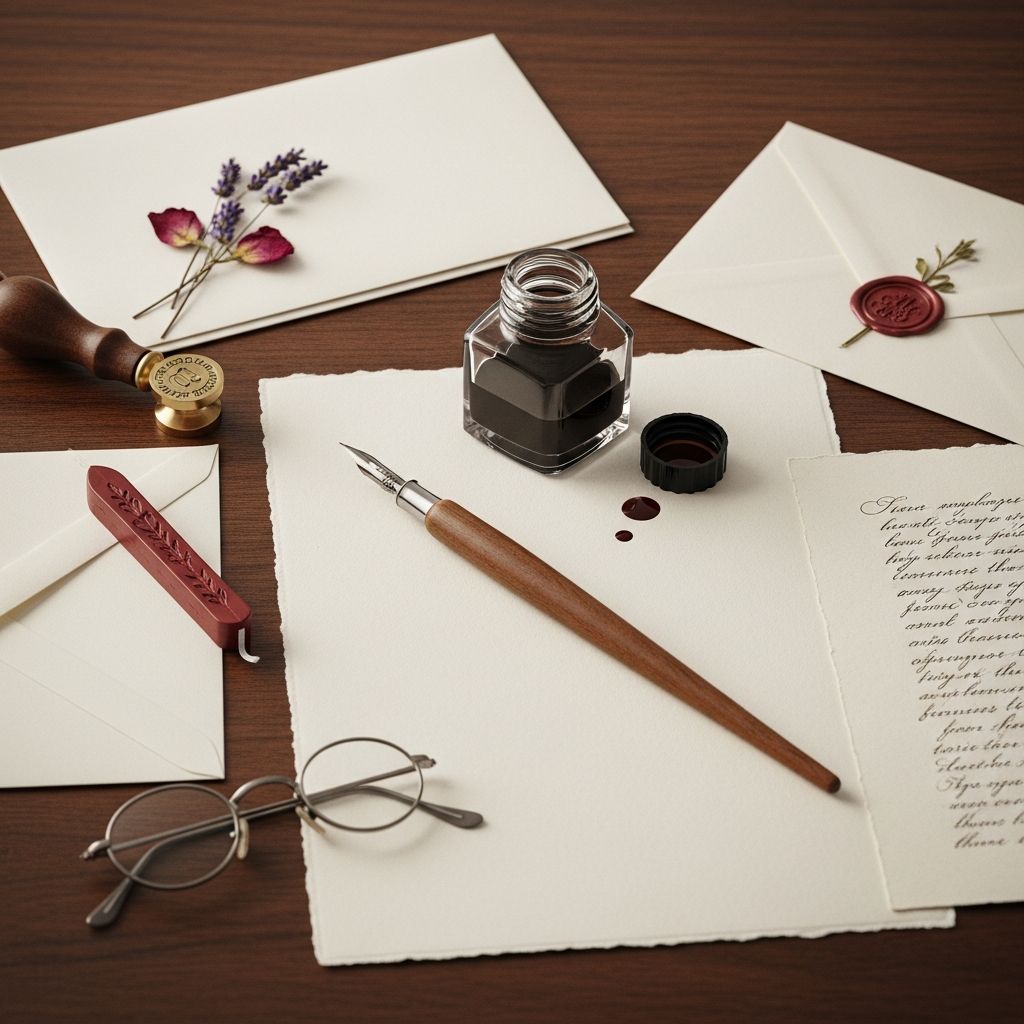
Letter writing stands as a cornerstone of human communication, bridging distances and preserving thoughts across time. Despite the dominance of digital messaging, letters retain unique value for their thoughtfulness and permanence.
The Enduring Legacy of Letters in Human History
Letters have served as vital conduits for information since ancient civilizations. Evidence traces written correspondence back to 500 BCE, with earlier forms on clay tablets facilitating trade and diplomacy. In classical eras, figures like Cicero and Seneca elevated letter writing to an art form, blending personal reflection with philosophical discourse.
During the Renaissance and Enlightenment, epistolary exchanges fueled intellectual movements. Benjamin Franklin, a prolific correspondent, relied on letters to advance science and politics, even authoring guides on the craft. The 19th century saw letters boom with postal expansions, enabling personal stories and official records that now enrich historical archives.
In the 20th century, world wars amplified letters’ role, as soldiers’ missives home captured raw emotions and events. Today, amid emails and texts, physical letters evoke authenticity, fostering deeper connections in an ephemeral digital landscape.
Core Components of Every Effective Letter
Regardless of purpose, letters share fundamental elements ensuring clarity and professionalism. These include the sender’s address and date, recipient’s address, salutation, body, complimentary close, and signature.
- Date and Place: Positioned top-right, it contextualizes the letter (e.g., “New York, NY, April 5, 2026”).
- Salutation: Tailored to tone—”Dear Dr. Smith,” for formal; “Hi Alex,” for casual.
- Body: The core message, structured in paragraphs for readability.
- Closing: Phrases like “Sincerely” or “Best regards” signal end.
- Signature: Handwritten for authenticity, often with typed name below.
Formatting options include block style (all left-aligned) or modified block (indented paragraphs), both promoting neatness.
Navigating Formal and Informal Letter Styles
Letters adapt to context: formal for authority, informal for intimacy. Formal letters demand concise language, proper titles, and error-free prose, ideal for official matters.
Informal letters embrace personality, with contractions, emojis in modern variants, and free-flowing narratives. They prioritize warmth over rigidity, perfect for friends or family.
| Aspect | Formal Letters | Informal Letters |
|---|---|---|
| Tone | Professional, objective | Conversational, personal |
| Salutation | “Dear Ms. Johnson,” | “Hey buddy,” |
| Structure | Strict paragraphs, no slang | Flexible, anecdotes |
| Closing | “Yours sincerely,” | “Love,” or “Cheers,” |
Essential Types of Letters for Everyday Use
Letters categorize by intent: inquiry, informational, business, legal, and personal. Each serves distinct needs.
Inquiry and Request Letters
These seek information or action, like job inquiries or product details. Start with purpose, provide context, and end with clear calls-to-action.
Informational and Thank-You Letters
Convey updates, gratitude, or details. Thank-you notes, post-interview or gift, reinforce relationships.
Business and Cover Letters
Critical for careers, cover letters highlight skills and fit (e.g., “My project management experience aligns with your team’s goals.”). Resignation or offer letters formalize transitions.
Complaint and Resolution Letters
Address issues calmly: state facts, impacts, and solutions. “I appreciate your prompt attention to this matter.”
Legal Correspondence
Precise and authoritative, covering contracts or notices (e.g., debt reminders with deadlines).
Personal and Social Letters
Fostering bonds, these share life updates or condolences. Their tangibility outshines texts.
Practical Tips for Crafting Compelling Letters
Success hinges on preparation. Outline key points first, use active voice, and proofread meticulously. Personalize with specifics to engage readers.
- Know your audience: Match tone and depth.
- Be concise: Aim for 1/2 to one page.
- Use quality paper for physical letters.
- Digital adaptations: PDFs preserve formatting.
Incorporate storytelling for personal letters; data for business ones. Handwriting adds intimacy, boosting emotional impact.
Why Letters Thrive in the Digital Era
Emails fragment attention; letters demand focus, yielding richer exchanges. They combat digital fatigue, serving therapy-like reflection.
Professionally, letters stand out in applications, signaling dedication. Legally, they provide verifiable records. For education, they hone writing skills.
Reviving letter-writing builds mindfulness, strengthens ties, and creates heirlooms. Start small: pen a note to a friend today.
Frequently Asked Questions (FAQs)
What is the standard format for a business letter?
Use block style: sender’s address, date, recipient’s address, salutation, body, closing, signature. Keep it left-aligned with single spacing.
How do personal letters differ from emails?
Personal letters offer tangibility and depth, encouraging deliberate expression over hasty replies.
Are letters still relevant in 2026?
Yes, for formal, legal, and sentimental purposes, providing permanence emails lack.
What should a cover letter include?
Introduction, qualifications, company fit, and enthusiastic close. Tailor to the job.
How to write a complaint letter effectively?
Be factual, polite, specific about issues, and propose solutions.
References
- Letter Writing | Formats, Types & Examples — Study.com. 2023. https://study.com/academy/lesson/types-of-letter-writing.html
- Letter (message) — Wikipedia. 2023-10-15. https://en.wikipedia.org/wiki/Letter_(message)
- Letter Writing — Britannica Kids. 2023. https://kids.britannica.com/students/article/letter-writing/275444
- LETTERS for Kids ✉️ Characteristics and Elements Language Arts — Smile and Learn (YouTube). 2022-05-10. https://www.youtube.com/watch?v=0gBRKyl3V3I
- How to Begin a Letter-Writing Habit — School of the Unconformed. 2023-08-20. https://schooloftheunconformed.substack.com/p/how-to-begin-a-letter-writing-habit

- Integrated M.A. in Applied Linguistics, University of Hyderabad
- 5+ years in editorial, instructional, SEO, and research-based writing
Sneha is a relationships and lifestyle writer with a strong foundation in applied linguistics and certified training in relationship coaching. She brings over five years of writing experience to theskillvault, crafting thoughtful, research-driven content that empowers readers to build healthier relationships, boost emotional well-being, and embrace holistic living. Her writing and insights reflect the belief that beauty, happiness, and wellness…