
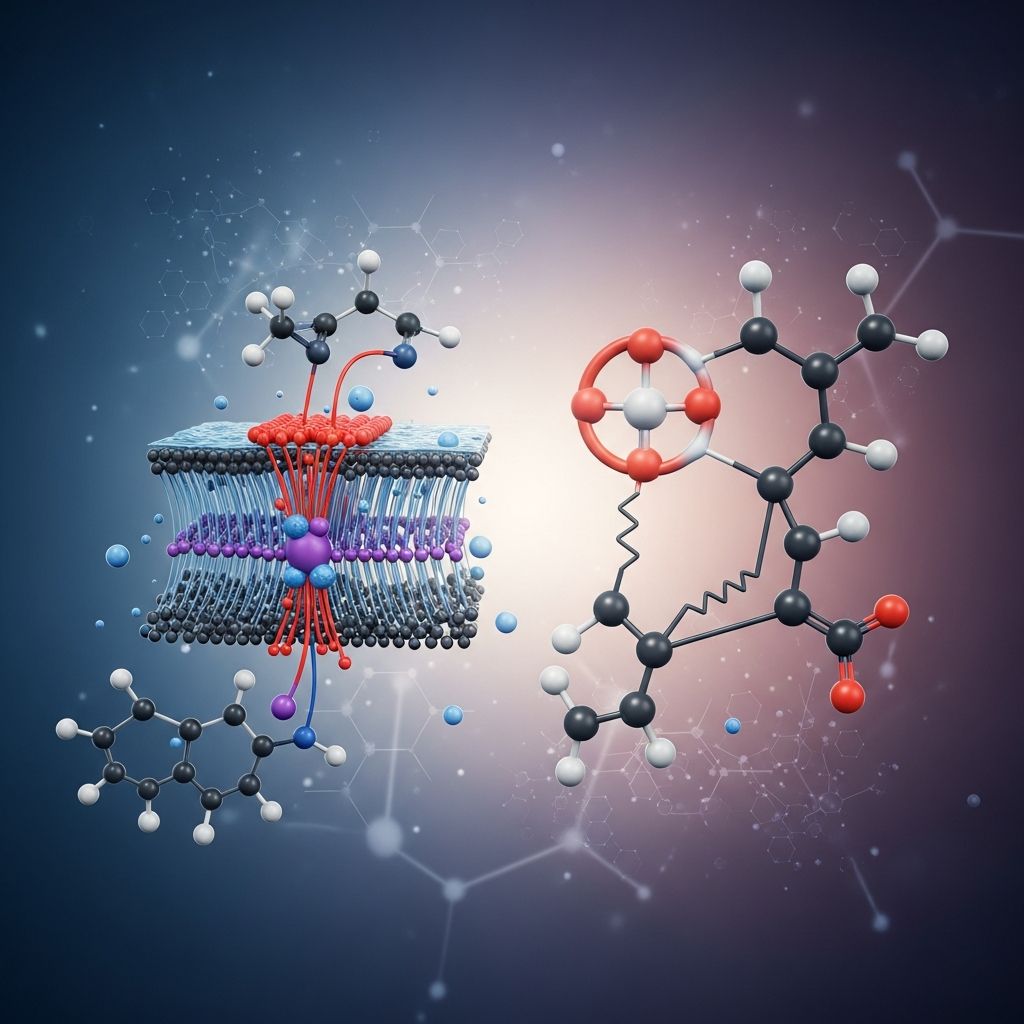
Lipids represent a fundamental class of biomolecules characterized by their hydrophobic nature and diverse structures, playing crucial roles in energy storage, cellular architecture, and signaling pathways. Unlike polar molecules, lipids primarily consist of hydrocarbon chains or rings, rendering them insoluble in water but essential for biological membranes and metabolic processes.
Defining Lipids and Their Core Characteristics
Lipids encompass a broad group of organic compounds that share the property of insolubility in water, distinguishing them from carbohydrates and proteins. They serve as efficient energy reservoirs, structural components of cell membranes, and precursors for hormones and vitamins. Major categories include triglycerides for energy, phospholipids and sphingolipids for membranes, and sterols for regulation.
Structurally, lipids feature long hydrocarbon tails that confer nonpolarity, often combined with polar heads in amphipathic molecules like phospholipids. This duality enables self-assembly into bilayers, vital for compartmentalizing cellular contents.
Energy Powerhouses: Triglycerides and Fatty Acids
Triglycerides, or triacylglycerols, dominate as the primary lipid form in adipose tissue and diet, comprising over 95% of dietary lipids. Each molecule consists of a glycerol backbone esterified to three fatty acid chains, providing compact, high-energy storage—twice the caloric density of carbohydrates.
Fatty acids vary by saturation: saturated types feature straight chains with no double bonds (e.g., palmitic acid in palm oil), solid at room temperature; unsaturated ones have cis double bonds, creating kinks for fluidity (e.g., oleic acid in olive oil). Essential omega-3 (ALA) and omega-6 (LA) fatty acids must be dietary sourced, supporting anti-inflammatory pathways.
| Fatty Acid Type | Structure Feature | Examples | Food Sources |
|---|---|---|---|
| Saturated | No double bonds, straight chain | Stearic acid, Palmitic acid | Butter, Meat, Coconut oil |
| Monounsaturated | One double bond | Oleic acid | Avocados, Olive oil |
| Polyunsaturated | Multiple double bonds | Linoleic acid (omega-6), ALA (omega-3) | Fish, Nuts, Flaxseeds |
Trans fats, artificially hydrogenated unsaturated fats, raise health concerns by promoting LDL cholesterol accumulation.
Membrane Architects: Phospholipids and Sphingolipids
Phospholipids are amphipathic lipids pivotal to all cellular membranes, featuring a glycerol spine linked to two fatty acids and a phosphorylated head (e.g., choline in lecithin). In aqueous environments, they spontaneously form bilayers with hydrophilic heads outward and hydrophobic tails inward, regulating transport and signaling.
Glycerophospholipids, the most common, underpin plasma membranes; phosphosphingolipids add variety. Sphingolipids, built on sphingosine rather than glycerol, include ceramides (sphingosine + fatty acid), sphingomyelins (with phosphate), and glycosphingolipids (with sugars like cerebrosides and gangliosides). These enrich membrane rafts, aiding cell recognition and nerve insulation.
- Glycerophospholipids: Versatile in eukaryotic membranes, sources include egg yolks and soybeans.
- Sphingomyelins: Abundant in myelin sheaths, supporting neural transmission.
- Glycosphingolipids: Crucial for cell adhesion and signaling in brain tissue.
Sterols: Regulators of Fluidity and Hormones
Sterols, exemplified by cholesterol, possess a four-fused-ring core with a hydroxyl group, embedding in membranes to modulate fluidity—preventing crystallization at low temperatures and stiffening at high ones. Cholesterol constitutes 20-25% of animal cell membranes and serves as a precursor for steroid hormones like cortisol, estrogen, and testosterone.
In humans, cholesterol travels via lipoproteins: HDL (“good”) clears excess, while LDL (“bad”) deposits it in arteries if elevated. Dietary sterols from plants (phytosterols) compete with cholesterol absorption, benefiting heart health.
Specialized Lipids: Waxes, Prenols, and Polyketides
Waxes, esters of long-chain fatty acids and alcohols, provide waterproof barriers—e.g., earwax protects canals, beeswax structures hives, and plant cuticles deter evaporation.
Prenol lipids, derived from isoprene units, include terpenoids (carotenoids for vision), quinones (coenzyme Q10 in respiration), and polyprenols. These contribute to pigmentation, electron transport, and vitamin synthesis.
Polyketides, assembled from acetyl units, form macrolide antibiotics and pigments, often cyclic with ketone-methylene chains. Saccharolipids feature sugar backbones with fatty acids, seen in bacterial lipopolysaccharides.
Biological Functions Across Lipid Classes
Lipids orchestrate multifaceted roles:
- Energy Metabolism: Triglycerides yield 9 kcal/g upon beta-oxidation.
- Structural Integrity: Phospholipids/sphingolipids form lipid bilayers; sterols fine-tune them.
- Signaling: Eicosanoids (from arachidonic acid) mediate inflammation as prostaglandins/thromboxanes.
- Protection: Waxes shield surfaces; glycolipids enable immune recognition.
- Nutrient Transport: Aid fat-soluble vitamins (A, D, E, K) absorption.
Imbalances, like excess saturated fats, link to cardiovascular disease, underscoring dietary balance.
Dietary Sources and Health Implications
Incorporate lipids mindfully: avocados/olive oil for monounsaturates, fatty fish for omega-3s, nuts for polyunsaturates. Limit trans fats from processed foods. Phospholipids abound in soy/eggs; sterols in meats/dairy, moderated for cholesterol management.
| Lipid Class | Key Functions | Rich Dietary Sources |
|---|---|---|
| Triglycerides | Energy storage, insulation | Oils, butter, fatty meats |
| Phospholipids | Membrane structure | Egg yolks, soybeans, liver |
| Sterols | Hormone synthesis, fluidity | Cheese, shellfish, eggs |
| Sphingolipids | Nerve insulation | Dairy, soy products |
Frequently Asked Questions (FAQs)
What are the main types of lipids?
The primary lipids are triglycerides (fats/oils), phospholipids, sphingolipids, sterols (like cholesterol), prenols, and polyketides, each with unique structures and roles.
How do phospholipids differ from triglycerides?
Phospholipids have two fatty acids, glycerol, and a phosphate head for membranes; triglycerides have three fatty acids for energy storage.
Why are omega-3 fatty acids essential?
Humans cannot synthesize omega-3s like ALA, vital for brain health, reducing inflammation, sourced from fish and flaxseeds.
What role does cholesterol play in the body?
Cholesterol maintains membrane fluidity and produces hormones/bile; balanced levels via HDL/LDL prevent plaque buildup.
Are all fats unhealthy?
No—unsaturated fats support health; moderation of saturated/trans fats is key to avoiding heart disease.
Advancements in Lipid Research
Recent studies emphasize lipidomics, mapping lipid profiles for disease diagnostics—e.g., altered sphingolipids in cancer. Omega-3 supplementation shows promise in neurodegeneration, per clinical trials.
References
- Types of lipids — Allied Academies. 2022. https://www.alliedacademies.org/articles/types-of-lipids-16647.html
- Lipids | Types, Example & Forms – Lesson — Study.com. 2023. https://study.com/academy/lesson/lipids-types-nutritional-role.html
- 5.3 Three Classes of Lipids — MTSU Pressbooks. 2023. https://mtsu.pressbooks.pub/nutrition/chapter/5b-lipid-types-structures/
- Lipids (article) | Macromolecules — Khan Academy. 2024. https://www.khanacademy.org/science/biology/macromolecules/lipids/a/lipids
- Lipids | Biology for Majors I — Lumen Learning. 2023. https://courses.lumenlearning.com/suny-wmopen-biology1/chapter/lipids/
- Lipid Types and Structures — VCU Pressbooks. 2023. https://pressbooks.library.vcu.edu/biol217vcu/chapter/5b-lipid-types-structures/
- What are lipids? — Medical News Today. 2023-10-13. https://www.medicalnewstoday.com/articles/what-are-lipids

Medha Deb is an editor with a master's degree in Applied Linguistics from the University of Hyderabad. She believes that her qualification has helped her develop a deep understanding of language and its application in various contexts. Medha specializes in the areas of beauty, health, sports, and wellness and is committed to ensuring that the content on the website is…