
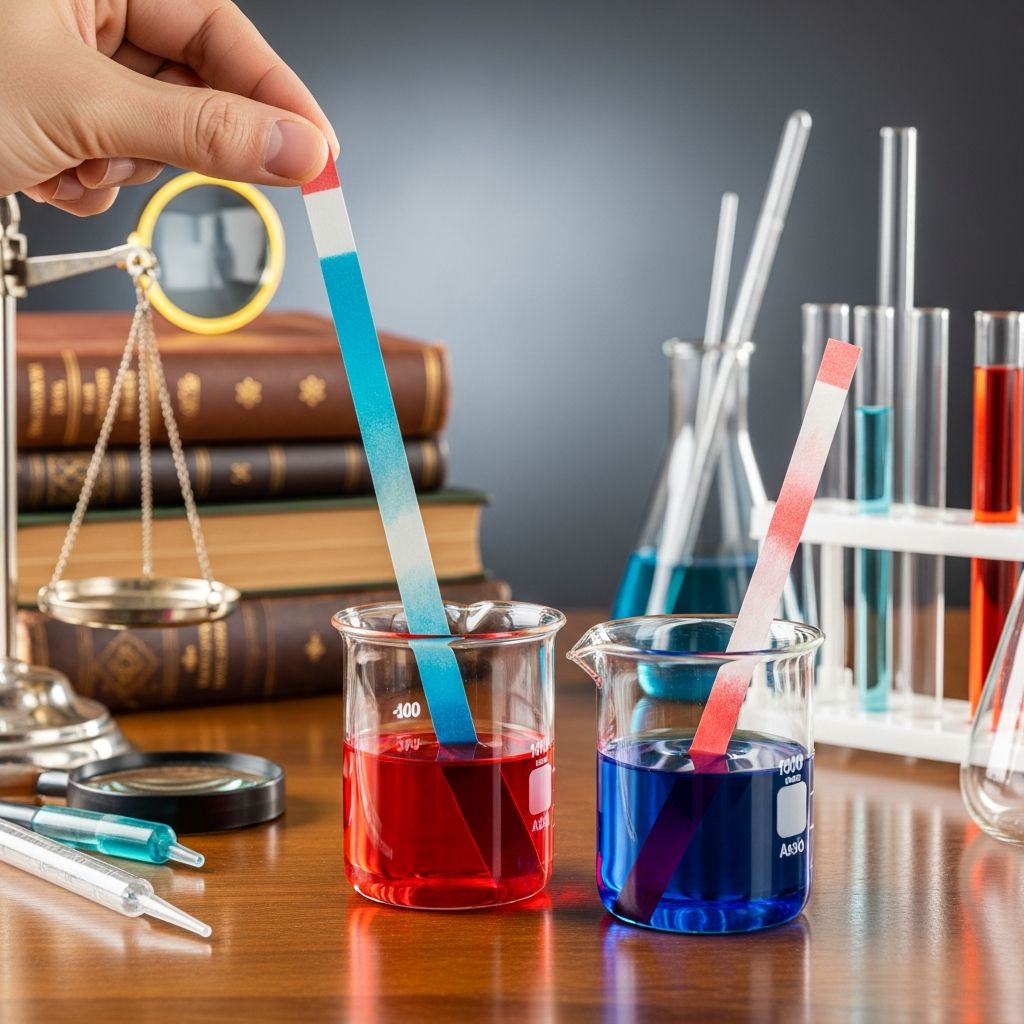
Since the sixteenth century, scientists and researchers have relied on natural substances derived from lichens to understand the chemical properties of various solutions. One of the most enduring and practical innovations emerging from this tradition is litmus paper, a simple yet remarkably effective tool for determining whether a substance is acidic or alkaline. This humble piece of treated filter paper has become a staple in chemistry classrooms, industrial laboratories, and research facilities worldwide, providing quick and affordable insights into the pH characteristics of countless materials.
The Origins and Composition of Litmus Indicators
Litmus represents one of the earliest and most ingenious applications of natural dyes in scientific measurement. The substance originates from lichens, which are symbiotic organisms composed of fungi and algae working in concert to produce unique chemical compounds. Between ten and fifteen distinct indicator chemicals exist within lichens, but the extraction and processing of these materials involves sophisticated treatment methods that concentrate and refine the dyes into their most useful forms.
The fundamental composition of litmus consists of a water-soluble mixture containing various dyes extracted from lichens through specialized chemical processes. Before lichens can be transformed into the litmus used in laboratories, they undergo thorough treatment to isolate and concentrate the active compounds. Wood cellulose, which forms the base of filter paper, serves as the substrate upon which litmus dyes are absorbed and fixed. The resulting product must be exceptionally pure, free from contaminants that could interfere with accurate pH measurements.
Interestingly, the chemical profile of litmus bears similarity to another lichen-derived indicator known as orcein, though the proportions of constituent dyes differ between these two substances. This relationship demonstrates the diverse applications possible when extracting natural indicator compounds from lichens, offering researchers multiple options for their specific testing requirements.
How Litmus Paper Functions as a pH Indicator
The mechanism by which litmus paper indicates acidity or alkalinity involves fundamental principles of chemistry related to hydrogen ion concentration. When litmus dyes encounter solutions with different pH levels, they undergo observable color transformations. These changes occur across a specific pH range, typically between 4.5 and 8.3 at standard room temperature (approximately 25°C or 77°F), making litmus most effective for detecting moderately acidic or alkaline conditions rather than extreme pH values.
Red litmus contains a mild diprotic acid within its structure. When this acidic form encounters a basic or alkaline solution, hydrogen ions react with the additional base present in the molecule. This chemical reaction causes a restructuring of the litmus compound itself, transforming it into its conjugate base form, which exhibits a distinctly blue coloration. Conversely, when blue litmus encounters acidic conditions, the acidic environment protonates the blue dye molecules, converting them into their red-colored acidic form.
The color transitions serve as visual indicators of pH status: red litmus paper turns blue when exposed to basic or alkaline solutions, while blue litmus paper turns red when contacting acidic materials. If neither color change occurs when testing with red litmus, the sample is likely acidic. Similarly, if blue litmus remains unchanged, the sample is likely basic or alkaline. This straightforward indicator system makes litmus paper exceptionally useful for quick preliminary pH assessments without requiring sophisticated electronic equipment.
The Three Categories of Litmus Paper
Laboratory suppliers and chemistry educators recognize three distinct varieties of litmus paper, each serving particular purposes depending on the nature of the substance being tested:
- Red Litmus Paper: Designed primarily to detect basic and alkaline solutions. When red litmus encounters alkaline conditions, it undergoes transformation to blue coloration. Red litmus typically appears more coral-colored when dry but deepens to a richer red shade when moistened with sample solutions.
- Blue Litmus Paper: Engineered to identify acidic conditions. When blue litmus contacts acidic materials, it converts to red coloration. While blue litmus appears only slightly darker when wet compared to its dry state, the color change to red remains clearly visible.
- Neutral Litmus Paper: Displays purple coloration and incorporates dyes present in both red and blue varieties. Neutral litmus paper can transform to either red or blue depending on the pH characteristics of the tested solution, making it versatile for comprehensive pH assessment without requiring multiple paper types.
When litmus paper fails to change color regardless of which variety is used, technicians can infer that the solution occupies a neutral pH range, neither significantly acidic nor alkaline. Purple coloration at neutral pH indicates that the litmus compound exists in a form between its acidic and basic states, reflecting the chemical balance at that particular pH level.
Practical Applications in Chemistry Education and Laboratory Work
Litmus paper has established itself as an indispensable tool across multiple professional and educational contexts. Its primary advantage lies in its combination of simplicity, affordability, and portability. Unlike electronic pH meters that require calibration, battery power, and careful maintenance, litmus paper demands no special equipment or preparation. A simple piece of colored paper and a sample solution constitute everything necessary to obtain preliminary pH information.
In chemistry classrooms worldwide, litmus paper serves as the foundational tool through which students first encounter pH concepts and acid-base chemistry. The immediate visual feedback reinforces abstract chemical principles, allowing learners to observe molecular interactions manifested as tangible color changes. This pedagogical value extends beyond mere demonstration; hands-on experimentation with litmus paper helps students develop intuitive understanding of how solutions differ in their fundamental chemical nature.
Professional laboratories employ litmus paper for rapid preliminary screening before conducting more sophisticated analyses. Industrial facilities monitor processes where pH control proves critical, using litmus as a quick verification method. Environmental scientists employ litmus paper to assess water quality in field conditions where transporting sensitive electronic equipment would prove impractical. The accessibility and reliability of litmus testing have ensured its continued relevance despite advances in analytical chemistry technology.
Proper Methodology for Conducting Litmus Tests
Obtaining accurate results from litmus paper requires adherence to specific procedural guidelines that maximize reliability and minimize potential sources of error.
Testing Liquids: Step-by-Step Approach
- Collect the sample using a clean dropper or pipette to ensure no contaminants compromise results.
- Place a small drop of sample on one end of the litmus paper strip, avoiding submersion into the sample solution as this would cause dye to spread into the liquid rather than remain localized on the paper.
- Observe color changes, noting whether the paper remained unchanged or transformed to a different hue.
- Interpret results based on the established color-to-pH correspondence: red indicates acidic conditions, purple suggests neutrality, and blue denotes basic or alkaline environments.
Interpreting Results for Both Paper Types
| Test Scenario | Red Litmus Paper Result | Blue Litmus Paper Result | Conclusion |
|---|---|---|---|
| Acidic Solution | Remains red (no change) | Turns red | Solution is acidic (pH < 4.5) |
| Neutral Solution | May appear purple or unchanged | May appear purple or unchanged | Solution is neutral (pH 4.5-8.3 range) |
| Alkaline Solution | Turns blue | Remains blue (no change) | Solution is basic/alkaline (pH > 8.3) |
When interpreting results, remember that the absence of color change provides equally valuable information as visible transformation. Red litmus that exhibits no color change in a sample indicates that solution lacks sufficient alkalinity to trigger the chemical transformation, meaning the sample is acidic. Conversely, blue litmus that remains unchanged signals insufficient acidity to convert the dye to red, indicating the sample is basic.
Advanced Testing Capabilities: Beyond Liquid Solutions
While most commonly applied to aqueous solutions, litmus paper demonstrates additional versatility when adapted for specialized testing purposes. Wet litmus paper can effectively detect water-soluble gases that influence acidity or alkalinity. When such gases dissolve in the moisture on the paper’s surface, the resulting solution colors the litmus according to the gas’s chemical properties.
Ammonia gas exemplifies this application: as an alkaline substance, ammonia dissolves in the water film on wet litmus paper and causes red litmus to transform to blue. Similarly, acidic gases would produce the inverse effect, converting blue litmus to red. This capability extends litmus testing beyond traditional liquid analysis into gaseous phase evaluation, demonstrating the method’s adaptability to diverse analytical needs.
Litmus can also be prepared as an aqueous solution rather than remaining confined to paper format. Such solutions function identically to solid litmus paper, appearing red under acidic conditions and blue under alkaline conditions. This flexibility in presentation format allows chemists to select the most appropriate form for their specific experimental requirements.
Limitations and Considerations for Accurate Testing
Despite litmus paper’s numerous advantages, practitioners must recognize its inherent limitations to avoid misinterpretation of results. The color change range of 4.5 to 8.3 encompasses neutral and moderately acidic or alkaline conditions, but strongly acidic solutions (pH below 4.5) or highly alkaline solutions (pH above 8.3) fall outside this responsive range. Extreme pH conditions may not produce expected color changes, requiring alternative testing methods for comprehensive analysis.
Additionally, litmus paper provides qualitative information indicating whether a sample is acidic or basic but does not quantify the precise pH value. Determining exact pH measurements demands electronic pH meters or more sophisticated analytical techniques. Litmus paper functions best as a preliminary screening tool rather than as instrumentation for precise pH quantification in applications demanding high accuracy.
Sample preparation and storage conditions significantly influence results. Contaminated litmus paper or samples exposed to interfering substances can produce inaccurate color changes. Paper must be stored in dry conditions, as moisture absorption can compromise sensitivity. Samples must be collected and tested promptly, as prolonged exposure to air or contact with contaminants may alter their true pH characteristics.
Distinguishing Litmus Paper from Other pH Indicators
A common misconception conflates all pH indicator papers with litmus paper, but this classification proves inaccurate. Modern laboratories employ numerous indicator formulations beyond litmus, each optimized for specific pH ranges or particular applications. Universal indicator paper, for instance, contains multiple indicator compounds that produce different colors across a much broader pH spectrum than litmus paper can achieve.
The terminology “litmus paper” should be reserved for indicators specifically made using litmus dyes derived from lichens. Other pH papers utilize alternative indicator chemicals that may offer superior performance for certain applications but represent distinct products from traditional litmus. Understanding this distinction helps chemists select appropriate testing materials for their particular needs.
Frequently Asked Questions About Litmus Paper
Q: Why has litmus paper remained popular despite modern analytical technology?
A: Litmus paper’s combination of low cost, portability, simplicity, and reliability makes it ideal for classroom education and field testing. Its immediate visual feedback supports learning and rapid preliminary assessments without requiring calibration or power sources.
Q: Can litmus paper be used to test solid materials?
A: Litmus paper primarily tests solutions where the sample dissolves in water. To test solids, they must first be dissolved or suspended in water to create a testable solution, as litmus indicators respond to hydrogen ion concentration in aqueous environments.
Q: How should litmus paper be stored to maintain effectiveness?
A: Store litmus paper in dry conditions, protected from moisture and contaminants. Proper storage in sealed containers away from humidity preserves the dyes’ sensitivity and prevents premature degradation or false color changes.
Q: What is the difference between dipping and spot-testing with litmus paper?
A: Spot testing—applying a small sample drop directly to paper—prevents dye dissolution into the sample. Dipping paper into solutions causes dyes to leach into the liquid, potentially contaminating the sample and producing inaccurate results.
Q: Does litmus paper work for all types of aqueous solutions?
A: Litmus paper works effectively across its pH range of 4.5 to 8.3. Solutions with extreme pH values (very strong acids or bases) may not produce expected color changes, necessitating alternative testing methods for such samples.
References
- Litmus Paper – Everything You Need to Know — Science Equip. 2024. https://www.scienceequip.com.au/blogs/news/litmus-paper-everything-you-need-to-know
- Litmus Paper — BYJU’S. 2024. https://byjus.com/chemistry/litmus-paper/
- Litmus — Wikimedia Foundation. 2024. https://en.wikipedia.org/wiki/Litmus
- Litmus Paper and the Litmus Test — Science Notes. 2024. https://sciencenotes.org/litmus-paper-and-the-litmus-test/
- Litmus Paper as an Indicator — Khan Academy. 2024. https://en.khanacademy.org/science/bridge-course-class-10th-science/x37589313f9a4c197:week-1/x37589313f9a4c197:acids-bases-and-salts/v/litmus-paper-as-an-indicator

- Integrated M.A. in Applied Linguistics, University of Hyderabad
- 5+ years in editorial, instructional, SEO, and research-based writing
Sneha is a relationships and lifestyle writer with a strong foundation in applied linguistics and certified training in relationship coaching. She brings over five years of writing experience to theskillvault, crafting thoughtful, research-driven content that empowers readers to build healthier relationships, boost emotional well-being, and embrace holistic living. Her writing and insights reflect the belief that beauty, happiness, and wellness…