
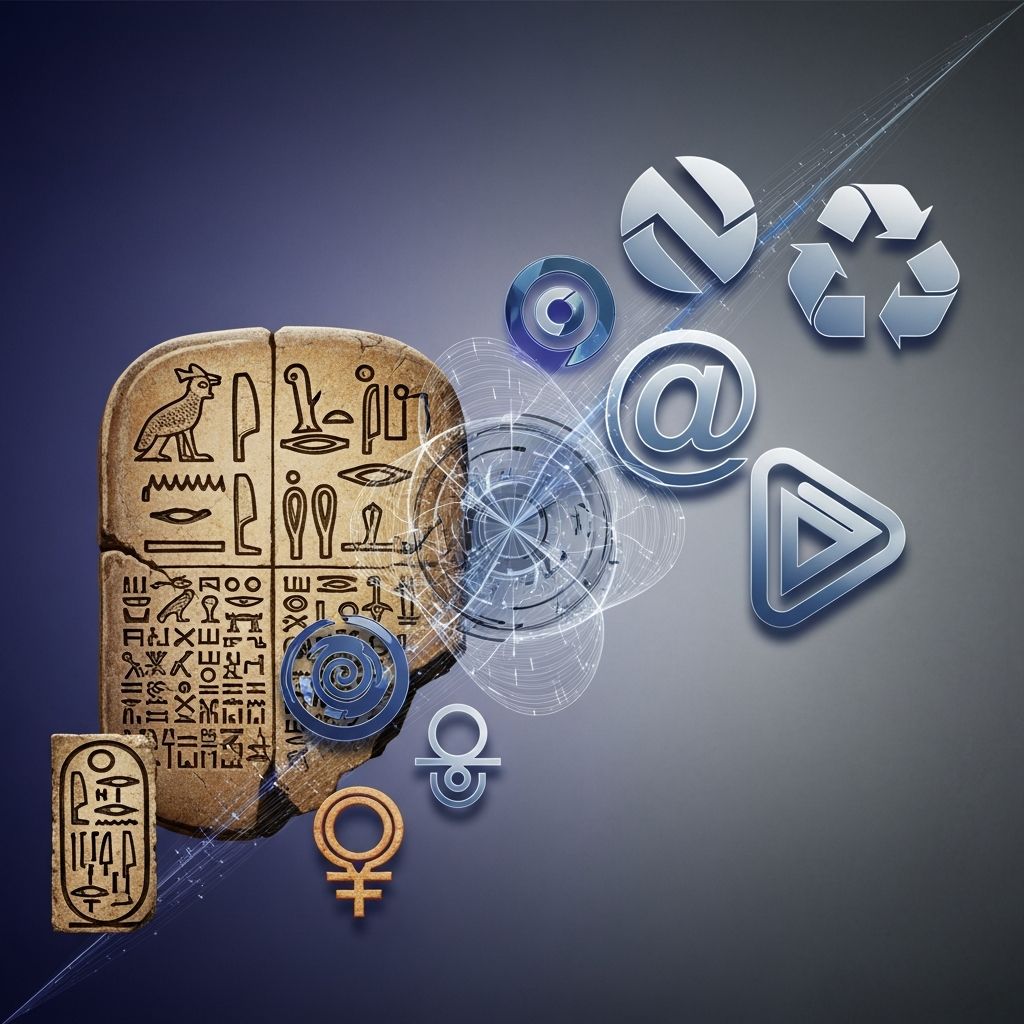
Logographs represent a unique category of written symbols where a single character conveys an entire word, morpheme, or concept, bypassing phonetic representation. Unlike alphabetic systems that build words from sound units, logographs prioritize meaning, enabling compact and efficient communication in complex languages.
Defining Logographs in Linguistic Contexts
A **logograph**, also known as a logogram or lexigraph, is fundamentally a written character that embodies a semantic unit of language, such as a full word or the smallest meaningful element called a morpheme. For instance, in English, morphemes include standalone words like ‘be’ or affixes like ‘-ing,’ each potentially represented by a logograph in suitable systems.
These symbols do not hint at pronunciation, requiring users to memorize their meanings and sounds through context and repetition. This trait distinguishes them from phonograms, which denote sounds, and ideograms, which pictorially suggest ideas without precise verbal ties. The term derives from Greek roots: ‘logos’ for ‘word’ and ‘graphe’ for ‘writing’ or ‘drawn representation,’ reflecting their origin as tools for graphic speech capture.
Logographic systems form the backbone of certain writing traditions, where thousands of characters must be learned to achieve fluency. This demands extensive education but allows nuanced expression unburdened by spelling variations or phonetic shifts.
Historical Evolution of Logographic Writing
The emergence of logographs traces back to prehistoric needs for recording transactions, rituals, and narratives. Early Mesopotamian cuneiform, around 3200 BCE, evolved from pictographs into logograms representing ideas or words, pressed into clay with wedge-shaped styluses. Sumerian scribes used these for administrative tallies, gradually adapting them for literature like the Epic of Gilgamesh.
In ancient Egypt, hieroglyphs functioned primarily as logographs from 3100 BCE, adorning tombs and temples with symbols for words like ‘pharaoh’ or ‘Nile.’ Bilingual inscriptions, such as the Rosetta Stone, revealed their dual logographic and phonetic roles, aiding modern decipherment.
Chinese script, originating over 3,500 years ago, stands as the purest surviving logographic system. Oracle bone inscriptions from the Shang Dynasty (1600–1046 BCE) feature characters etched for divination, many recognizable in modern forms. Unlike phonetic scripts, Chinese characters maintain visual consistency across dialects, fostering unity in spoken diversity.
| Era | System | Key Feature |
|---|---|---|
| 3200 BCE | Cuneiform (Mesopotamia) | Pictographs to word-signs |
| 3100 BCE | Egyptian Hieroglyphs | Logosyllabic hybrid |
| 1600 BCE | Chinese Oracle Bones | Pure logographic core |
| 19th Century CE | Modern Analysis | Term ‘logograph’ coined |
Prominent Logographic Systems Across Cultures
Chinese characters exemplify logographs, with over 50,000 in dictionaries, though 3,000 suffice for daily reading. Each comprises a radical (semantic hint) and phonetic component, as in ‘mā’ (mother, 媽), blending meaning and sound cues. Japan’s kanji borrows these, pairing with kana syllabaries for hybrid use.
Egyptian hieroglyphs numbered around 700 common signs, often carved in stone for eternity. Symbols like the ankh (life) or wedjat (eye of Horus) served logographically, evoking concepts instantly. Mayan glyphs in Mesoamerica mirrored this, blending logograms with syllabic elements for histories and astronomy.
Cuneiform spread to Akkadian, Hittite, and others, with signs like ‘dingir’ (god) acting as logograms. Sumerian numeration used logographs like horizontal wedges for ‘1’ or circles for ’10’.
- Chinese: Semantic-phonetic compounds; dialect-independent.
- Egyptian: Monumental, rebus-capable for names.
- Cuneiform: Polyvalent signs (word or sound).
Modern Manifestations and Everyday Logographs
Contemporary life brims with logographs, simplifying global exchange. The ampersand (&) stands for ‘and,’ the dollar sign ($) for currency, and @ for ‘at,’ all memorized icons transcending language barriers. Mathematical symbols like π (pi) or ∑ (sum) function similarly, denoting concepts without phonetic ties.
Emojis extend this tradition digitally; a thumbs-up 👍 conveys approval universally, akin to ancient ideo-logographs. Corporate logos, like Apple’s bitten apple, evoke brands logographically.
In computing, logographs optimize interfaces—think Wi-Fi icons or recycle bins—prioritizing instant recognition over text.
Contrasting Logographs with Phonetic Alphabets
| Aspect | Logographs | Alphabets |
|---|---|---|
| Unit Represented | Word/Morpheme | Sound/Phoneme |
| Learning Curve | High (thousands of signs) | Low (20-40 letters) |
| Dialect Adaptability | Excellent (visual unity) | Poor (spelling reforms needed) |
| Expressiveness | Compact for ideas | Flexible for new words |
Alphabets like Latin excel in phonetic precision, ideal for Indo-European tongues with consistent sound-word mappings. Logographs shine in isolating languages like Chinese, where tones and morphemes defy simple phonation. Hybrids, such as Japanese, balance both worlds.
Challenges and Strengths of Logographic Literacy
Acquiring logographic proficiency poses hurdles: Chinese learners spend years mastering strokes and radicals, with dyslexia manifesting as character recall issues rather than letter confusion. Yet, strengths abound—readers process meaning holistically, aiding rapid comprehension and translation across Sinitic languages.
Cognitive studies show logograph users engage right-brain visual processing more, contrasting left-brain sequential decoding in alphabetic readers. This fosters artistic calligraphy traditions, elevating writing to visual poetry.
Digital input methods, like pinyin-to-character conversion, ease modern use, predicting characters from phonetic or shape inputs.
Logographs in the Digital Age and Beyond
Unicode standardizes 90,000+ CJK characters, ensuring cross-platform rendering. AI translation tools parse logographs contextually, bridging ancient scripts to neural networks.
Revival efforts digitize endangered systems like Sumerian cuneiform via projects like the Cuneiform Digital Library Initiative. Logographs inspire universal symbols for global challenges, from climate icons to pandemic alerts.
Frequently Asked Questions (FAQs)
What is the primary difference between a logograph and an ideogram?
A logograph specifically represents a word or morpheme with an associated pronunciation, while an ideogram conveys a concept more abstractly without fixed sound.
Are Chinese characters purely logographic?
Yes, at their core, but many include phonetic hints alongside semantic radicals, making them compound logographs.
Can logographs work in spoken languages with alphabets?
Absolutely—symbols like $, &, and % thrive in English, proving logographs’ versatility beyond dedicated systems.
How many logographs are needed for basic Chinese literacy?
About 2,000-3,000 characters cover 99% of everyday texts, newspapers included.
Why haven’t logographic systems replaced alphabets globally?
Alphabets’ simplicity suits phonetic languages and innovation; logographs demand heavy memorization, limiting spread.
References
- Logograph – Definition, Meaning & Synonyms — Vocabulary.com. Accessed 2025. https://www.vocabulary.com/dictionary/logograph
- Logogram Writing Systems, History & Examples — Study.com. Accessed 2025. https://study.com/academy/lesson/logogram-overview-languages-examples.html
- Logogram — Wikipedia. Accessed 2025. https://en.wikipedia.org/wiki/Logogram
- Logograph – Etymology, Origin & Meaning — Etymonline. Accessed 2025. https://www.etymonline.com/word/logograph
- Logograph — YouTube (Word World). Accessed 2025. https://www.youtube.com/watch?v=5EEqLsuc3PY
- LOGOGRAPH — Cambridge English Dictionary. Accessed 2025. https://dictionary.cambridge.org/us/dictionary/english/logograph
- A.Word.A.Day — logograph — Wordsmith.org. Accessed 2025. https://www.wordsmith.org/words/logograph.html
- LOGOGRAPH Definition & Meaning — Merriam-Webster. 2025-12-01. https://www.merriam-webster.com/dictionary/logograph

- Integrated M.A. in Applied Linguistics, University of Hyderabad
- 5+ years in editorial, instructional, SEO, and research-based writing
Sneha is a relationships and lifestyle writer with a strong foundation in applied linguistics and certified training in relationship coaching. She brings over five years of writing experience to theskillvault, crafting thoughtful, research-driven content that empowers readers to build healthier relationships, boost emotional well-being, and embrace holistic living. Her writing and insights reflect the belief that beauty, happiness, and wellness…