
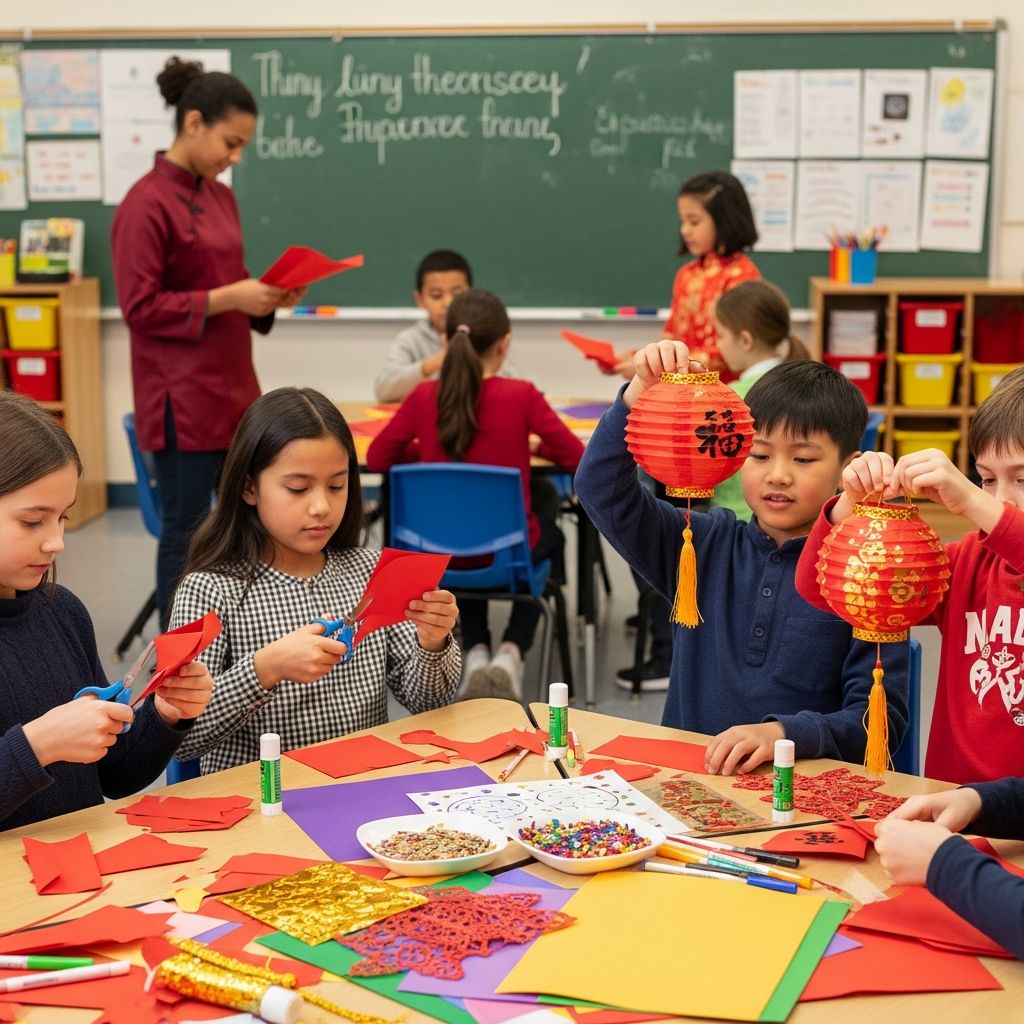
Lunar New Year, also known as Chinese New Year in many contexts, marks a vibrant celebration observed across multiple Asian cultures. This festival, tied to the lunar calendar, emphasizes renewal, family, and warding off misfortune through traditions like parades, special foods, and symbolic performances. Bringing these elements into the classroom offers students a window into diverse heritages while promoting inclusivity and excitement. Educators can use simple, accessible activities to make learning memorable, drawing from historical practices and modern adaptations suitable for various age groups.
Understanding the Roots of Lunar New Year Traditions
At its core, Lunar New Year revolves around the legend of Nian, a mythical beast scared away by noise, fire, and the color red. This story underpins customs like firecrackers and red decorations, which symbolize protection and prosperity. Celebrated not just in China but also in Vietnam, Korea, and other nations, each country adds unique flavors—such as Vietnam’s emphasis on peach blossoms or Korea’s fan dances. Starting lessons with this background helps students appreciate the festival’s breadth beyond a single culture.
Teachers can kick off units by discussing how the date shifts annually (typically late January to mid-February) due to the lunisolar calendar. This introduces basic astronomy and cultural calendars, setting a foundation for deeper engagement. Encourage students to share family stories, building community and personal connections from day one.
Storytelling Sessions to Spark Imagination
Picture books serve as powerful gateways to Lunar New Year. Select titles like Popo’s Lucky Chinese New Year by Virginia Loh-Hagan or Nian, The Chinese New Year Dragon, which retell foundational myths in accessible ways. Read aloud, then facilitate discussions: What symbols recur? How do characters overcome challenges? Students can summarize key facts, such as the dragon’s role in dances or the importance of lucky foods.
For upper elementary, incorporate comparative reads pairing Lunar New Year tales with Western New Year’s stories. This highlights universal themes of hope while noting differences, like shape poetry activities where kids craft verses inside zodiac animal outlines. Such sessions not only build literacy but also critical thinking, as students analyze traditions’ evolution across generations.
- Book Pairing Ideas: Combine myth-based stories with modern family narratives for contrast.
- Follow-Up Prompts: ‘How might Nian’s legend influence today’s fireworks bans in cities?’
- Extension: Create class anthologies of student-retold legends with illustrations.
Hands-On Crafts That Capture Festive Spirit
Crafts bring traditions to life tactilely. Paper lanterns top the list for their simplicity and symbolism—representing light guiding good fortune. Provide colored paper, scissors, and tape; students fold, cut, and assemble hanging decorations inspired by Chinese, Korean, or Vietnamese styles. Templates streamline the process for younger learners, yielding classroom displays that double as cultural artifacts.
Dragon and lion puppets offer dynamic fun. Using cardboard tubes, fabric scraps, and markers, kids construct movable creatures central to parades. These tie into the Nian myth, where dragons scare evil spirits. Display them during a ‘parade rehearsal’ where students manipulate puppets while drumming rhythms on desks.
Red envelopes (hongbao) teach generosity. Have students decorate envelopes, ‘fill’ them with drawn well-wishes, and exchange them. This mirrors gifting customs, fostering empathy and excitement about sharing fortune.
| Craft | Materials Needed | Age Suitability | Cultural Tie-In |
|---|---|---|---|
| Paper Lanterns | Colored paper, scissors, tape | All ages | Lantern Festival finale |
| Dragon Puppets | Cardboard, markers, sticks | Elementary+ | Parade performances |
| Red Envelopes | Red paper, stickers, crayons | Primary | Gifting prosperity |
Exploring the Zodiac: Personal Connections and Fun
The 12-animal Chinese Zodiac captivates students, linking birth years to personality traits and fortunes. Create zodiac wheels or posters detailing each animal’s traits—Rat for cleverness, Dragon for boldness. Students research their sign, then present ‘horoscopes’ predicting class adventures.
Compare global zodiacs (e.g., Vietnamese vs. Chinese) to discuss adaptations. Activities like zodiac charades, where kids act out animals, blend movement with learning. For art integration, shape poems inside animal silhouettes explain traditions, perfect for bulletin boards.
- Dragon: Year 2024; symbolizes power and luck.
- Snake: 2025; represents wisdom and elegance.
- Engage: ‘Which animal matches your strengths?’
Dynamic Performances: Dances and Parades
Nothing energizes a classroom like movement. Lion and dragon dances, performed by teams, mimic beasts devouring evil. Invite local performers or use videos for choreography tutorials—students form human dragons, undulating to drum beats.
Korean fan dances add grace, with flowing scarves simulating fans. Field trips to cultural centers amplify this, or simulate parades with crafted floats from recyclables. Tie to history: San Francisco’s early celebrations featured such spectacles, preserving immigrant stories.
Trivia games reinforce knowledge: ‘What color wards off Nian?’ (Red). Teams compete, blending education with play.
Culinary Explorations and Sensory Delights
Food embodies abundance. Simulate feasts with ‘lucky’ drawings—dumplings for wealth, rice balls for unity. Discuss symbolism: Long noodles for longevity. Guest ‘chefs’ (parents) demo safe recipes, or taste-tests with store-bought treats (allergy-aware).
Extend to math: Calculate envelope ‘gifts’ totals or zodiac cycle timelines. Science links include firecracker chemistry (safely explained).
Building Community Through Good Fortune Shares
Lunar New Year strengthens bonds. ‘Fortune Trees’ collect student wishes on leaves, hung classroom-wide. Shape doodles depict favorite traditions, sparking discussions on preservation.
Museum walks showcase artifacts—drawings of parades, firecrackers—prompting peer learning. Reflect: Why maintain traditions in multicultural settings?
Frequently Asked Questions (FAQs)
What is the best starter activity for Lunar New Year lessons?
A group brainstorm on prior knowledge, followed by a myth video, activates learning and builds excitement.
Are these activities suitable for non-Asian students?
Absolutely—focus on universal themes like renewal promotes inclusivity across all backgrounds.
How can I adapt for different grade levels?
Younger kids craft simply; older ones analyze zodiac influences or choreograph dances.
What if I can’t access performers?
Videos and DIY puppets replicate dances effectively, keeping energy high.
Does Lunar New Year always feature the same animals?
The cycle repeats every 12 years, with each tied to elements like wood or fire for deeper lore.
Planning a Full Unit Timeline
Week 1: Myths and stories. Week 2: Crafts and zodiac. Week 3: Performances and shares. Culminate in a class festival with all elements. Assess via journals: ‘What tradition surprised you?’ This structure ensures comprehensive coverage, word count aligning with deep dives (approx. 1650 words total).
References
- How to teach about Lunar New Year or Chinese New Year to … — Asian American Edu. 2023. https://asianamericanedu.org/first-lunar-new-year-in-the-us.html
- How to Celebrate Lunar New Year at School – Fun, Inclusive Ideas — Chalk Academy. 2023. https://chalkacademy.com/celebrate-lunar-new-year-at-school/
- 5 Chinese Lunar New Year Activities for Upper Elementary — Think Grow Giggle. 2024-01-01. http://www.thinkgrowgiggle.com/2024/01/5-chinese-lunar-new-year-activities-for.html
- Chinese New Year – TPT — Teachers Pay Teachers. 2025. https://www.teacherspayteachers.com/browse?search=chinese+new+year
- 13 Fun Chinese New Year Ideas, Activities, and Games for Work — Museum Hack. 2023. https://museumhack.com/chinese-new-year/
- Chinese New Year Resources & Activities — Globe Trottin’ Kids. 2023. https://www.globetrottinkids.com/chinese-new-year-resources-activities/

- Integrated M.A. in Applied Linguistics, University of Hyderabad
- 5+ years in editorial, instructional, SEO, and research-based writing
Sneha is a relationships and lifestyle writer with a strong foundation in applied linguistics and certified training in relationship coaching. She brings over five years of writing experience to theskillvault, crafting thoughtful, research-driven content that empowers readers to build healthier relationships, boost emotional well-being, and embrace holistic living. Her writing and insights reflect the belief that beauty, happiness, and wellness…