
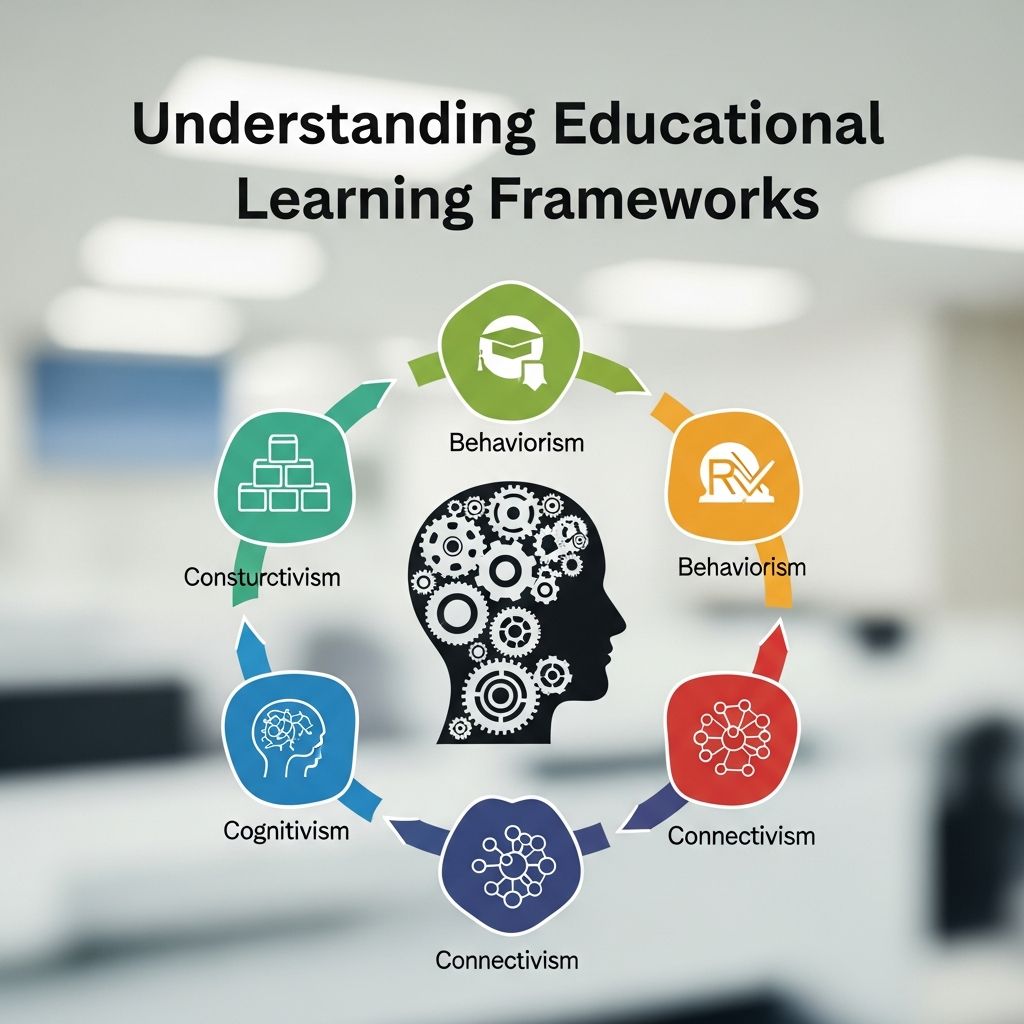
Educational systems worldwide have evolved through decades of psychological research into how people acquire and retain knowledge. Rather than viewing learning as a singular process, modern educators recognize that multiple theoretical frameworks explain how individuals absorb, process, and retain information. Understanding these frameworks allows teachers to design more effective lessons, support diverse learners, and create environments where knowledge acquisition becomes more meaningful and lasting. This article explores the major psychological approaches that shape contemporary education and provides actionable strategies for implementing each framework in real-world classroom settings.
The Foundation of Modern Educational Theory
Educational learning theories are conceptual frameworks developed through psychological research that describe the mechanisms by which people learn. These theories emerged from the work of pioneering psychologists and educators who sought to understand the cognitive and behavioral processes underlying education. Rather than representing competing ideas, these frameworks complement each other and address different aspects of the learning process. Modern educational practice recognizes that students learn through multiple pathways, and effective teaching often integrates elements from several theoretical perspectives.
The relationship between learning theories and classroom practice is reciprocal. Theories inform teaching strategies, while classroom experiences generate new research questions that refine our understanding of how learning actually occurs. This ongoing dialogue between theory and practice ensures that educational methods remain grounded in psychological science while remaining practical and applicable in diverse educational settings.
Behavioral Approaches to Knowledge Acquisition
Behaviorism represents one of the earliest systematic approaches to understanding learning in educational contexts. This framework conceptualizes learning as changes in observable behavior resulting from responses to environmental stimuli. Developed by pioneering researchers including B.F. Skinner, behaviorism focuses on measurable outcomes rather than internal mental processes, making it relatively straightforward to assess and modify learning outcomes.
The core principle underlying behavioral approaches involves the strategic use of reinforcement to shape student behavior and academic performance. Positive reinforcement—such as verbal praise, recognition, or tangible rewards—encourages students to repeat desired behaviors. Negative reinforcement, ranging from simple disapproval to more formal consequences, discourages undesired actions. Teachers implementing behavioral principles typically establish consistent routines and provide immediate feedback, creating predictable classroom structures that help students understand expectations and consequences.
Practical Applications of Behavioral Learning
- Establish and maintain consistent classroom routines that signal expectations and create predictability
- Deliver prompt and specific feedback immediately following student actions or academic work
- Implement reward systems that reinforce positive behaviors and academic achievement
- Use recognition programs to highlight student accomplishments and encourage peer learning
- Create structured consequences that are proportionate and clearly communicated
While behavioral approaches excel at creating orderly learning environments and establishing foundational habits, they address only external manifestations of learning rather than internal cognitive processes. This limitation led educational psychologists to develop complementary frameworks that examine how students think about and process information.
Cognitive Processing and Mental Organization
Cognitivism emerged as a theoretical response to behaviorism, offering a more nuanced view of how students learn by examining internal mental processes. Rather than focusing solely on observable behavior, cognitivism conceptualizes learning as the internal arrangement and organization of information within the mind. Under this framework, students actively engage with new information, incorporating it into existing knowledge structures using mental strategies such as planning, goal-setting, and pattern recognition.
The cognitivist perspective fundamentally reimagines the teacher’s role from behavior modifier to information architect. Teachers working within this framework present information in ways that allow students to absorb knowledge and develop skills through internal cognitive processing. This requires attention to how information is structured, sequenced, and presented across multiple modalities to accommodate different learning preferences and cognitive styles.
Implementing Cognitive Learning Strategies
- Present learning materials through diverse media including visual, auditory, and kinesthetic formats
- Organize information in logical sequences that build upon previously mastered concepts
- Engage students in class discussions that encourage them to articulate connections between ideas
- Help students identify relationships between new concepts and existing knowledge
- Monitor and track which instructional methods most effectively convey specific knowledge domains
- Use graphic organizers and concept mapping to help students visualize information structures
Cognitivism recognizes that students are active processors of information rather than passive recipients. By understanding how students organize knowledge mentally, educators can design instruction that aligns with natural cognitive processes, leading to deeper understanding and better retention.
Building Knowledge Through Active Construction
Constructivism represents one of the most influential educational frameworks of the past century, with roots in the work of Swiss psychologist Jean Piaget and Russian educator Lev Vygotsky. This approach asserts that learners do not passively acquire skills and knowledge through information transmission; instead, they actively construct understanding by combining new information with prior experiences and existing knowledge.
A fundamental insight of constructivism is that new concepts “stick” more readily when individuals can attach them to things they already understand. This principle suggests that effective teaching requires understanding students’ lived experiences, current knowledge levels, and existing conceptual frameworks. Rather than presenting information as objective facts to be memorized, constructivist teachers create opportunities for students to discover relationships between concepts through engagement with material and reflection on experience.
Constructivism encompasses both psychological constructivism—emphasizing individual experiences and reflection—and social constructivism—highlighting the role of interaction with others in building knowledge. Social constructivism particularly recognizes that discussion, collaboration, and peer feedback accelerate learning by exposing students to diverse perspectives and encouraging them to articulate and refine their own understanding.
Strategies for Constructivist Learning Environments
- Encourage students to explore connections between subject matter and their personal experiences and knowledge
- Facilitate discussions between students that create catalysts for meaningful connections to form
- Design open-ended activities that allow multiple valid approaches and solutions
- Provide scaffolding that supports students in building understanding without simply providing answers
- Create opportunities for peer teaching and collaborative problem-solving
- Ask questions that prompt reflection on learning processes and conceptual understanding
Learning Through Experience and Reflection
Experiential learning represents a complementary approach to constructivism that emphasizes how direct experience combined with reflection facilitates knowledge acquisition. Rather than positioning learning as occurring primarily through information transmission or even mental reorganization alone, experiential learning holds that skills and knowledge are most effectively acquired through action followed by thoughtful reflection on that action.
Developed by psychologist David Kolb, experiential learning theory proposes a cycle in which students engage in concrete experience, reflect on that experience, develop abstract concepts from their reflections, and then test these concepts through active experimentation. This framework proves particularly powerful for students who thrive in practical settings and need to understand the real-world applications of abstract concepts.
The philosophy underlying experiential education maintains that direct experience can help students develop skills and acquire knowledge more effectively than traditional classroom-based approaches alone. By engaging students in hands-on activities, simulations, internships, and projects, educators tap into natural learning processes while making abstract concepts concrete and meaningful.
Designing Experiential Learning Activities
- Create hands-on activities that allow students to learn through direct practical engagement
- Design outdoor or field-based learning experiences that connect classroom content to real environments
- Implement project-based learning where students tackle authentic problems and create tangible products
- Incorporate simulations and role-playing scenarios that allow safe exploration of complex situations
- Encourage journaling and reflection activities that help students process and consolidate learning
- Facilitate discussions where students articulate what they learned and how they can apply it
- Provide opportunities for internships, apprenticeships, or service learning connected to curriculum
Social Learning and Observational Processes
Social learning theory, developed by psychologist Albert Bandura, emphasizes that people acquire knowledge and skills by observing others within social contexts. This framework recognizes the powerful role of modeling, imitation, and social interaction in education. Rather than treating learning as an isolated cognitive process, social learning theory positions it within the broader context of human relationships and community.
According to this perspective, when teachers and peers model desired behaviors, attitudes, and problem-solving approaches, students learn through observation and subsequent practice. The effectiveness of modeling depends partially on students identifying with the model and perceiving the modeled behavior as achievable and valuable. Social learning theory has proven particularly valuable in early childhood education and care, where children naturally learn through observation of adult and peer behaviors.
Humanistic Approaches Emphasizing Whole-Person Development
Humanistic learning theory, founded by pioneers including Carl Rogers and Abraham Maslow, represents a learner-centric approach that prioritizes the development of the whole individual, encompassing emotional well-being and personal growth alongside academic achievement. This framework rests on the philosophical conviction that humans are fundamentally good and will act appropriately when their basic needs are met.
Rather than emphasizing specific learning methods or instructional materials, humanistic theory places the learner themselves at the center of educational planning. The approach prioritizes meeting the unique emotional and academic needs of each student, empowering them to take greater control over the direction and pace of their own learning. Humanistic educators create nurturing environments where students feel safe exploring their potential, encouraged to voice their thoughts, and supported in taking intellectual risks.
Creating Humanistic Learning Environments
- Provide students with meaningful choices about what to study and how to approach learning
- Build positive teacher-student relationships based on genuine care and respect
- Create a classroom atmosphere where students feel psychologically safe taking intellectual risks
- Use discussions, group work, and self-evaluation to encourage critical thinking and connection
- Provide ample support, encouragement, and motivation to build student confidence
- Help students recognize their own growth and celebrate progress
- Design learning experiences that promote intrinsic motivation and autonomous learning
Integrating Multiple Frameworks for Effective Teaching
Rather than viewing these learning frameworks as competing theories, contemporary educational practice recognizes that each addresses different aspects of learning and that effective instruction often integrates multiple approaches. A well-designed lesson might incorporate behavioral principles to establish classroom structure, cognitive strategies to present information effectively, constructivist opportunities for students to build understanding, experiential elements to make learning tangible, social learning components through peer interaction, and humanistic attention to individual student needs and growth.
The selection of which frameworks to emphasize depends on multiple factors including the age and developmental stage of students, the nature of the content being taught, available resources and learning environment, and specific learning objectives. Mathematics instruction, for instance, might emphasize cognitive strategies for understanding problem-solving approaches while incorporating constructivist elements where students discover mathematical relationships and experiential components through manipulatives and real-world applications.
Connecting Learning Theory to Diverse Student Needs
One significant strength of having multiple learning frameworks is that they accommodate the reality that students possess different strengths, preferences, and learning styles. Some students thrive in highly structured behavioral environments with clear expectations and immediate feedback. Others develop deeper understanding through constructivist activities that encourage active knowledge-building. Still others learn most effectively through hands-on experiential approaches or through social interaction and observation. Humanistic approaches ensure that individual student needs and aspirations guide educational planning.
Multiple intelligences theory complements these frameworks by suggesting that students possess different intellectual strengths—linguistic, logical-mathematical, spatial, bodily-kinesthetic, musical, interpersonal, intrapersonal, and naturalistic intelligences. By designing diverse activities suited to varying learning styles and intelligences—incorporating music, art, games, outdoor activities, and hands-on projects—educators ensure that all students encounter learning approaches aligned with their particular strengths.
Modern Applications of Learning Theory in Technology-Enhanced Environments
Contemporary classrooms increasingly leverage technology to support multiple learning frameworks simultaneously. Connectivism, an emerging theory emphasizing learning through technology and networks, encourages students to find information from online databases and reliable digital sources, contributing to shared online resources such as wikis and collaborative platforms. Technology enables behavioral approaches through online platforms that provide immediate feedback and track progress. It supports cognitive learning by presenting information through multimedia formats. Constructivist applications leverage collaborative digital tools. Experiential learning expands through simulations and virtual laboratories. Humanistic approaches benefit from personalized learning platforms that adapt to individual student needs and allow greater student agency in directing learning.
Reflective Teaching Practice and Theory
Understanding diverse learning frameworks enables teachers to become more reflective practitioners who consciously select instructional approaches based on learning objectives and student needs. Rather than defaulting to familiar teaching methods, educators informed by learning theory can justify their choices, adapt approaches when students struggle, and continuously refine their practice based on observed outcomes. This theoretical foundation transforms teaching from an intuitive art into a practice grounded in psychological science while remaining responsive to individual classroom contexts.
References
- Educational Learning Theories and How to Apply Them — Phoenix University. https://www.phoenix.edu/articles/education/educational-learning-theories.html
- Major Theoretical Approaches of Learning — Educational Psychology, SUNY Open Textbooks. https://edpsych.pressbooks.sunycreate.cloud/chapter/major-theoretical-approaches/
- Applying the 5 Learning Theories of Psychology — Sphero. https://sphero.com/blogs/news/applying-learning-theories-psychology
- Five Educational Learning Theories — Western Governors University. https://www.wgu.edu/blog/five-educational-learning-theories2005.html
- Learning Theories: Five Theories of Learning in Education — National University. https://www.nu.edu/blog/theories-of-learning/
- Learning Theories — StatPearls, National Center for Biotechnology Information (NCBI). https://www.ncbi.nlm.nih.gov/books/NBK562189/

Medha Deb is an editor with a master's degree in Applied Linguistics from the University of Hyderabad. She believes that her qualification has helped her develop a deep understanding of language and its application in various contexts. Medha specializes in the areas of beauty, health, sports, and wellness and is committed to ensuring that the content on the website is…