
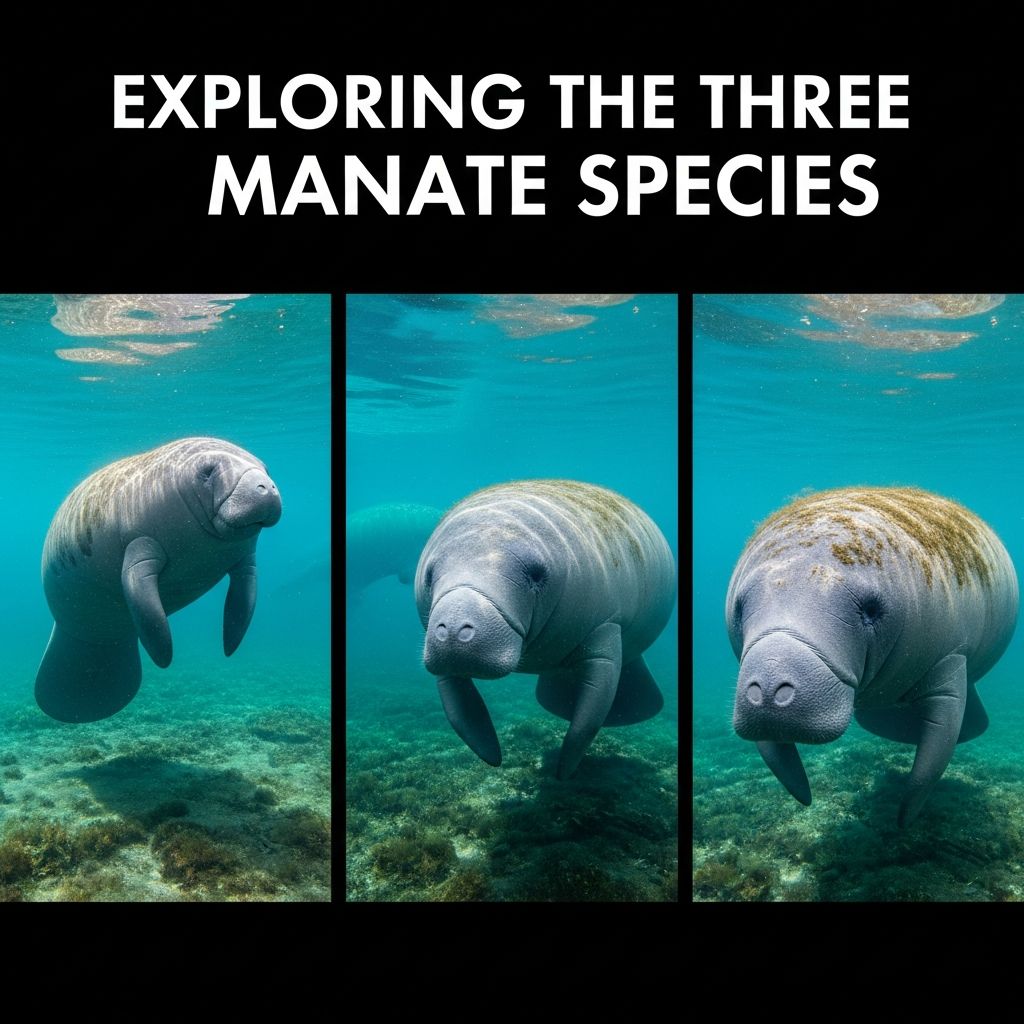
Manatees, often affectionately called sea cows, are remarkable herbivorous mammals that glide gracefully through rivers, estuaries, and coastal waters. Belonging to the order Sirenia and family Trichechidae, there are three recognized living species, each adapted to specific regions yet sharing common traits like paddle-shaped tails and whiskered snouts. These slow-moving creatures play crucial ecological roles by grazing on aquatic vegetation, helping maintain healthy ecosystems. This article provides an in-depth look at their biology, habitats, behaviors, and the urgent conservation needs facing them today.
Biological Foundations of Manatees
Manatees evolved from ancient land mammals that returned to the water millions of years ago. They are fully aquatic, with streamlined bodies averaging 9 to 13 feet in length and weights from 800 to 3,000 pounds, though females are typically larger. Their thick, grayish skin is nearly hairless except for bristly whiskers on their upper lips, which aid in detecting food. Unlike whales, manatees have flexible necks due to unfused cervical vertebrae, allowing better maneuverability.
Respiration occurs through nostrils on top of their broad heads; they surface every 3-5 minutes to breathe, expelling 90% of the air in a distinctive puff. Thermoregulation is a challenge in cooler waters, so they seek warm shallow areas. Reproduction is slow: gestation lasts 12-14 months, with calves nursing for up to 18 months and staying with mothers for 2-3 years.
West Indian Manatee: The Versatile Coastal Dweller
The West Indian manatee (Trichechus manatus) is the most widespread and largest species, reaching up to 15 feet and 3,000 pounds. It features nails on its flippers and a rounded, paddle-like tail. Two subspecies exist: the Florida manatee (T. m. latirostris), inhabiting U.S. Atlantic and Gulf coasts, and the Antillean manatee (T. m. manatus), found in the Caribbean, Central, and northern South America.
These manatees thrive in diverse waters—fresh, brackish, or saltwater—including rivers, bays, and mangroves. They migrate seasonally, moving to warmer waters in winter. Diet consists of seagrasses, algae, and over 60 plant species, consuming 4-9% of body weight daily. In Florida, they congregate at natural springs, drawing tourists but also risks.
| Feature | Florida Subspecies | Antillean Subspecies |
|---|---|---|
| Primary Habitat | SE U.S. coastal waters | Caribbean & Central America |
| Avg. Length | 9-13 ft | 8-12 ft |
| Population Estimate | ~6,000-10,000 | ~500-2,000 |
Threats include boat collisions, red tide algae blooms, and habitat loss from development. Listed as threatened under the U.S. Endangered Species Act, populations have rebounded due to speed zones and sanctuaries.
West African Manatee: Africa’s Hidden Gem
The West African manatee (Trichechus senegalensis) mirrors the West Indian in size (9-13 feet, up to 1,300 pounds) but has a blunter snout for uprooting plants in murky waters. Lacking distinct markings, it blends into rivers from Senegal to Angola, favoring mangroves, estuaries, and slow rivers.
Highly adaptable, it tolerates wide salinity ranges and feeds on aquatic plants, mangrove leaves, and crops like rice, sometimes venturing into flooded fields. Less studied due to remote habitats, it forms small groups and calves year-round. Hydroelectric dams fragment habitats, blocking migrations.
- Key Adaptations: Blunt muzzle for dense vegetation; eyes positioned higher for surface vigilance.
- Diet: Seagrasses, algae, freshwater plants; up to 10% body weight daily.
- Social Behavior: Solitary or small herds of 5-20 individuals.
Primary dangers: Bushmeat hunting, bycatch in nets, and pollution. Conservation lags, with no formal population counts, but local protections are emerging.
Amazonian Manatee: The Riverine Specialist
Smallest at 6.5-9 feet and 800-1,100 pounds, the Amazonian manatee (Trichechus inunguis) stands out with smooth, nail-less flippers and white belly patches. Exclusive to freshwater, it inhabits blackwater rivers, oxbow lakes, and igapó forests in the Amazon Basin across Brazil, Peru, Colombia, and beyond.
Strictly freshwater, it avoids saltwater and dives up to 10 minutes. Diet: Hydrilla, water lettuce, and flooded forest plants; molars march forward as they wear. Calving peaks in rising waters (June-August), aiding calf dispersal. Hybrids with West Indian manatees occur near Amazon mouths, signaling range overlap.
- Unique Traits: No nails; lighter coloration; smaller size for tight channels.
- Habitat Pressures: Deforestation floods/dries feeding grounds.
- Behavior: Diurnal; uses river bends for whirlpool feeding.
Threats: Poaching for fat/bushmeat, dams altering flows, climate-driven droughts. Protected in reserves, but enforcement is weak.
Comparing the Manatee Trio
| Species | Size (Length/Weight) | Habitat | Main Threats | Conservation Status |
|---|---|---|---|---|
| West Indian | 9-15 ft / 1,000-3,000 lbs | Coastal/marine | Boat strikes, habitat loss | Threatened |
| West African | 9-13 ft / 800-1,300 lbs | Rivers/estuaries | Hunting, dams | Vulnerable |
| Amazonian | 6.5-9 ft / 800-1,100 lbs | Freshwater rivers | Poaching, deforestation | Endangered |
Conservation Strategies and Success Stories
Global efforts focus on habitat protection, anti-poaching, and research. In the U.S., Florida’s manatee zones reduced strikes by 50% since 1990. Amazon initiatives include rescue/rehab centers and community education. African programs train locals as eco-guards. Climate adaptation—restoring wetlands—addresses warming waters stressing manatees.
Challenges persist: Illegal trade, bycatch, and data gaps. Public awareness via ecotourism funds protection without disturbance.
Frequently Asked Questions (FAQs)
Are all manatees endangered?
West Indian is threatened, Amazonian endangered, West African vulnerable; all need protection.
Can manatees live in saltwater and freshwater?
West Indian and African yes; Amazonian only freshwater.
What do manatees eat?
Over 60 aquatic plants like seagrass, algae, hydrilla.
How fast do manatees swim?
Usually 3-5 mph; bursts to 15 mph when alarmed.
Do manatees have any predators?
Adults few (sharks, crocs); calves vulnerable to alligators.
Why Manatees Matter
These sirenians indicate ecosystem health; their grazing prevents algal overgrowth. Protecting them preserves biodiversity. Citizen science—reporting sightings—aids monitoring. By supporting sanctuaries and regulations, we ensure these gentle giants endure.
References
- The Three Types of Manatees: Exploring Manatee Species — Fahlo. 2023. https://myfahlo.com/blogs/wildlife/three-types-of-manatees
- All About Manatees – Scientific Classification — United Parks & Resorts (SeaWorld). 2024-01-15. https://seaworld.org/animals/all-about/manatee/classification/
- Manatee (Trichechus manatus) — U.S. Fish & Wildlife Service. 2025-03-10. https://www.fws.gov/species/manatee-trichechus-manatus
- Manatee — Wikipedia (citing primary sources). 2026-04-01. https://en.wikipedia.org/wiki/Manatee

Medha Deb is an editor with a master's degree in Applied Linguistics from the University of Hyderabad. She believes that her qualification has helped her develop a deep understanding of language and its application in various contexts. Medha specializes in the areas of beauty, health, sports, and wellness and is committed to ensuring that the content on the website is…