
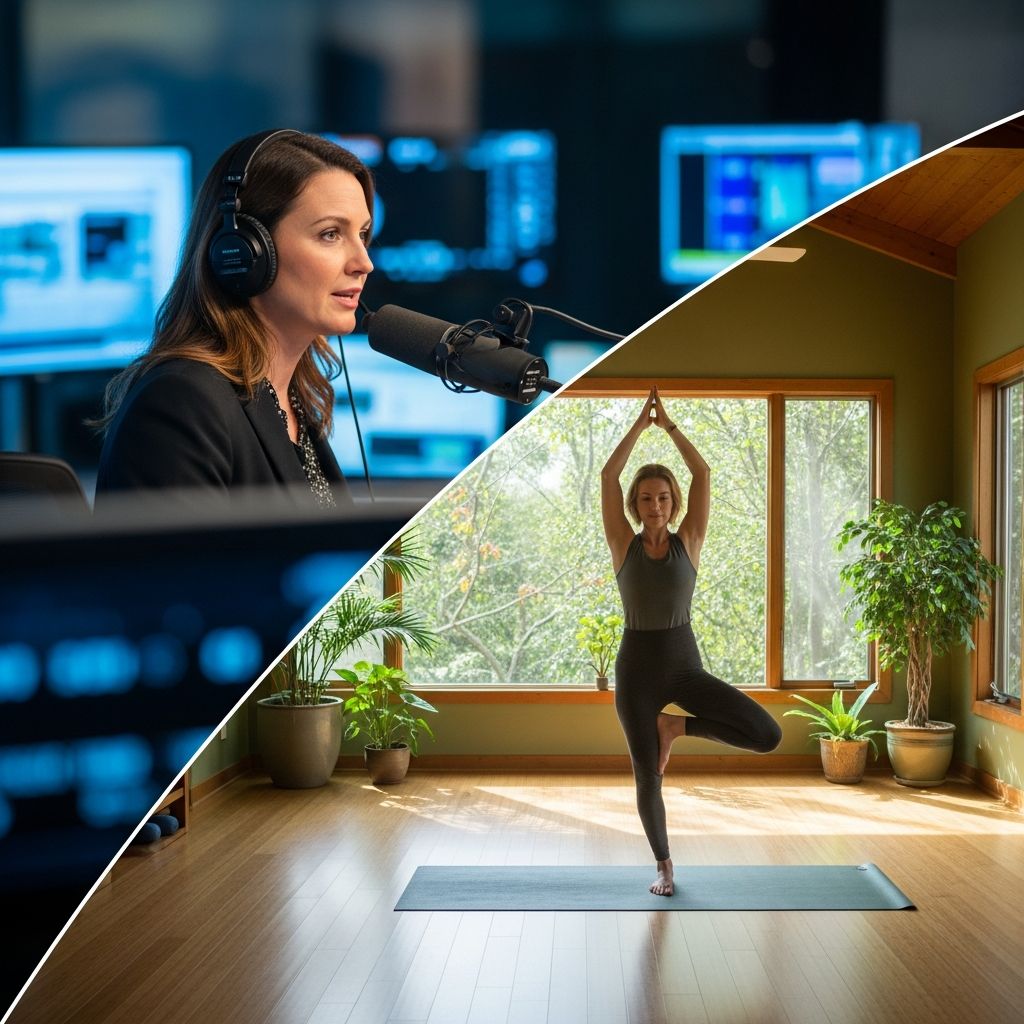
Mary Strong’s journey from sports broadcasting to founding The Green Yogi is a case study in aligning work with values, managing multiple careers, and building a business grounded in wellness and environmental responsibility. Her path illustrates how seemingly unrelated experiences—elite athletics, journalism, and yoga—can combine into a meaningful and sustainable career.
Who Is Mary Strong?
Mary Strong is a former collegiate volleyball athlete, Emmy-nominated sports journalist, and television broadcaster who has worked with major networks covering the NFL, AVP beach volleyball, and other sports. Alongside her media career, she developed a long-term yoga practice that eventually led her to open The Green Yogi, an eco-conscious power yoga studio with locations in California.
Her story reflects a broader trend: many professionals are no longer satisfied with a single linear career path and are instead designing portfolio careers that blend income, purpose, and lifestyle.
The Spark Behind The Green Yogi
The Green Yogi grew from a desire to share the mental clarity and stress relief Mary experienced through yoga while honoring her commitment to environmental stewardship. Rather than opening a conventional studio, she designed a space that prioritizes both inner wellbeing and planetary health.
| Influence | How It Shaped The Green Yogi |
|---|---|
| Athlete background | Emphasis on strong, athletic power yoga and performance-oriented teaching. |
| Broadcast career | High standards for professionalism, consistency, and communication. |
| Environmental values | Eco-conscious building choices, low-waste studio operations, and community education on sustainability. |
Designing an Eco-Conscious Yoga Studio
Green business practices are not just a branding choice; they have measurable impacts on energy use, indoor air quality, and community health. The Green Yogi incorporates multiple sustainability strategies from the build-out to daily operations, echoing broader guidelines for green building promoted by organizations like the U.S. Green Building Council.
Key Sustainability Principles
- Reuse before replacing: Preserving existing walls and flooring where possible to avoid construction waste and embodied carbon.
- Choose low-toxicity materials: Using low-VOC paints and finishes to support healthier indoor air quality, consistent with recommendations from environmental and public health agencies.
- Source responsible wood: Incorporating Forest Stewardship Council (FSC)-certified wood to support more sustainable forestry practices.
- Reduce single-use products: Avoiding paper and plastic bags in the boutique and minimizing disposable items.
- Conserve water and energy: Using landscaping that reduces irrigation needs and incorporating energy-conscious choices in lighting and climate control.
- Digitize administration: Implementing paperless check-in and registration systems.
These decisions reflect broader research showing that green building and efficient resource use can significantly reduce energy consumption and emissions while improving occupant health.
Balancing Broadcasting and Entrepreneurship
For a period, Mary split her time between live sports broadcasting—often involving travel, late nights, and tight production schedules—and running a studio that demanded consistent presence and community engagement.
Practical Strategies for Managing Two Careers
- Clear boundaries: Designating non-negotiable studio hours and focused windows for broadcast preparation.
- Systems over heroics: Investing in reliable scheduling software, automated reminders, and transparent communication with staff.
- Delegation: Hiring and mentoring trusted teachers and managers so the studio can function smoothly when she is on the road.
- Aligned priorities: Treating both careers as extensions of core strengths—storytelling in broadcasting and teaching presence and resilience in yoga.
Her experience aligns with research on “dual career” professionals, which emphasizes the importance of planning, social support, and clear role expectations to avoid burnout.
Building a Yoga Studio with a Strong Identity
The Green Yogi is more than a room with yoga mats; it is a branded experience built around specific values and a consistent teaching style.
Elements of The Green Yogi Identity
- Signature style: Athletic, yet accessible power yoga that appeals to both beginners and advanced practitioners.
- Community-first approach: Regular events, workshops, and local partnerships to keep the studio connected to its neighborhood.
- Eco-chic aesthetic: Clean, modern design with natural materials and calming colors that mirror its sustainability ethos.
- Teacher development: Coaching instructors to maintain high standards of sequencing, safety, and presence.
By anchoring the studio in a clear identity, Mary differentiates The Green Yogi in a crowded wellness market and builds loyalty beyond class pricing.
Lessons for Aspiring Yoga and Wellness Entrepreneurs
For professionals considering a shift into yoga, fitness, or wellness, Mary’s story offers several practical takeaways.
1. Let Your Practice Mature Before You Teach
Many successful studio owners developed a deep personal practice long before they opened a business. A sustained commitment to yoga or any modality helps shape a distinctive teaching voice and a more grounded leadership style.
2. Treat Teaching as a Craft
- Take reputable teacher training programs and continue your education through workshops and mentorship.
- Study anatomy, injury prevention, and inclusive cuing to improve safety and accessibility.
- Solicit feedback and reflect on each class as part of a continuous improvement process.
3. Understand the Realities of Studio Ownership
Studio ownership blends passion with logistics: leases, insurance, payroll, marketing, cleaning schedules, and community management. Aspiring owners benefit from shadowing existing studio leaders or managing classes before signing a lease.
4. Embed Values into Daily Operations
Whether your focus is sustainability, accessibility, or trauma-sensitive teaching, values need to appear in everyday decisions: vendor choices, pricing, hiring, and programming. The Green Yogi’s consistent eco-choices are a practical example of this alignment.
Mental Health, Yoga, and High-Pressure Careers
Mary’s transition from full-time broadcasting into a more balanced portfolio—including yoga—reflects a broader recognition of the mental health challenges associated with high-pressure work. Research has shown that long hours, performance pressure, and travel can contribute to stress and burnout among media professionals and other demanding fields.
Yoga, mindfulness, and movement-based practices are increasingly used to manage work-related stress, with some studies indicating benefits for anxiety, perceived stress, and overall quality of life when practiced regularly.
How a Mind-Body Practice Supports Demanding Work
- Regulating the nervous system: Breath-centered practices can help calm physiological responses to stress.
- Improving focus: Meditation and mindful movement may enhance attention and decision-making.
- Supporting physical resilience: Strength and flexibility training offset the impacts of travel, long sitting hours, and irregular schedules.
- Creating community: Studios can provide social support networks that buffer against burnout.
Designing a Purpose-Driven Career Path
Mary’s career trajectory underscores the idea that your first profession does not define your entire life. She leveraged transferable skills—on-camera communication, discipline from athletics, and leadership—to build a second career that feels more aligned with her values.
Steps to Begin Redesigning Your Career
- Clarify your values: Identify what feels non-negotiable—such as environmental impact, creative expression, flexibility, or community.
- Audit your skills: List strengths developed in your current and past roles that could translate into new industries.
- Experiment on a small scale: Teach part-time, volunteer, or launch a pop-up offering before fully transitioning.
- Build a supportive network: Connect with mentors, peers, and potential collaborators in your target field.
- Plan financially: Prepare for a ramp-up period, including savings, part-time work, or phased transitions.
Frequently Asked Questions (FAQs)
How did Mary Strong move from sports broadcasting into yoga entrepreneurship?
She maintained a long-term yoga practice alongside her work as a sports journalist and NFL broadcaster, then chose to formalize that passion by opening The Green Yogi—initially while still working in television—before fully embracing a blended career that includes studio ownership, teaching, and media work.
What makes The Green Yogi different from a typical yoga studio?
The Green Yogi emphasizes athletic power yoga, community connection, and environmentally conscious design. The studio uses low-VOC materials, limits single-use products, preserves existing structures to reduce waste, and incorporates sustainable purchasing and operations strategies.
Do I need a broadcasting or athletic background to follow a similar path?
No. The core lessons from Mary’s story are about aligning work with values, developing real expertise in your discipline, and thoughtfully designing transitions. Your unique background—whether in finance, education, healthcare, or the arts—can similarly inform a distinctive wellness or entrepreneurial path.
Is owning a yoga studio financially sustainable?
Studio economics vary widely by region, size, and business model. Owners often combine revenue from group classes, workshops, teacher trainings, private sessions, and retail. Those who succeed tend to treat their studios as businesses—analyzing costs, pricing strategically, and diversifying offerings—rather than relying solely on drop-in class income.
How can I make my own wellness business more eco-friendly?
- Choose low-toxicity and durable materials for any build-out or renovations.
- Use digital systems instead of paper wherever possible.
- Limit single-use plastic and encourage reusable water bottles and bags.
- Source from vendors with clear sustainability commitments.
- Educate your community about the environmental impact of everyday decisions.
References
- Mary Strong – The Green Yogi — The Green Yogi. 2024-01-01. https://thegreenyogi.com/instructors/mary-strong/
- Mary Strong – IMDb — IMDb. 2023-01-01. https://www.imdb.com/name/nm1720191/
- Mary Strong — Wikipedia / various cited sources. 2023-08-01. https://en.wikipedia.org/wiki/Mary_Strong
- An Interview With Mary Strong, NFL Broadcaster and Owner of The Green Yogi — Career Contessa. 2014-01-01. https://www.careercontessa.com/interviews/mary-strong-the-green-yogi/
- NFL Broadcaster Mary Strong Finds True Calling in Yoga — Elephant Journal. 2010-08-01. https://www.elephantjournal.com/2010/08/nfl-broadcaster-mary-strong-finds-true-calling-in-yoga/
- Six Yoga Studios Going the Extra Green Mile — Rubicon. 2018-04-19. https://www.rubicon.com/blog/six-yoga-studios-going-green/

Medha Deb is an editor with a master's degree in Applied Linguistics from the University of Hyderabad. She believes that her qualification has helped her develop a deep understanding of language and its application in various contexts. Medha specializes in the areas of beauty, health, sports, and wellness and is committed to ensuring that the content on the website is…