
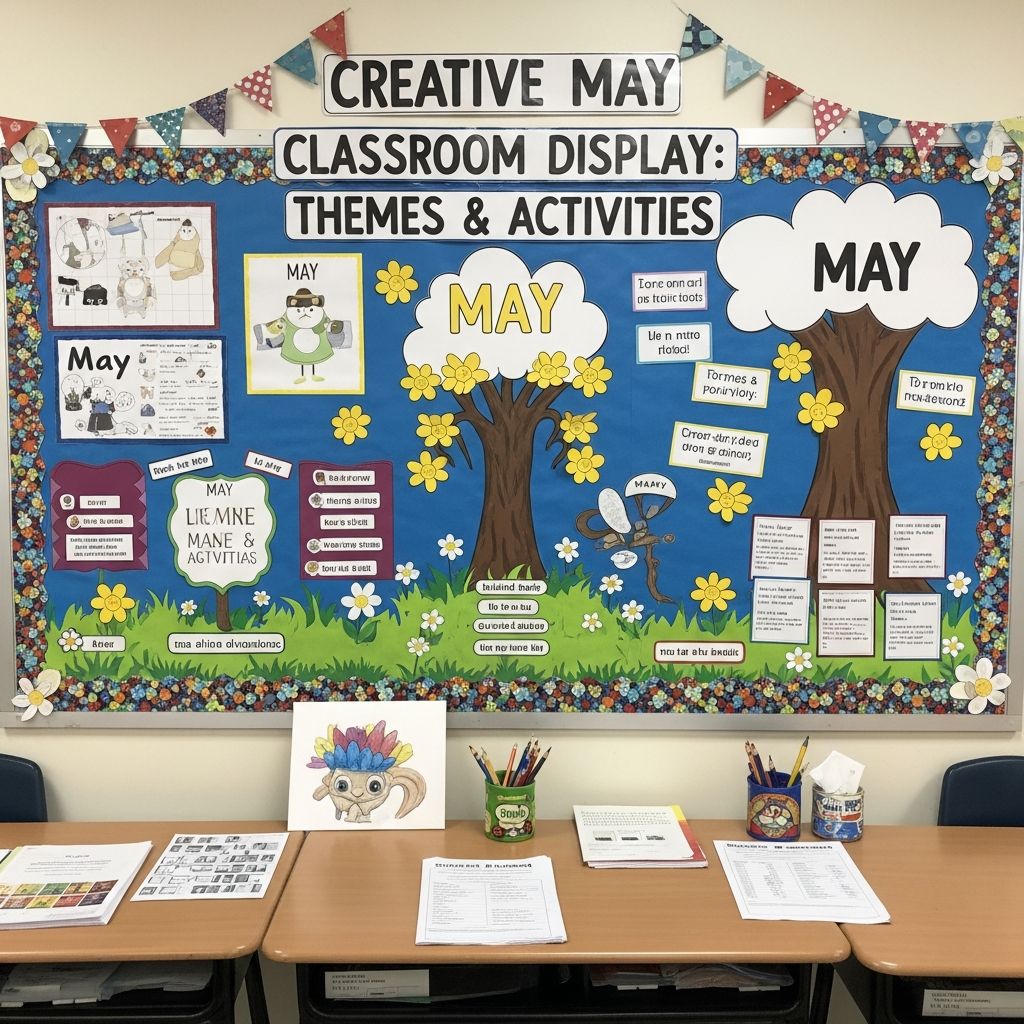
Designing Engaging Classroom Displays for May
As the school year draws to a close, May offers a perfect opportunity to refresh classroom environments with displays that capture the energy of late spring and celebrate end-of-year achievements. Bulletin boards during this month can serve multiple purposes: they reinforce learning objectives, create a visually stimulating classroom environment, and provide opportunities for student creativity and expression. Whether you’re teaching primary grades or intermediate level students, May bulletin boards can be tailored to incorporate current seasonal themes, recognize student accomplishments, and maintain enthusiasm during the final weeks of the academic calendar.
The key to creating effective bulletin boards lies in selecting themes that resonate with students while remaining educationally purposeful. Spring provides natural inspiration through blooming flowers, outdoor activities, and seasonal weather patterns. Additionally, May hosts numerous commemorative occasions and awareness months that can inform your display designs.
Celestial and Space-Themed Displays
Students of all ages are naturally fascinated by astronomy and the night sky. Creating a constellation-focused bulletin board engages learners in multiple ways. Begin by introducing students to the mythology and cultural stories associated with different constellations. Many civilizations have developed their own interpretations of star patterns, providing rich opportunities for comparative learning and cultural exploration.
Once students have studied constellation narratives, invite them to create their own stories inspired by star patterns. This writing activity encourages imaginative thinking and personal connection to astronomical concepts. Students can then construct visual representations of their invented constellations using accessible craft materials. Black construction paper serves as an excellent backdrop, while chalk and adhesive star stickers allow students to plot their constellation patterns. The combination of written narrative and visual representation creates a comprehensive display that showcases both literacy skills and creative thinking.
This type of display works particularly well for intermediate grades and can be differentiated by adjusting the complexity of the stories or the size of the construction paper used. Consider arranging student work in clusters or overlapping patterns to create visual depth on your bulletin board.
Handprint and Floral-Inspired Creations
Hand-print activities have long been classroom staples because they produce immediate, colorful results while requiring minimal materials. During May, handprint projects can be transformed into spring flowers or floral arrangements. This approach works exceptionally well for primary grades and younger learners who benefit from concrete, tactile art experiences.
To create handprint flowers, students trace or print their hands on large construction paper sheets, transforming fingers into flower petals. The creative possibilities expand when students incorporate writing components. They might compose short pieces about spring renewal, reflections on growth throughout the school year, personal memories associated with May, or messages celebrating important people in their lives, such as mothers and caregivers.
The written component can be attached to the back of each flower or arranged around the floral display. This integration of art and writing creates a multifaceted display that demonstrates both creative and academic competencies. Teachers might also display these arrangements in circular patterns, with flowers radiating outward from a central point, or in linear rows to create garden-like effects.
Interactive Reading Incentive Boards
May bulletin boards can serve functional purposes beyond decoration by incorporating reading tracking elements. An interactive kite-themed display provides one creative approach to celebrating student reading accomplishments. Begin with a large kite cutout as the centerpiece of your bulletin board. Attach a ribbon or string extending from the kite across the entire display area.
Students record their reading progress on bow-shaped paper cutouts, including their name, book title, author, and a one-sentence summary. Each bow is attached along the ribbon, creating a visual representation of the class’s collective reading achievement. As more students complete books, the ribbon extends further, creating anticipation and motivation as the class works toward a predetermined length goal.
This display format addresses multiple educational objectives simultaneously: it promotes reading engagement, provides opportunities for written summarization, creates visual motivation through the growing ribbon, and celebrates individual accomplishments within a collective context. Teachers can adjust participation requirements based on grade level and reading proficiency.
Plant Science and STEM Integration
May’s warmer weather makes it an ideal time to incorporate plant science into bulletin board displays. A sunflower-themed STEM board combines artistic elements with scientific learning. Students can create sunflower craft projects while simultaneously learning about plant structure, growth cycles, and pollination.
One effective approach involves having students create sunflower cutouts and contribute factual information cards about plants or sunflowers specifically. Information might include plant anatomy terms, growth requirements, pollination processes, or interesting facts about different plant species. By arranging these elements on the bulletin board, you create an educational display that teaches scientific concepts while showcasing student creativity.
Coffee filter flowers provide another versatile option for spring displays. By dyeing coffee filters with washable markers and water, students create delicate, colorful flowers that can be arranged into wreaths, bouquets, or garden scenes. This activity introduces basic color mixing while producing visually striking results suitable for any May bulletin board.
Celebrating End-of-Year Milestones
As May progresses, bulletin boards can shift focus toward celebrating the approaching conclusion of the school year. Displays featuring the sun with student names written on rays create warm, celebratory presentations perfect for recognizing each class member. Students might contribute self-portraits, written reflections on their year, or personal goals for the summer months.
Summer-themed displays invite students to imagine and describe their upcoming break. Providing writing prompts such as “My summer adventure will be…” or “This summer, I want to…” encourages reflection and creative expression. Student responses can be displayed on colorful sand buckets, beach pails, or other summer-themed cutouts. For added visual interest, three-dimensional elements created from dollar-store supplies can enhance the display’s appeal.
Bird Research and Writing Connections
May’s natural abundance of bird activity provides excellent opportunities for inquiry-based learning. Students can create bird cutouts and use them as springboards for research activities or end-of-year writing projects. This approach accommodates diverse learning styles and interests, as students can choose birds they personally find fascinating.
The bulletin board can display student-created birds alongside their research findings or creative writing pieces. Teachers might provide fact cards about bird species, migration patterns, or nesting behaviors to accompany the visual displays. This format transforms the bulletin board into an interactive learning resource that supports literacy, scientific inquiry, and artistic expression simultaneously.
Themed Display Planning Considerations
Successful May bulletin boards share several common characteristics regardless of specific theme. Effective displays maintain visual balance by distributing elements evenly across the board space. Color coordination—whether through planned harmony or intentional contrast—creates visual cohesion. Text elements should be easily readable from classroom seating areas, suggesting larger fonts for titles and clearly legible handwriting or printed labels.
Student involvement in display creation significantly increases engagement and ownership. Rather than teachers completing all artwork and assembly, involving students in design decisions, material preparation, and arrangement transforms bulletin boards into collaborative projects. This participation also means displays remain fresh and student-centered rather than appearing overly polished or teacher-created.
Rotating elements throughout May maintains visual interest and allows for curriculum connections across multiple subjects. A single bulletin board might feature constellations during the first week, transition to plant science the following week, and conclude with end-of-year reflections in the final weeks.
Frequently Asked Questions
Q: What materials are most cost-effective for May bulletin board projects?
A: Construction paper, coffee filters, markers, and student-created artwork provide excellent, budget-friendly options. Dollar stores offer seasonal supplies, and recycled materials can be incorporated creatively. Many projects require materials already available in typical classrooms.
Q: How can I adapt May bulletin board ideas for mixed-grade classrooms?
A: Differentiate by adjusting project complexity, providing varied writing prompt difficulty levels, and allowing student choice in activity participation. Multi-grade displays can celebrate diverse age groups’ contributions without requiring separate boards.
Q: Should bulletin boards remain displayed throughout May or change weekly?
A: Both approaches have merit. Changing displays weekly maintains novelty and allows exploration of diverse themes, while month-long displays enable more substantial project development and allow student contributions to accumulate throughout May.
Q: How do I incorporate curriculum standards into decorative bulletin boards?
A: Select themes aligning with current units of study, include written components addressing literacy standards, incorporate factual information supporting science standards, and use displays for formative assessment of student learning.
Q: What if I have limited bulletin board space in my classroom?
A: Maximize vertical space using hanging elements, utilize door displays, create three-dimensional displays on shelving or tables, or rotate displays monthly to feature different themes without requiring permanent space allocation.
References
- May Bulletin Board Ideas — The Teacher’s Corner. Accessed April 2026. https://bulletinboards.theteacherscorner.net/monthly/may/
- 21 May Bulletin Board Ideas From Real Teachers — Teach Simple. Accessed April 2026. https://teachsimple.com/blog/bulletin-boards/may-bulletin-boards/
- 16 Uplifting May Bulletin Boards for Classrooms — We Are Teachers. Accessed April 2026. https://www.weareteachers.com/may-bulletin-boards/

- Integrated M.A. in Applied Linguistics, University of Hyderabad
- 5+ years in editorial, instructional, SEO, and research-based writing
Sneha is a relationships and lifestyle writer with a strong foundation in applied linguistics and certified training in relationship coaching. She brings over five years of writing experience to theskillvault, crafting thoughtful, research-driven content that empowers readers to build healthier relationships, boost emotional well-being, and embrace holistic living. Her writing and insights reflect the belief that beauty, happiness, and wellness…