
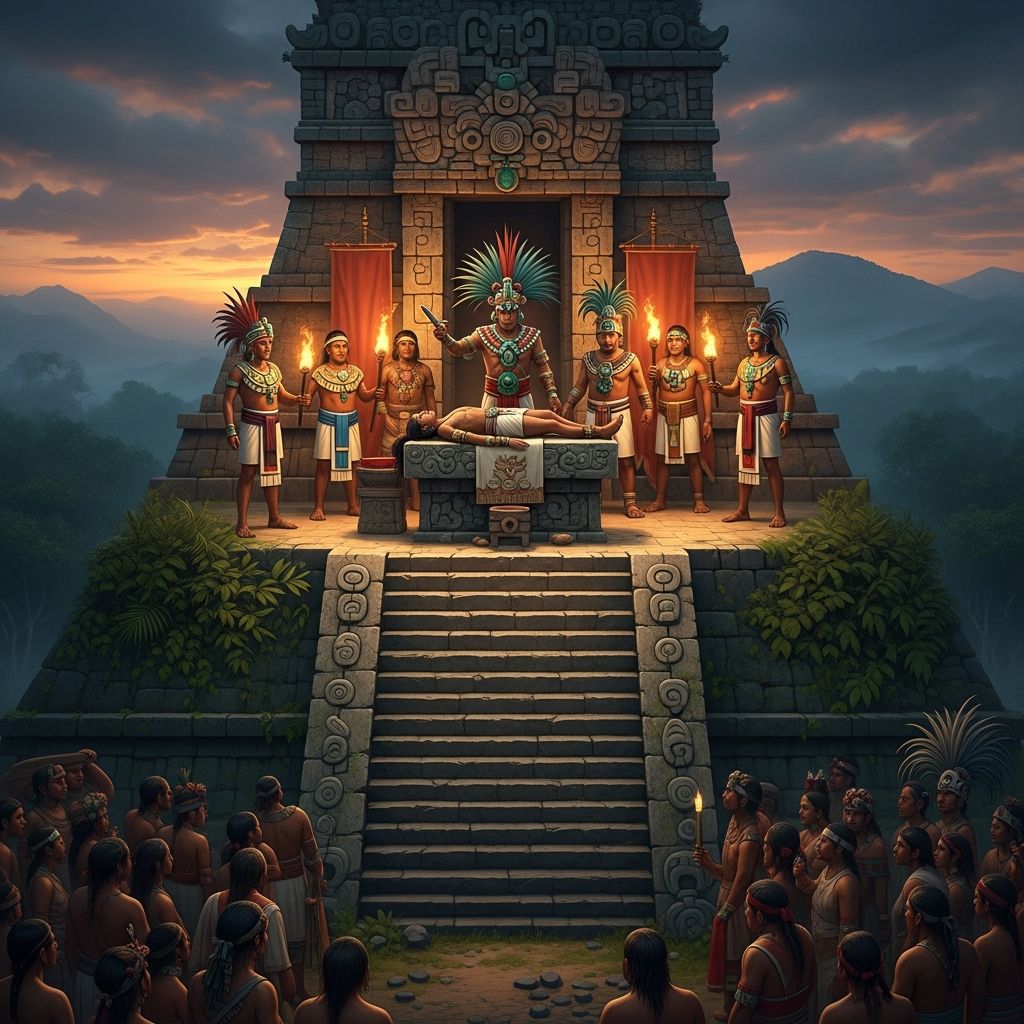
The ancient Maya civilization, flourishing in Mesoamerica from around 2000 BCE to the Spanish conquest in the 16th century, integrated human sacrifice into its religious framework as a profound act of devotion. These rituals were not random acts of violence but structured ceremonies believed to nourish gods, ensure cosmic balance, and sustain life cycles like agriculture and warfare. Blood, viewed as a life force, was central, with human offerings representing the ultimate gift to deities.
Religious Foundations of Maya Sacrifices
Maya cosmology portrayed the universe as fragile, requiring constant renewal through blood to feed gods who upheld the sun’s movement, rain, and fertility. Deities like Chac, the rain god, and Itzamna, the creator, demanded sustenance; neglecting them risked drought, famine, or collapse. Human sacrifice elevated this beyond animal offerings, symbolizing total submission.
- Blood as Life Force: Known as chu’lel, blood nourished supernatural entities, drawn from piercings or extractions.
- Cosmic Debt: Myths like the Popol Vuh describe gods sacrificing themselves for humanity, obligating reciprocal offerings.
- Key Events: Sacrifices marked temple dedications, ruler accessions, and solstices, tying society to divine favor.
Auto-sacrifice—nobles piercing tongues, ears, or genitals with stingray spines or obsidian blades—preceded larger communal rites, blurring elite and public roles in piety.
Methods and Execution of Sacrificial Rites
Maya priests orchestrated diverse techniques, each tailored to specific gods or occasions, often atop pyramids amid chants and incense. Heart extraction stood paramount, evoking maize god decapitations in myth.
| Method | Description | Context/Deity |
|---|---|---|
| Heart Removal | Priest (nacom in black garb) sliced chest with obsidian knife; heart offered while beating, body tumbled down stairs. | Temple summits; general nourishment. |
| Decapitation | Victim’s head severed, often displayed on skull racks; reenacted mythic killings. | War captives, ballgame losers. |
| Drowning | Adorned victims cast into cenotes (sacred wells) with treasures. | Chichen Itza’s Sacred Cenote for Chac. |
| Arrow Sacrifice | Bound victim shot with arrows by dancers aiming for heart. | Fertility rites. |
| Other | Beating, mutilation, or immolation; children sometimes buried alive. | Ballgames, building dedications. |
Victims were painted blue, symbolizing divinity, and held by chacs (assistants named for rain god). Post-ritual, remains fed the earth, recycling life force.
Selection of Victims: From Captives to Children
Not all Maya faced the knife; selections emphasized purity or enmity. High-value targets included enemy nobles, whose defeat glorified rulers.
- War Prisoners: Elite captives from battles, sacrificed to validate conquests.
- Social Outcasts: Slaves, orphans, illegitimate children—low-status lives deemed expendable.
- Children: Prized for innocence; 1967 Chichen Itza chultun revealed 100+ boys aged 3-4, many twins, linking to Hero Twin myths in Popol Vuh.
Genetic analysis of 64 skeletons confirmed all males, some genetically related across generations, suggesting honored local families contributed sons to balance cosmos, not just captives as Spanish accounts claimed. Twins evoked divine twins Hunahpu and Xbalanque, who overcame underworld trials.
Archaeological and Artistic Evidence
Excavations and iconography affirm ubiquity. Classic period (250-900 CE) murals, ceramics, and stelae depict bound figures, hearts aloft, heads on racks. Chichen Itza’s cenote yielded jade-adorned skeletons; ball courts show loser-sacrifice scenes.
Recent DNA from Chichen Itza ties victims to modern Yucatán Maya, revealing genetic resilience against conquest-era diseases. Postclassic persistence into 17th century indicates deep entrenchment.
Influence from Neighboring Cultures
Toltecs introduced intensified practices post-900 CE, evident at Chichen Itza under Toltec-Itza rule. Pilgrims hurled jewel-laden victims into cenotes. Yet Maya adapted uniquely, blending with local myths.
The Ballgame: Sacrifice in Competition
The ritual ballgame (pitz) merged sport and theology. Teams propelled rubber balls through stone hoops using hips; losers faced sacrifice, symbolizing underworld descent and rebirth. Carvings show decapitated players, heads as balls in mythic echoes.
This gamified death reinforced hierarchy: victors gained divine favor, losers eternal glory.
Decline and Colonial Encounters
Spanish chroniclers like Diego de Landa documented blue-painted victims atop pyramids. Conquest suppressed but didn’t erase practices; some persisted covertly. Modern scholarship reframes sacrifices as worldview cornerstones, not barbarism.
Frequently Asked Questions
Why did the Maya sacrifice children specifically?
Children, especially twins, embodied purity and mythic heroes from Popol Vuh; DNA from Chichen Itza confirms boys aged 3-4 in ritual contexts.
Were all Maya sacrifices heart extractions?
No, methods varied: drowning, arrows, decapitation suited different gods and sites.
Did Maya elites participate in sacrifices?
Yes, through bloodletting; full human offerings targeted captives or designated innocents.
How does genetics inform Maya sacrifice?
Chichen Itza analysis shows male twins from local lineages, tying to creation myths.
Was human sacrifice unique to Maya?
No, Toltecs influenced them; Aztecs amplified it, but Maya integrated cosmologically.
References
- Maya Human Sacrifice — MayaIncaAztec.com. Accessed 2026. https://www.mayaincaaztec.com/maya/maya-human-sacrifice
- Human sacrifice in Maya culture — Wikipedia (drawing from peer-reviewed sources). Accessed 2026. https://en.wikipedia.org/wiki/Human_sacrifice_in_Maya_culture
- Child sacrifices tied to Mayan hero twin myth revealed by ancient DNA — Science.org. 2024-09-25. https://www.science.org/content/article/child-sacrifices-tied-to-mayan-hero-twin-myth-revealed-by-ancient-dna
- Maya Ritual and Myth: Human Sacrifice in the Context of the Ballgame — OpenSIUC (Southern Illinois University). 2014. https://opensiuc.lib.siu.edu/cgi/viewcontent.cgi?article=1335&context=uhp_theses

- Integrated M.A. in Applied Linguistics, University of Hyderabad
- 5+ years in editorial, instructional, SEO, and research-based writing
Sneha is a relationships and lifestyle writer with a strong foundation in applied linguistics and certified training in relationship coaching. She brings over five years of writing experience to theskillvault, crafting thoughtful, research-driven content that empowers readers to build healthier relationships, boost emotional well-being, and embrace holistic living. Her writing and insights reflect the belief that beauty, happiness, and wellness…