
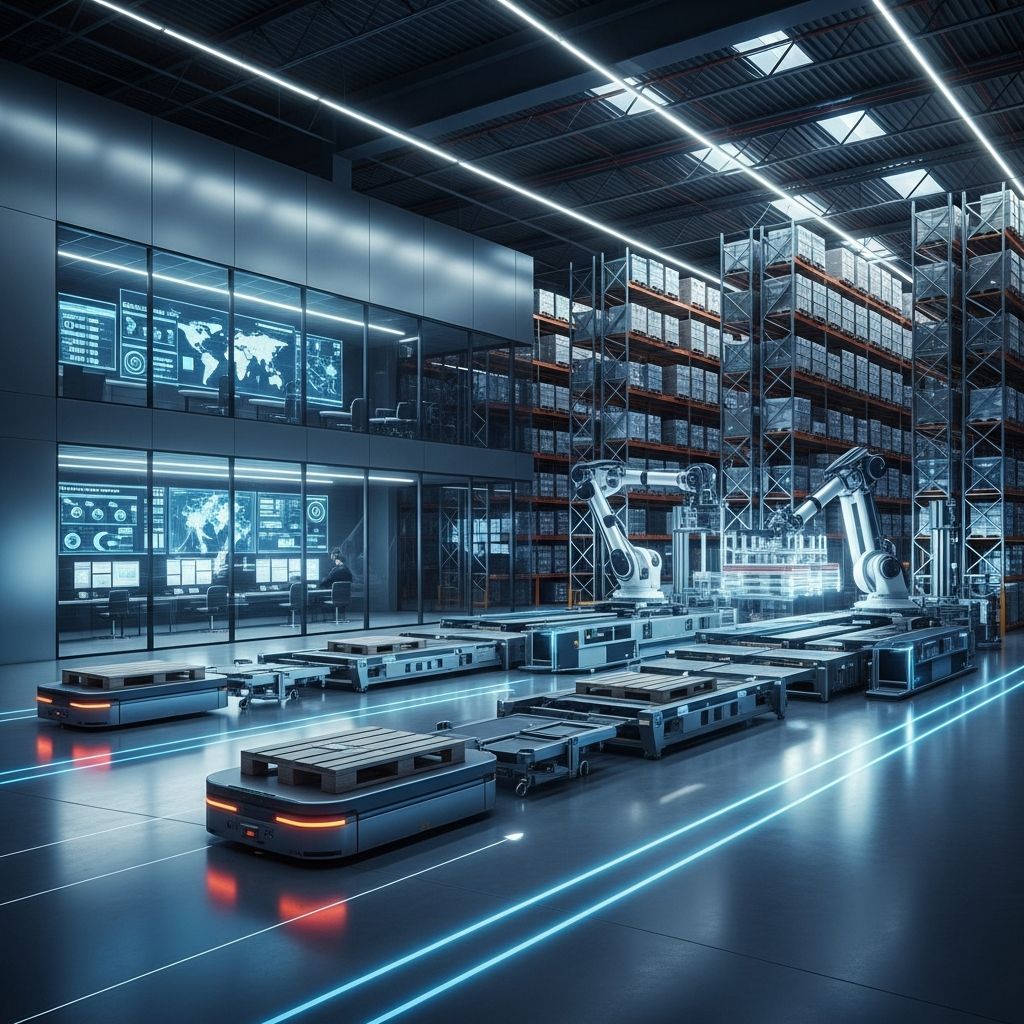
McLane is one of the quiet giants of the American economy: a large-scale supply chain and logistics company that keeps grocery stores, convenience outlets, chain restaurants, and other retailers stocked every day. While its trucks and trailers are highly visible on highways, the complexity of the work happening behind the scenes—inside distribution centers, transportation fleets, and corporate offices—is less widely understood.
This article explores how a company like McLane operates, the types of careers it offers, and what makes its culture and operations distinctive in the broader logistics and supply chain industry.
What McLane Does in the Supply Chain Ecosystem
At its core, McLane is a wholesale supply chain services provider focused on moving products efficiently from manufacturers to retailers and foodservice operators. Companies in this sector typically specialize in:
- Warehousing and distribution – operating large distribution centers that store, pick, and ship products for customers.
- Transportation – managing fleets of trucks and trailers, drivers, and routing systems.
- Inventory management – balancing sufficient stock with minimal waste and cost.
- Data and technology services – using software and analytics to forecast demand, track orders, and optimize routes.
Distribution and logistics firms are a critical part of the U.S. food system. According to the U.S. Department of Agriculture, the food and beverage manufacturing and distribution industry supports millions of jobs across production, processing, warehousing, and retail, forming one of the largest employment segments in the country. McLane and similar firms help connect each step in that chain.
Key Business Segments: Grocery, Convenience, and Foodservice
Large distributors like McLane typically organize operations around three major customer groups: grocery retailers, convenience store operators, and foodservice brands such as quick-service restaurants and institutional dining.
Grocery Distribution
Grocery-focused distribution centers handle an enormous variety of products. A single facility can manage tens of thousands of SKUs spanning dry goods, refrigerated items, frozen foods, and non-food products. To serve grocery retailers effectively, distributors focus on:
- Multi-temperature storage – maintaining ambient, refrigerated, and frozen zones under one roof.
- Rapid order turnaround – enabling daily or near-daily deliveries to keep shelves stocked and fresh.
- Compliance and food safety – following strict handling, storage, and traceability rules based on federal and state regulations.
Convenience Store Networks
Convenience stores require frequent, smaller deliveries with a mix of fast-moving products such as beverages, snacks, prepared foods, and tobacco. To serve this channel, distribution networks emphasize:
- Tight delivery windows for urban or high-traffic locations.
- High service reliability to avoid stockouts on top-selling items.
- Category insights to help store operators plan assortments and promotions.
Foodservice and Restaurant Support
On the foodservice side, McLane-type operations support chain restaurants, cafeterias, institutional kitchens, and other high-volume meal providers. This translates into:
- Menu-driven logistics – aligning purchasing and distribution with specific recipes and menu rotations.
- Strict quality and temperature controls for perishable ingredients.
- High coordination across suppliers, central kitchens, and individual locations.
How a Modern Distribution Center Operates
A typical McLane distribution center (DC) is a highly engineered environment that blends physical labor, automation, and data systems. A simplified view of the operational flow looks like this:
| Stage | Primary Activities | Key Technologies |
|---|---|---|
| Inbound | Receive goods, verify quantities, inspect for damage | Barcode scanning, electronic data interchange (EDI) |
| Storage | Place stock into racks, pallet positions, or case-flow lanes | Warehouse management systems (WMS), slotting algorithms |
| Order Picking | Select cases or eaches based on customer orders | Voice picking, RF scanners, pick-to-light systems |
| Consolidation | Sort picked items onto pallets or into containers by route | Conveyors, sortation equipment, load planning tools |
| Outbound | Load trucks, verify manifests, dispatch for delivery | Transportation management systems (TMS), GPS tracking |
According to research on warehouse automation, technologies such as WMS, scanning, and voice-directed picking can significantly increase productivity and reduce picking errors compared with manual paper-based systems. Companies like McLane typically invest in such systems to maintain efficiency at scale.
Technology and Data as Competitive Advantages
Logistics leaders increasingly differentiate themselves through technology. Supply chain disruptions in recent years have underscored the business value of real-time visibility, predictive analytics, and resilient networks. McLane’s operations reflect several of these broader industry trends:
- Advanced routing tools to design efficient delivery paths that reduce miles, fuel use, and emissions.
- Demand forecasting models that anticipate order volumes based on seasonality, promotions, and macroeconomic trends.
- Telematics and driver monitoring to improve safety, manage hours-of-service compliance, and track fleet performance.
- Data dashboards that give customers visibility into orders, inventory levels, and delivery performance.
The World Bank and other organizations note that efficient logistics systems—with robust digital infrastructure—are strongly linked to national competitiveness and economic growth. Companies like McLane play a direct role in that equation by modernizing the flow of physical goods with digital tools.
People at the Center: Jobs and Career Paths
Despite the rising role of automation, distribution and logistics remain people-intensive industries. The U.S. Bureau of Labor Statistics projects continued employment growth in transportation and warehousing roles, driven by e-commerce, retail demand, and the complexity of modern supply chains. McLane’s staffing model mirrors this, offering a mix of frontline, technical, and corporate roles.
Frontline Distribution Roles
Frontline positions are the backbone of any distribution company. Common opportunities include:
- Warehouse selectors and material handlers – picking, packing, and staging orders; replenishing inventory; operating pallet jacks or forklifts.
- Truck drivers – transporting products from DCs to customer locations, often on regional routes that allow frequent home time.
- Maintenance technicians – ensuring material handling equipment, refrigeration systems, and building infrastructure remain operational.
These jobs can involve physical work and non-traditional schedules, but they often offer clear pay structures, overtime possibilities, and defined pathways to supervisory roles.
Corporate and Professional Careers
Beyond the warehouse, McLane-style organizations require a broad set of professional skills:
- Supply chain and operations management – planning capacity, balancing inventory, and optimizing network design.
- Information technology and data analytics – supporting WMS and TMS platforms, developing dashboards, and analyzing performance metrics.
- Finance, HR, and legal – managing budgeting, workforce programs, contracts, and compliance.
- Sales and account management – building relationships with retail and restaurant customers, negotiating service levels, and coordinating promotional initiatives.
As logistics becomes more data-driven, roles that blend operational knowledge with analytics or software expertise are especially in demand.
Culture, Values, and Safety
McLane emphasizes culture and values as strongly as operational performance. This mirrors a wider trend in logistics, where employee engagement and safety are now seen as core business drivers rather than support functions.
Commitment to Safety
Distribution and trucking carry inherent physical risks. The U.S. Occupational Safety and Health Administration (OSHA) notes that warehousing hazards include forklift incidents, falls, and ergonomic strain, making systematic safety programs essential. Companies like McLane address this through:
- Regular safety training for forklift operation, lifting techniques, lockout/tagout, and hazard recognition.
- Driver safety initiatives focused on defensive driving, fatigue management, and compliance with federal hours-of-service rules.
- Incident reporting and root-cause analysis to reduce repeat accidents and improve procedures.
Values and Team Culture
While specifics vary by location, common cultural themes in companies like McLane include:
- Service orientation – putting customers and end consumers at the center of decisions.
- Accountability – measuring performance and owning results at individual and team levels.
- Respect and inclusion – recognizing that diverse backgrounds strengthen problem-solving and innovation.
- Continuous improvement – using Lean or similar methodologies to refine processes and remove waste.
Research from consulting and academic organizations has linked strong workplace culture and engagement to better safety, lower turnover, and higher productivity in industrial settings.
Sustainability and the Future of Logistics
Environmental performance is increasingly important for large distribution companies. Retail and foodservice customers are setting emissions and waste-reduction goals, and they expect logistics partners to contribute.
Across the industry, leading distributors are exploring:
- Fleet efficiency improvements – using newer engines, route optimization, driver coaching, and aerodynamic equipment to cut fuel consumption.
- Alternative fuels and electrification – piloting electric trucks and low-carbon fuels on suitable routes, especially in urban or short-haul segments.
- Waste and packaging reduction – improving palletization and packaging to reduce damaged goods and shrink.
- Energy management in facilities – investing in LED lighting, high-efficiency refrigeration, and smart building systems.
Global agencies such as the International Energy Agency emphasize that freight, warehousing, and transport efficiency are essential pieces of broader decarbonization strategies. As a large player, McLane contributes by fine-tuning its operations and investing in more sustainable practices over time.
How McLane Fits into Career Planning
For job seekers, McLane represents a gateway into the rapidly evolving world of supply chain and logistics. When evaluating whether a company like McLane is right for you, consider the following dimensions:
- Preferred work environment – Do you thrive in fast-paced, physical settings, or are you more drawn to analytical and office-based roles?
- Schedule and lifestyle – Are you open to night shifts or early mornings? Are regional driving routes compatible with your home life?
- Growth potential – Does the company provide training, cross-functional exposure, and leadership pathways?
- Location stability – Distribution centers and regional hubs are often long-lived assets in their communities, offering stable local employment opportunities.
Frequently Asked Questions About McLane and Logistics Careers
Q: What types of jobs are most common at companies like McLane?
A: The most common roles include warehouse selectors and material handlers, commercial truck drivers, maintenance technicians, and a range of corporate positions in operations planning, IT, finance, HR, and sales. Many employees start in frontline roles and move into supervisory or specialist positions over time.
Q: Is logistics work physically demanding?
A: Many warehouse and driving roles involve physical tasks, such as lifting, operating equipment, or spending long hours on the road. Employers typically provide safety training, ergonomic tools, and equipment to reduce strain, but candidates should be prepared for active work environments.
Q: How important is technology in McLane’s operations?
A: Technology is central to modern logistics. Warehouse management systems, routing software, telematics, and analytics tools are used to coordinate inventory, plan deliveries, and monitor performance. Employees with strong digital skills and a willingness to learn new systems often have additional advancement opportunities.
Q: What skills help employees advance in a distribution company?
A: Consistent performance, reliability, communication skills, and an aptitude for learning new systems are crucial. Experience with data analysis, process improvement, or team leadership can accelerate progression into supervisory, planning, or management roles.
Q: Why are companies like McLane important to the broader economy?
A: Distributors and logistics providers form the backbone of modern commerce. They ensure that food, household goods, and essential products move efficiently from manufacturers to retailers and restaurants. According to the World Bank and other economic research, strong logistics performance is tightly correlated with economic growth and trade competitiveness.
References
- Enhance your article’s visibility: a guide to SEO for journal authors — Wiley. 2019-10-23. https://www.wiley.com/en-us/publish/editor-insights/enhance-your-article-s-visibility-a-guide-to-seo/
- Employment Projections: Transportation and Warehousing — U.S. Bureau of Labor Statistics. 2024-02-01. https://www.bls.gov/emp/tables/employment-by-detailed-industry.htm
- SEO Starter Guide: The Basics — Google Search Central. 2023-08-15. https://developers.google.com/search/docs/fundamentals/seo-starter-guide
- SEO Writing: 16 Tips for Creating SEO-Optimized Content — Semrush. 2024-03-05. https://www.semrush.com/blog/seo-writing/
- Safety and Health Topics: Warehousing — Occupational Safety and Health Administration (OSHA). 2023-05-10. https://www.osha.gov/warehousing
- Food and beverage manufacturing — U.S. Department of Agriculture, Economic Research Service. 2023-06-01. https://www.ers.usda.gov/topics/food-markets-prices/processing-marketing/food-and-beverage-manufacturing/
- Connecting to Compete: Trade Logistics in the Global Economy — World Bank. 2018-07-01. https://openknowledge.worldbank.org/entities/publication/b9af4f87-4a6e-58b1-a2f5-42e72fbda5e5
- Tracking Clean Energy Progress 2023 – Transport — International Energy Agency. 2023-09-26. https://www.iea.org/reports/tracking-clean-energy-progress-2023/transport

- Integrated M.A. in Applied Linguistics, University of Hyderabad
- 5+ years in editorial, instructional, SEO, and research-based writing
Sneha is a relationships and lifestyle writer with a strong foundation in applied linguistics and certified training in relationship coaching. She brings over five years of writing experience to theskillvault, crafting thoughtful, research-driven content that empowers readers to build healthier relationships, boost emotional well-being, and embrace holistic living. Her writing and insights reflect the belief that beauty, happiness, and wellness…