
The Chemical Foundation of Metal Oxidation
Metal oxidation represents one of the most fundamental chemical processes occurring in our environment, affecting everything from industrial infrastructure to everyday household items. At its core, oxidation is a chemical reaction in which a metal loses electrons to oxygen or other oxidizing agents, fundamentally altering the metal’s molecular structure and surface characteristics. This electron transfer process belongs to a broader category of chemical reactions known as redox reactions, where oxidation occurs simultaneously with reduction—the gaining of electrons by another substance.
The term “oxidation” historically became associated with oxygen because this element is highly reactive and readily accepts electrons from metals. However, modern chemistry recognizes that oxidation can occur through reactions with various elements and compounds, not exclusively oxygen. When a metal undergoes oxidation, the electrons move from the metal atoms to the oxidizing agent, resulting in the formation of new chemical compounds called oxides. These oxides typically appear as a surface layer that visually distinguishes the oxidized metal from its original state.
Electron Transfer: The Mechanism Behind Metal Degradation
Understanding the electron transfer mechanism provides insight into why metals are susceptible to oxidation. Metals possess a particular atomic structure that makes them prone to losing electrons. When metallic atoms encounter oxygen molecules, a chemical attraction develops between them. The oxygen atoms, being highly electronegative, pull electrons away from the metal atoms with considerable force. This electron movement is not instantaneous but occurs through a series of atomic interactions.
As electrons transfer from metal to oxygen, the metal atoms transform into positively charged ions, while the oxygen atoms become negatively charged ions. These oppositely charged ions then combine to form stable oxide compounds. For example, when iron undergoes oxidation, it transforms into iron oxide, commonly known as rust. The specific type of iron oxide formed depends on environmental conditions and the oxidation stage, with Fe₂O₃ and Fe₃O₄ being the most frequently encountered compounds in steel corrosion.
Environmental Triggers: When and Where Oxidation Occurs
Metal oxidation does not occur uniformly or spontaneously under all conditions. Specific environmental factors must be present for oxidation to initiate and progress. The primary environmental triggers include atmospheric oxygen exposure, moisture presence, and the presence of electrolytic solutions such as saltwater or acidic substances.
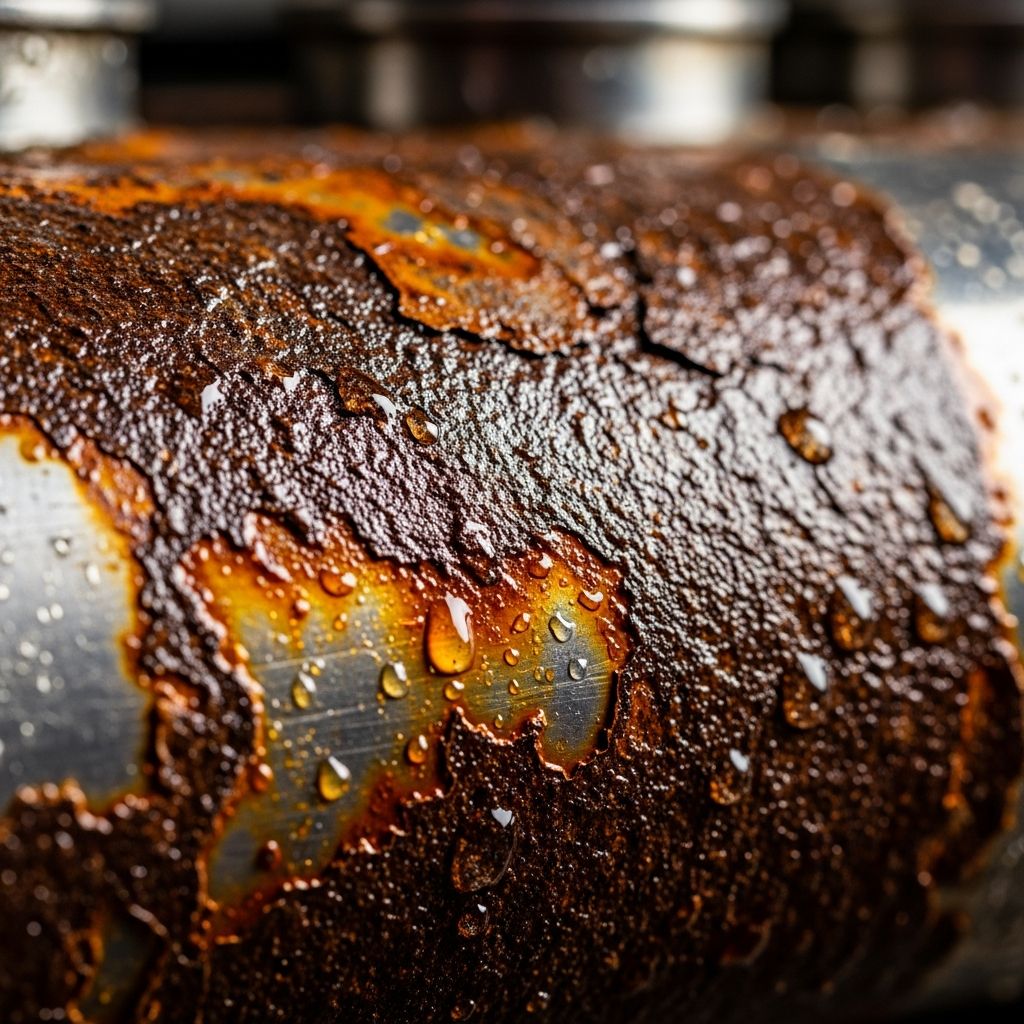
Atmospheric Exposure: When metals interact directly with oxygen in the air, metallic elements in the metal’s composition begin transforming into oxides. This process creates a visible film or layer on the metal’s surface, typically exhibiting rusty or discolored appearance. The speed of atmospheric oxidation varies depending on the metal type, atmospheric conditions, and environmental pollutants present.
Moisture Involvement: Water and humidity significantly accelerate the oxidation process. When metal surfaces become wet or are exposed to high humidity levels, water molecules facilitate electron transfer by acting as an electrolytic medium. The presence of water creates pathways for ionic movement, dramatically increasing oxidation rates compared to dry conditions. This is why coastal areas, where saltwater spray combines with high humidity, experience rapid metal deterioration.
Chemical Exposure: Metals exposed to acids, salts, or other chemical substances experience accelerated oxidation. These chemicals can penetrate protective oxide layers or create conditions that facilitate continuous electron transfer. Industrial environments and areas with chemical pollution present heightened oxidation risks.
The Oxide Layer: Protective Barrier or Continuing Problem
One of the most interesting aspects of metal oxidation involves the formation and behavior of oxide layers on metal surfaces. As oxidation progresses, a layer of metal oxide accumulates on the surface. Initially, this oxide layer can provide some protective benefit by creating a physical barrier between the underlying metal and the oxidizing environment. In some metals like aluminum, this naturally formed oxide layer is sufficiently protective and stable, preventing further deep oxidation and preserving the metal’s structural integrity.
However, in other metals like iron and steel, the oxide layer often proves ineffective as a long-term protective barrier. As the oxide layer develops, its chemical composition and density can create conditions that actually promote continued oxidation. The oxide layer may develop cracks, pores, or impurities that allow oxidizing agents to penetrate and reach the underlying metal. Additionally, if the oxide layer dissolves or is physically damaged, oxidation rapidly resumes.
The rate of electron transfer typically decreases as the oxide layer thickens, potentially causing the oxidation process to slow or even temporarily halt. This passivation effect occurs when the oxide layer becomes sufficiently dense to restrict electron movement. Nevertheless, if environmental conditions change—such as exposure to more aggressive chemical agents or mechanical damage to the oxide layer—oxidation can resume with renewed intensity.
Distinguishing Oxidation from Related Chemical Processes
While oxidation represents a specific chemical process, it is frequently confused with related phenomena, particularly corrosion and rust. Understanding the distinctions between these processes is essential for properly addressing metal degradation.
| Process | Definition | Scope | Reversibility |
|---|---|---|---|
| Oxidation | Electron loss resulting in oxide formation | Surface-focused chemical reaction | Can be halted; oxide can be removed |
| Corrosion | Material deterioration from environmental interaction | Includes oxidation plus material loss and property degradation | Permanent structural damage occurs |
| Rust | Iron oxide formation from iron-oxygen-water reaction | Specific to iron and iron-containing alloys | Permanent; removal possible but reaction cannot reverse |
Oxidation specifically refers to the chemical electron transfer process and typically affects the metal’s surface appearance. Corrosion is a broader phenomenon that encompasses oxidation along with material deterioration, loss of mechanical properties, and dimensional changes. Rust is the specific byproduct when iron undergoes oxidation in the presence of water and oxygen, creating iron oxide compounds.
A critical distinction exists: all rust represents oxidation, but not all oxidation produces rust. Metals like aluminum oxidize to form aluminum oxide, which creates a protective layer rather than the destructive rust seen with iron. This demonstrates that oxidation outcomes vary significantly depending on the metal composition and environmental conditions.
Physical and Functional Consequences of Metal Oxidation
Metal oxidation produces multiple negative effects that extend beyond aesthetic concerns. Understanding these consequences helps explain why oxidation prevention matters for industrial applications and infrastructure maintenance.
Functional Impairment: Oxidation can severely compromise the electrical and thermal conductivity of metals. Oxidized surfaces develop increased electrical resistance, making them unsuitable for applications requiring efficient current flow. Heat transfer capabilities similarly diminish as oxide layers act as insulators. In some applications, oxidized metal surfaces develop permeability issues, leading to leaks in pipes, containers, or structural components.
Durability Degradation: The oxide layer formation gradually weakens the underlying metal structure. As oxidation penetrates deeper into the metal matrix, it compromises mechanical strength and elasticity. Metals that were originally ductile and strong may become brittle and prone to cracking. This degradation is particularly problematic in infrastructure applications where metal components must support heavy loads or resist stress.
Aesthetic Deterioration: Oxidized metal surfaces display characteristic discoloration ranging from brown to reddish-orange hues, depending on the specific oxide compounds formed and environmental factors. This visible degradation affects the appearance of both functional equipment and decorative metal items. For many applications, this aesthetic change alone necessitates replacement or refinishing.
Surface Integrity Loss: Oxidation creates surface irregularities, pitting, and scaling. These surface defects can trap moisture and contaminants, creating localized oxidation cells that accelerate further degradation. The rough, flaking oxide layer reduces the metal’s ability to perform its intended function effectively.
Industrial and Practical Implications
The effects of metal oxidation extend far beyond individual objects. In industrial contexts, widespread metal oxidation represents a significant economic burden. Steel structures, reinforced concrete containing steel reinforcement, machinery, and transportation infrastructure all face oxidation risks. When oxidation proceeds unchecked, these assets deteriorate faster than intended, leading to expensive replacement cycles, operational disruptions, and potential safety hazards.
In marine environments, where saltwater accelerates oxidation dramatically, structures face accelerated deterioration. Offshore platforms, ships, bridge infrastructure near coastal areas, and waterfront facilities require intensive maintenance and protection strategies to combat oxidation. Similarly, industrial facilities handling corrosive chemicals or located in humid climates must implement comprehensive oxidation management programs.
Protective Strategies and Prevention Methods
Given oxidation’s pervasive impact, various strategies have been developed to slow or prevent the process. These approaches generally fall into several categories:
- Coating and Sealing: Applying protective coatings—paint, lacquer, epoxy, or specialized sealants—creates a physical barrier that prevents oxygen and moisture from contacting the metal surface. These coatings must remain intact and be reapplied periodically as they degrade.
- Metal Selection: Using metals with natural oxidation resistance, such as stainless steel or aluminum, reduces oxidation susceptibility. Stainless steel contains chromium, which forms a self-healing protective oxide layer.
- Galvanization: Applying a zinc coating to steel creates a barrier that oxidizes preferentially, protecting the underlying steel through sacrificial oxidation.
- Environmental Control: Reducing moisture exposure, maintaining appropriate humidity levels, and preventing chemical contact minimizes oxidation triggers.
- Regular Maintenance: Cleaning metal surfaces, removing corrosion promptly, and reapplying protective treatments extends metal lifespan significantly.
- Cathodic Protection: Using electrical systems to prevent electron loss provides effective protection for large structures and buried infrastructure.
The Role of Metal Composition
Different metals exhibit vastly different oxidation susceptibilities. Highly reactive metals like sodium and magnesium oxidize rapidly and readily, even at room temperature. Iron and steel oxidize readily when exposed to moisture and oxygen. Copper oxidizes to form characteristic green patina. In contrast, noble metals like gold and platinum resist oxidation under most conditions.
Alloy composition significantly influences oxidation behavior. Adding chromium to steel dramatically improves oxidation resistance by promoting formation of a stable, self-healing protective oxide layer. Copper additions can enhance oxidation resistance in some applications. Understanding these compositional factors allows engineers to select appropriate materials for specific environments.
Frequently Asked Questions About Metal Oxidation
Q: Can oxidized metal be restored to its original state?
A: Physical removal of oxide layers is possible through grinding, wire brushing, or chemical cleaning. However, the underlying metal may have experienced structural damage that cannot be fully reversed. Prevention remains more effective than restoration.
Q: Why does aluminum not rust like iron?
A: Aluminum forms a stable, self-healing aluminum oxide layer that protects the underlying metal from further oxidation. This natural passivation layer is dense and adheres well to the surface, unlike iron oxide which flakes off.
Q: Is oxidation always harmful?
A: Not entirely. Some oxide layers provide protective benefits by preventing deeper oxidation. However, in most structural and functional applications, oxidation negatively impacts performance and must be managed.
Q: How quickly does oxidation occur?
A: Oxidation rates vary dramatically based on metal type, environmental conditions, humidity, temperature, and chemical exposure. Some metals oxidize visibly within days in humid conditions, while others may take months or years under dry conditions.
Q: Can oxidation be completely prevented?
A: Complete prevention is impractical, but oxidation can be significantly slowed through protective coatings, appropriate material selection, environmental control, and regular maintenance.
References
- Oxidation Definition, Process & Examples — Study.com. Accessed April 5, 2026. https://study.com/academy/lesson/video/what-is-oxidation-definition-process-examples.html
- What is Metal Oxidizing? — Markham Metals. Accessed April 5, 2026. https://markhammetals.com/what-is-metal-oxidizing/
- Corrosion vs Oxidation vs Rust — Fictiv. Accessed April 5, 2026. https://www.fictiv.com/articles/corrosion-vs-oxidation-vs-rust
- What is oxidation and how to protect metals — ATP Europe. Accessed April 5, 2026. https://atp-europe.com/oxidation-meaning-and-protection/
- Differences between Oxidation and Corrosion of Steel — Ternium. Accessed April 5, 2026. https://www.ternium.com/en/media/news/oxidation-and-corrosion-of-steel–13540664220

Medha Deb is an editor with a master's degree in Applied Linguistics from the University of Hyderabad. She believes that her qualification has helped her develop a deep understanding of language and its application in various contexts. Medha specializes in the areas of beauty, health, sports, and wellness and is committed to ensuring that the content on the website is…