
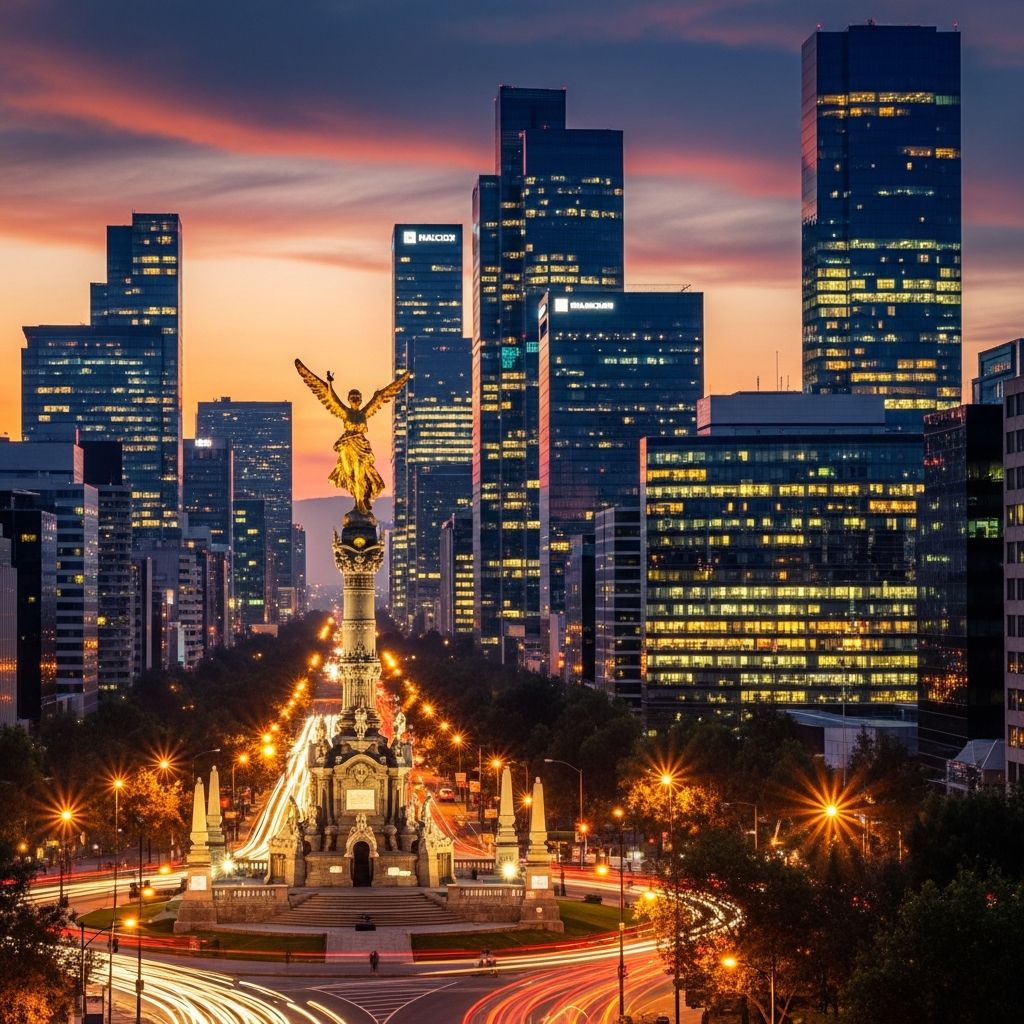
Understanding Mexico City’s Position as a Career Destination
Mexico City stands as the undisputed economic center of Mexico and a significant player in Latin America’s business landscape. The capital city has consistently ranked as the most competitive state in the country, earning the distinction of being the only entity with a “very high” level of competitiveness according to the Mexican Institute for Competitiveness (IMCO). This dominant position extends across multiple dimensions including economy, innovation, infrastructure, society, and governance, making it an exceptionally attractive destination for professionals seeking dynamic career advancement.
The city’s appeal to jobseekers stems from its concentration of corporate headquarters, government institutions, and leading educational and healthcare facilities. Major Mexican and international corporations maintain significant operations in the capital, creating a diverse employment ecosystem that spans multiple sectors and skill levels. This concentration of organizational headquarters and administrative functions generates substantial employment opportunities across management, technical, and specialized roles.
The Economic Foundation Supporting Job Growth
Mexico City’s economy demonstrates remarkable diversification, with engagement across 943 different economic sectors according to IMCO data. This sectoral breadth provides career seekers with numerous pathways and reduces vulnerability to industry-specific downturns. The city’s GDP per capita, excluding the mining sector, stands at 541,916 pesos (approximately US$28,750), representing the highest in the country and indicating robust earning potential for professionals working in the capital.
The broader Mexican economy is undergoing significant transformation that directly impacts job creation and career opportunities in Mexico City. Digital transformation initiatives are reshaping how businesses operate, while sustainability requirements are driving new roles and departments across organizations. Manufacturing reindustrialization, supported by the USMCA trade agreement and proximity to the United States, is generating demand for specialized talent in production management, supply chain coordination, and industrial technology.
Emerging Growth Sectors and Job Prospects
Several industry segments are experiencing accelerated expansion in Mexico City, presenting particularly strong career opportunities for professionals with relevant expertise:
Technology and Digital Innovation
Mexico’s technology sector attracted US$5.4 billion in venture capital investment in 2022 and has established the country as the leading destination for technology investment in Latin America. Mexico City hosts the majority of these emerging technology companies and established tech enterprises. The fintech sector specifically is projected to grow at an annual rate of 20% through 2025, creating demand for software developers, data analysts, financial technology specialists, and product managers. Over 400 registered startups operate in digital payments, lending, and cryptocurrency segments, many concentrated in the capital city.
E-Commerce and Digital Services
The Mexican e-commerce market reached US$29.6 billion in 2022 and is expanding at a compound annual growth rate of 9.8%, positioning Mexico as one of Latin America’s most significant e-commerce markets. This growth trajectory directly translates to employment opportunities in logistics, customer service, digital marketing, user experience design, and operations management within Mexico City-based e-commerce companies.
Sustainable Business and Environmental Services
PWC Mexico projects that 70% of Mexican companies will adopt more sustainable practices across production and supply chains by 2025. This transition creates career opportunities in environmental compliance, sustainability consulting, circular economy strategy, and green technology implementation. Mexico City’s advanced business environment positions it as the hub for companies developing and implementing these sustainability initiatives.
Artificial Intelligence and Automation
The Global Innovation Index Report 2023, published by the World Intellectual Property Organization (WIPO), ranks Mexico 55th globally in digital innovation, reflecting growing adoption of emerging technologies including artificial intelligence and automation. Mexico City, as the innovation capital, is concentrating AI development talent and creating roles for machine learning engineers, AI trainers, automation specialists, and related positions.
Work Environment and Employment Practices
The nature of employment in Mexico City is evolving significantly. Remote and hybrid work arrangements have become established practices rather than temporary measures. A 2023 survey indicated that 65% of Mexican companies adopted some form of remote work during the pandemic, with expectations that this percentage will exceed 75% by 2025, primarily through hybrid models combining in-person and remote arrangements. This shift benefits professionals by expanding job opportunities beyond geographical constraints and enabling access to positions with companies located throughout Mexico and internationally.
McKinsey consulting projections indicate that remote work will dominate in sectors including technology, financial services, and education, particularly in Mexico City’s professional environment. This transformation requires companies to invest in collaboration tools and cloud-based software infrastructure, creating additional career opportunities in IT management, systems administration, and digital workplace implementation.
Compensation and Career Advancement Prospects
Compensation in Mexico City reflects the city’s status as the economic center and the concentration of higher-wage employers. Professional salaries in the technology, finance, and multinational corporate sectors typically exceed the national average, with senior positions commanding competitive international-level compensation packages. The presence of multinational corporations and regional headquarters creates clear advancement pathways for ambitious professionals, with opportunities to progress into management, executive, and leadership roles.
The city’s educational institutions and professional development infrastructure support continuous career advancement. Access to specialized training programs, professional certifications, and skill development initiatives enables workers to enhance their market value and pursue upward mobility within and across organizations.
Industry-Specific Employment Trends
Financial Services and Fintech
Mexico City maintains its position as the financial center of Mexico, hosting major banks, insurance companies, and the rapidly expanding fintech sector. Career opportunities span traditional banking roles through emerging positions in digital payments, blockchain technology, and innovative financial products. The projected 20% annual growth rate in fintech ensures sustained demand for specialized financial technology talent.
Manufacturing and Industrial Operations
While manufacturing facilities are distributed throughout Mexico, Mexico City houses the corporate, planning, and management operations for manufacturing enterprises. Professional opportunities include supply chain management, quality control, industrial engineering, logistics coordination, and operations planning. The anticipated 30% growth in Industry 4.0 technologies including robotics, 3D printing, and AI applications in manufacturing creates demand for professionals skilled in next-generation production methods.
Innovation and Startup Ecosystem
Mexico City’s startup ecosystem continues expanding, offering opportunities for entrepreneurially-minded professionals and those seeking roles in emerging companies. Startup positions often provide greater autonomy, learning opportunities, and potential equity participation compared to established corporations, appealing to professionals at various career stages.
Networking and Professional Development Resources
Mexico City’s professional community offers extensive networking opportunities through business associations, industry conferences, and professional groups. The capital’s concentration of corporate headquarters means that major business organizations, chambers of commerce, and professional societies maintain active chapters in the city. These networks facilitate career transitions, skill development, and professional relationship building essential for long-term career success.
Practical Considerations for Job Seekers
Language Requirements
Spanish fluency is essential for most positions in Mexico City, with English proficiency increasingly valued in international companies, technology sectors, and multinational corporations. Bilingual professionals command higher compensation and access more diverse opportunities.
Work Authorization
Foreign professionals typically require appropriate visa classification and work authorization. Mexico’s immigration framework accommodates various employment categories, though processes vary based on employer size, position type, and professional qualifications. Companies often provide guidance and support through the work authorization process.
Cost of Living and Compensation Context
While Mexico City is the most expensive city in Mexico, compensation levels reflect this reality. Professional salaries in specialized sectors and multinational companies provide appropriate compensation for living costs and support standards comparable to other major Latin American or international business centers.
Challenges and Realistic Expectations
Mexico City’s job market, while dynamic, operates within a broader economic context presenting certain challenges. Economic growth projections indicate slower expansion than historical rates, and broader economic policy uncertainties may affect certain sectors.[10] Security concerns in some regions and the need for stronger rule of law represent challenges that can impact business operations and employment stability in certain sectors.
Nevertheless, Mexico City’s position as the concentration point for higher-wage employment, advanced sectors, and international business operations ensures relatively greater resilience compared to other Mexican regions.
Frequently Asked Questions
Q: What industries offer the most job opportunities in Mexico City?
A: Technology, fintech, e-commerce, financial services, and multinational manufacturing operations provide the strongest employment prospects. These sectors are experiencing rapid expansion and competing actively for skilled talent in Mexico City’s market.
Q: Is remote work common in Mexico City’s job market?
A: Yes, remote and hybrid work arrangements have become standard practice, particularly in technology, finance, and professional services sectors. This trend expanded significantly post-pandemic and is expected to continue through 2025 and beyond.
Q: What salary expectations should professionals have in Mexico City?
A: Salaries vary significantly by industry, experience level, and organization type. Technology, finance, and multinational corporations typically offer higher compensation than local small and medium enterprises. Senior and specialized roles command premium compensation.
Q: How important is Spanish language proficiency for employment in Mexico City?
A: Spanish fluency is essential for most positions. English proficiency is increasingly valued in international companies and technology sectors, but Spanish remains the fundamental language requirement.
Q: What are the visa requirements for working in Mexico City?
A: Foreign professionals require appropriate work authorization and visa classification. Mexico offers various employment visa categories, and employers typically assist with the authorization process. Requirements vary based on position type and employer characteristics.
Q: Are there opportunities for career advancement in Mexico City?
A: Yes, the concentration of corporate headquarters and management operations creates clear advancement pathways into management, executive, and leadership positions for qualified professionals.
References
- Mexico Most Competitive States 2025 — Mexican Institute for Competitiveness (IMCO). 2025. https://mexiconewsdaily.com/business/mexico-most-competitive-states-2025/
- Business Trends in Mexico for 2025 — PWC Mexico. 2025. https://mexicobusiness.news/policyandeconomy/news/business-trends-mexico-2025
- Mexico Country Outlook 2025 — Baker Institute for Public Policy. 2025. https://www.bakerinstitute.org/research/mexico-country-outlook-2025
- Mexico ranking in the Global Innovation Index 2025 — World Intellectual Property Organization (WIPO). 2025. https://www.wipo.int/edocs/gii-ranking/2025/mx.pdf
- Mexico Economic Outlook, January 2025 — Deloitte. 2025. https://www.deloitte.com/us/en/insights/economy/americas/mexico-economic-outlook.html
- Sheinbaum’s Triple Economic Dilemma — Americas Quarterly. 2025. https://www.americasquarterly.org/article/sheinbaums-triple-economic-dilemma/
- Mexico — World Bank. 2025. https://www.worldbank.org/ext/en/country/mexico

Medha Deb is an editor with a master's degree in Applied Linguistics from the University of Hyderabad. She believes that her qualification has helped her develop a deep understanding of language and its application in various contexts. Medha specializes in the areas of beauty, health, sports, and wellness and is committed to ensuring that the content on the website is…