
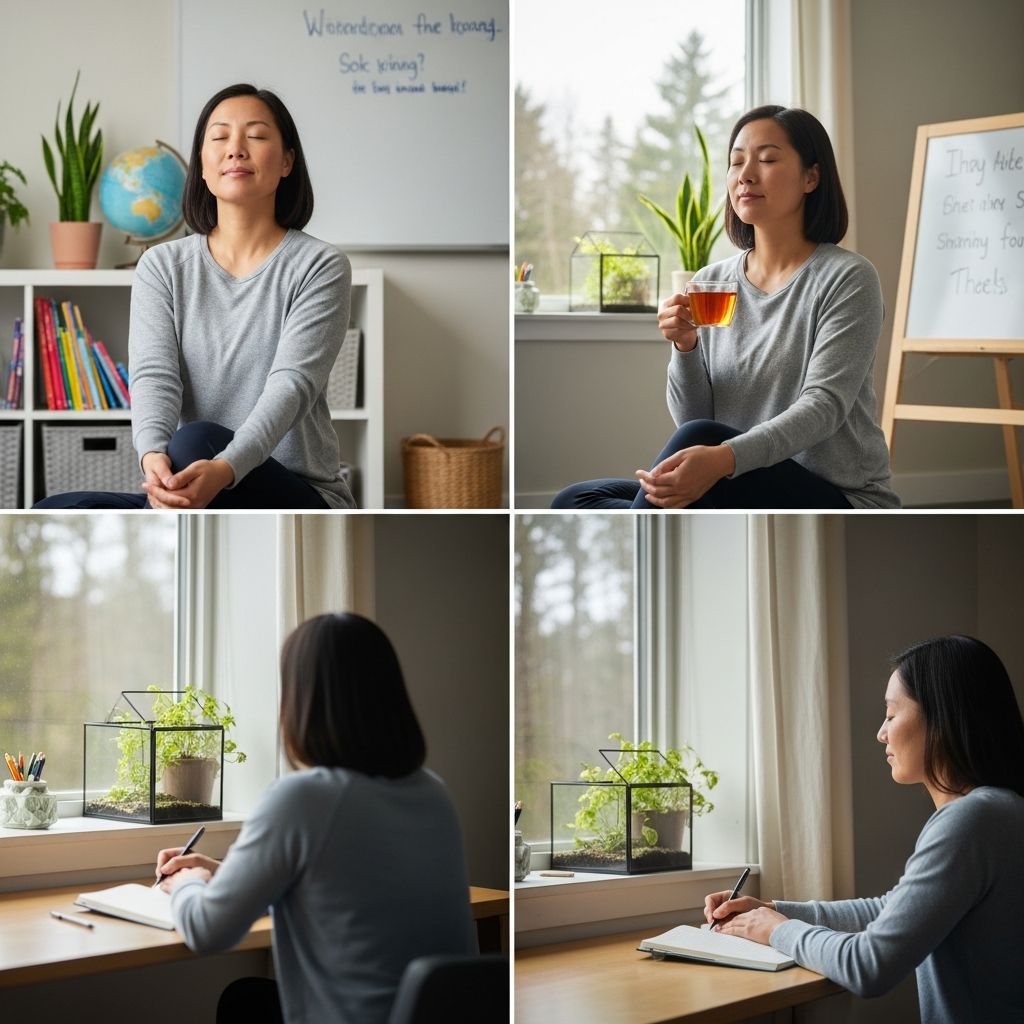
Teaching demands immense emotional, mental, and physical energy, often leading to high levels of stress and burnout among educators. Implementing structured wellness strategies, particularly mindfulness and self-care, can transform this demanding profession into a sustainable and fulfilling career. These practices not only help teachers manage personal challenges but also model healthy behaviors for students, creating more supportive learning environments.
Understanding the Pressures Faced by Modern Educators
Educators navigate a complex landscape of administrative duties, diverse student needs, and emotional labor that can erode well-being over time. Research consistently shows that chronic stress impacts physiological health, including elevated blood pressure and weakened immune responses, while also diminishing job satisfaction and teaching efficacy. For instance, studies on social-emotional learning (SEL) integration reveal that mindful practices yield strong effects on educators’ enjoyment of teaching and overall wellness.
Burnout manifests as exhaustion, cynicism, and reduced accomplishment, exacerbated by long hours and secondary trauma from students’ challenges. Without intervention, these factors contribute to high turnover rates in education. Prioritizing wellness is thus essential for long-term career sustainability and student success.
Core Principles of Mindfulness in Education
Mindfulness involves cultivating present-moment awareness of thoughts, emotions, and sensations without judgment. For educators, this practice enhances self-regulation, emotional literacy, and resilience, enabling better navigation of classroom dynamics. Programs like those from USC Rossier emphasize hands-on training where teachers develop meditation routines and apply them to both personal lives and curricula.
Key benefits include improved focus, reduced anxiety, and heightened empathy. When teachers practice mindfulness, they become more attuned to their students’ emotional states, fostering deeper connections and more effective instruction.
Daily Mindfulness Exercises for Busy Teachers
Incorporating short, practical exercises into a teacher’s routine can yield significant results without requiring extra time. Here are evidence-based techniques:
- Body Scan Meditation: Spend 2-5 minutes mentally scanning from head to toe, noting tension and consciously releasing it. This promotes relaxation and interrupts stress cycles.
- Breath Awareness: Practice 4-7-8 breathing—in for 4 seconds, hold for 7, out for 8—to activate the parasympathetic nervous system and lower cortisol levels.
- Intention Setting: Begin each day by stating a clear intention, such as ‘I will respond with patience,’ to guide actions mindfully.
- Mindful Walking: During breaks, focus on footsteps and surroundings to ground oneself in the present.
These practices, when done consistently, build neural pathways for calmer responses, as supported by SEL research showing physiological improvements like reduced stress responses.
Self-Care Routines Tailored to Teaching Schedules
Self-care extends beyond mindfulness to encompass physical, social, and professional nourishment. Educators should adopt a holistic approach:
| Category | Strategies | Benefits |
|---|---|---|
| Physical | Regular exercise, hydration, balanced meals | Boosts energy, improves mood via endorphins |
| Emotional | Journaling, therapy sessions | Processes trauma, enhances self-compassion |
| Social | Peer support groups, family time | Reduces isolation, provides perspective |
| Professional | Boundary setting, delegation | Prevents overload, sustains motivation |
Such routines align with recommendations from Purdue Global, emphasizing mentorship and social connections to combat isolation. Trauma-informed self-care, like guided relaxations, benefits both teachers and students by modeling regulation.
Integrating Mindfulness into Classroom Activities
Teachers can seamlessly weave mindfulness into lessons, benefiting everyone involved. A study highlighted improvements in student stress levels, self-efficacy, and interpersonal skills when teachers led mindfulness sessions, with educators reporting higher mindfulness and fewer relational issues.
Practical applications include:
- Starting class with a one-minute breathing exercise to build collective focus.
- Using ’emotion check-ins’ where students name feelings, teaching vocabulary and validation.
- Incorporating movement breaks with mindful stretching to release tension.
- Creating trauma-sensitive spaces by acknowledging diverse triggers and offering choices in participation.
Antioch University’s approach frames mindfulness as adult SEL, encouraging reflective teaching that transforms classroom dynamics through self-awareness.
Addressing Trauma and Emotional Challenges
Many educators encounter secondary trauma from students’ experiences. Trauma-informed mindfulness helps by building capacity to handle difficult emotions without overwhelm. Practices like noting thoughts (‘thinking’) create distance from reactivity.
WestEd defines mindfulness as fostering self-awareness of internal states, crucial for educators supporting SEL in students. Early childhood educators, facing high workloads, use emotional management habits to mitigate health risks like hypertension.
Building Long-Term Resilience Habits
Sustainable wellness requires commitment. Teachers should track progress via journals, join professional development like mindfulness certificates, and seek institutional support. Realistic self-care avoids time-intensive luxuries, focusing on accessible tools like neck-up check-ins for stress reduction.
Communities of practice, such as those at NAEYC, share strategies for emotional habits that enhance problem-solving and clarity. Over time, these build a ‘resilience toolkit’ for thriving amid demands.
Measuring Impact: Research and Outcomes
Evidence underscores efficacy: Mindful educators show better student outcomes in focus and emotion management. Physiological benefits include lowered blood pressure, while psychological gains encompass reduced burnout. Programs report transformed teaching practices, with subtle classroom shifts leading to win-win scenarios.
Frequently Asked Questions
How does mindfulness help prevent teacher burnout?
Mindfulness reduces stress by promoting present-moment awareness, emotional regulation, and resilience, directly countering burnout symptoms like exhaustion.
Can these practices be done in under 5 minutes?
Yes, techniques like breathwork and body scans are designed for busy schedules, fitting into transitions or breaks.
Is mindfulness suitable for all grade levels?
Absolutely; adaptations make it effective from early childhood through higher education, supporting diverse needs.
What if my school lacks support for wellness?
Start individually with personal routines, then advocate for programs using research on benefits.
Are there free resources for getting started?
Many exist, including online guides, apps, and community-shared practices tailored for educators.
References
- Mindfulness for Educators — USC Rossier School of Education. 2023. https://rossierprolearn.usc.edu/mindfulness-for-educators/
- Field Notes: For Educators, Mindfulness Goes Far Beyond “Self-Care” — Antioch University. 2023. https://commonthread.antioch.edu/for-educators-mindfulness-goes-far-beyond-self-care/
- Nurturing Educator Well-Being: Mindful Practices to Support Self-Awareness — Create for Education. 2023. https://createforeducation.org/nurturing-educator-well-being-1/
- Trauma-Informed Mindfulness as a Self-Care Tool for Teachers and Students — Whole Child Counseling. 2016 (updated 2023). https://www.wholechildcounseling.com/post/trauma-informed-mindfulness-as-a-self-care-tool-teachers-and-students-in-the-classroom
- The Complete Guide to Self-Care for Educators — Purdue Global. 2023. https://www.purdueglobal.edu/blog/education/self-care-for-educators-guide/
- Self-Care Resources for Educators — Mindful Teachers. 2023. https://www.mindfulteachers.org/blog/self-care-resources
- Simple and Lasting Mindful Emotional Management Habits for Early Childhood Educators — NAEYC. 2023. https://www.naeyc.org/resources/blog/simple-and-lasting-mindful-emotional-management-habits-early-childhood-educators

Medha Deb is an editor with a master's degree in Applied Linguistics from the University of Hyderabad. She believes that her qualification has helped her develop a deep understanding of language and its application in various contexts. Medha specializes in the areas of beauty, health, sports, and wellness and is committed to ensuring that the content on the website is…