
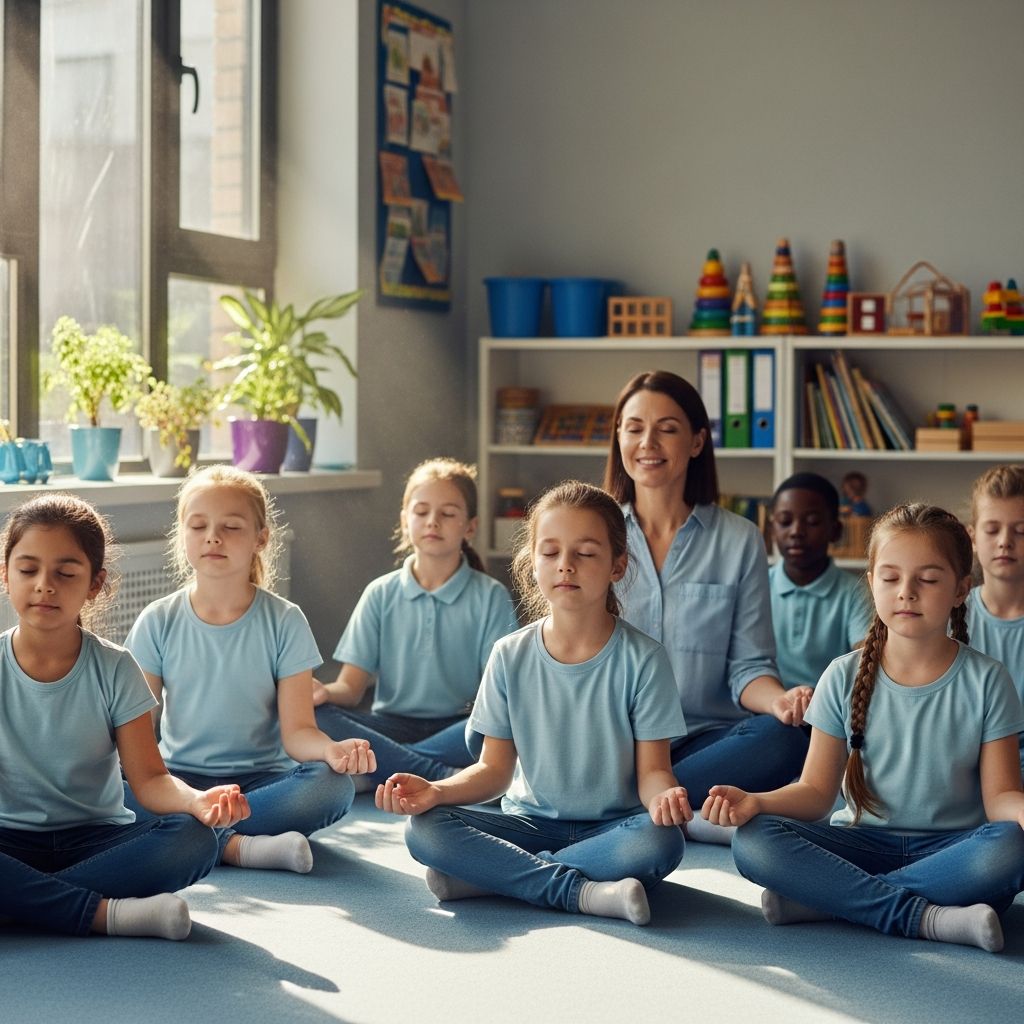
Mindfulness practices enable educators to cultivate presence, reduce burnout, and create supportive learning environments, leading to enhanced teaching effectiveness and student success.
Understanding Mindfulness in the Educational Context
Mindfulness involves maintaining nonjudgmental awareness of the present moment, helping teachers navigate the demands of classroom instruction with greater clarity and composure. In education, it addresses the emotional and cognitive challenges often overlooked in traditional training programs focused solely on content delivery.
By integrating mindfulness, teachers can better manage their inner experiences, from fleeting thoughts to intense emotions, fostering a balanced approach to daily challenges. This practice shifts educators from reactive responses to intentional actions, fundamentally altering their interaction with students and colleagues.
Key Benefits for Educators’ Well-Being
Regular mindfulness training significantly lowers stress levels among teachers, with programs like CARE demonstrating reductions in personal distress and time-pressure-related anxiety. Participants in such initiatives report improved emotion regulation and heightened mindfulness, contributing to overall psychological health.
- Reduced Burnout: Teachers completing mindfulness courses experience decreased anxiety, depression, and exhaustion compared to control groups.
- Enhanced Self-Compassion: Practices build resilience by encouraging kinder self-perception during high-pressure scenarios.
- Better Emotional Awareness: Mindfulness helps identify emotional patterns, allowing proactive regulation rather than automatic reactions.
These personal gains create a foundation for sustained career longevity, as educators feel more equipped to handle the profession’s rigors.
Practical Mindfulness Techniques for Daily Use
Teachers can incorporate simple exercises into their routines without disrupting lesson plans. Focused breathing, for instance, centers attention on inhalations and exhalations, quickly restoring calm amid disruptions.
| Technique | Description | Best For |
|---|---|---|
| Focused Breathing | Concentrate on breath for 1-2 minutes | Quick stress relief |
| Open Awareness | Observe surroundings without judgment | Class transitions |
| Loving-Kindness Meditation | Send positive intentions to self and others | Building empathy |
| Body Scan | Mentally check physical sensations | Pre-class preparation |
These methods, drawn from established programs, require minimal time yet yield substantial returns in focus and patience.
Impact on Classroom Dynamics and Student Outcomes
Mindfulness-trained teachers exhibit superior classroom performance, including stronger behavior management and emotional support for students. Observers note increased productivity in these classrooms, even without direct instructional changes.
Students benefit indirectly through a calmer atmosphere that promotes attention and stress coping. In one study, elementary students exposed to mindfulness-influenced environments showed lasting behavioral improvements, as perceived by their teachers.
- Higher student engagement due to teachers’ composed presence.
- Improved conflict resolution fostering positive relationships.
- Enhanced creativity and collaboration in group activities.
This ripple effect underscores how teacher-centered mindfulness elevates the entire learning ecosystem.
Evidence from Rigorous Research Studies
Randomized controlled trials validate these effects. The CARE program, developed by experts from Naropa University and Penn State, showed statistically significant improvements in teacher well-being and classroom interactions. A pilot by UCSD researchers found mindfulness training buffered teachers from stress, enhancing instructional support.
Harvard research emphasizes providing dedicated practice time for teachers to maximize student attention gains. Collectively, these findings from peer-reviewed sources confirm mindfulness’s transformative potential.
Overcoming Common Implementation Barriers
Many educators hesitate due to packed schedules, yet brief daily sessions prove effective. Schools can support by integrating mindfulness into professional development, mirroring successful models like CARE.
Initial resistance often fades as benefits emerge, such as effortless student connections and reduced personal reactivity. Starting small—perhaps with a morning breath focus—builds momentum without overwhelming routines.
Building a Mindful School Culture
Beyond individual practice, institutions can foster widespread adoption. Dedicated mindfulness spaces or group sessions encourage communal participation. Service learning projects, approached mindfully, leverage student strengths for community building.
Leadership commitment ensures sustainability, with data tracking productivity and satisfaction metrics to demonstrate value.
Long-Term Strategies for Sustained Practice
Reflection journals help teachers track emotional states pre- and post-interactions, refining responses over time. Pairing mindfulness with professional goals aligns personal growth with career advancement.
Advanced techniques, like nervous system attunement, enable nuanced guidance during complex student encounters. Consistency transforms these tools into intuitive habits.
Frequently Asked Questions (FAQs)
How does mindfulness reduce teacher burnout?
Mindfulness training decreases anxiety, depression, and exhaustion by enhancing self-compassion and emotion regulation, as shown in teacher-specific studies.
Can mindfulness improve student behavior without direct intervention?
Yes, teachers’ composed presence leads to more productive classrooms and positive behavior perceptions, per randomized trials.
What is the shortest effective mindfulness practice for busy teachers?
One- to two-minute focused breathing exercises restore calm and focus effectively during transitions.
Does mindfulness require prior meditation experience?
No, adapted programs like CARE start with accessible techniques tailored for educators, yielding benefits regardless of background.
How can schools measure mindfulness program success?
Track teacher well-being surveys, classroom observation ratings, and student productivity metrics for quantifiable impacts.
Steps to Integrate Mindfulness into Your Teaching Routine
- Begin with 5-minute daily personal practice using guided audio.
- Incorporate brief pauses during lessons for collective breathing.
- Reflect weekly on emotional patterns in a journal.
- Seek school support for group sessions or training.
- Monitor progress through student feedback and self-assessments.
This roadmap ensures gradual, impactful adoption.
References
- How Mindfulness Upended (and then Transformed) My Teaching — Mindful Teachers. Accessed 2026. https://www.mindfulteachers.org/blog/mindfulness-transformed-my-teaching
- How Mindfulness Can Transform the Classroom — Garrison Institute. Accessed 2026. https://www.garrisoninstitute.org/social-change/mindfulness-transform-classroom/
- Seven Ways Mindfulness Can Help Teachers — Greater Good Science Center, UC Berkeley. 2015-10-02. https://greatergood.berkeley.edu/article/item/seven_ways_mindfulness_can_help_teachers
- Can Mindfulness Make Us Better Teachers? — Center for Integrative Health, UCSD. 2013-10-02. https://cih.ucsd.edu/mbpti/blog/can-mindfulness-make-us-better-teachers
- 3 Ways Mindfulness Can Foster a Positive School Climate — Navigate360. Accessed 2026. https://navigate360.com/blog/3-ways-mindfulness-can-foster-a-positive-school-climate/
- Making Time for Mindfulness — Harvard Graduate School of Education. 2019-01. https://www.gse.harvard.edu/ideas/usable-knowledge/19/01/making-time-mindfulness

- Integrated M.A. in Applied Linguistics, University of Hyderabad
- 5+ years in editorial, instructional, SEO, and research-based writing
Sneha is a relationships and lifestyle writer with a strong foundation in applied linguistics and certified training in relationship coaching. She brings over five years of writing experience to theskillvault, crafting thoughtful, research-driven content that empowers readers to build healthier relationships, boost emotional well-being, and embrace holistic living. Her writing and insights reflect the belief that beauty, happiness, and wellness…