
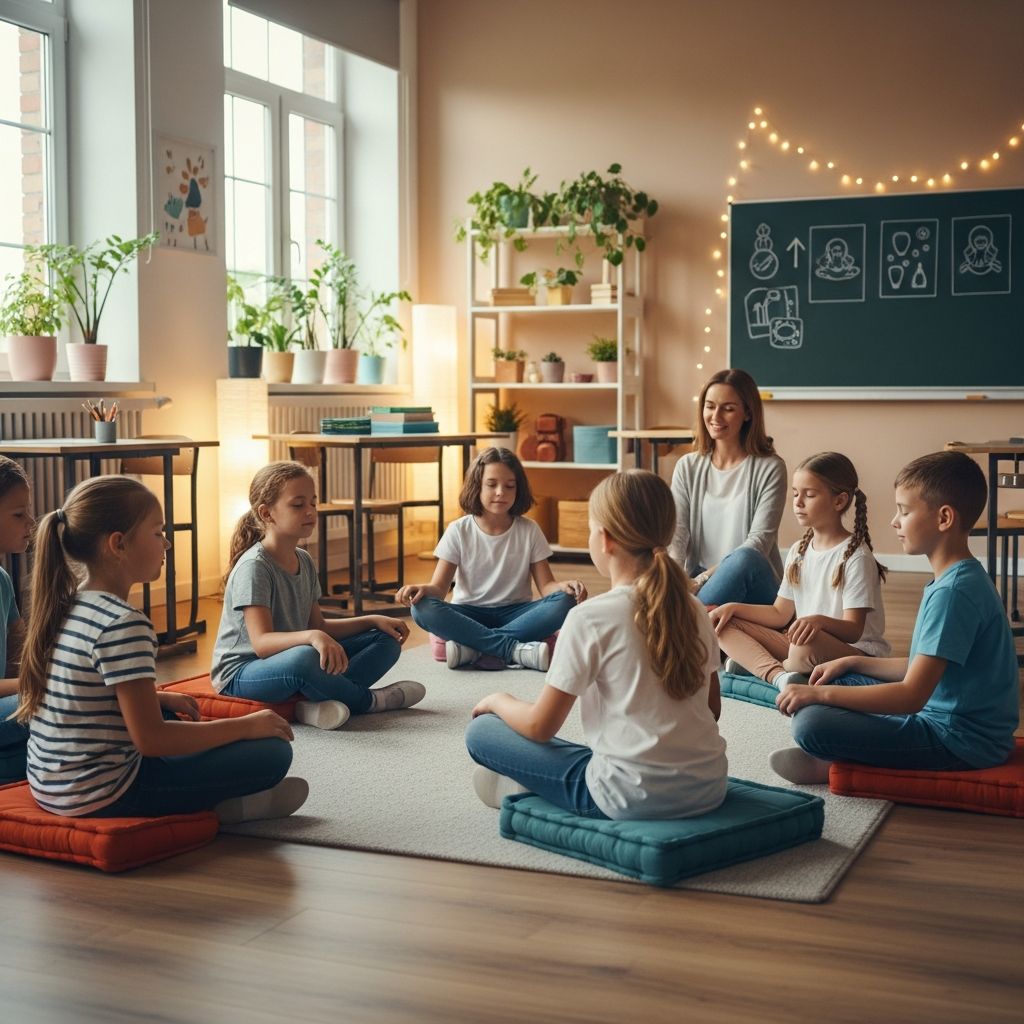
Mindfulness practices in educational settings offer a powerful approach to addressing the rising levels of stress among students and teachers. By cultivating present-moment awareness, these techniques help build resilience, sharpen concentration, and promote a harmonious school atmosphere.
Why Schools Need Mindfulness Now More Than Ever
In today’s fast-paced academic world, students face mounting pressures from exams, social dynamics, and future uncertainties. These stressors can impair cognitive functions and emotional health. Research indicates that mindfulness-based school interventions (MBSIs) effectively mitigate these issues by enhancing prosocial behavior, resilience, executive function, attention, and mindfulness while decreasing anxiety and attention problems.
Educators also benefit, experiencing lower blood pressure, reduced depression symptoms, and greater empathy, which improves teaching effectiveness. Integrating these practices creates a dual advantage, supporting both learners and instructors in thriving.
Core Advantages of Mindfulness for Young Learners
Mindfulness equips students with lifelong tools for emotional regulation. Key benefits include:
- Stress Reduction: Practices focusing on the present moment alleviate mental clutter, significantly lowering stress levels as shown in studies with university students adaptable to school contexts.
- Enhanced Focus and Attention: Students develop better self-regulation, directing attention to essential tasks and improving academic outcomes.
- Emotional Resilience: By observing thoughts non-judgmentally, children build coping mechanisms against adversity.
- Improved Social Dynamics: Increased empathy and compassion reduce bullying and foster supportive peer interactions.
- Academic Gains: Better emotional control correlates with higher performance across subjects.
Systematic reviews confirm these effects, with high-quality evidence (‘A Grade’) supporting reductions in conduct issues and boosts in well-being for many participants.
Practical Techniques Tailored for Classroom Use
Implementing mindfulness requires simple, age-appropriate methods. Start with short sessions to build familiarity.
| Technique | Description | Duration | Best For |
|---|---|---|---|
| Breath Awareness | Guide students to notice their inhales and exhales, anchoring attention to the rhythm. | 2-5 minutes | Start of class |
| Body Scan | Direct focus sequentially through body parts, releasing tension. | 5-10 minutes | Midday reset |
| Mindful Listening | Listen to ambient sounds or chimes without judgment. | 3 minutes | Transitions |
| Gratitude Sharing | Students voice one thing they’re thankful for. | 5 minutes | End of day |
| Loving-Kindness Meditation | Repeat phrases wishing well to self and others. | 5-7 minutes | Building empathy |
These exercises draw from validated programs like mindfulness-based stress reduction, proven to manage anxiety effectively. Adapt for different ages: shorter for elementary, reflective discussions for older students.
Building a Mindful School Culture from Leadership Down
Success hinges on administrative buy-in. School leaders should prioritize mindfulness in professional development, integrating it into coaching for self-regulation strategies. Train teachers to model practices, creating a common language like ‘pause and breathe’ that turns discipline issues into growth opportunities.
Collaborate with parents through workshops, ensuring home reinforcement. Programs like MindUP, blending mindfulness with social-emotional learning, demonstrate moderate to strong evidence for elementary gains in self-regulation.
Evidence from Real-World Implementations
Schools adopting mindfulness report tangible shifts. One study on middle schoolers showed significant executive function improvements post-intervention. Physiological benefits include stress hormone reduction, with 73% of studies noting decreased psychological stress.
For at-risk students, benefits amplify; those struggling most with self-regulation see the greatest gains. Teachers note fewer disruptions, attributing this to heightened self-awareness guiding better choices.
Overcoming Common Implementation Challenges
Resistance may arise from skepticism or time constraints. Address by starting small—daily 2-minute breaths—and sharing research-backed outcomes. Provide teacher training to build confidence; programs with psychoeducation on emotions yield best results.
Equity matters: Offer accommodations for diverse needs, ensuring inclusivity. Track progress via simple surveys on stress levels to demonstrate impact and secure ongoing support.
Daily Integration Strategies for Busy Schedules
Weave mindfulness into routines without adding time:
- Morning announcements with a collective breath.
- Pre-test centering to boost performance.
- Post-recess reflections for emotional check-ins.
- Homework prompts encouraging mindful moments.
Such seamless embedding normalizes the practice, making it a cultural norm rather than an add-on.
Long-Term Impacts on Lifelong Well-Being
Beyond immediate relief, mindfulness instills habits enduring into adulthood. It promotes growth mindsets, creativity via divergent thinking, and robust communication. Reduced anxiety disorders and enhanced coping prepare students for life’s challenges.
For educators, sustained practice lowers burnout, fostering compassionate environments. Collective efforts yield healthier schools where well-being underpins achievement.
Frequently Asked Questions (FAQs)
What age groups benefit most from school mindfulness?
All ages gain, but elementary students show strong prosocial and resilience boosts; middle schoolers excel in executive function.
How much time is needed daily?
Even 2-5 minutes yields results; consistency trumps duration.
Can mindfulness replace counseling?
No, it complements professional support, especially for clinical needs.
What if students resist?
Make it playful, model enthusiasm, and highlight peer benefits to build buy-in.
Are there costs involved?
Many free resources exist; invest in initial training for maximum ROI.
Empowering Tomorrow’s Leaders Through Present-Moment Practices
Mindfulness bridges the gap between stress and success in education. By prioritizing these practices, schools invest in holistic development, yielding resilient, focused individuals ready for future demands. Start today for calmer classrooms tomorrow.
References
- Integrating Mindfulness Meditation into School Curriculum — Wellspring Prevention. 2023. https://wellspringprevention.org/blog/integrating-mindfulness-meditation-school-curriculum/
- The Benefits of Mindfulness in Schools — The Independence School. 2023. https://www.theindependenceschool.org/community/blog/the-benefits-of-mindfulness-in-schools
- How Mindfulness and Stress Management Affect Learning and Teaching — Exeed College. 2023. https://exeedcollege.com/blog/how-mindfulness-and-stress-management-affect-learning-and-teaching/
- Mindfulness-based school interventions: A systematic review — PMC (NCBI). 2022-09-23. https://pmc.ncbi.nlm.nih.gov/articles/PMC9524483/
- Integrating Mindfulness in the Classroom: Benefits and Seven Strategies — University of San Diego PCE. 2023. https://pce.sandiego.edu/mindfulness-in-the-classroom/
- Mindfulness-Based Practices for Schools — WestEd (CA Safe Supportive Schools). 2020-06. https://ca-safe-supportive-schools.wested.org/wp-content/uploads/2020/06/Mindfulness-Based-Practices-for-Schools.pdf
- Supporting Student Mental Well-Being with Mindfulness Programs — American Psychiatric Association. 2023. https://www.psychiatry.org/news-room/apa-blogs/student-well-being-and-mindfulness-programs
- Mindfulness in the Classroom — Child Mind Institute. 2023. https://childmind.org/article/mindfulness-in-the-classroom/

- Integrated M.A. in Applied Linguistics, University of Hyderabad
- 5+ years in editorial, instructional, SEO, and research-based writing
Sneha is a relationships and lifestyle writer with a strong foundation in applied linguistics and certified training in relationship coaching. She brings over five years of writing experience to theskillvault, crafting thoughtful, research-driven content that empowers readers to build healthier relationships, boost emotional well-being, and embrace holistic living. Her writing and insights reflect the belief that beauty, happiness, and wellness…