
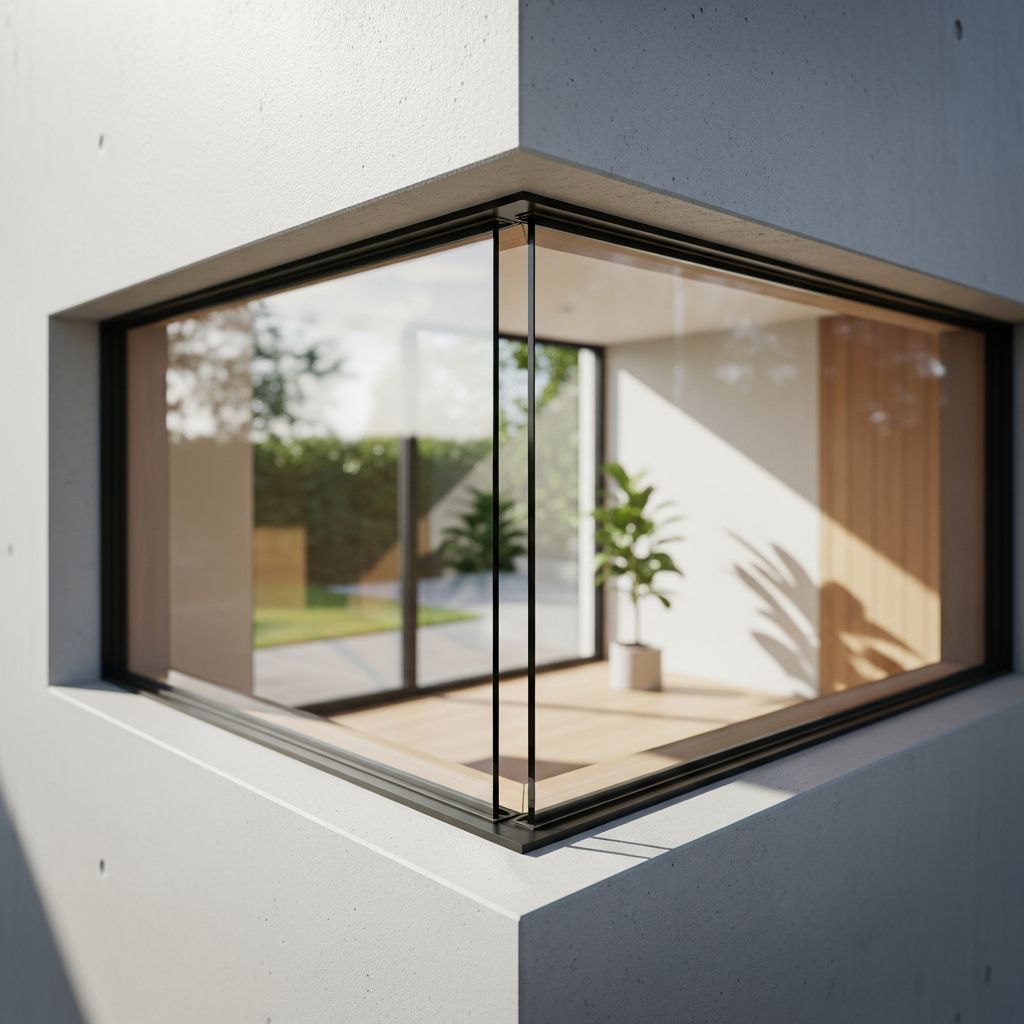
Mitered windows feature frames where the trim pieces meet at precise angled cuts, typically 45 degrees, to form clean, seamless corners that enhance architectural appeal. This technique draws from traditional woodworking practices, offering a polished look ideal for contemporary and classic home designs.
The Fundamentals of Miter Joints in Window Framing
In window construction, a miter joint involves beveling the ends of frame or casing members at angles that align perfectly to create a 90-degree corner without visible end grain. Unlike standard butt joints where one piece simply abuts another, mitered connections hide the joint line, providing a more refined finish. These joints are essential in applications like window casings, where aesthetics play a crucial role in the overall room appearance.
The precision required for mitered windows stems from the need for exact measurements. Even slight deviations in angle or length can result in gaps, making tools like miter saws indispensable for clean cuts. Historically, such joints have been used since the 15th century in carpentry, evolving from basic frame-making to sophisticated architectural elements.
Key Components of a Mitered Window Assembly
- Window Casing: The outer trim that covers the gap between the window frame and wall, often mitered at corners for a continuous flow.
- Sash Frames: Movable parts surrounding the glass, sometimes mitered for multi-pane designs.
- Aprons and Stools: Bottom supports that can incorporate mitered edges to match the upper casing.
- Molding Profiles: Crown or base elements joined via miters to frame the window elegantly.
These elements work together to not only seal the window but also elevate the visual harmony of interiors.
Comparing Mitered and Butt Joints for Window Trim
Mitered corners contrast sharply with butt joints, where trim pieces meet squarely. Here’s a detailed comparison:
| Aspect | Mitered Joints | Butt Joints |
|---|---|---|
| Appearance | Seamless, picture-frame-like elegance with continuous grain pattern | Simple, functional with visible end grain |
| Installation Precision | High; requires accurate 45-degree cuts | Low; straightforward squaring |
| Durability Against Wood Movement | Prone to gaps from cross-grain expansion | More stable as movement aligns with grain |
| Best Use | Decorative interiors, fine woodworking | Exterior or high-moisture areas |
While mitered joints offer superior aesthetics, butt joints excel in environments where wood expands and contracts significantly, as the grain direction minimizes joint stress.
Step-by-Step Guide to Creating Mitered Window Trim
- Measure Accurately: Record window dimensions, adding allowances for casing width. Double-check diagonals for squareness.
- Select Materials: Choose stable woods like oak or pine; avoid highly reactive species for miters.
- Mark and Cut Angles: Use a miter saw set to 45 degrees. Cut head casing longer to account for side overlaps.
- Test Fit: Dry-assemble pieces, adjusting for tight seams.
- Assemble with Adhesive: Apply wood glue, clamp, and reinforce with nails or biscuits for strength.
- Finish and Install: Sand joints smooth, prime, paint, then secure to the window frame.
For non-90-degree corners, calculate half the desired angle—e.g., 22.5 degrees for 45-degree turns.
Advantages of Incorporating Mitered Windows in Home Design
Mitered windows contribute to a sophisticated interior by creating uninterrupted lines that draw the eye outward. They are particularly effective in formal spaces like dining rooms or libraries, where trim details underscore luxury. Additionally, matching grain across miters simulates a single, flowing piece, enhancing perceived quality.
Beyond visuals, these joints allow for versatile molding profiles, from simple flats to ornate crowns, adapting to various architectural styles such as Craftsman or Victorian.
Challenges and Solutions in Mitered Window Installation
One primary issue is wood movement: cross-grain swelling at miters can cause cracks, especially in humid climates. Videos from woodworking experts demonstrate how short-grain ends expand more than long-grain sides, prying joints apart over time.
Solutions include:
- Using finger-jointed or engineered wood for stability.
- Opting for butt joints in exteriors or bathrooms.
- Reinforcing with splines or biscuits embedded in the miter.
- Acclimating materials to the installation environment beforehand.
Precise tooling mitigates cutting errors; digital miter saws with laser guides ensure repeatability.
Advanced Variations: Beyond Standard 90-Degree Miters
While 45-degree cuts dominate, mitered windows can feature compound angles for canted walls or beveled glass. Three-way miters join at box corners, demanding compound saw settings. For arches, flexible coping supplements miters, blending precision with forgiveness.
In modern prefab windows, factory-mitered frames arrive pre-assembled, simplifying on-site work while maintaining quality.
Tools and Materials Essential for Professional Results
Success with mitered windows relies on quality equipment:
| Tool/Material | Purpose |
|---|---|
| Sliding Compound Miter Saw | Precise angled and bevel cuts |
| Miter Box (Manual) | Budget-friendly for small projects |
| Wood Glue & Clamps | Secure bonding during assembly |
| Biscuit Joiner | Alignment and strength reinforcement |
| Fine Sandpaper (220 Grit) | Smoothing joints pre-finish |
Investing in sharp blades prevents tear-out, ensuring crisp edges.
Real-World Applications and Case Studies
In residential builds, mitered window casings unify spaces, as seen in high-end renovations where they pair with wainscoting. Commercial settings favor them for storefronts, creating expansive glass illusions. A study of traditional vs. modern trim notes mitered designs boost perceived value by 15-20% in appraisals.
Challenges arise in historic restorations, where matching antique profiles demands custom milling.
Frequently Asked Questions (FAQs)
Are mitered joints stronger than butt joints for windows?
Mitered joints appear seamless but are weaker without reinforcement due to end-grain gluing; butt joints offer better longevity in dynamic environments.
Can beginners install mitered window trim?
Yes, with practice and a reliable miter saw, but start with butt joints to build confidence before tackling angles.
What if my miter cuts don’t align perfectly?
Sand lightly or use wood filler; for prevention, measure twice and use stop blocks on the saw.
Should I use mitered corners for exterior windows?
Prefer butt joints outdoors to resist weather-induced movement; reserve miters for protected interiors.
How do I finish mitered window frames?
Prime before assembly, caulk gaps, then paint or stain for a professional seal.
Maintenance Tips for Long-Lasting Mitered Windows
Regularly inspect joints for gaps, re-caulking as needed. Control indoor humidity below 50% to minimize wood shifts. In high-traffic areas, protect with quarterly cleanings using mild soap.
These practices extend the life of mitered elements, preserving both form and function.
References
- What is a Miter Joint? Types, Uses, and How to Make One — CCMPS. 2023-10-15. https://ccmps.co.uk/miter-joint/
- Mitre Joint | Definition, Types & Uses — Study.com. 2024-01-20. https://study.com/academy/lesson/what-is-a-mitre-joint-definition-uses.html
- Door and Window Casing — Mitred vs Butt-Joint Corners — West Coast Moulding. 2024-11-18. https://westcoastmoulding.com/2024/11/18/mitred-vs-butt-joint/
- Finishing Interior Window Trim: Installing Butted vs Mitre Joints — Tiny House Academy (YouTube). 2022-05-10. https://www.youtube.com/watch?v=fEjpKF1YnCU
- 07 WindsorONE BUTT JOINTS VS MITERS — WindsorONE (YouTube). 2023-03-15. https://www.youtube.com/watch?v=oZxiu_MPIeM
- 07 – Butt Joints vs. Miters — WindsorONE. 2024-02-28. https://windsorone.com/install/installation-videos/07-butt-joints-vs-miters/
- Crown Molding: Mitering vs. Coping. Which Do You Do? — Fine Homebuilding. 2009-06-01. https://www.finehomebuilding.com/2009/06/01/crown-molding-mitering-vs-coping-which-do-you-do

Medha Deb is an editor with a master's degree in Applied Linguistics from the University of Hyderabad. She believes that her qualification has helped her develop a deep understanding of language and its application in various contexts. Medha specializes in the areas of beauty, health, sports, and wellness and is committed to ensuring that the content on the website is…