
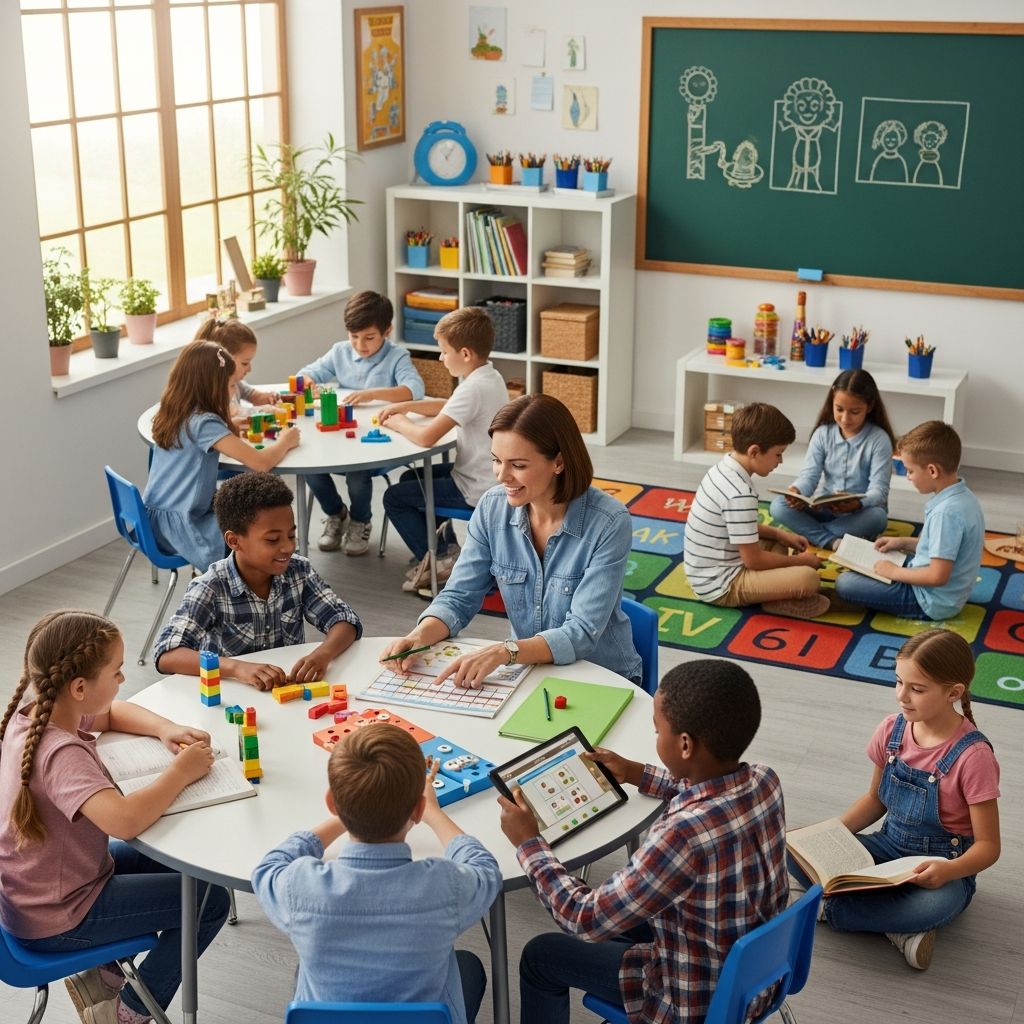
Understanding Modern Instructional Approaches in Education
The landscape of classroom instruction has evolved significantly over the past decade, moving beyond traditional lecture-based models toward more dynamic, student-centered approaches. Contemporary educational research demonstrates that teachers who employ a diverse repertoire of instructional techniques create more engaging learning environments and achieve better student outcomes. The foundation of effective instruction rests on recognizing that learners bring unique preferences, abilities, and paces to the classroom, requiring educators to adapt their methodologies accordingly.
Modern pedagogy emphasizes flexibility and responsiveness to individual learner needs. Rather than adhering to a single instructional philosophy, successful educators blend multiple strategies throughout their lessons, units, and academic years. This multifaceted approach acknowledges that what works for one student may not work for another, and what engages learners during one lesson may need adjustment in subsequent sessions. By maintaining a comprehensive toolkit of instructional methods, teachers can create conditions where all students have opportunities to succeed.
Foundational Educational Frameworks Supporting Instructional Practice
Several theoretical frameworks provide the scaffolding upon which contemporary instructional strategies are built. Universal Design for Learning (UDL) represents one such framework, advocating for the presentation of information through multiple modalities to accommodate various learners. This approach recognizes that students perceive and process information differently, requiring educators to offer content through diverse channels—visual, auditory, kinesthetic, and textual—enabling broader comprehension and accessibility.
UDL further emphasizes providing multiple pathways for students to demonstrate mastery and understanding. Rather than relying exclusively on traditional testing formats, educators implementing UDL incorporate varied assessment methods allowing students to showcase their learning through projects, presentations, performances, discussions, and written work. Additionally, UDL advocates for leveraging student interests and intrinsic motivation as catalysts for learning, acknowledging that personal relevance increases engagement and retention. The framework also addresses the integration of technology in contemporary classrooms, recognizing that digital tools can facilitate access to information and create interactive learning experiences aligned with how students naturally engage with information.
Core Instructional Methodologies for Classroom Application
Educators today have access to numerous evidence-based instructional strategies that can be systematically incorporated into their practice. Understanding the characteristics, benefits, and implementation considerations for each methodology empowers teachers to make deliberate choices about when and how to apply specific strategies. The most effective educators are those who can seamlessly transition between approaches based on learning objectives, student needs, and contextual factors.
Tailoring Curriculum Through Instructional Differentiation
Differentiated instruction stands among the most widely recognized and implemented strategies in contemporary classrooms. This approach involves deliberately modifying lesson content, processes, and products to address the diverse learning needs, readiness levels, and interests present within any given classroom. Rather than delivering identical instruction to all learners, differentiation acknowledges that students enter classrooms with varying background knowledge, learning preferences, and developmental readiness.
Implementing differentiation requires ongoing assessment and intentional planning. Teachers differentiate content by providing students with different foundational materials, resources, or complexity levels depending on prior knowledge and readiness. Process differentiation involves varying how students engage with material—some learners may use manipulatives or visual aids while others work with abstract representations. Product differentiation allows students to demonstrate learning through formats matching their strengths, whether written essays, visual presentations, oral explanations, or performance-based assessments. Successful differentiation demands that teachers possess deep knowledge of their students’ strengths, challenges, interests, and learning histories.
Blended Learning: Integrating Digital and In-Person Instruction
Blended learning represents a strategic integration of face-to-face instruction with online or digital components. This approach leverages the strengths of both modalities, using technology to extend learning beyond classroom walls while preserving the interpersonal connections that characterize effective teaching. Blended models might involve students completing preparatory work online before class, facilitating more productive use of in-person time for collaborative problem-solving and discussion. Alternatively, students might engage in direct instruction during class while completing practice and extension activities online.
The flexibility inherent in blended approaches accommodates diverse learning paces and preferences. Visual learners benefit from animated explanations and video content accessible asynchronously, while kinesthetic learners engage with interactive simulations and manipulatives. Blended learning also provides opportunities for personalized pacing—students who require additional practice can access supplementary materials without holding back peers ready to advance, while accelerated learners can pursue extension activities. Furthermore, blended models create opportunities for teachers to monitor individual progress through learning management systems, enabling data-informed instructional adjustments.
Learner-Centered Pedagogy: Empowering Student Agency
Learner-centered approaches fundamentally shift the classroom dynamic from teacher-directed to student-directed. In this paradigm, educators function as facilitators, guides, and mentors rather than primary content deliverers. Students assume active roles in determining learning objectives, selecting materials and activities, and assessing their own progress. This methodology aligns with constructivist learning theories suggesting that learners build understanding through active engagement with content and peers rather than passive reception of information.
Learner-centered environments employ various structures to promote student agency and participation. Cooperative learning arrangements place students in structured groups where each member assumes a specific role, promoting interdependence and collective accountability. Literature circles enable students to lead discussions about shared readings, developing critical analysis and communication skills while exploring content independently selected. Station-based activities create differentiated learning experiences within a single lesson, allowing students to rotate through stations addressing varied skill levels or interests. Additionally, movement-based activities—incorporating kinesthetic elements through hands-on experiments, outdoor learning, or interactive games—enhance engagement while accommodating diverse learning modalities.
Game-Based Learning: Enhancing Motivation Through Play
Incorporating game mechanics and game-based elements into instruction capitalizes on intrinsic motivation and engagement that games naturally generate. Game-based learning extends beyond simple drill-and-practice software to include structured activities with clear objectives, rules, feedback systems, and goal-oriented progression. Educational games can reinforce conceptual understanding, develop problem-solving skills, and promote collaborative learning while maintaining high engagement levels.
The effectiveness of game-based learning stems partly from immediate feedback—games provide instant information about performance, enabling learners to adjust strategies and retry attempts. The non-punitive nature of game failure—where mistakes are learning opportunities rather than sources of shame—creates psychologically safe environments encouraging risk-taking and persistence. Games also naturally accommodate differentiation, as varied difficulty levels can challenge different learners appropriately. Competition elements, when structured collaboratively rather than individually, can motivate effort and engagement without generating harmful anxiety.
Small Group Instruction: Targeted, Intensive Support
Small group instruction provides opportunities for teachers to work with learners requiring specialized attention, whether for remediation, acceleration, or specific skill development. These targeted sessions allow for personalized pacing, immediate feedback, and intensive practice in focused areas. Small group configurations facilitate ongoing formative assessment, enabling teachers to monitor understanding in real-time and adjust instruction responsively.
Effective small group instruction requires careful composition. Homogeneous grouping—bringing together students with similar needs—allows teachers to address specific gaps or accelerate learning without holding students back or overwhelming them. However, flexible regrouping based on evolving needs prevents stigmatization and accommodates students’ progress. Small groups also provide psychological safety for students hesitant to participate in whole-class settings, creating space for verbal processing and question-asking without audience anxiety.
Experiential and Online Learning Modalities
Experiential learning emphasizes learning through direct experience, reflection, and application. This approach acknowledges that many learners construct understanding more effectively through doing rather than hearing or reading about concepts. Field studies, laboratory investigations, community service projects, and hands-on experiments provide authentic engagement with content while developing practical competencies alongside conceptual understanding.
Online learning has expanded possibilities for instructional delivery and access. Asynchronous online platforms allow students to engage with content on flexible schedules, accommodating diverse circumstances and learning paces. Synchronous online instruction through video conferencing maintains real-time interaction and community building while transcending geographical constraints. Online environments facilitate access to specialized resources, expert practitioners, and diverse perspectives beyond what traditional classroom settings alone can provide.
Contrasting Teacher-Centered Versus Student-Centered Approaches
Traditional teacher-centered pedagogy has dominated educational practice for generations. In this model, the teacher functions as the primary knowledge authority, delivering content through lecture while students passively receive information. Assessment typically consists of standardized tests measuring factual recall, with poor performance attributed to student deficiency rather than instructional mismatch. This approach concentrates responsibility and blame on individual teachers when students underperform, creating stress and potentially promoting narrow teaching focused exclusively on test preparation rather than deep learning.
Contemporary research increasingly demonstrates limitations of purely teacher-centered approaches for fostering genuine understanding and independent thinking. When students passively receive information without processing it meaningfully or connecting it to prior knowledge, retention remains superficial and transfer to new contexts limited. Additionally, teacher-centered models struggle to accommodate diverse learners, treating all students identically despite their varied needs and preferences.
Student-centered approaches flip this dynamic, positioning learners as active participants in knowledge construction. While teachers relinquish center stage, their role becomes more complex and demanding—they must understand students’ backgrounds, design learning experiences promoting engagement and discovery, facilitate peer interactions, and create psychologically safe environments where students feel comfortable taking intellectual risks. Paradoxically, effective student-centered instruction often requires more sophisticated teacher expertise than lecturing, demanding continuous formative assessment, responsive adjustment, and deep content knowledge enabling flexible facilitation.
Designing Lessons Incorporating Multiple Instructional Elements
The most effective instructors employ what might be termed "blended strategy" approaches, intentionally combining multiple methodologies within single lessons and units. Rather than committing exclusively to one philosophy, contemporary teachers recognize that different objectives, content types, and learner needs benefit from varied approaches. A single lesson might begin with direct instruction introducing new concepts, transition to cooperative learning for guided practice, shift to individual or small group work targeting specific needs, and conclude with whole-class discussion reflecting on learning.
Successful integrated instruction requires that teachers possess thorough knowledge of their students’ learning histories and prior understanding. Without this foundational knowledge, even well-intentioned attempts at differentiation and student-centered learning become ineffective. Teachers must understand which students require scaffolding, who can work independently, what topics generate particular interest or confusion, and how different individuals respond to various instructional formats. Building this knowledge demands time, observation, conversation, and ongoing informal assessment.
Creating Active Learning Environments Through Strategic Engagement
Active learning encompasses instructional practices requiring students to think deeply about content, articulate understanding, and apply concepts rather than passively receiving information. Active learning environments utilize discussion, questioning, problem-solving, peer teaching, and reflection as mechanisms for promoting deeper processing and more durable learning. The physical arrangement of classrooms can support active learning—flexible furniture allowing diverse grouping configurations, technology facilitating collaboration and presentation, and open space enabling movement-based activities.
Effective active learning strategies maintain clear connections to learning objectives while balancing structure with student autonomy. Activities that appear engaging but lack substantive connection to content learning represent pseudo-engagement. Conversely, content-focused activities lacking any element of student choice or agency may fail to generate genuine motivation. The optimal approach provides structure ensuring focused engagement with meaningful content while building in student agency regarding how that engagement unfolds.
Assessment and Feedback Integration Within Instructional Strategy
Assessment functions not merely as an endpoint for measuring learning but as an integral component of instruction itself. Formative assessment—ongoing monitoring of student understanding throughout learning experiences—provides crucial information guiding instructional adjustment. When teachers understand what students are thinking, what misconceptions are present, and where confusion exists, they can intervene strategically and modify instruction to address identified gaps.
Effective feedback serves similarly as an instructional tool rather than simply evaluative. Research indicates that specific, timely feedback focusing on processes and strategies rather than innate ability promotes learning and motivation. Peer feedback, self-assessment, and student reflection similarly enhance learning when structured thoughtfully. These assessment approaches align well with varied instructional strategies, providing information about strategy effectiveness and enabling responsiveness to emerging student needs.
Practical Considerations for Strategy Implementation
Successfully implementing diverse instructional strategies requires careful attention to several practical considerations:
- Student Preparation: Students accustomed to traditional instruction may initially find student-centered or active learning approaches unfamiliar or uncomfortable. Explicit instruction in how to participate in new formats, establishing norms, and gradual implementation support successful transition.
- Classroom Environment: Physical space must support intended strategies. Cooperative learning requires flexible seating allowing group formation, while movement-based activities need adequate open space. Technology integration depends on reliable equipment and connectivity.
- Planning and Preparation: Varied instructional strategies demand more sophisticated planning than traditional lecture-based approaches. Teachers must design activities, prepare materials, anticipate potential challenges, and determine how they will monitor and facilitate learning.
- Time Management: Active learning approaches sometimes require more time than direct instruction for comparable content coverage. Teachers must consciously prioritize depth of understanding over breadth of coverage.
- Professional Development: Implementing unfamiliar strategies effectively benefits from professional learning opportunities enabling teachers to understand theoretical foundations, observe exemplars, practice implementation, and reflect on effectiveness.
Frequently Asked Questions About Instructional Strategies
Q: Can traditional teacher-centered instruction ever be appropriate?
A: Yes. Direct instruction effectively builds foundational knowledge and introduces complex concepts. The key is balance—combining direct instruction with active learning activities enabling students to process information meaningfully and apply understanding.
Q: How do I know which strategies to use with particular students?
A: Effective strategy selection depends on understanding your students’ learning preferences, readiness levels, prior knowledge, and interests. Ongoing formative assessment, observation, and student feedback guide these decisions. Students may also benefit from learning about their own learning preferences.
Q: Does instructional differentiation require completely separate lessons for different students?
A: No. Differentiation occurs across a spectrum from subtle adjustments within whole-class instruction to completely individualized tasks. Most differentiation involves moderate adjustments—varying text complexity, providing additional scaffolding, extending activities—within shared learning experiences.
Q: How do technology and digital tools fit within varied instructional strategies?
A: Technology serves as a tool enabling various strategies rather than a strategy itself. Digital platforms facilitate blended learning, online collaboration supports cooperative learning, games leverage gamification principles, and learning management systems provide assessment tools. Effective integration aligns technology use with specific instructional purposes.
Q: How do I manage different students working on different tasks simultaneously?
A: Clear systems and procedures enable simultaneous differentiated instruction. Establish norms for independent work, create visual schedules showing task assignments, teach students how to seek help appropriately, and use timers and check-in systems managing transitions and maintaining focus.
Continuous Growth in Instructional Practice
Developing proficiency with diverse instructional strategies represents ongoing professional growth rather than a destination. The most effective educators remain reflective practitioners, constantly examining what works, why certain approaches succeed with particular students, and how instruction can evolve to better serve learners. Collaboration with colleagues, engagement with research literature, observation of exemplary teachers, and systematic reflection on practice all contribute to deepening instructional expertise. By investing in varied approaches and remaining responsive to student needs, teachers create classrooms where all learners can experience success and develop toward their full potential.
References
- Bloom, B. S., Englehart, M. D., Furst, E. J., Hill, W. H., & Krathwohl, D. R. — Taxonomy of Educational Objectives: The Classification of Educational Goals. 2015. https://www.tandfonline.com/doi/abs/10.1080/14727943.2016.1174661
- Kolb, D. A., & Kolb, A. Y. — The Learning Way: Learning by Doing. Pearson Education. 2005. https://learningfromexperience.com/
- Akdeniz, C. — Instructional Process and Concepts in Theory and Practice. Chapter 2: Differentiated Instruction. 2020. https://www.scribd.com/doc/Instructional-Process-and-Concepts-in-Theory-and-Practice
- National Center for Universal Design for Learning — UDL Guidelines and Framework. Accessed from CAST. https://udlguidelines.cast.org/
- K20 Center, University of Oklahoma — Teaching Strategies for Student Engagement and Classroom Equity. 2024. https://k20center.ou.edu/
- Facing History and Ourselves — Four Corners Teaching Strategy: Promoting Active Learning and Discussion. https://www.facinghistory.org/resource-library/four-corners
- Model Teaching — Instructional Strategies for Classroom Engagement and Understanding. 2024. https://www.modelteaching.com/education-articles/teaching-strategies

Medha Deb is an editor with a master's degree in Applied Linguistics from the University of Hyderabad. She believes that her qualification has helped her develop a deep understanding of language and its application in various contexts. Medha specializes in the areas of beauty, health, sports, and wellness and is committed to ensuring that the content on the website is…