
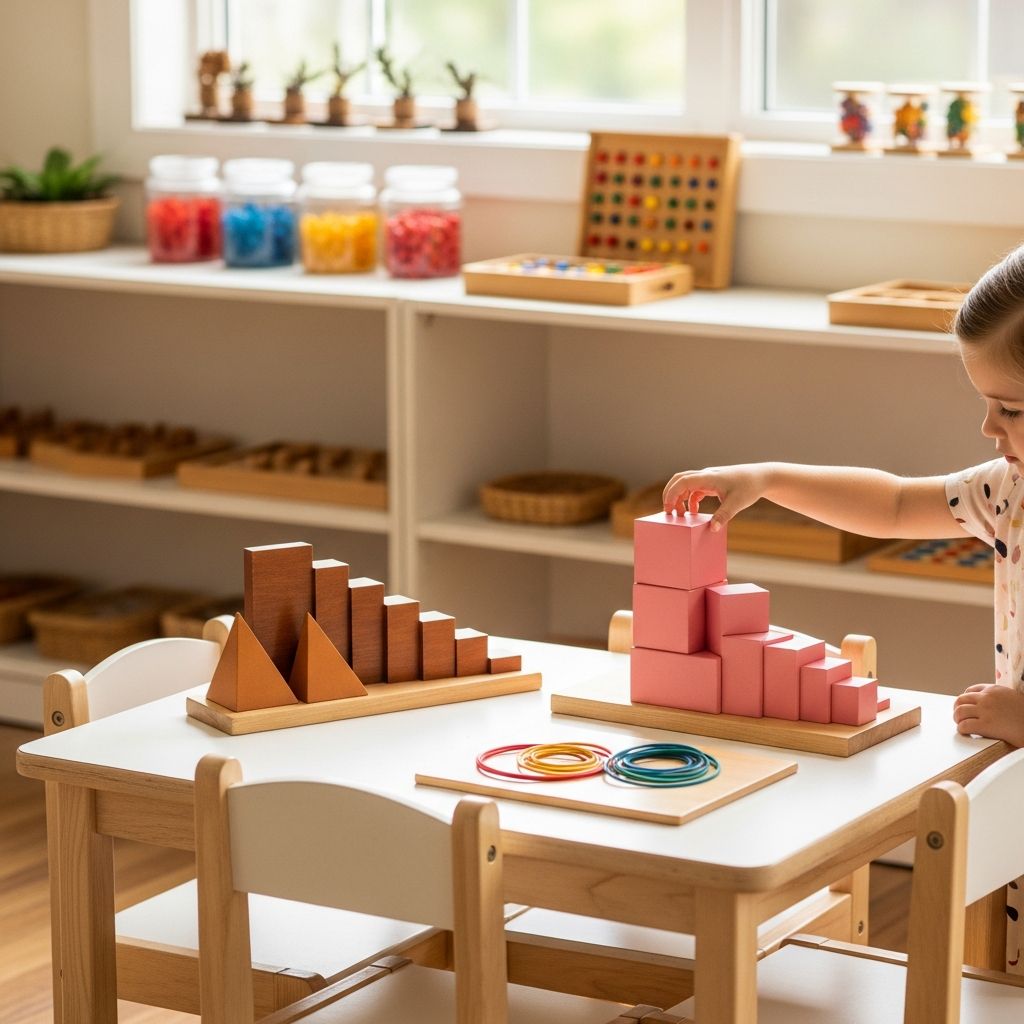
Montessori education revolutionizes early childhood learning by prioritizing the child’s natural drive for discovery and independence. Developed by Dr. Maria Montessori, this method creates environments where children thrive through self-directed exploration rather than traditional instruction.
Core Foundations of Montessori Learning
The Montessori approach rests on fundamental beliefs about child development. It views children as inherently capable learners who construct knowledge through interaction with their surroundings. Central to this philosophy is the idea that education should nurture the whole child—intellectually, emotionally, socially, and physically.
Key tenets include deep respect for each child’s individuality, allowing them to progress at their own rhythm. Learning is seen as an active process, where hands-on experiences replace passive absorption of information. This fosters intrinsic motivation, as children pursue interests without external rewards like grades or prizes.
- Respect for the child: Acknowledges unique potentials and paces.
- Active discovery: Emphasizes experiential learning over rote memorization.
- Holistic growth: Integrates cognitive, physical, emotional, and social development.
Designing the Ideal Learning Space
A hallmark of Montessori is the prepared environment, meticulously arranged to support independent exploration. Classrooms feature low shelves with accessible materials, child-sized furniture, and areas inviting movement. Natural elements like plants and light create harmony and order, essential for focus.
Materials are limited to those aiding specific developmental stages, promoting concentration by avoiding clutter. Children move freely, selecting activities that match their interests, which builds self-discipline within clear boundaries. This setup encourages responsibility, as students care for their space and materials.
| Element | Purpose | Benefits |
|---|---|---|
| Child-sized furniture | Promotes accessibility | Builds independence |
| Open shelves | Displays materials | Encourages choice |
| Natural light and plants | Creates harmony | Fosters calm focus |
| Defined work areas | Supports order | Enhances concentration |
Hands-On Tools for Discovery
Montessori materials are ingeniously designed for self-teaching. Sensorial tools refine senses through tactile experiences, like color-matching blocks or texture boards. Math materials, such as golden beads, make abstract concepts concrete, allowing children to grasp place value physically.
Practical life activities—pouring water, polishing objects—develop fine motor skills and grace. Language materials progress from sandpaper letters to moveable alphabets, supporting phonetic awareness. These self-correcting tools provide immediate feedback, empowering children to learn from errors independently.
The Teacher’s Guiding Role
Montessori educators act as guides, observing keenly to tailor experiences. They present lessons briefly, then step back, intervening only to support or extend learning. This observational expertise ensures activities align with developmental readiness.
Teachers model behaviors, demonstrating courtesy and care. Their role evolves with age groups: nurturing infants, guiding toddlers, and facilitating deeper inquiries for older children. Certification emphasizes deep training in child psychology and material use.
Multi-Age Classrooms: A Community of Learners
Typically spanning three-year ranges (e.g., 3-6, 6-9), multi-age groups foster mentorship. Older children teach peers, reinforcing mastery, while younger ones aspire and learn socially. This mirrors real-world dynamics, building empathy, leadership, and collaboration.
Long-term relationships with the same teacher allow personalized tracking. Diversity in backgrounds promotes global awareness, with curricula incorporating cultural studies to celebrate differences.
Fostering Independence and Self-Discipline
Freedom within limits is pivotal: children choose work but follow classroom norms. This cultivates self-regulation, as purposeful activity leads to deep concentration, or ‘work cycles.’ Intrinsic rewards from competence replace external validation.
Practical life exercises teach daily skills, boosting confidence. Movement is integral, countering sedentary learning; children select floor mats for focused tasks, transitioning smoothly between activities.
Curriculum Across Developmental Stages
Primary Years (Ages 3-6)
Focuses on foundational skills through concrete materials. Sensorial refinement prepares abstract thinking; practical life builds coordination. Language and math emerge naturally via exploratory play.
Elementary (Ages 6-12)
Shifts to ‘cosmic education,’ connecting personal learning to the universe. Group projects explore history, science, and geography, emphasizing interconnectedness and responsibility.
Proven Advantages for Children
Studies affirm Montessori’s efficacy. Children exhibit advanced executive function, creativity, and social skills. Longitudinal research shows sustained academic gains and emotional resilience.
By prioritizing process over outcomes, it cultivates lifelong learners adaptable to change. Reduced behavioral issues stem from engaging environments meeting innate needs.
- Enhanced motivation and persistence
- Superior problem-solving
- Stronger peer relations
- Academic edge in reading/math
Implementing Montessori at Home
Parents can adopt principles: create low shelves with purposeful toys, allow uninterrupted work, model grace. Observe interests to guide activities, avoiding interruptions during concentration.
Set consistent limits lovingly. Incorporate nature walks for sensorial input and practical tasks like cooking together.
Navigating Challenges and Variations
Not all programs are authentic; seek AMS/AMS-affiliated schools with certified staff. Costs vary, though public options exist. Adaptations for special needs highlight inclusivity.
Critics note potential gaps in standardization, but evidence supports flexibility’s strengths.
Frequently Asked Questions
What age groups does Montessori serve?
From infancy through adolescence, with classrooms grouped in three-year cycles for natural peer learning.
Do Montessori children use textbooks?
Minimal reliance; hands-on materials dominate, transitioning to books in upper levels for research.
How is progress measured?
Through observation, portfolios, and mastery demonstrations, not tests or grades.
Is Montessori suitable for gifted or special needs children?
Yes, individualized pacing accommodates all abilities exceptionally well.
Can Montessori prepare for traditional schools?
Absolutely; graduates excel due to strong foundations in independence and skills.
References
- About Montessori — American Montessori Society. 2023-01-15. https://amshq.org/about-montessori/
- The Montessori Philosophy — Montessori Foundation. 2022-05-20. https://www.montessori.org/the-montessori-philosophy/
- Key Montessori Principles Of Education — Montessori Academy. 2024-03-10. https://montessoriacademy.com.au/montessori-education/principles-of-montessori-education/
- Montessori Education: The Philosophy and How It Works — Rocky Mountain School. 2023-08-05. https://rms.wa.edu.au/montessori-education-the-philosophy-and-how-it-works/
- Montessori Philosophy — Del and Montessori. 2022-11-12. https://www.delandmontessori.com/montessori-philosophy

- Integrated M.A. in Applied Linguistics, University of Hyderabad
- 5+ years in editorial, instructional, SEO, and research-based writing
Sneha is a relationships and lifestyle writer with a strong foundation in applied linguistics and certified training in relationship coaching. She brings over five years of writing experience to theskillvault, crafting thoughtful, research-driven content that empowers readers to build healthier relationships, boost emotional well-being, and embrace holistic living. Her writing and insights reflect the belief that beauty, happiness, and wellness…