
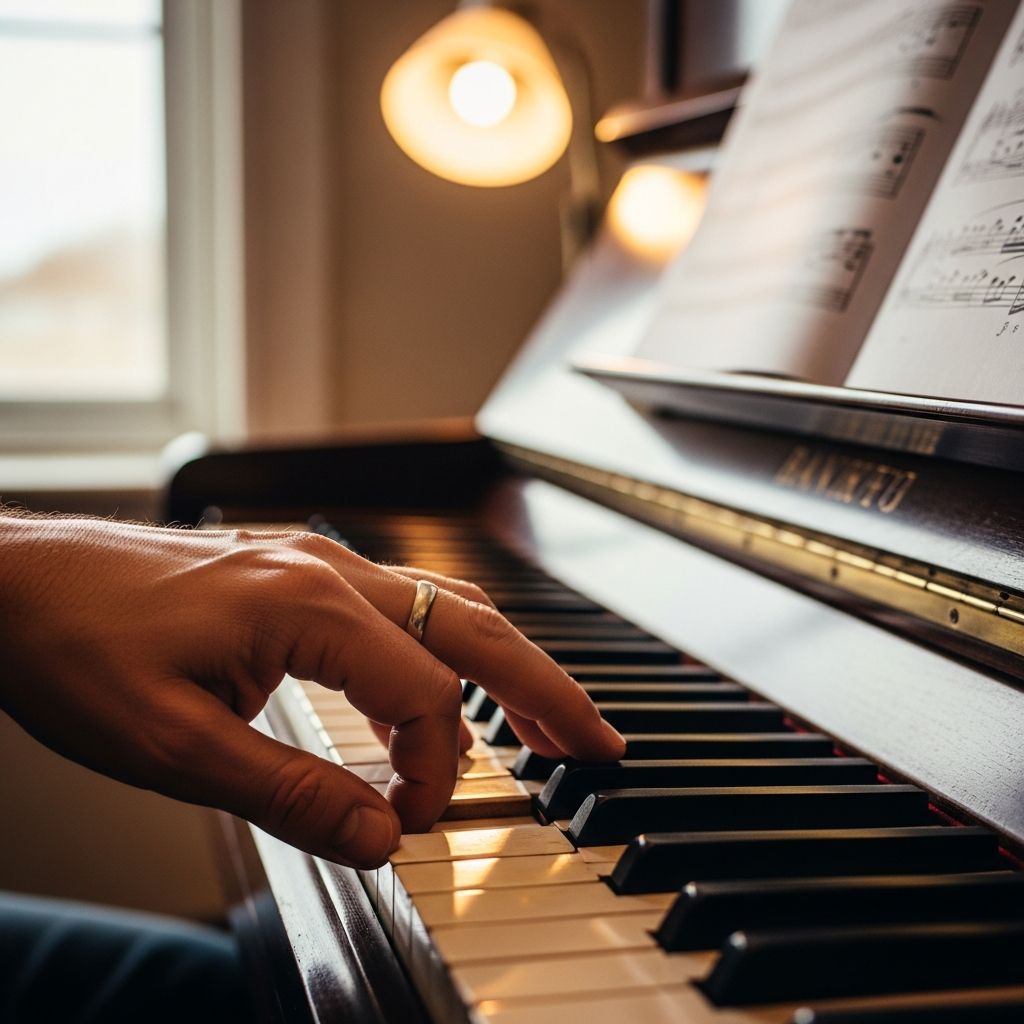
Musical literacy empowers adults to read, interpret, and create music, fostering deeper connections with this universal art form. It encompasses notation reading, auditory comprehension, and cultural awareness, transforming passive listening into active engagement.
Defining Musical Literacy in Adulthood
Musical literacy goes beyond basic note-reading; it involves decoding rhythms, harmonies, and structures while grasping historical and social contexts. For adults, this means building skills to hear music internally (audiation), improvise, and appreciate diverse genres.
Unlike childhood learning, adult acquisition leverages life experience for quicker conceptual grasp, though consistent practice is key. Research shows older adults can gain tonal and rhythmic proficiency through targeted training.
Core Advantages of Developing Musical Skills Later in Life
Acquiring these abilities yields multifaceted rewards, from sharpened cognition to enriched social interactions.
- Cognitive Enhancement: Training improves executive functions, memory, and visuospatial skills. A year-long piano study with naïve older adults boosted attention and neural plasticity.
- Emotional and Social Gains: It fosters empathy, creativity, and conversation starters, linking music processing to language fluency.
- Well-Being Boost: Participants report higher life quality, reduced stress, and better physical coordination via musical activities.
| Benefit Category | Supported Skills | Evidence from Studies |
|---|---|---|
| Cognitive | Memory, Attention, Executive Function | 3-4 months piano practice enhanced functions in 29 adults |
| Social/Emotional | Empathy, Confidence, Relationships | Gold-MSI scores rose post-training |
| Physical | Coordination, Motor Skills | Drumming/singing improved memory in older women |
Foundational Elements Every Adult Should Master
Start with essentials to build confidence without overwhelming complexity.
Notation Basics: Reading the Musical Language
Learn staff lines, clefs, note values, and key signatures. Apps gamify this, turning symbols into sounds. Practice daily for 15 minutes to internalize rhythms and pitches.
Rhythmic Understanding and Audiation
Audiation—mentally hearing music—is crucial. Clap beats, count subdivisions, and shadow recordings to develop inner rhythm.
Harmony and Chord Progressions
Grasp major/minor scales and common progressions (I-IV-V). This unlocks song analysis across pop, jazz, and classical.
Practical Pathways to Skill Acquisition
Adults thrive with flexible, tech-aided methods over rigid lessons.
- Digital Tools: Use apps like Yousician or Simply Piano for interactive theory and playing tutorials.
- Video Resources: YouTube channels break down techniques; follow along with slowed demos.
- Group Classes: Community choirs or ukulele circles offer low-pressure practice and camaraderie.
- Self-Paced Books: Titles on basic theory provide structured home learning.
A longitudinal study compared piano practice to listening groups; both advanced skills, but hands-on yielded broader gains.
Grasping Instrumental and Vocal Fundamentals
Understanding techniques demystifies performances.
Piano and Keyboard Essentials
Key-based layout aids theory visualization. Learn hand position, scales, and arpeggios to follow compositions.
Guitar Chord Foundations
Open chords and strumming patterns form pop/rock bedrock. Barre chords expand versatility.
Vocal Production Insights
Breath control, resonance, and pitch matching reveal singers’ prowess, from vibrato to belting.
Other Instruments: Broadening Horizons
Explore strings (violin bowing), winds (saxophone embouchure), and percussion for genre-spanning appreciation.
Enhancing Live Music Experiences
Literacy spotlights virtuosity at events. Discern a violinist’s double-stops or drummer’s polyrhythms, elevating immersion.
At classical recitals, follow scores; in rock shows, identify modulations. This shifts focus from spectacle to artistry.
Overcoming Adult Learning Hurdles
Time scarcity and self-doubt are common; counter with micro-sessions and progress tracking. Motivation surges from small wins, like playing a favorite tune.
Neuroplasticity persists lifelong; studies confirm older novices match younger learners in skill uptake with persistence.
Advanced Steps for Lifelong Growth
Progress to ear training, composition, and genre analysis. Join ensembles or compose via software for creative outlets.
Frequently Asked Questions (FAQs)
Can adults without prior experience become musically literate?
Yes; research shows naïve older adults acquire skills in months, rivaling lifelong musicians in targeted areas.
How much daily practice is needed?
20-30 minutes suffices for steady gains, prioritizing consistency over intensity.
What if I can’t play an instrument?
Literacy stems from understanding, not performance. Listening analytically builds foundations.
Does it help brain health?
Absolutely; it enhances cognition, delays decline, and boosts well-being.
Best starting resources?
Free apps, online theory sites, and community groups offer accessible entry points.
References
- Acquisition of musical skills and abilities in older adults—results of … — PMC/NCBI. 2024. https://pmc.ncbi.nlm.nih.gov/articles/PMC11658158/
- Musical literacy – Wikipedia — Wikipedia. Accessed 2026. https://en.wikipedia.org/wiki/Musical_literacy
- How To Become Musically Literate as an Adult | SkillsYouNeed — SkillsYouNeed. Accessed 2026. https://www.skillsyouneed.com/rhubarb/musically-literate-adult.html
- The power of Music Literacy: Unlocking a Lifetime of Benefits — Legrand Music. Accessed 2026. https://www.legrandmusic.org/blogs/post/the-power-of-music-literacy-unlocking-a-lifetime-of-benefits
- Connections Between Music Literacy and Music-Related … — UConn Digital Commons. 2018. https://digitalcommons.lib.uconn.edu/cgi/viewcontent.cgi?article=1169&context=vrme

- Integrated M.A. in Applied Linguistics, University of Hyderabad
- 5+ years in editorial, instructional, SEO, and research-based writing
Sneha is a relationships and lifestyle writer with a strong foundation in applied linguistics and certified training in relationship coaching. She brings over five years of writing experience to theskillvault, crafting thoughtful, research-driven content that empowers readers to build healthier relationships, boost emotional well-being, and embrace holistic living. Her writing and insights reflect the belief that beauty, happiness, and wellness…