
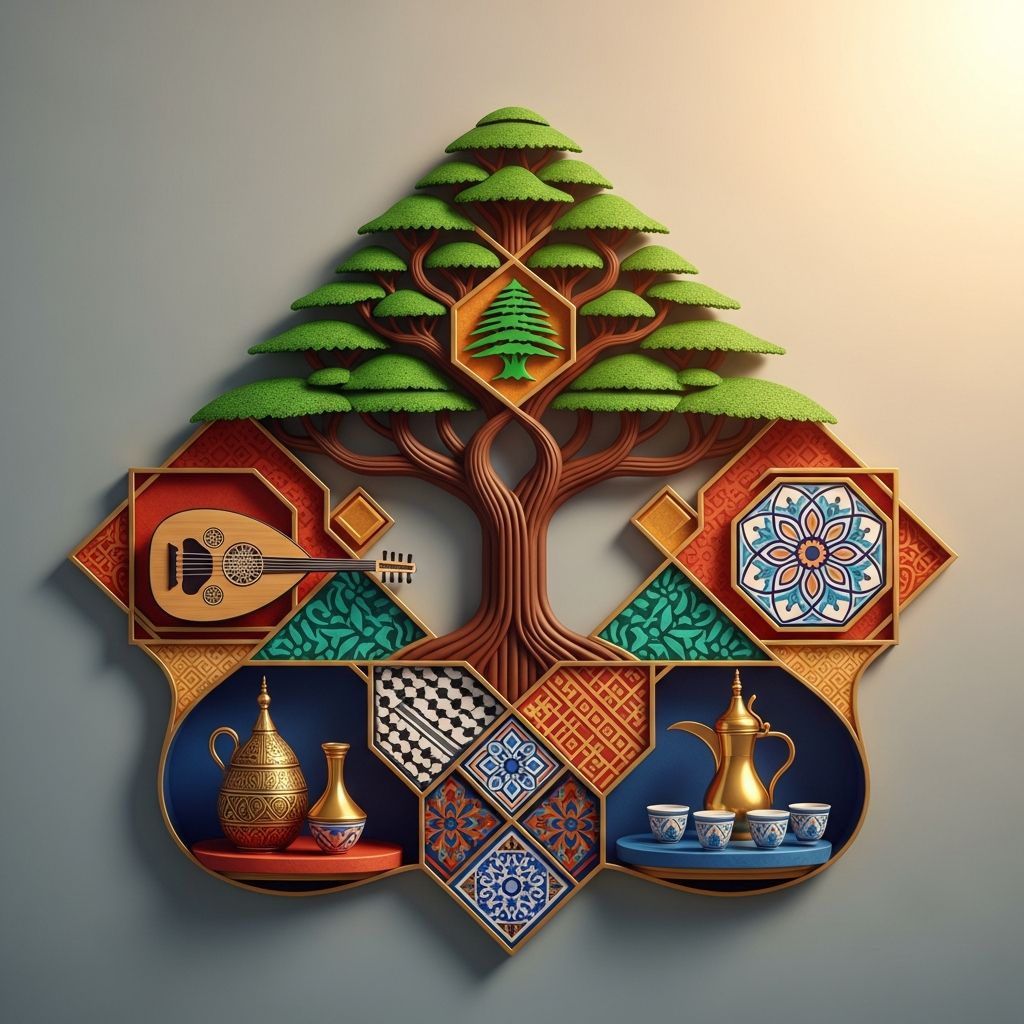
National Arab American Heritage Month, observed every April, honors the profound impact of Arab Americans on U.S. society, from pioneering innovations to enriching cultural landscapes. This annual event highlights resilience, achievements, and shared values amid a diverse national fabric.
The Roots and Rise of a National Observance
Efforts to formally recognize Arab American contributions trace back to the 1980s, when Congress passed resolutions like the 1989 Joint Resolution designating October 25 as National Arab-American Day.April emerged as the dedicated month to align with events such as the Kahlil Gibran Spirit of Humanity Awards, building momentum over decades through local proclamations in states and cities.
In 2017, the Arab America Foundation launched a coordinated national initiative, starting with a few states and expanding rapidly. By 2023, 48 states had issued proclamations, reflecting widespread embrace. Federal milestones include the U.S. Department of State’s 2021 proclamation and President Joe Biden’s statements in 2022 and official proclamation in 2023, urging Americans to observe with programs celebrating history and culture.
Permanent legislation now designates April as Arab American Heritage Month in states like Illinois, Oregon, Virginia, Indiana, and California, transforming sporadic local events into a unified national tradition.
Defining the Arab American Community
Arab Americans hail from 22 countries across the Middle East and North Africa, including Algeria, Bahrain, Comoro Islands, Djibouti, Egypt, Iraq, Jordan, Kuwait, Libya, Morocco, Mauritania, Oman, Palestine, Qatar, Saudi Arabia, Somalia, Sudan, Syria, Tunisia, United Arab Emirates, Lebanon, and Yemen. Numbering over 3.5 million, they represent a vibrant mosaic of traditions integrated into American life.
Immigration waves began in the late 19th century, with early settlers often from Lebanon and Syria seeking economic opportunities. Post-World War II and recent decades saw influxes from diverse regions, contributing to fields like medicine, engineering, and the arts amid challenges including post-9/11 discrimination.
Trailblazers Shaping American Progress
Arab Americans have left indelible marks across sectors. In politics, figures like former Michigan Governor Jennifer Granholm and Representatives Rashida Tlaib and Justin Amash advocate for policy and representation.
Business icons include Steve Jobs, whose Syrian heritage fueled Apple’s innovation, and Farouk Shami, a haircare magnate and philanthropist. In medicine, Dr. Elias Zerhouni advanced NIH leadership, while entertainers like Shannon Elizabeth and Fady Joudah blend cultural narratives into mainstream media.
Military service stands out, with over 6,000 Arab Americans in recent conflicts, exemplifying patriotism. These stories counter stereotypes, showcasing hard work and generosity.
Cultural Tapestry: Traditions and Innovations
Arab American culture fuses ancestral roots with American dynamism. Cuisine features staples like hummus, falafel, tabbouleh, and baklava, adapted in fusion dishes at eateries nationwide. Festivals often include dabke folk dancing, calligraphy exhibits, and henna art, preserving heritage while evolving.
Music spans traditional oud melodies to modern artists like Saint Levant, bridging generations. Literature, from Kahlil Gibran’s The Prophet to Naomi Shihab Nye’s poetry, explores identity and belonging. Visual arts thrive through galleries highlighting Islamic geometric patterns alongside contemporary themes.
| Aspect | Traditional Elements | American Adaptations |
|---|---|---|
| Cuisine | Shawarma, mansaf | Food trucks, fusion tacos |
| Dance | Dabke line dance | Community festivals, weddings |
| Art | Calligraphy, mosaics | Street art, museum exhibits |
Educational Strategies for Schools and Communities
Integrating Arab American Heritage Month into curricula fosters inclusion. Schools can host:
- Virtual author talks on Gibran or modern poets.
- Cooking demos of Middle Eastern recipes using accessible ingredients.
- Timeline projects mapping Arab immigration and inventions like the coffee bean’s U.S. introduction.
- Film screenings of documentaries on Arab American experiences.
- Art workshops creating cultural collages.
These activities challenge biases, promote empathy, and align with standards for multicultural education. Resources from NYC Department of Education include lesson plans on achievements and anti-stereotype discussions.
Community Engagement and Events
April buzzes with festivals, seminars, and exhibitions. Highlights include:
- State capitol proclamations and governor addresses.
- University panels on Arab contributions to STEM.
- Library reading challenges featuring Arab authors.
- Nonprofit galas honoring veterans and leaders.
Grassroots volunteers secure hundreds of local recognitions annually, amplifying voices. Online platforms share recipes, playlists, and histories for virtual participation.
Addressing Challenges and Promoting Unity
Despite progress, Arab Americans face misconceptions and bias. Heritage Month combats this by spotlighting shared values like resilience and community service. Presidential calls emphasize learning histories to reject discrimination, building bridges across divides.
FAQs
What is Arab American Heritage Month?
It’s an April observance celebrating Arab Americans’ history, culture, and contributions, officially recognized federally since 2021.
Why April?
Selected for its ties to cultural awards and to consolidate prior scattered observances.
How many Arab Americans are there?
Approximately 3.5 million, from 22 Arab League nations.
Which states have permanent laws?
Illinois, Oregon, Virginia, Indiana (Senate), California.
How can I participate?
Join events, read Arab authors, try recipes, or advocate for proclamations in your area.
References
References
- Arab American Heritage Month — American-Arab Anti-Discrimination Committee (AAI). 2023. https://www.aaiusa.org/arab-american-heritage-month
- Learn more about the history and relevance of Arab American Heritage Month — University of Notre Dame. 2023. https://weareall.nd.edu/our-stories/news/learn-more-about-the-history-and-relevance-of-arab-american-heritage-month/
- National Arab American Heritage Month — Wikipedia (informed by primary sources). 2023. https://en.wikipedia.org/wiki/National_Arab_American_Heritage_Month
- Arab American Heritage Month — New York City Department of Education (.gov). 2023. https://www.schools.nyc.gov/learning/subjects/social-studies/arab-american-heritage-month
- Arab-American Heritage: Home — SUNY Schenectady County Community College (.edu). 2023. https://libguides.sunysccc.edu/arabamericanheritage
- National Arab American Heritage Month — Arab America Foundation. 2026. https://arabamericafoundation.org/national-arab-american-heritage-month/

Medha Deb is an editor with a master's degree in Applied Linguistics from the University of Hyderabad. She believes that her qualification has helped her develop a deep understanding of language and its application in various contexts. Medha specializes in the areas of beauty, health, sports, and wellness and is committed to ensuring that the content on the website is…