
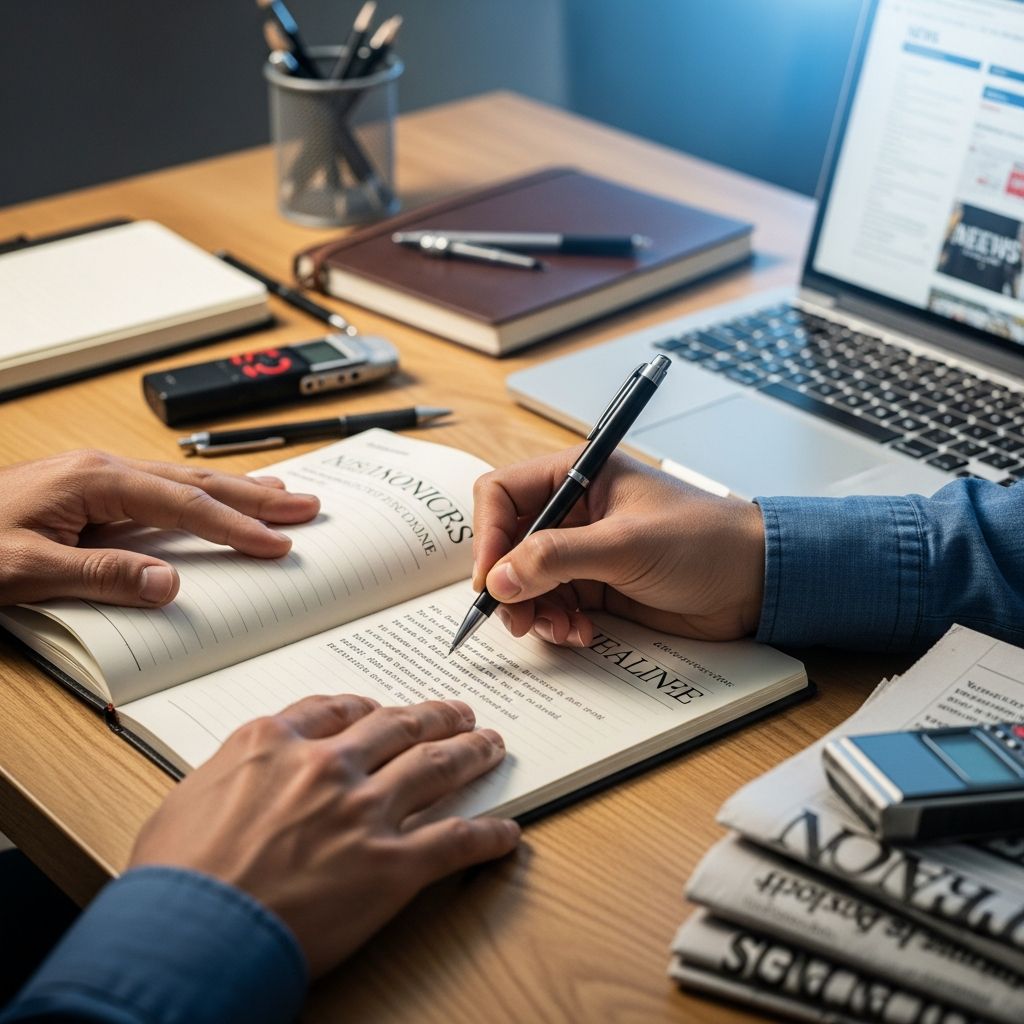
News writing demands precision, speed, and the ability to captivate readers instantly. Unlike academic or creative prose, it prioritizes facts, clarity, and reader retention through structured formats and tight language. This guide delves into core principles, organizational strategies, and practical tools to elevate your reporting skills.
Understanding the Inverted Pyramid Structure
The **inverted pyramid** remains the cornerstone of news writing, placing the most critical information at the top for immediate impact. This approach ensures readers grasp the essence even if they skim or the story is truncated. Start with answers to the five Ws—who, what, when, where, why—and how, then descend into supporting details, context, and background.
- Top Tier (Lead):** Core facts that define the story’s news value.
- Middle Tier:** Additional details, quotes, and explanations to build understanding.
- Bottom Tier:** Less urgent info like historical context or related events, easily cut if space is limited.
This structure suits fast-paced news cycles, allowing editors to trim from the bottom without losing integrity.
Crafting Compelling Leads
The lead, often one sentence, hooks readers and delivers the story’s heartbeat. It must be concise, active, and packed with the newest, most relevant details. Avoid starting with attribution or time; lead with impact.
| Lead Type | Description | Example Scenario |
|---|---|---|
| Summary Lead | Condenses who, what, when, where, why, how into 25-35 words. | Local election results with winner and margin. |
| Multiple-Element Lead | Links related events for complex stories. | Series of policy announcements in one week. |
| Descriptive Lead | Paints a vivid scene to immerse readers. | Disaster eyewitness moment. |
| Suspense Lead | Teases to draw readers deeper. | Impending crisis warning. |
Choose based on story type: hard news favors summary; features allow descriptive flair.
Incorporating Narrative Elements in Journalism
While objectivity reigns, **narrative journalism** weaves storytelling tools like character development, scenes, dialogue, and themes without sacrificing facts. Pulitzer winners like Rick Bragg blend this with traditional structure for emotional depth.
Key tools include:
- Revealing characters through actions and change.
- Vivid scenes with sensory details.
- Time shifts via flashbacks for context.
- Authentic dialogue to humanize sources.
- A clear purpose tying facts to broader themes.
This style engages while upholding accuracy, honesty, and integrity.
The Five-Box Outlining Method
Rick Bragg’s **five-box technique** streamlines drafting by visualizing story flow before writing. Fill these sequentially:
- Lead Box: The hook drawing readers in.
- Nut Graf Box: Story summary explaining ‘so what?’
- Transition Box: New facts bridging to narrative.
- Narrative Box: Core storytelling section.
- Ending Box: Memorable quote or image for lasting impact.
This method, though from 2002, endures for its clarity in complex pieces.
Alternative Story Structures
Beyond the inverted pyramid, adapt formats for variety:
- Hourglass: Inverted pyramid top, narrative middle, recap bottom—ideal for features needing both urgency and depth.
- Pure Narrative: Fiction-like flow with journalistic rigor, suited to magazines.
- Wall Street Journal Formula: Anecdote lead, pyramid body, forward-looking end.
Select based on audience and medium; print favors pyramids, digital allows experimentation.
Essential Language and Style Rules
Conciseness defines journalistic prose: short sentences (one idea each), brief paragraphs (1-2 sentences), and active voice. Adhere to **AP Style** for consistency in numbers, titles, and abbreviations.
Avoid:
- Subjective words like ‘very’ or ‘unique’.
- Reporter intrusion (‘I found’).
- Long quotes; paraphrase unless poignant.
Proofread thrice: once for facts, once for conciseness (cut one word per sentence), once for flow.
Writing Effective Headlines
Headlines must standalone, snappy, and present-tense for past events. Omit articles (‘a’, ‘the’); include verbs; derive from body content—no new info.
- Present tense: ‘Council Approves Budget’.
- Future: ‘Mayor to Announce Plan’.
- Keep under 10 words for scannability.
Test: Does it convey who-what-why succinctly?
Maintaining Objectivity and Balance
Journalism demands neutrality: attribute all non-obvious facts, present all sides, let readers judge. Check spellings, titles, quote accuracy. Outline post-draft to ensure logical transitions.
Nut graf follows lead, summarizing significance in general terms.
Editing and Polishing Your Piece
Refine ruthlessly:
- Shorten paragraphs for online readability.
- Separate quotes into solo paragraphs.
- End forward-looking or with revisited lead—not recaps.
Simplify jargon; explain terms for broad audiences.
Common Pitfalls to Avoid
Aspire writers stumble on:
| Pitfall | Fix |
|---|---|
| Buried lede | Front-load key facts. |
| Passive voice | Use active: ‘Police arrested suspect’ vs. ‘Suspect was arrested’. |
| Opinion creep | Attribute views; stick to facts. |
| Overlong sentences | Split into two. |
FAQs
What is the inverted pyramid in news writing?
It organizes stories with most vital info first, descending to least essential, aiding quick reads and edits.
How long should a news lead be?
Ideally 25-35 words, answering key questions without fluff.
Can journalists use storytelling techniques?
Yes, via narrative tools like scenes and dialogue, while prioritizing accuracy.
What is AP Style?
Standardized rules for U.S. journalism on punctuation, capitalization, and more.
How do you end a news story?
With a fresh quote, stat, or future implication—not summary.
This comprehensive approach equips you to produce polished, reader-focused journalism that informs and engages.
References
- Regent Writing Resources: Journalistic Writing Style Part 1 — Regent University. 2023-07. https://www.regent.edu/wp-content/uploads/2023/07/Regent-Writing-Resources-Style-Journalistic-Writing-Style-Part-1.pdf
- A Beginner’s Guide to Journalism News Writing — Palomar College Pressbooks. N/A. https://pressbooks.palomar.edu/introtojournalism/chapter/chapter-7-basics-of-writing/
- Guidelines for Newswriting — Cal Poly UCM. N/A. https://ucm.calpoly.edu/guidelines-newswriting
- Journalistic Writing — Eastern Washington University Research Guides. N/A. https://research.ewu.edu/writers_c_journalistic_writing
- News Writing Guide — Texas A&M University. N/A. https://marcomm.tamu.edu/creative-platform/voice-and-tone/news-writing-guide/
- Journalism and Journalistic Writing: Introduction — Purdue OWL. N/A. https://owl.purdue.edu/owl/subject_specific_writing/journalism_and_journalistic_writing/index.html
- Newswriting Guidelines — Northwestern University. N/A. https://www.northwestern.edu/brand/editorial-guidelines/newswriting-guidelines/

- Integrated M.A. in Applied Linguistics, University of Hyderabad
- 5+ years in editorial, instructional, SEO, and research-based writing
Sneha is a relationships and lifestyle writer with a strong foundation in applied linguistics and certified training in relationship coaching. She brings over five years of writing experience to theskillvault, crafting thoughtful, research-driven content that empowers readers to build healthier relationships, boost emotional well-being, and embrace holistic living. Her writing and insights reflect the belief that beauty, happiness, and wellness…