
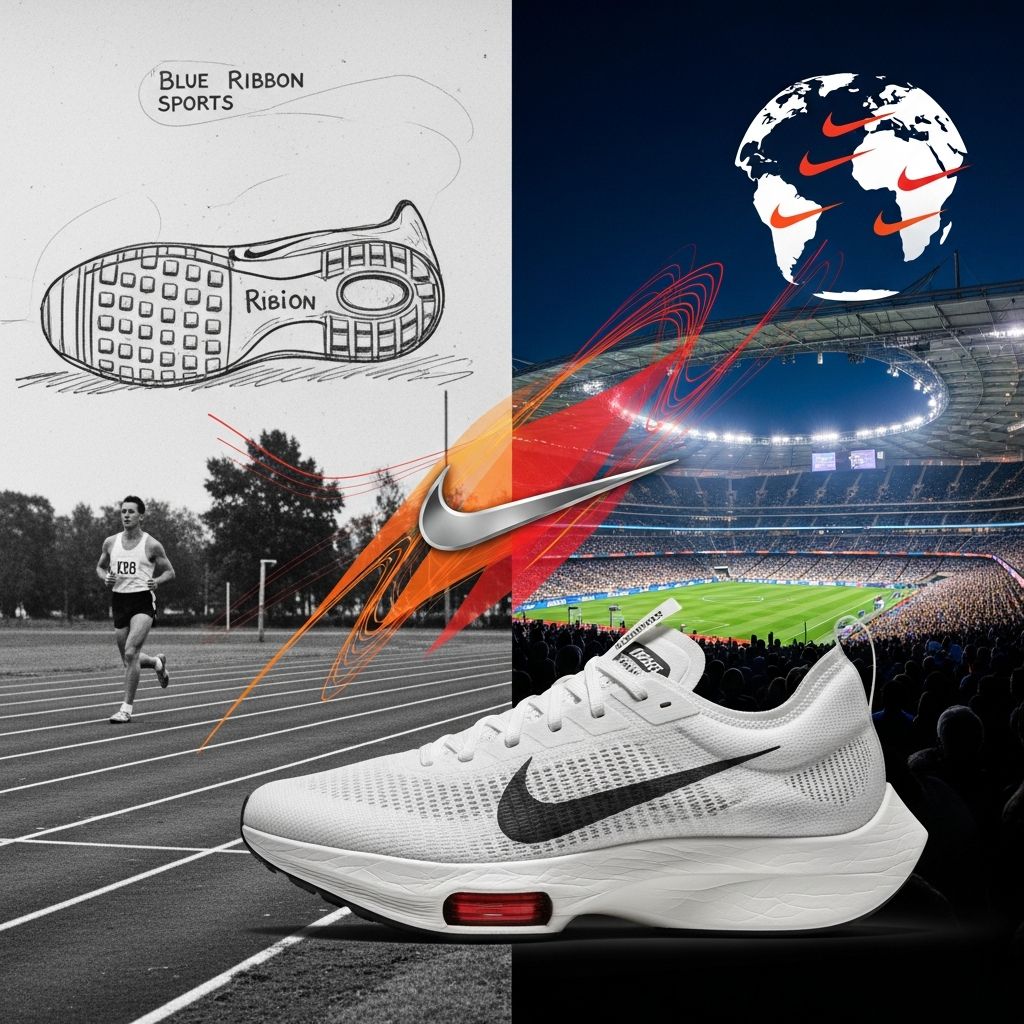
The Athletic Revolution That Started in Eugene
Few companies can claim to have fundamentally reshaped an entire industry while maintaining their core mission of empowering athletes. Nike Inc represents one of the most compelling business transformation stories of the modern era, evolving from a modest shoe importer operating out of a car trunk into a multinational corporation that influences global sports culture. The organization’s trajectory reveals not just commercial success, but a commitment to innovation that has consistently pushed the boundaries of what athletic performance equipment can achieve.
The foundations of this empire were laid in the Pacific Northwest, where two individuals with complementary visions and backgrounds came together to pursue a shared passion. What began as a lean operation with minimal resources would eventually redefine athletic branding and establish new standards for how companies connect with consumers through sport.
The Visionary Partnership: Two Oregon Pioneers
The story of Nike’s creation centers on two remarkable individuals whose backgrounds seemed tailored for success in the sports industry. Phil Knight, a Stanford University graduate with a business degree, had competed as a middle-distance runner at the University of Oregon, where he developed an acute understanding of what athletes actually needed from their footwear. His coach at Oregon, Bill Bowerman, was an innovative thinker who constantly experimented with shoe design and construction methods, driven by a philosophy that proper equipment could enhance athletic performance significantly.
Knight’s international travels in the early 1960s introduced him to the Onitsuka Tiger Company, a Japanese manufacturer producing high-quality running shoes at reasonable prices. Recognizing an untapped market opportunity in the United States, Knight arranged to become the company’s distribution partner. On January 25, 1964, Blue Ribbon Sports officially came into existence as a partnership between Knight and Bowerman. This date marked the true beginning of what would become a global phenomenon, though few observers at the time could have predicted the magnitude of the company’s eventual impact.
Building Foundation Through Grassroots Marketing
During its earliest years, Blue Ribbon Sports operated on a shoestring budget, with Knight famously selling shoes from the trunk of his car at track meets and running events. This direct-to-athlete approach proved incredibly effective, as it connected the company directly with serious competitors who could immediately appreciate the superior design and comfort of the products. The company’s first retail location opened in 1966, representing a significant milestone in their expansion strategy.
By 1968, the company had officially incorporated and introduced one of its most legendary products: the Cortez shoe. Designed by Bowerman using innovative construction techniques, the Cortez became an immediate commercial success and established the company’s reputation for combining functional design with athletic performance. The shoe demonstrated that American companies could compete with international manufacturers by focusing on quality and innovation rather than merely competing on price.
A critical turning point occurred in 1971 when Blue Ribbon Sports transitioned to manufacturing its own products through overseas subcontractors, rather than remaining purely as a distributor. This shift marked a fundamental change in business strategy and enabled greater control over product quality and design innovation. More significantly, the company rebranded itself as Nike Inc on May 30, 1971, adopting the name of the Greek goddess of victory. The accompanying Swoosh logo, created by a graphic design student, would become one of the world’s most recognizable symbols.
Strategic Expansion and Market Penetration
The 1970s represented a period of aggressive expansion for the newly rebranded Nike. The company recognized early that brand visibility required strategic partnerships with professional athletes. By securing endorsement deals with tennis champions like Ilie Nastase and Jimmy Connors, Nike began establishing itself as more than just another shoe manufacturer—it was becoming a symbol of athletic excellence and performance.
In 1976, Nike made a pivotal decision to hire John Brown and Partners, a Seattle-based advertising agency, as its first dedicated marketing partner. The agency created a revolutionary advertising campaign titled “There is no finish line,” which showcased the brand philosophy without explicitly displaying specific products. This approach emphasized the spirit of athletic achievement and continuous improvement, resonating deeply with competitors and fitness enthusiasts alike.
By 1980, Nike had captured approximately 50% of the U.S. athletic shoe market and went public, transforming from a private operation into a publicly traded company. This milestone enabled the company to raise capital for expanded operations while rewarding early investors. The company’s decision to go public reflected confidence in its business model and provided resources for the aggressive growth strategy that would define the subsequent decade.
The Michael Jordan Phenomenon and Basketball Dominance
While Nike had achieved substantial market penetration in running shoes, the basketball segment remained underdeveloped and heavily dominated by competitors. In 1984, facing a plateauing domestic market and needing to establish dominance in basketball, Nike made a bold strategic decision that many industry observers viewed as reckless: the company committed its entire annual marketing budget to sign an unknown NBA rookie named Michael Jordan.
Jordan agreed to a five-year contract valued at $2.5 million to promote a specialized basketball shoe called the Air Jordan, which featured distinctive black-and-red colorway that violated NBA uniform regulations. Rather than deterring sales, the rule violations and subsequent fines actually generated enormous publicity and cultural intrigue. The Air Jordan, priced at $65 per pair at launch, became the highest-priced basketball shoe on the market, yet demand far exceeded supply.
This partnership fundamentally transformed Nike’s trajectory and established a template for athlete partnerships that the company would leverage for decades. The decision to bet heavily on an unproven player in a sport the company hadn’t previously dominated demonstrated exceptional strategic vision. As Jordan’s basketball career ascended to legendary status, the Air Jordan brand became a cultural icon transcending the sport itself, influencing fashion, hip-hop culture, and youth consumer preferences globally.
Product Diversification and Brand Evolution
Throughout the 1980s and beyond, Nike systematically expanded beyond its core running and basketball segments. The company introduced the Air Max technology in 1987, revolutionizing cushioning systems and establishing new performance standards. The introduction of the “Just Do It” slogan in 1988 encapsulated the brand philosophy of empowerment and action, becoming one of advertising’s most enduring and effective taglines.
Strategic acquisitions played a crucial role in Nike’s expansion strategy. In 1988, the company acquired Cole Haan, a manufacturer of casual and dress shoes, enabling penetration into lifestyle and professional markets. The 1994 acquisition of Canstar Sports brought skateboarding and hockey equipment brands into the portfolio, while the 2003 acquisition of Converse provided access to the iconic Chuck Taylor All-Star market segment. In 1996, Nike created its ACG division focused on extreme sports and outdoor activities, recognizing emerging consumer interest in specialized athletic pursuits like snowboarding and mountain biking.
Global Infrastructure and Operational Excellence
Nike’s physical presence expanded dramatically during the 1990s. In 1990, the company relocated its headquarters to an eight-building campus in Beaverton, Oregon, consolidating operations and creating a world-class facility for product development and corporate functions. That same year marked the opening of NikeTown in Portland, Oregon, a revolutionary retail concept that functioned as a brand showcase rather than a traditional shoe store. This prototype location demonstrated how retail environments could communicate brand values while selling products, inspiring the subsequent development of similar flagship stores in major cities worldwide.
The company also expanded its technical capabilities during this period, moving into sports technology accessories including portable heart rate monitors, high-altitude compasses, and fitness applications. By the early 2000s, Nike had established itself not merely as a footwear and apparel company, but as a comprehensive sports technology and performance company capable of serving athletes across multiple disciplines and performance levels.
International Expansion and Market Development
Recognizing limitations in the domestic U.S. market, Nike established Nike International Ltd in 1981 to systematically penetrate European, Asian, Latin American, and African markets. Initial European expansion proved challenging due to the entrenched positions of competitors Adidas and Puma in soccer, the continent’s dominant athletic shoe category. However, Nike’s innovative marketing approaches and product quality gradually enabled market share gains.
By 1999, Nike had established European headquarters in Hilversum, The Netherlands, demonstrating significant commitment to long-term regional operations. The company’s international operations generated increasingly substantial revenue contributions, eventually exceeding domestic sales and establishing Nike as a truly global enterprise.
Organizational Culture and Innovation Philosophy
Nike’s sustained success reflects more than just clever marketing or fortunate partnerships. The organization cultivated an internal culture deeply rooted in athletic values and continuous innovation. Bill Bowerman’s original philosophy—that proper equipment enables better athletic performance—remained embedded in corporate decision-making across decades. The company maintained dedicated research and development operations focused on understanding athlete needs and translating that understanding into product improvements.
This innovation orientation manifested across all business functions, not merely product design. The company pioneered new retail concepts, established novel athletic sponsorship models, and developed digital platforms connecting brands with consumers in unprecedented ways. Nike’s willingness to invest heavily in emerging technologies and market segments, even when immediate profitability remained uncertain, reflected confidence in long-term strategic vision.
Revenue Growth and Financial Performance
Nike’s financial trajectory validates the company’s strategic decisions and execution capability. By 1991, annual revenues had reached $3 billion, establishing Nike as a major player in global commerce. The company’s public offering and subsequent capital raises enabled investment in facilities, technology, and talent that reinforced competitive advantages. Revenue growth continued accelerating through the 1990s and 2000s, driven by product innovation, international expansion, and successful brand extension into adjacent markets.
Frequently Asked Questions About Nike Inc
Q: When was Nike actually founded, and what was its original name?
A: Nike was founded on January 25, 1964, as Blue Ribbon Sports by Phil Knight and Bill Bowerman. The company officially became Nike Inc on May 30, 1971, adopting the name of the Greek goddess of victory.
Q: What was the significance of the Michael Jordan partnership?
A: In 1984, Nike invested its entire annual marketing budget to sign rookie Michael Jordan to a $2.5 million five-year contract. This strategic bet established Nike’s dominance in basketball and created a cultural icon that transcended sports, fundamentally transforming the company’s trajectory and establishing a template for athlete partnerships.
Q: How did Nike expand beyond athletic shoes?
A: Nike systematically diversified through acquisitions, strategic brand launches, and product line extensions. Key acquisitions included Cole Haan (1988), Canstar Sports/Bauer (1994), Converse (2003), and Umbro (2008). The company also created specialized divisions like Nike ACG for extreme sports and moved into sports technology accessories.
Q: What role did grassroots marketing play in Nike’s early success?
A: Nike’s founder Phil Knight sold shoes from his car at track meets, establishing direct connections with serious athletes. This grassroots approach created authentic brand advocates who could immediately appreciate product quality and performance advantages.
Q: Where is Nike headquartered?
A: Nike’s world headquarters is located in Beaverton, Oregon, where the company relocated in 1990 to an eight-building campus. The company also maintains European headquarters in Hilversum, The Netherlands, established in 1999.
References
- Nike, Inc. | History, Logo, Headquarters, & Facts — Britannica Money. 2024. https://www.britannica.com/money/Nike-Inc
- Nike, Inc. — Wikipedia. 2024. https://en.wikipedia.org/wiki/Nike,_Inc.
- NIKE, Inc. – Company History — Company-Histories.com. 2024. https://www.company-histories.com/NIKE-Inc-Company-History.html
- Birthplace of Nike — Eugene, Cascades & Coast. 2024. https://www.eugenecascadescoast.org/explore/history-culture-museums/tracktown-usa/birthplace-of-nike/
- About Nike – The official website for NIKE, Inc., Converse and Jordan — Nike, Inc. Official Site. 2024. https://about.nike.com/en/

- Integrated M.A. in Applied Linguistics, University of Hyderabad
- 5+ years in editorial, instructional, SEO, and research-based writing
Sneha is a relationships and lifestyle writer with a strong foundation in applied linguistics and certified training in relationship coaching. She brings over five years of writing experience to theskillvault, crafting thoughtful, research-driven content that empowers readers to build healthier relationships, boost emotional well-being, and embrace holistic living. Her writing and insights reflect the belief that beauty, happiness, and wellness…