
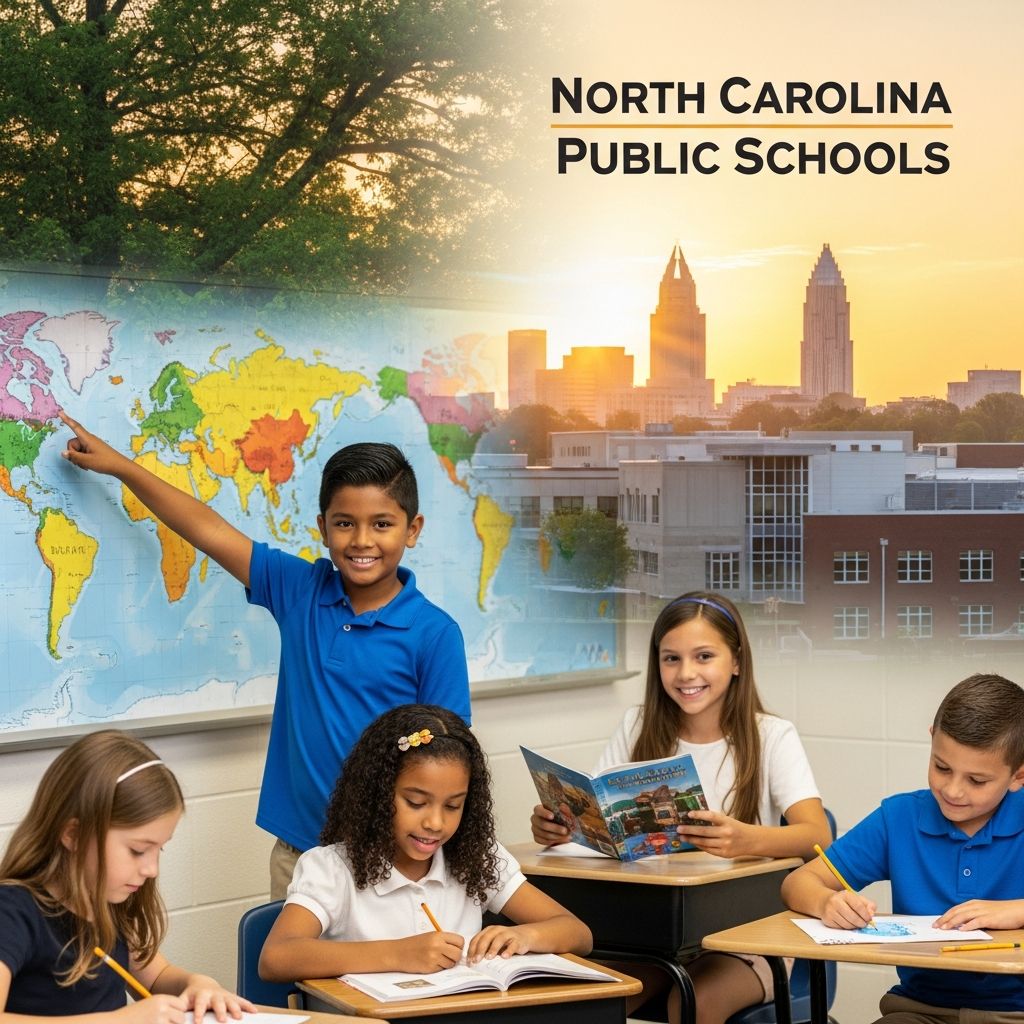
North Carolina boasts one of the largest public education systems in the U.S., educating over 1.5 million students across thousands of schools with a focus on academic proficiency and future readiness.
Overview of the State’s Public Education Landscape
North Carolina’s public school network ranks as the ninth largest in the nation, encompassing 2,760 schools that serve 1,546,300 students for the 2026 school year. This system includes traditional district schools, charters, and innovative options like virtual academies, with 92% of K-12 students opting for public education—slightly above the national average of 90%. The student-teacher ratio stands at 15:1, supported by 100,039 educators.
Diversity is a hallmark, with minority enrollment at 57%, predominantly Black and Hispanic students. Statewide proficiency rates show 51% of students proficient in math and 50% in reading, alongside a 63% science proficiency and an 86% graduation rate. Per-pupil spending reached $12,492 in 2023, reflecting ongoing investments amid funding challenges.
Key Statistics and Demographics
- Total Public Schools: 2,760, including 2,467 traditional, 208 charters, and specialized regional/lab schools.
- Student Population: 1,546,300 across all grades, with 68% eligible for free lunch.
- Teachers: 128,896 certified and 59,207 non-certified staff, totaling 188,103 full-time employees.
- Ethnic Breakdown: 6% two or more races (92,120 students), with a diversity score of 0.71.
- Proficiency Metrics (2021-22): Math 51%, Reading 50%, Science 63%.
| Metric | North Carolina Average | National Context |
|---|---|---|
| Math Proficiency | 51% | Below national benchmarks in advanced states |
| Reading Proficiency | 50% | Competitive but room for growth |
| Graduation Rate | 86% | Aiming for top national ranking |
| Student-Teacher Ratio | 15:1 | Standard for large districts |
Standout Public Schools and Districts
High-performing schools drive the system’s reputation. Top-ranked institutions include Brown Summit Middle School (magnet, ≥99% math/reading proficiency), Metrolina Regional Scholars Academy, and Highland School of Technology. Central Academy of Technology and Arts excels with ≥95% math and 90-94% reading proficiency for grades 9-12.
Districts like Chapel Hill-Carrboro City Schools lead rankings, earning A+ grades for academics, college readiness, and teacher quality, serving 11,386 students across 20 schools. Other large districts include Wake County (68,894 students, 129 schools in Greensboro area), Winston-Salem/Forsyth County (52,717 students), and Cumberland County (49,661 students).
Popular areas feature clusters like North Raleigh (18 schools) and Fayetteville regions, offering varied options from elementary to high school.
Strategic Vision for Educational Excellence
The North Carolina Department of Public Instruction (NCDPI) outlines a 2025-2030 strategic plan, “Achieving Educational Excellence,” approved to position public schools as the nation’s best. Grounded in eight pillars, it emphasizes high academic achievement, character development, and nationwide leadership.
Core goals include boosting the four-year graduation rate to 92% (from 86.9%), raising average ACT scores to 20 (from 18.5), and increasing AP exam pass rates to 73% by 2029. Pillars cover student preparation, educator support, family engagement, safe environments, operational efficiency, innovation, celebration of success, and investment advocacy.
- Pillar 1: Prepare students for post-graduation success through foundational skills, CTE, arts, and work-ready competencies.
- Pillar 2: Elevate educators with competitive support and professional growth.
- Pillar 3: Strengthen parent and community ties for holistic support.
- Pillar 4: Foster secure, healthy learning spaces.
Implementation demands collaboration among educators, families, and leaders, with transparency in progress tracking.
Funding, Challenges, and Improvement Efforts
Despite progress, funding lags; North Carolina ranks near the bottom in cost-adjusted per-pupil spending, dropping to second-to-last in recent assessments. Advocates push legislative agendas like universal pre-K, reliable assessments, and alignment with postsecondary pathways.
Opportunities abound in innovation, such as virtual learning options that provide flexibility for families. Online public schools, tuition-free and accredited, align with state goals by offering personalized pacing and broad course access.
Choosing the Right Public School Option
Families have diverse choices: traditional neighborhood schools, magnets for specialized programs, charters for innovation, and virtual academies for remote learning. Factors to consider include proficiency scores, graduation rates, extracurriculars, and proximity. Tools like state rankings help identify fits, with top counties showcasing excellence.
For 2026, expect enhanced focus on early education, AP expansion, and community hubs turning schools into lifelong learning centers.
Frequently Asked Questions
What are the highest-performing public schools in North Carolina?
Leading schools include Brown Summit Middle School (≥99% proficiency), Metrolina Regional Scholars Academy, and Highland School of Technology, based on combined math and reading scores.
How many public schools operate in North Carolina?
There are 2,760 public schools statewide.
What is the student-teacher ratio in NC public schools?
The ratio is 15:1, with over 100,000 teachers serving 1.5 million students.
What proficiency rates define NC public education?
Math: 51%, Reading: 50%, Science: 63%, Graduation: 86%.
What are the goals of NC’s public school strategic plan?
Aim for top U.S. ranking by 2030 via pillars like student prep, educator reverence, and safe environments, targeting 92% graduation and higher AP passes.
Are virtual public schools available in North Carolina?
Yes, tuition-free online options like those from Connections Academy provide flexible, full-time public education aligned with state standards.
Why Public Schools Remain a Top Choice
North Carolina’s public schools offer accessible, high-quality education with ongoing enhancements. From top-ranked performers to ambitious reforms, the system prioritizes every student’s success, making it a compelling option for families statewide. Explore local districts, review data, and consider innovative formats to find the perfect fit.
References
- Best Public Schools in North Carolina (2026) — PublicSchoolReview.com. 2026. https://www.publicschoolreview.com/north-carolina
- 2026 North Carolina Schools — GreatSchools.org. 2026. https://www.greatschools.org/north-carolina/
- 2025-2030 Strategic Plan for North Carolina Public Schools — NC Department of Public Instruction (.gov). 2025. https://www.dpi.nc.gov/documents/statesuperintendent/achieving-educational-excellence-strategic-plan/download?attachment
- 2026 Best School Districts in North Carolina — Niche.com. 2026. https://www.niche.com/k12/search/best-school-districts/s/north-carolina/
- Top 6 in 2026! Legislative Agenda — Public Schools First NC (.org). Undated (recent). https://publicschoolsfirstnc.org/resources/fact-sheets/top-6-in-2026-legislative-agenda/
- North Carolina is at the bottom of the rankings for funding public schools — NC Budget & Tax Center. 2025-12. https://ncbudget.org/north-carolina-is-at-the-bottom-of-the-rankings-for-funding-public-schools-it-doesnt-have-to-be-that-way/
- Public Comment on Proposed 2025-26 Amendment — NC DPI (.gov). 2026-01-14. https://www.dpi.nc.gov/news/press-releases/2026/01/14/public-comment-proposed-2025-26-amendment-north-carolina-consolidated-state-plan-under-elementary

- Integrated M.A. in Applied Linguistics, University of Hyderabad
- 5+ years in editorial, instructional, SEO, and research-based writing
Sneha is a relationships and lifestyle writer with a strong foundation in applied linguistics and certified training in relationship coaching. She brings over five years of writing experience to theskillvault, crafting thoughtful, research-driven content that empowers readers to build healthier relationships, boost emotional well-being, and embrace holistic living. Her writing and insights reflect the belief that beauty, happiness, and wellness…