
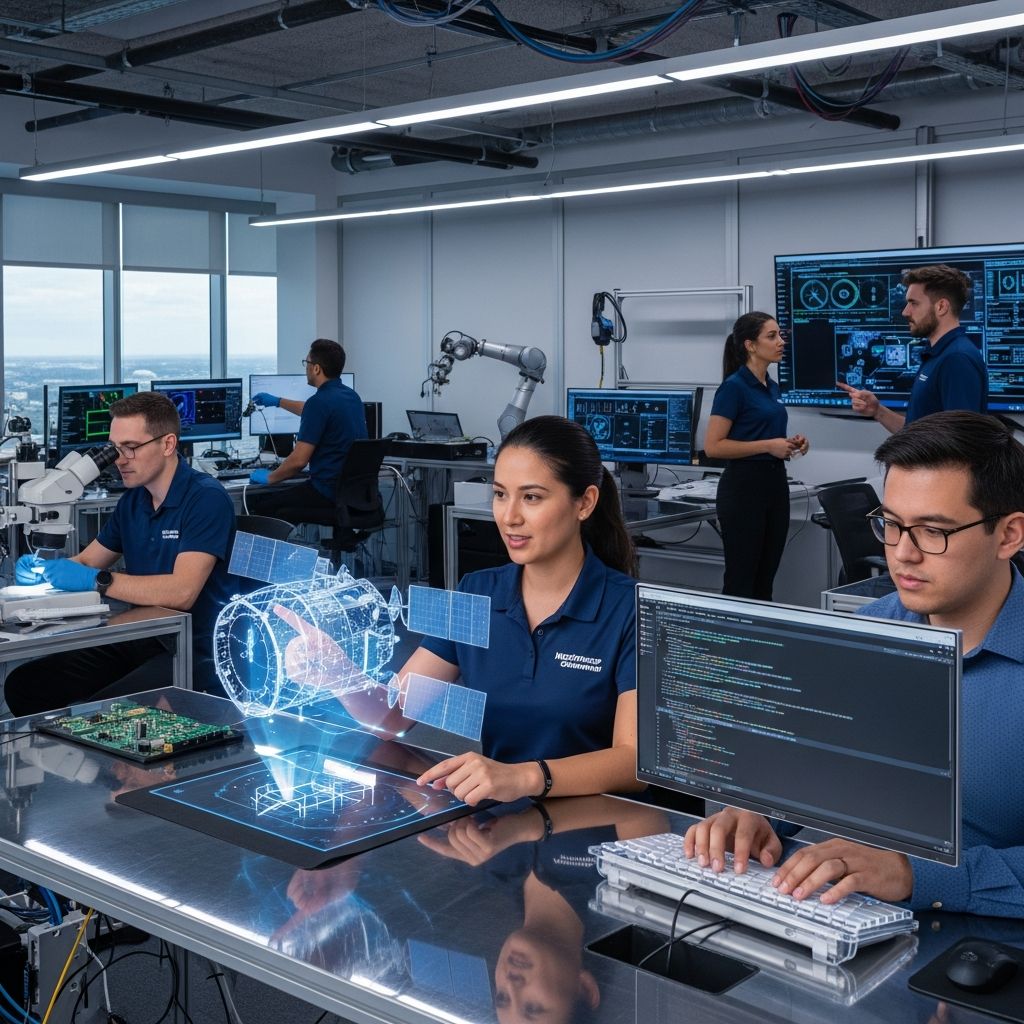
Northrop Grumman is widely recognized as a global leader in aerospace and defense technology, but for many professionals it is also a place to pursue meaningful, long-term careers. The company’s work spans autonomous systems, cyber, space, and advanced defense technologies, helping government and commercial customers address complex national security and scientific challenges. This guide explores what it is like to work at Northrop Grumman, the kinds of roles you can find, how the culture supports people, and how you can position yourself for a career there.
Understanding Northrop Grumman’s Mission and Impact
To understand careers at Northrop Grumman, it helps to know what the company does and why its work matters. Formed in 1994 through the merger of Northrop Corporation and Grumman Corporation, the company’s heritage includes more than 20 legacy organizations that shaped modern aviation and spaceflight, from the flying wing concept to the Apollo Lunar Module.
- Deep aerospace heritage: Northrop’s roots trace back to pioneering aircraft such as the P-61 Black Widow and experimental flying wings of the 1940s, which later influenced the B-2 Spirit stealth bomber.
- Space exploration history: Grumman designed and built the Apollo Lunar Module that first delivered astronauts to the Moon, and its expertise continues to inform modern space systems and scientific missions.
- Naval aviation leadership: Legacy companies supplied tens of thousands of carrier-based aircraft to the U.S. Navy, shaping the evolution of naval aviation.
- Modern defense and technology: Today, Northrop Grumman develops sophisticated systems in areas such as stealth aircraft, sensors, cyber defense, and command-and-control networks for customers in the United States and abroad.
For employees, this heritage translates into a daily connection to programs that support national security, scientific discovery, and global stability. Many roles are directly tied to long-term government programs, which can provide both job stability and a clear sense of mission.
Core Business Areas and Types of Work
Northrop Grumman’s work can be broadly grouped into several technology and mission domains. Understanding these can help you see where your skills might fit.
| Domain | Typical Focus | Representative Roles |
|---|---|---|
| Air & Space Systems | Aircraft, spacecraft, payloads, and associated mission systems | Aerospace engineer, systems engineer, structural analyst, test engineer |
| Mission Systems & Sensors | Radar, electronic warfare, communications, and networking technologies | RF engineer, hardware designer, signal processing engineer, integration engineer |
| Cyber & Digital Solutions | Cybersecurity, software-defined systems, data processing, and automation | Software engineer, cyber analyst, penetration tester, DevSecOps engineer |
| Logistics & Sustainment | Lifecycle support for complex platforms, maintenance, and training | Logistics analyst, technical writer, field engineer, training specialist |
| Corporate Functions | Business operations, finance, supply chain, HR, legal, and communications | Financial analyst, contracts specialist, recruiter, communications manager |
Because the company operates across multiple domains, employees often collaborate across disciplines—software engineers working closely with mechanical engineers, cyber experts partnering with systems engineers, and business professionals interfacing with technical teams.
Work Environment and Culture
While each site and business area has its own character, a few common themes tend to define the culture across Northrop Grumman.
1. Mission-Driven Mindset
Many employees are drawn to Northrop Grumman because their day-to-day work connects to larger national and global priorities. Projects often support defense, intelligence, and space exploration programs funded by government agencies, so the outcomes can have direct real-world consequences.
- Teams frequently work on programs that span years or even decades, encouraging long-term thinking and systems-level problem solving.
- Security and safety are central, which means processes, documentation, and quality standards are taken seriously.
- Employees with military or government backgrounds often find the mission familiar and meaningful.
2. Engineering and Systems Thinking Culture
Because the company develops complex, integrated systems—from stealth aircraft to advanced radars—there is a strong emphasis on structured engineering processes and cross-functional collaboration.
- Systems engineering and configuration management are widely used frameworks.
- Multidisciplinary design reviews, simulations, and testing are central to product development.
- Employees are encouraged to think not only about their component, but how it fits into a larger system-of-systems.
3. Diversity, Inclusion, and Employee Resource Groups
Like many large U.S. defense contractors, Northrop Grumman has formal diversity and inclusion initiatives, often supported by employee resource groups (ERGs) focused on shared experiences or backgrounds. These groups can provide networking opportunities, mentoring, and community-building for early- and mid-career professionals.
- Affinity groups may focus on veterans, women in engineering, early-career professionals, or underrepresented communities.
- Many locations host volunteer events, STEM outreach, and mentoring programs aligned with the company’s community engagement goals.
4. Security and Compliance
Because of the sensitive nature of many programs, a significant portion of roles require eligibility for U.S. security clearances or work under export control rules.
- Some positions are limited to U.S. citizens or permanent residents due to government regulations.
- Work environments frequently include access-controlled areas, secure labs, and specific policies on data handling and communication.
Career Paths and Professional Development
Northrop Grumman’s size and project diversity create a range of career pathways—from technical expert tracks to people leadership and program management.
Technical and Engineering Paths
Engineers and technologists can often choose between progressing as deep technical experts or moving into broader systems-level and leadership roles over time.
- Individual contributor tracks: Specialists in areas such as propulsion, software, electronics, or systems modeling can advance into senior and principal roles while remaining hands-on with technology.
- Systems and integration roles: Engineers who enjoy cross-discipline coordination can move into systems engineering, integration, and test roles that bridge multiple technical domains.
- Technical leadership: Senior technologists may serve as chief engineers or architects for programs, guiding overall technical direction and mentoring teams.
Program, Project, and People Leadership
With many long-duration, multi-stakeholder programs, there is strong demand for leaders who can manage scope, schedule, and budget while coordinating complex technical work.
- Program managers interface with government customers, internal engineering teams, and suppliers.
- Functional managers oversee groups of engineers or specialists, balancing staffing, performance, and career development.
- Project managers support specific work packages within larger programs, often an entry step into broader leadership roles.
Training, Mentoring, and Education Support
Large defense and aerospace firms typically invest in structured learning and development, and Northrop Grumman follows this approach.
- Formal onboarding and rotational assignments for new graduates, where available, expose early-career employees to multiple projects.
- Technical and leadership training, including internal courses and external certifications, can support advancement.
- Tuition assistance and support for advanced degrees are often offered, particularly for roles aligned with long-term technical needs.
Who Thrives at Northrop Grumman?
While the company hires professionals from many backgrounds, certain traits tend to align well with its work and culture.
- Systems thinkers: People who enjoy tracing how small design choices cascade through a larger system fit naturally into complex aerospace and defense projects.
- Detail-oriented problem solvers: High standards for safety, reliability, and security favor professionals who are comfortable with rigorous documentation and review processes.
- Mission-motivated individuals: Those who care about defense, national security, or space exploration often find personal meaning in the company’s work.
- Collaborative teammates: Programs require coordination across hardware, software, logistics, business, and customer stakeholders.
Northrop Grumman employs not only engineers and scientists but also professionals in finance, supply chain, human resources, legal, communications, and more, so there are paths for both technical and non-technical candidates.
Benefits, Flexibility, and Work–Life Balance
Specific benefits packages and flexibility options can vary by location, role, and contract requirements, but some general patterns are common among large U.S. aerospace and defense companies.
- Health and retirement plans: Competitive medical, dental, retirement, and insurance benefits are standard among major defense contractors.
- Paid time off: Employees typically receive paid vacation and holidays, with policies varying by tenure and local practices.
- Flexible work arrangements: Many corporate and software-oriented roles may allow hybrid or flexible schedules, while some hardware, lab, and classified programs require more on-site presence.
- Relocation and mobility: Because the company maintains multiple sites, there may be opportunities to move between facilities or states over the course of a career.
Prospective employees should review individual job postings carefully to understand location, travel expectations, and any on-site or clearance requirements, as these can vary significantly across roles.
How to Position Yourself for a Role
Breaking into a large, mission-focused technology company requires a combination of technical competence, evidence of impact, and clear alignment with the organization’s work.
1. Align Your Skills With Core Needs
Commonly sought skills include systems and software engineering, cyber defense, RF and sensor engineering, data analysis, and project management.
- Highlight work with embedded systems, model-based design, cloud or DevSecOps practices, or secure coding if you are a technologist.
- Showcase experience with regulated industries, government projects, or safety-critical systems if available.
- For non-technical roles, emphasize familiarity with complex contracts, compliance, or large program coordination.
2. Demonstrate Mission Awareness
Candidates who understand the company’s role in national security and aerospace stand out. You do not need to be an expert, but you should show awareness of:
- The types of systems the company builds (aircraft, space systems, sensors, cyber solutions).
- The importance of security, safety, and reliability in defense work.
- How your background connects to supporting government and commercial customers.
3. Prepare for Structured Hiring Processes
Interviews at large aerospace and defense firms tend to combine behavioral questions with technical assessments.
- Be ready to discuss past projects in detail—your role, the trade-offs you considered, and how you resolved challenges.
- Expect questions about working on teams, handling conflict, and operating under constraints or regulations.
- For some roles, you may encounter coding challenges, design problems, or case-style questions.
Frequently Asked Questions (FAQs)
Q1: Do I need a security clearance before applying?
A: No. For many positions, Northrop Grumman will sponsor a clearance for qualified candidates after they are hired, but you must meet eligibility requirements set by the U.S. government.
Q2: What degrees are most common for technical roles?
A: Degrees in aerospace, mechanical, electrical, computer, and systems engineering are typical, along with computer science, physics, and related disciplines for software and mission systems roles.
Q3: Are there opportunities for internships and early-career roles?
A: Yes. Large aerospace and defense companies, including Northrop Grumman, regularly offer internships, co-op programs, and entry-level positions for recent graduates, often in partnership with universities.
Q4: Can non-engineers build long-term careers at Northrop Grumman?
A: Absolutely. Business, finance, supply chain, HR, legal, and communications professionals all play critical roles in supporting major programs and can grow into leadership and strategic positions over time.
Q5: How stable are careers in the defense sector?
A: While no job is fully guaranteed, defense and aerospace firms often work on multi-year government contracts, which can provide more predictable demand than purely commercial sectors, especially in areas tied to national security and long-term space programs.
References
- Northrop Grumman Corporation — Encyclopaedia Britannica. 2024-01-10. https://www.britannica.com/money/Northrop-Grumman-Corporation
- Northrop Grumman — Northrop Grumman (Corporate Overview and Heritage). 2024-06-01. https://www.northropgrumman.com/who-we-are/northrop-grumman-heritage
- Naval Aviation and Northrop Grumman — Northrop Grumman. 2023-09-15. https://www.northropgrumman.com/what-we-do/aircraft/naval-aviation/legacy
- Northrop Grumman Corporation – Company History — Company-Histories.com. 2002-05-01. https://www.company-histories.com/Northrop-Grumman-Corporation-Company-History.html
- Northrop Grumman — Bitscale Company Directory. 2024-04-20. https://bitscale.ai/directory/northrop-grumman
- Northrop Grumman — Wikipedia (for background only; cross-checked with primary sources). 2024-08-01. https://en.wikipedia.org/wiki/Northrop_Grumman

- Integrated M.A. in Applied Linguistics, University of Hyderabad
- 5+ years in editorial, instructional, SEO, and research-based writing
Sneha is a relationships and lifestyle writer with a strong foundation in applied linguistics and certified training in relationship coaching. She brings over five years of writing experience to theskillvault, crafting thoughtful, research-driven content that empowers readers to build healthier relationships, boost emotional well-being, and embrace holistic living. Her writing and insights reflect the belief that beauty, happiness, and wellness…