
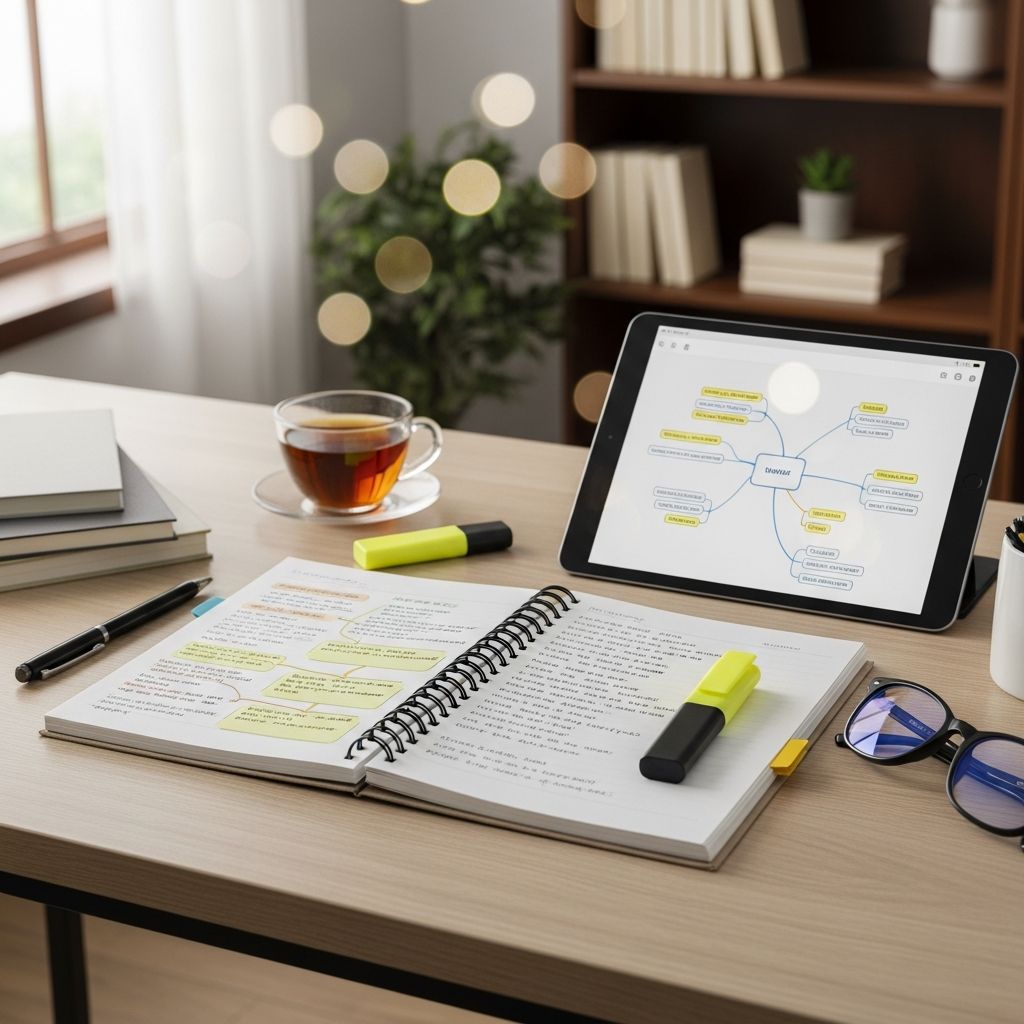
Students who find it hard to stay focused during lectures or lessons often struggle with capturing essential information. Effective note-taking can transform this challenge into an opportunity for better comprehension and retention. By adopting targeted strategies, distracted learners can minimize interruptions, organize thoughts clearly, and reinforce learning long-term.
Why Note-Taking Matters for Those Prone to Distraction
Note-taking serves as a powerful tool for maintaining attention and processing information actively. When learners jot down key points, they engage more deeply with the material, which helps override wandering thoughts. This practice not only aids immediate focus but also builds a reliable study resource for later review.
Research from academic institutions highlights how structured note-taking enhances memory by encouraging paraphrasing and summarization in one’s own words. For instance, actively recording ideas during sessions strengthens neural connections, making recall easier over time. Distracted students benefit particularly because the physical act of writing anchors attention amid environmental noise or digital temptations.
Creating an Optimal Note-Taking Environment
Before diving into methods, set up a distraction-free zone. Choose a quiet space with minimal visual clutter, and use noise-cancelling headphones if needed. Digital tools like focused apps can block notifications during study sessions.
- Position your desk facing a plain wall to avoid window gazing.
- Keep only essential items: notebook, pen, water, and device for class.
- Schedule short breaks using timers to sustain concentration without burnout.
Pre-class rituals, such as reviewing prior notes or skimming readings, prime the brain for absorption. This preparation reduces cognitive overload, allowing better focus on new content.
Proven Note-Taking Techniques Tailored for Focus
Several systems stand out for their ability to structure information simply, helping distracted minds stay on track. Experiment to find what aligns with your learning style—linear, visual, or tabular.
The Structured Cornell Approach
This method divides the page into sections: a wide right area for main notes, a narrow left column for cues or questions, and a bottom summary box. During class, fill the right side with key ideas and details. Afterward, add questions in the left and condense everything below.
Its strength lies in built-in review prompts, ideal for scattered attention. Cover the main notes, glance at cues, and test recall—perfect for reinforcing without re-reading everything.
Visual Mind Mapping for Conceptual Links
Start with a central topic in the page’s middle, then draw branches to subtopics, details, and examples. Use colors, icons, and arrows to show relationships. This non-linear format suits visual thinkers and helps distracted students see the big picture quickly.
Mind maps combat boredom by turning notes into engaging diagrams, facilitating connections between ideas that linear lists might miss. Great for subjects like history or science with interconnected themes.
Outline Method for Hierarchical Clarity
Use bullets or numbers to nest information: main topics at top level, supports indented below. Skip lines between major points for easy scanning. This mirrors lecture flows, keeping pace without overload.
For distracted learners, its simplicity prevents overwhelm—focus on hierarchy rather than perfect sentences.
Charting for Comparative Data
Create tables with columns for categories like dates, events, pros/cons, or definitions. Rows fill with specifics. Excellent for fact-heavy classes such as languages or stats.
This method organizes chaos into grids, reducing mental juggling and highlighting patterns at a glance.
| Method | Best For | Focus Benefit |
|---|---|---|
| Cornell | Review-heavy subjects | Self-quizzing cues |
| Mind Mapping | Conceptual topics | Visual engagement |
| Outline | Structured lectures | Easy hierarchy |
| Charting | Facts & comparisons | Quick patterns |
Daily Habits to Boost Note-Taking Success
Beyond methods, habits amplify effectiveness. Prioritize active engagement: listen for emphasis cues like “key point” or repeated ideas, then paraphrase immediately.
- Employ abbreviations (e.g., “w/” for with, “→” for leads to) to keep up speed.
- Highlight or star **critical concepts** post-session.
- Write on one side of paper for margin notes and easy reorganization.
Date and number pages religiously. Use loose-leaf binders for flexibility—insert handouts or rearrange sections seamlessly.
Leveraging Technology Without Losing Focus
Apps like Notion, OneNote, or GoodNotes offer digital Cornell templates and searchability. Voice-to-text tools transcribe lectures for later editing, but pair with manual writing for retention.
Minimize tabs: one for class, one for notes. Browser extensions block social media during sessions. Record lectures if permitted, noting timestamps for key segments.
Post-Session Review: Locking in Knowledge
Review within hours while fresh—fill gaps, clarify fuzzy parts via textbooks or peers. Summarize in your words or create flashcards from cues.
Weekly overviews connect sessions, spotting themes. This spaced repetition combats forgetting curves, vital for distracted minds.
Link new info to prior knowledge: note “similar to last week’s X” for stronger webs.
Overcoming Common Pitfalls
Distracted students often transcribe verbatim, missing synthesis. Aim for 20-30% of spoken content: capture essence, not scripts.
- Avoid multitasking—close unrelated apps.
- If mind wanders, jot the distraction briefly, then refocus.
- Practice in low-stakes settings to build stamina.
Adapting for Online Learning Challenges
Virtual classes amplify distractions with pings and home comforts. Pause videos to note, use chat for questions. Screenshot slides, annotating digitally.
Active participation—like responding in discussions—pairs with noting, doubling engagement.
Frequently Asked Questions
How often should I review notes if I’m easily distracted?
Daily for 10-15 minutes, plus weekly synthesis. Short bursts prevent overwhelm.
What’s the best note-taking app for beginners?
OneNote or Evernote—free, template-rich, and searchable.
Can I mix note-taking methods?
Yes, hybridize: outline lectures, mind map reviews.
How do I handle fast-talking instructors?
Focus on keywords, record if allowed, supplement post-class.
Does handwriting beat typing for retention?
Handwriting often edges out for encoding, but typing suits volume—balance both.
Building Long-Term Proficiency
Track progress: note grades or quiz scores pre/post-strategies. Adjust based on what sticks. Pair with sleep, exercise for peak focus.
Consistent practice turns note-taking into a reflex, empowering distracted learners to thrive academically. Start small—one class, one method—and scale up.
References
- The Art of Effective Note-Taking in Online Learning — Mississippi State University Online. 2023. https://www.online.msstate.edu/article/art-effective-note-taking-online-learning
- Effective Note Taking — Utah State University. Accessed 2026. https://www.usu.edu/academic-support/note_taking/effective_note_taking
- Note Taking Strategies for College Students — University of Florida Online. 2023. https://ufonline.ufl.edu/gators-online-stories/note-taking-strategies-for-online-classes/
- Common Note-taking Methods — University of Tennessee at Chattanooga. Accessed 2026. https://www.utc.edu/enrollment-management-and-student-affairs/center-for-academic-support-and-advisement/tips-for-academic-success/note-taking
- Academic Resource Center Note-Taking — Harvard University. 2023-10-02. https://academicresourcecenter.harvard.edu/2023/10/02/note-taking/

- Integrated M.A. in Applied Linguistics, University of Hyderabad
- 5+ years in editorial, instructional, SEO, and research-based writing
Sneha is a relationships and lifestyle writer with a strong foundation in applied linguistics and certified training in relationship coaching. She brings over five years of writing experience to theskillvault, crafting thoughtful, research-driven content that empowers readers to build healthier relationships, boost emotional well-being, and embrace holistic living. Her writing and insights reflect the belief that beauty, happiness, and wellness…