
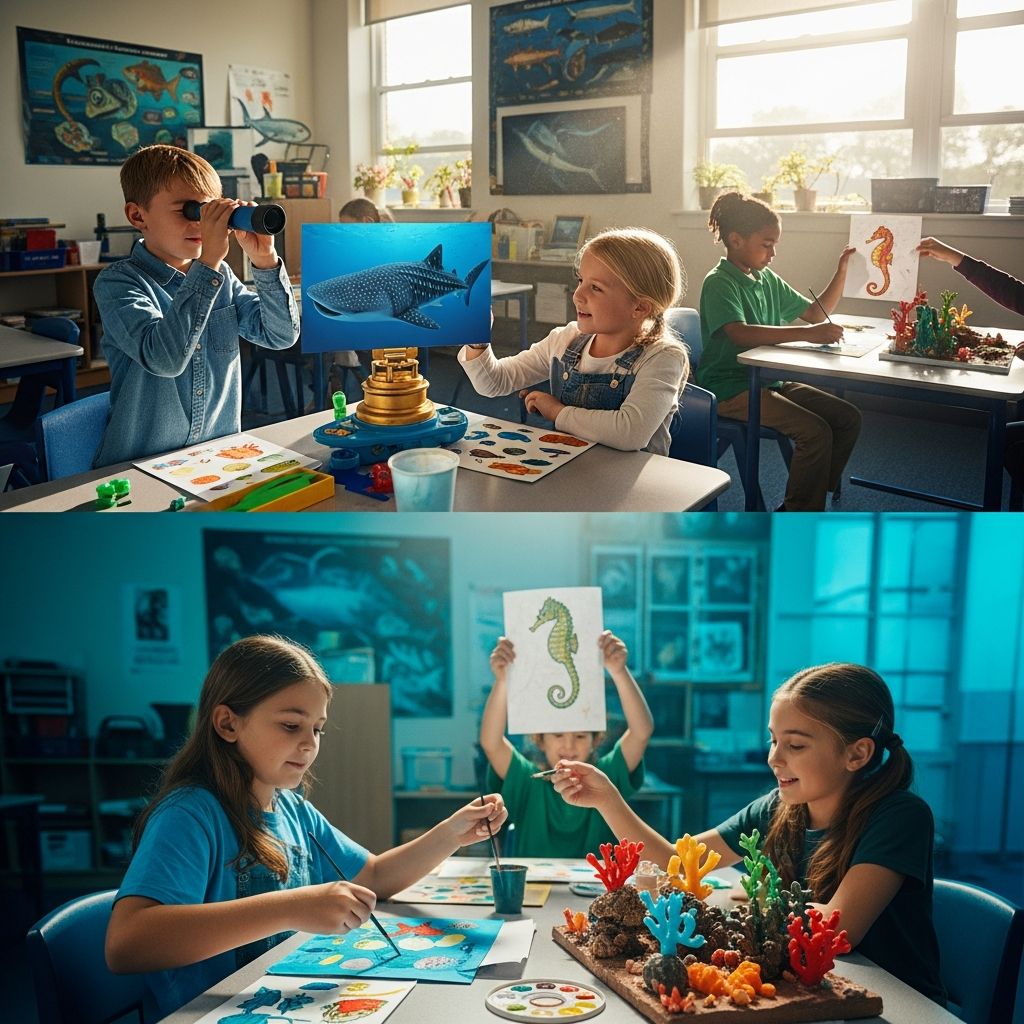
Bringing the mystique of the ocean and the joy of beach outings into the classroom can captivate students’ imaginations while reinforcing key educational concepts. This approach not only makes learning fun but also connects children to the natural world, fostering environmental awareness and curiosity about marine ecosystems. From vibrant decorations to interactive experiments, these ideas draw on the endless inspiration of seas and shores to create dynamic learning spaces.
Designing Your Seaside Learning Environment
Start by envisioning your classroom as a coastal retreat. Select a palette of tranquil blues, sandy neutrals, and pops of coral to evoke serene shorelines. Hang lightweight fishing nets draped with faux seashells and starfish from ceilings to mimic tidal pools. Transform bulletin boards into wave-crashing scenes using layered blue tissue paper for depth and foam stickers for whitecaps.
Incorporate functional elements like Adirondack-style chairs in the reading nook, shaded by paper umbrellas. String LED lights shaped like glowing jellyfish across windows to filter sunlight into an underwater glow. For walls, create a mural of a coral reef using student-contributed drawings of fish and anemones, glued onto painted backgrounds. This setup not only beautifies but also serves as a daily prompt for discussions on ocean biodiversity.
- Use recyclable materials like bottle caps for pebbles in a floor-based ‘beach’ area.
- Position desks in clusters resembling sandbar islands to encourage collaborative work.
- Add sound machines playing gentle waves during quiet reading times.
Hands-On Sensory Experiences from the Shore
Sensory play is crucial for young learners, helping develop fine motor skills and sensory processing. Set up a kinetic sand table mimicking beach dunes, complete with buried ‘treasures’ like plastic gems and mini compasses. Pair it with a water table stocked with toy submarines, floating buoys, and scoops for dredging ‘ocean floor’ sediments made from dyed rice.
Extend this with a discovery bin filled with real and replica shells, smoothed pebbles, and dried seaweed. Provide magnifiers and sorting trays labeled by texture or size. For older students, introduce textured bins with cornstarch ‘quicksand’ or hair gel oceans teeming with glitter fish. These activities align with science standards on states of matter and ecosystems while providing calming tactile input.
| Sensory Station | Materials Needed | Educational Focus |
|---|---|---|
| Beach Sand Pit | Kinetic sand, shells, shovels | Fine motor, measurement |
| Deep Sea Gel | Hair gel, plastic sea life, droppers | Sensory integration, colors |
| Wave Pool | Blue water beads, boats, funnels | Buoyancy, volume |
Interactive Science Explorations of the Deep
Turn your room into a marine lab with simple yet profound experiments. Demonstrate ocean currents using a clear bin of water, food coloring, and a fan to simulate wind-driven flows. Discuss how gyres collect plastic waste, tying into real-world conservation. Build density columns with saltwater layers of varying salinity, dropping in eggs or carrots to show how sea creatures float.
Explore bioluminescence by mixing tonic water with highlighter ink under blacklight, mimicking deep-sea glow. For biology, dissect virtual shark models via apps or create paper models of food webs linking plankton to whales. Weather stations with hygrometers track ‘coastal humidity,’ connecting to evaporation cycles. These align with NGSS standards on Earth’s systems and matter interactions.
Challenge students to engineer boats from recyclables, testing in a wave-simulating tray. Measure speed, stability, and load capacity, graphing results for data analysis. Extend to erosion demos with sand ramps and water sprays, modeling beach loss from storms.
Artistic Expressions Inspired by Marine Life
Art becomes a portal to the sea through collaborative projects. Have students paint watercolor seascapes blending sunset skies with silhouettes of dolphins leaping. Use coffee filters for jellyfish: dye, scrunch, and suspend from strings. Sponge-print octopuses on fabric banners, adding yarn tentacles for texture.
Recycle CDs into shimmering fish scales for mosaic murals. Press leaves and flowers into clay ‘seashells’ for imprints, baking into ornaments. Photography corners with blue backdrops let kids pose as merfolk or mermaids, editing with wave overlays. Display work on a ‘gallery reef’ wall, rotating monthly.
- Clay nautilus shells with embedded beads.
- Recycled bottle terrariums as submarine views.
- Finger-paint tidal pools with iridescent paints.
Storytelling and Literacy Waves
Literacy flourishes amid ocean tales. Curate a bookshelf with classics like ‘The Rainbow Fish’ and ‘Commotion in the Ocean,’ alongside non-fiction on coral restoration. Host puppet shows with sock dolphins recounting migration journeys. Create sight-word ‘waves’ crashing on beach mats, where students read aloud to ‘surf.’
Journaling stations with prompts like ‘If I were a sea turtle…’ build narrative skills. Poetry slams feature haikus on hermit crabs. For writing centers, provide shell-shaped notepads and seaweed stamps. Reading rotations around ‘lifeguard’ chairs encourage peer discussions on plot and theme.
Math Mysteries Beneath the Waves
Infuse math with maritime challenges. Graph favorite sea animals from class polls, using bar graphs as ‘submarine charts.’ Measure string ‘kelp’ lengths for perimeter lessons. Pattern sequences with shell beads on necklaces. Time wave crashes with stopwatches for averages and medians.
Budget a ‘treasure hunt’ expedition, allocating coins for supplies. Geometry shines in tessellating turtle shells or fraction pizzas as ‘pizza sharks.’ Board games with dice-rolled voyages teach probability. These gamified approaches boost retention and make abstract concepts tangible.
| Math Concept | Ocean Activity | Skill Targeted |
|---|---|---|
| Graphing | Fish population surveys | Data representation |
| Measurement | Boat length comparisons | Units and tools |
| Fractions | Sharing whale blubber | Part-whole relationships |
Active Games and Physical Challenges
Keep energy high with PE infused by ocean fun. ‘Shark in the Middle’ tag builds agility. Relay races passing ‘message in a bottle’ batons teach teamwork. Parachute waves simulate tsunamis, lifting stuffed sea creatures. Balance beams as ‘tightropes’ over pretend lava flows to islands.
Yoga flows mimic sea lions stretching or whales breaching. Obstacle courses with hula hoop ‘waves’ and tunnel ‘caves’ develop coordination. Outdoor extensions include sandcastle engineering contests judging stability and creativity.
Curriculum Integration Across Subjects
Weave the theme throughout the day. Social studies explores coastal cultures like Polynesian navigators. History dives into shipwrecks and explorers like Jacques Cousteau. Music features sea shanties on ukuleles or rhythm ‘waves’ with ocean drums. Health lessons on sunscreen and hydration tie to beach safety.
Technology integrates via apps simulating dives or coding fish schools in Scratch. Field trips to aquariums or virtual reality ocean tours extend boundaries. Assessment through ‘diver logs’ portfolios tracks growth holistically.
Frequently Asked Questions (FAQs)
Q: How can I adapt ocean themes for different age groups?
A: For preschoolers, emphasize sensory play; elementary adds experiments; upper grades incorporate research projects on conservation.
Q: What budget-friendly materials work best for decor?
A: Dollar store blue streamers, printed sea life, and student artwork keep costs low while engaging everyone.
Q: How do I maintain the theme without overwhelming the space?
A: Rotate elements seasonally and use removable hooks for flexibility.
Q: Are there ways to tie this to environmental education?
A: Yes, include plastic pollution demos and adopt-a-beach cleanups.
Q: Can this theme work year-round?
A: Absolutely—shift to stormy seas in winter or bioluminescent nights for variety.
References
- Next Generation Science Standards: Earth’s Systems — NGSS Lead States. 2013. https://www.nextgenscience.org/
- Ocean Literacy Framework — National Marine Sanctuaries Education. 2020-07-15. https://sanctuaries.noaa.gov/
- Marine Debris Education Resources — NOAA Marine Debris Program. 2024-01-10. https://marinedebris.noaa.gov/
- Common Core State Standards for Literacy — National Governors Association. 2010. http://www.corestandards.org/
- STEM in the Ocean — Smithsonian Ocean Portal. 2023-05-22. https://ocean.si.edu/

- Integrated M.A. in Applied Linguistics, University of Hyderabad
- 5+ years in editorial, instructional, SEO, and research-based writing
Sneha is a relationships and lifestyle writer with a strong foundation in applied linguistics and certified training in relationship coaching. She brings over five years of writing experience to theskillvault, crafting thoughtful, research-driven content that empowers readers to build healthier relationships, boost emotional well-being, and embrace holistic living. Her writing and insights reflect the belief that beauty, happiness, and wellness…