
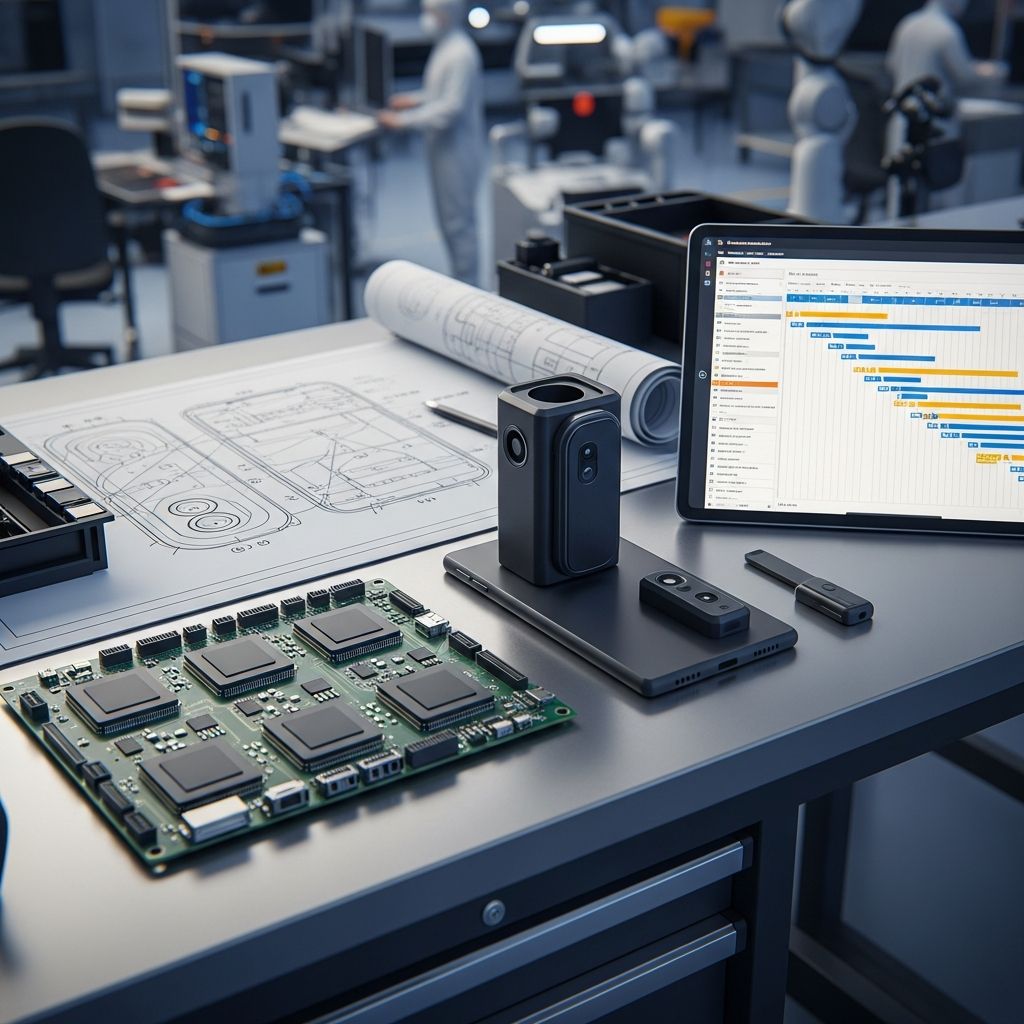
Effective management of Original Equipment Manufacturers (OEMs) is crucial for businesses relying on complex supply chains to deliver high-quality products on time. OEMs produce components or systems integrated into final products, making their performance pivotal to overall success. This guide explores practical approaches to enhance collaboration, mitigate risks, and drive operational excellence in OEM ecosystems.
Understanding the OEM Ecosystem
The OEM landscape involves multiple interconnected elements, from raw material sourcing to final distribution. Key processes include procurement of reliable components, precise production scheduling, rigorous quality checks, efficient assembly, and streamlined logistics. These stages demand coordination among suppliers, contract manufacturers (CMs), and buyers to minimize delays and costs.
Challenges such as elevated logistics expenses post-pandemic, quality inconsistencies across diverse inputs, evolving regulatory landscapes, and labor gaps persist. For instance, logistics costs remain above pre-2020 levels, forcing OEMs to balance cost-cutting with adaptability. Defects in any subsystem can compromise the entire product, while tariffs and trade policies introduce sudden uncertainties. Addressing labor shortages requires upskilling and tech integration.
Building Strong Supplier Partnerships
Robust relationships with suppliers and CMs form the foundation of a reliable OEM supply chain. Close collaboration aligns production capacities with demand, enabling early alerts on potential shortages and fostering proactive responses. Treating partners as extensions of your team enhances communication and resilience.
Transparency is key: share forecasts, design updates, and expectations regularly via digital platforms. This builds trust, reduces errors, and supports long-term savings, especially in bulk purchases. Clear contracts outlining scopes, timelines, and SOPs provide a framework for accountability and dispute resolution.
- Conduct joint planning sessions to synchronize schedules.
- Implement shared digital dashboards for real-time visibility.
- Foster mutual growth through performance incentives.
Developing Comprehensive Risk Strategies
Unforeseen events like natural disasters, geopolitical shifts, or cyber incidents can disrupt OEM operations. Risk mitigation plans inventory vulnerabilities, assess impacts on assets, and outline recovery steps. Regular testing and updates ensure agility in responses.
Incorporate “plus-one” models with backup suppliers to avoid single points of failure. Predictive analytics help anticipate fluctuations, while diversified sourcing navigates component shortages and lifecycle changes. Early cross-team alignment between engineering, procurement, and manufacturing is vital.
| Risk Type | Potential Impact | Mitigation Action |
|---|---|---|
| Supply Disruptions | Production Halts | Multi-supplier strategies, predictive forecasting |
| Regulatory Changes | Compliance Fines | Integrated software monitoring, policy updates |
| Labor Shortages | Delivery Delays | Upskilling programs, automation adoption |
Optimizing Inventory and Production
Balancing inventory levels prevents overstock waste and stockout delays. AI-driven tools enable accurate demand forecasting using historical data, optimizing stock to match consumer needs without excess resource use.
Production planning integrates inventory management to plot schedules that reduce storage costs. Digitize workflows with automated systems for work orders, MRO spares tracking, and preventive maintenance scheduling. This ensures parts availability, minimizes downtime, and optimizes labor deployment.
For specialized areas like PCB assembly, proactive management of long-lead components and alternate part qualification stabilizes processes. OEMs partnering closely with EMS providers achieve better yield and scalability.
Ensuring Uncompromising Quality Standards
Quality control spans the entire OEM lifecycle, from supplier inputs to final assembly. Rigorous checks at every stage catch defects early, cutting rework costs and boosting customer satisfaction. Non-destructive testing and automated pick-and-pack enhance accuracy.
Buyers benefit from OEMs adhering to processes like PPAP, verifying parts match specs before scaling. Regular site audits with digital forms confirm compliance with standards and safety protocols. Asset management solutions track quality in real-time for both OEMs and buyers.
- Set joint KPIs for defect rates, on-time delivery, and cost efficiency.
- Perform inbound inspections on received components.
- Leverage traceability for lot-to-serial tracking and warranty support.
Leveraging Technology for Efficiency
Technology transforms OEM management by providing visibility and automation. Supply chain software with predictive analytics optimizes routes, inventories, and compliance. Robotics reduce fulfillment costs, while digital twins simulate disruptions for better planning.
Enterprise tools streamline monitoring with standardized thresholds and data integration. For 2026, trends include AI integration, expanded traceability, and reshoring to counter constraints. Digitizing operations incorporates productivity tools like automated inventory and work order systems.
OEMs adopting these see reduced transportation expenses, improved order accuracy, and resilient chains turning challenges into advantages.
Performance Monitoring and Continuous Improvement
Establish metrics for OEMs and buyers to track progress. Digital forms ensure accessible records, enabling regular reviews. Audits uncover issues early, promoting accountability and refinement.
Maintain open channels for sharing challenges and updates. This transparency strengthens collaborations, aligning on design changes and timelines to prevent delays.
Navigating Future Trends in OEM Operations
By 2026, OEMs face AI-driven manufacturing, supply chain reshoring, and heightened traceability demands. Success hinges on technical alignment, process discipline, and viewing partners as team extensions. Early EMS engagement supports manufacturability and reliability.
Proactive strategies position OEMs to manage complexity, scale reliably, and gain competitive edges amid rising demands.
Frequently Asked Questions
What is an OEM in manufacturing?
An OEM produces parts or equipment incorporated into another company’s products, handling design, production, and sometimes branding.
How do clear contracts benefit OEM relationships?
They define expectations, reduce disputes, and provide legal clarity for smooth collaborations.
Why is inventory optimization critical for OEMs?
It balances stock levels to avoid waste and shortages, using AI for precise forecasting.
What role does technology play in quality control?
Tools enable real-time monitoring, automated checks, and traceability to minimize defects.
How can OEMs handle supply chain disruptions?
Through risk plans, diversified suppliers, and predictive analytics for resilience.
References
- 5 Best Practices for a Successful OEM Supply Chain Strategy — Surgere. 2023. https://surgere.com/blog/5-best-practices-for-a-successful-oem-supply-chain-strategy/
- A Comprehensive Guide to OEM — SafetyCulture. 2023. https://safetyculture.com/topics/oem
- PCB Assembly Trends OEMs Need to Know in 2026 — Foxtronics EMS. 2026. https://foxtronicsems.com/pcba-manufacturing/pcb-assembly-trends-oems-need-to-know-in-2026/
- 6 Enterprise Asset Management Strategies for 2026 — Reliable Plant. 2026. https://www.reliableplant.com/Read/33012/6-enterprise-asset-management-strategies-for-2026
- Report: 10 Trends Defining Manufacturing in 2026 — OEM Magazine. 2026. https://www.oemmagazine.org/business/article/22955033/report-10-trends-defining-manufacturing-in-2026

Medha Deb is an editor with a master's degree in Applied Linguistics from the University of Hyderabad. She believes that her qualification has helped her develop a deep understanding of language and its application in various contexts. Medha specializes in the areas of beauty, health, sports, and wellness and is committed to ensuring that the content on the website is…