
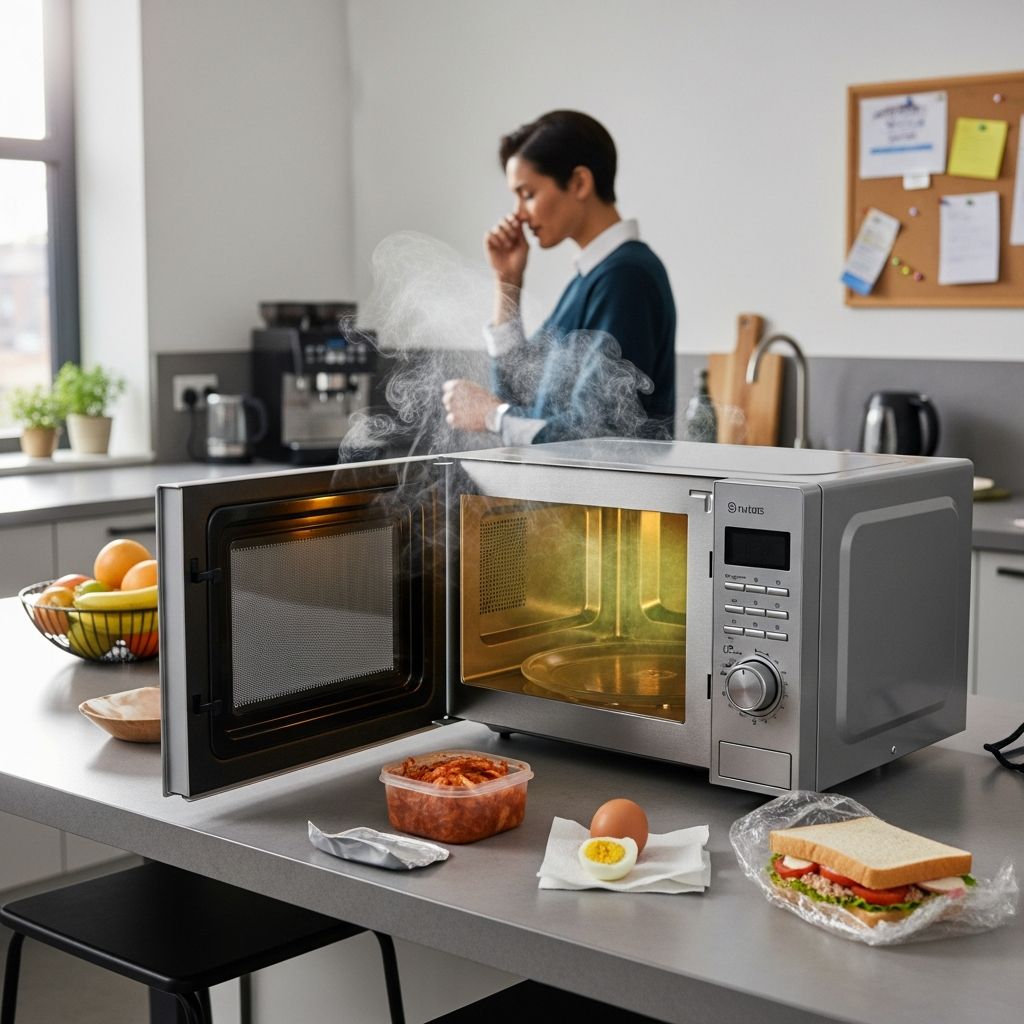
Navigating Food Choices in the Modern Workplace Kitchen
The office kitchen represents one of the most contentious shared spaces in any workplace. Unlike a break room designed primarily for relaxation, the kitchen serves as a communal hub where employees bring their lunch preferences, heating methods, and personal food philosophies into close proximity with their colleagues. Among the various sources of friction that arise in these spaces, few topics generate as much debate as the question of whether certain foods—particularly those with potent, lingering odors—are appropriate to prepare in a shared microwave. This question goes beyond simple preference; it touches on fundamental workplace respect, consideration, and the unspoken social contracts that govern professional environments.
The core tension arises because one person’s lunch choice directly impacts the sensory experience of multiple colleagues. When you heat fish, curry, or other aromatics in an office microwave, the smell doesn’t remain contained within the kitchen. It travels through ventilation systems, seeps into adjacent workspaces, and can linger for hours, affecting people who made no choice in the matter. This creates an ethical dilemma: Does your right to eat your preferred meal override your colleagues’ right to work in a reasonably pleasant environment?
Understanding Why Certain Foods Create Workplace Friction
Seafood, particularly fish, has earned its notorious reputation in office kitchens for scientific reasons. Fish contains trimethylamine, a compound that breaks down during cooking and creates an intensely pungent smell that many people find deeply unpleasant. Unlike the aroma of coffee or fresh-baked cookies—scents that most people find neutral or pleasant—fish odor triggers involuntary negative reactions in many individuals. Some people experience headaches, nausea, or allergic responses when exposed to concentrated fish smell.
The problem isn’t limited to seafood. Certain curry preparations, organ meats, strongly fermented foods, and dishes heavy with garlic or onions can produce similarly overpowering effects. The critical difference between these foods and items like sandwiches or salads is the volatility of their odorous compounds. When you heat these foods in a microwave, you’re essentially vaporizing these compounds and dispersing them throughout the workplace. The intensity and persistence of the smell makes it impossible for colleagues to ignore or escape.
It’s worth noting that what constitutes a “strong smell” varies by cultural background, personal experience, and individual sensory sensitivity. Foods that are staples in some cuisines and completely normal in some households may be novel and overwhelming to colleagues from different backgrounds. This cultural dimension adds complexity to the conversation—it’s not simply about being polite; it’s about navigating genuine cultural differences in a diverse workplace.
The Case Against Microwaving Strong-Smelling Foods at Work
Several practical and professional arguments support limiting the preparation of pungent foods in office kitchens. First, consider the impact on workplace productivity. When colleagues are exposed to an overwhelming odor they find unpleasant, their ability to concentrate diminishes. Studies on olfactory distraction show that persistent smells—particularly ones the individual perceives negatively—can reduce focus and increase stress levels. An employee who becomes nauseated or distracted by fish smell for the remainder of their workday has experienced a genuine degradation in their working conditions, despite doing nothing to cause it.
Second, these foods can trigger physical reactions in people with sensory sensitivities or food-related allergies. While a person may not be allergic to fish itself, the concentrated airborne particles from microwaved fish can provoke respiratory irritation, headaches, or other symptoms. Pregnant employees often experience heightened olfactory sensitivity, making them particularly vulnerable to unpleasant food smells. Employees with autism or sensory processing differences may find intense odors particularly distressing. Microwaving strong-smelling foods in a shared space essentially exposes people with these conditions to a workplace hazard they didn’t consent to and cannot control.
Third, these choices reflect respect—or lack thereof—for shared resources and community norms. An office microwave isn’t your personal appliance; it’s a tool that belongs to everyone. Using it in ways that knowingly diminish the experience of others for your own convenience sends a message about your priorities. In workplaces where these conversations come up repeatedly, they often indicate a broader culture problem where certain employees feel entitled to use shared spaces without considering their impact on others.
Practical Alternatives and Middle-Ground Solutions
Rather than framing this as an absolute prohibition, most workplace etiquette experts recommend a more nuanced approach. Several practical alternatives allow you to enjoy your preferred foods without creating workplace friction.
Heat at home before bringing to work. If you love leftover fish or curry, prepare your meal the night before, refrigerate it, and bring it to the office already heated. This eliminates the microwave entirely and allows you to eat foods with any odor profile you choose. You experience the heat retention benefits of proper food containers while avoiding the workplace impact.
Choose preparation methods that reduce aroma. Certain cooking techniques produce less pungent airborne compounds than others. If you have control over how your food is prepared, request cooking methods that minimize the odor released during reheating. Some foods can be prepared cold or at room temperature, eliminating the heating step entirely.
Use alternative heating methods. Some offices have toaster ovens or dedicated employee kitchen spaces away from main work areas. If your workplace offers these, use them for strongly scented foods. These alternatives often ventilate better than standard microwaves and are less likely to create lingering smells in the primary kitchen.
Time your meal strategically. If your office has quieter periods—early morning, late afternoon, or times when fewer colleagues are using the kitchen—use the microwave during these windows. You still heat your preferred food, but fewer people experience the smell, and it disperses more quickly with less impact on active workspaces.
Communicate and build consensus. Some workplaces have explicit policies about which foods can be heated in shared microwaves. If yours doesn’t, raising the conversation constructively—perhaps through a workplace committee or office manager—allows your group to establish mutually agreeable guidelines together. This approach respects everyone’s preferences while creating clear, agreed-upon boundaries.
Special Considerations for Workplace Culture and Diversity
The conversation around “appropriate” office foods intersects meaningfully with diversity and inclusion. In many cultures, the foods that American workplace etiquette has labeled “problematic”—fish, organ meats, aromatic curries—are ordinary, nutritious staples. Creating an implicit or explicit ban on these foods can feel exclusionary to employees whose cultural food traditions don’t align with majority-culture preferences.
The most inclusive approach acknowledges this tension directly. Rather than treating certain foods as universally unacceptable, workplaces can create flexible policies that allow diverse food traditions while establishing reasonable expectations about preparation methods, timing, or alternative heating solutions. This respects cultural differences while maintaining a functional shared space.
Employees from cultures where these foods are normal should never feel pressured to hide their lunch or eat foods outside their preferences simply to accommodate others’ comfort levels. Simultaneously, colleagues who find these smells genuinely distressing deserve environments where they can work without physical discomfort. The goal is accommodation and flexibility, not assimilation.
General Office Microwave Guidelines for Consideration
Beyond the question of strong-smelling foods, several broader microwave etiquette principles support harmonious shared kitchen spaces:
Keep heating times reasonable. Three to five minutes is a reasonable duration for reheating food. Microwaving for extended periods ties up the appliance when colleagues may need it and can result in burnt food that creates additional unpleasant smells.
Cover your food to prevent splatters. Uncovered food in a microwave leads to spills and splatters that others must clean. Use a microwave-safe cover or plate to contain your meal and keep the appliance cleaner for everyone.
Clean up immediately after use. If your food does spill or splatter, wipe it up immediately with a damp paper towel. Leaving messes for others to discover or clean is one of the most common sources of kitchen-related frustration in offices.
Reset the microwave after using it. Clear the timer and any special settings you’ve used so the next person doesn’t have to figure out what you left it set to. This simple consideration demonstrates respect for shared resources.
Don’t leave food unattended. Retrieve your food promptly when the microwave finishes heating. If you abandon your meal, you’re preventing colleagues from using the appliance and potentially inviting food safety issues.
Addressing Violations and Creating Workplace Solutions
If your workplace has persistent problems with strong-smelling foods being microwaved, addressing the issue requires tact and clear communication. Passive-aggressive notes in the kitchen rarely solve problems and often escalate tensions. Instead, involve management or a workplace culture committee to establish explicit guidelines that apply to everyone equally.
These guidelines should be framed positively—focusing on creating a pleasant, inclusive space for all employees—rather than targeting specific people or foods. Clear policies prevent the appearance of favoritism and ensure enforcement is consistent.
Frequently Asked Questions About Office Kitchen Practices
Is it ever okay to microwave fish in an office kitchen?
While no food is inherently “forbidden,” fish creates particularly strong, persistent odors that affect many colleagues. If you want to eat fish at lunch, heating it at home before bringing it to the office, eating it cold, or using alternative heating methods outside the main microwave respects shared workspace norms. Check your specific workplace policy first.
What if my culture’s traditional foods are considered “smelly” in my office?
Your right to eat foods from your cultural tradition is important. Consider heating food at home, using alternative times or spaces, and communicating with management about creating inclusive policies. You shouldn’t need to hide your food preferences, but you can also choose preparation methods that minimize workplace impact.
How should I handle a colleague who regularly microwaves smelly food?
Address the situation through proper channels—speak with management or use your workplace’s conflict resolution process rather than leaving notes or making comments. This prevents interpersonal tension and ensures the issue is taken seriously.
Are there foods besides fish that create problematic odors?
Strongly aromatic curries, organ meats, pungent fermented foods, and some seafood preparations can all create intense, lingering odors. The key consideration is whether the smell will noticeably affect colleagues in adjacent spaces.
What’s the best time to microwave foods with noticeable odors?
Early morning, late afternoon, or other periods when fewer colleagues are working near the kitchen minimize the number of people affected by the smell. Choose times when offices are quieter and ventilation has more time to clear the air.
Moving Forward: Creating Respectful Workplace Kitchens
The question of whether strong-smelling foods belong in office microwaves ultimately reflects broader workplace values. Respectful, functional shared spaces require all employees to consider how their choices affect others. This doesn’t mean suppressing cultural food traditions or accepting a bland, homogenized approach to lunch. Instead, it means thinking creatively about how to enjoy diverse foods while maintaining environments where everyone can work comfortably.
When employees approach office kitchen use with genuine consideration—thinking about timing, preparation methods, and the impact of their choices on colleagues—the entire workplace culture improves. These small courtesies reflect respect for shared resources and for the people you work alongside. The alternative—a kitchen marked by tension, passive-aggressive notes, and lingering resentment—serves no one well.
Your office kitchen can be a space where diverse food traditions are celebrated and different lunch preferences coexist peacefully. Achieving this requires intentional choices, clear communication, and a commitment to balancing personal preferences with communal responsibility.
References
- Mastering Office Microwave Etiquette: Keeping It Clean and Considerate — Poised Proper. 2024. https://www.poisedproper.com/post/mastering-office-microwave-etiquette-keeping-it-clean-and-considerate
- Proper Office Microwave Etiquette — Quick and Dirty Tips. Accessed 2025. https://www.quickanddirtytips.com/qdtarchive/proper-office-microwave-etiquette/
- Office Kitchen Etiquette — WeWork Ideas. 2024. https://www.wework.com/ideas/professional-development/creativity-culture/office-kitchen-etiquette
- Microwave Safety Tips and Rules — West Quay Offices. 2024. https://westquayoffices.com/knowledge-base-article/microwave-safety-tips-and-rules/

Medha Deb is an editor with a master's degree in Applied Linguistics from the University of Hyderabad. She believes that her qualification has helped her develop a deep understanding of language and its application in various contexts. Medha specializes in the areas of beauty, health, sports, and wellness and is committed to ensuring that the content on the website is…