
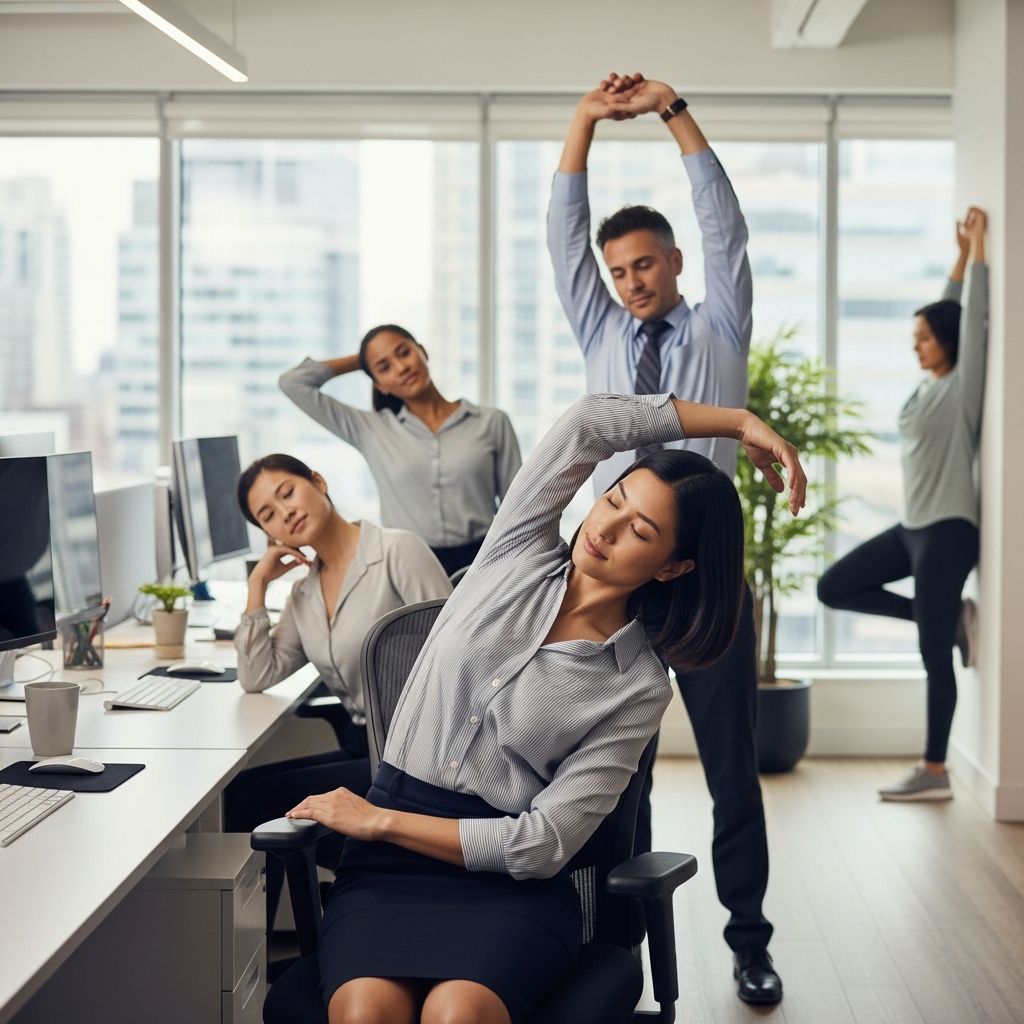
Prolonged sitting at a desk leads to muscle tightness, reduced energy, and diminished focus, but incorporating brief stretches can reverse these effects. Regular stretching during work hours improves physical comfort, sharpens mental acuity, and elevates overall performance.
Why Stretching Matters in a Desk-Bound World
The modern office environment demands long hours in static positions, contributing to widespread issues like back pain and fatigue. Office workers average 1,700 hours of sitting annually, fostering muscle imbalances and poor circulation. Stretching acts as a countermeasure, promoting blood flow, easing tension, and supporting joint health without requiring special equipment or time away from tasks.
Research from sources like the Journal of Physical Therapy Science confirms that targeted stretches significantly alleviate musculoskeletal discomfort by enhancing circulation and flexibility. Similarly, studies on whole-body stretching during breaks show reductions in pain and exertion, particularly beneficial for healthcare and office professionals. These practices not only prevent strain but also foster a proactive approach to wellness.
Key Benefits of Daily Office Stretching
Integrating stretches into your routine yields multifaceted advantages, grounded in physiological improvements.
- Relief from Tension and Discomfort: Static postures tighten muscles in the neck, shoulders, and lower back. Stretching elongates these tissues, reducing stiffness and pain while activating relaxation responses in the nervous system.
- Greater Flexibility and Mobility: Consistent practice maintains joint range of motion, preventing injuries and easing daily movements, as endorsed by the American College of Sports Medicine.
- Energy Surge and Focus Enhancement: Increased oxygen delivery to muscles and the brain combats midday slumps, improving cognitive function and productivity.
- Posture Correction: Targeted exercises strengthen supporting muscles, countering slouching and reducing risks of spinal issues.
- Mental Health Lift: Brief sessions lower stress, boost mood, and provide mental resets, leading to higher job satisfaction.
Programs involving pre-shift or lunch-break stretching further decrease fatigue, improve muscular coordination, and enhance nerve signaling for smoother movements. Workplace studies indicate mixed results on injury prevention but unanimous benefits for flexibility, circulation, and well-being.
Building an Effective Stretching Routine
To maximize gains, structure stretches around your schedule. Aim for 2-5 minute sessions every 1-2 hours, using your chair, desk, or walls as props. Pair with movement breaks for amplified effects, such as walking before stretching to prime muscles.
Encourage team involvement by scheduling group sessions, fostering a wellness culture that boosts morale and adherence. Track progress with reminders or apps, gradually increasing hold times from 20-30 seconds per stretch.
Essential Stretches for Upper Body Relief
Upper body areas bear the brunt of typing and screen time. These moves target common tension zones.
| Stretch Name | Target Area | Steps | Duration |
|---|---|---|---|
| Neck Tilt Release | Neck and Traps | Sit tall, tilt head to one shoulder, hold gently with hand. Switch sides. | 20-30 sec/side |
| Shoulder Blade Squeeze | Upper Back | Clasp hands behind back, pull shoulders down and back, lift chest. | 30 sec |
| Chest Doorway Opener | Chest and Shoulders | Stand in doorway, arms at 90 degrees on frame, lean forward gently. | 25 sec |
These alleviate forward-head posture effects, improving alignment and breathing.
Core and Lower Body Stretches for Stability
Neglecting the core and legs leads to lower back strain. Incorporate these for balanced support.
- Seated Forward Fold: Sit at chair edge, feet flat, hinge at hips to reach toward shins. Relaxes hamstrings and spine.
- Quad Stand Pull: Stand, bend one knee, grasp ankle behind you. Supports knee health and hip flexors.
- Torso Twist: Sit or stand, rotate upper body opposite to crossed leg. Eases spinal rotation.
- Calf Wall Push: Face wall, one foot back, heel down, lean in. Counters prolonged standing or sitting.
Perform bilaterally for symmetry, breathing deeply to enhance relaxation.
Full-Body Integration for Comprehensive Wellness
Combine stretches into sequences for holistic benefits. A sample 5-minute routine:
- Start with neck and shoulder rolls (1 min).
- Move to chest opener and arm circles (1 min).
- Transition to seated twists and leg extensions (2 min).
- End with standing calf and side bends (1 min).
Adapt for standing desks by emphasizing hip openers. For remote workers, use household items like door frames.
Overcoming Common Challenges
Barriers like time constraints or self-consciousness dissolve with preparation. Set phone alarms for 9:30 AM, 11 AM, 1:30 PM, and 3 PM breaks, aligning with natural energy dips. If space is limited, opt for seated variations. Consult a doctor for pre-existing conditions, ensuring modifications suit individual needs.
Workplace policies may support initiatives; propose stretch challenges to leadership, citing productivity gains.
Long-Term Strategies for Sustained Habits
Sustainability comes from integration. Track sessions in a journal, noting energy shifts. Vary routines weekly to prevent boredom. Combine with ergonomic adjustments like monitor height and supportive chairs for synergy.
Research supports whole-body programs reducing musculoskeletal pain and exertion, especially during lunch breaks. Over time, expect fewer aches, sharper focus, and elevated mood.
Frequently Asked Questions
How often should I stretch at work?
Every 1-2 hours for 2-5 minutes, totaling 10-20 minutes daily.
Can stretching prevent injuries?
While results vary, it improves flexibility and balance, lowering risks indirectly.
Is stretching safe for everyone?
Generally yes, but avoid pain; modify for conditions and seek professional advice.
Does stretching really boost productivity?
Yes, via better circulation and focus, as shown in cognitive performance studies.
What if my office discourages movement?
Use discreet seated stretches and advocate for wellness policies.
Transform Your Workday Today
Simple stretches bridge the gap between sedentary strain and vibrant performance. Start small, stay consistent, and reap rewards in comfort, efficiency, and health.
References
- 5 Amazing Benefits of Stretching at Work & 10 Easy Stretches to Do — Pliability. 2023. https://pliability.com/stories/benefits-of-stretching-at-work
- Boost Workplace Wellness: The Benefits of Stretching During Work Hours — WorkSafePT. 2023. https://worksafept.com/boost-workplace-wellness-the-benefits-of-stretching-during-work-hours/
- Workplace Stretching and Warm-up: The Benefits of a Work Readiness System — Ergo-Plus. 2023. https://ergo-plus.com/workplace-stretching-benefits-work-readiness-system/
- Do workplace stretching programs help prevent injuries? — Washington State Department of Labor & Industries (.gov). 2018. https://www.lni.wa.gov/safety-health/_docs/StretchingAndInjuries.pdf
- Effects of Whole-Body Stretching Exercise during Lunch Break — PMC/NCBI (.gov). 2023-05-24. https://pmc.ncbi.nlm.nih.gov/articles/PMC10222752/
- Let’s Get Stretching! — BYU Human Resources (.edu). 2023. https://hrs.byu.edu/stretching/lets-get-stretching-article
- Stretching — Stanford Environmental Health & Safety (.edu). 2023. https://ehs.stanford.edu/subtopic/stretching
- Office Ergonomics – Stretching — CCOHS (.ca government-affiliated). 2023. https://www.ccohs.ca/oshanswers/ergonomics/office/stretching.html

- Integrated M.A. in Applied Linguistics, University of Hyderabad
- 5+ years in editorial, instructional, SEO, and research-based writing
Sneha is a relationships and lifestyle writer with a strong foundation in applied linguistics and certified training in relationship coaching. She brings over five years of writing experience to theskillvault, crafting thoughtful, research-driven content that empowers readers to build healthier relationships, boost emotional well-being, and embrace holistic living. Her writing and insights reflect the belief that beauty, happiness, and wellness…