
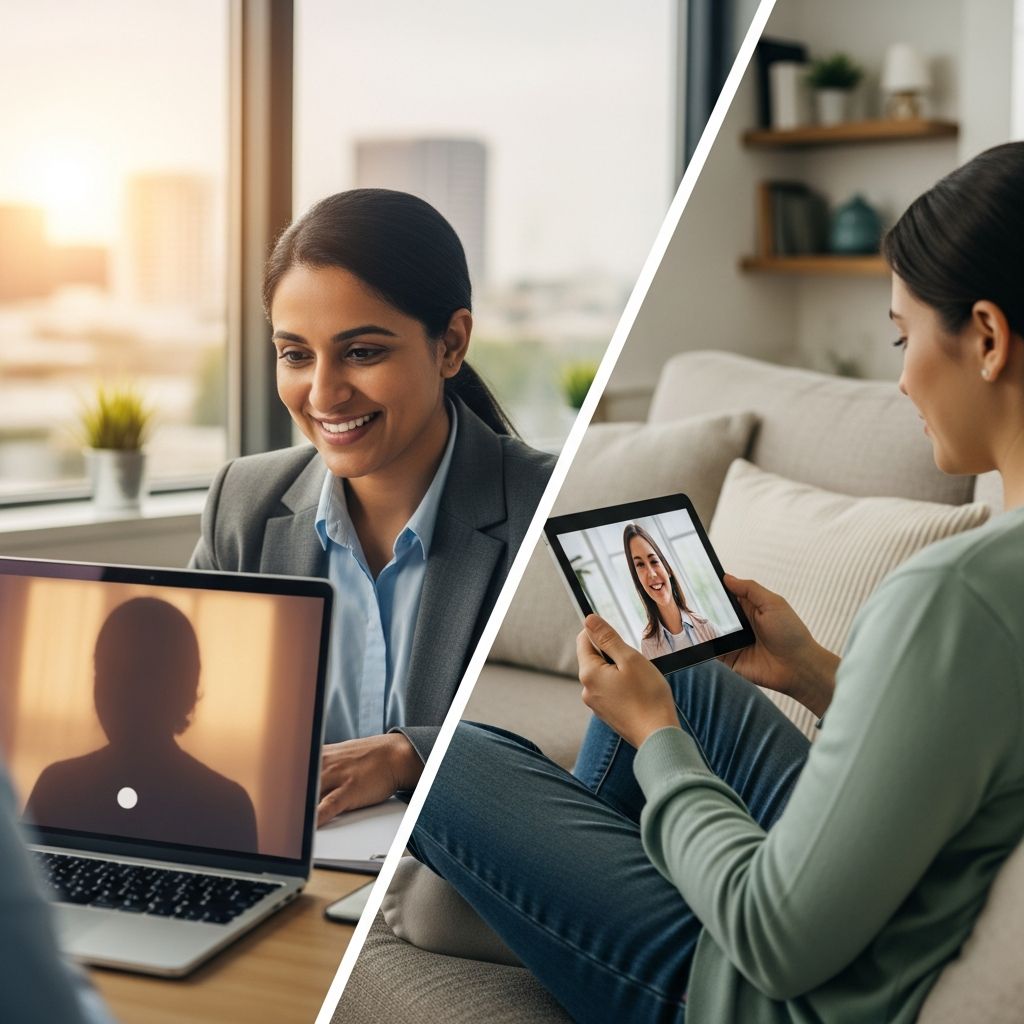
Access to mental health support in Fresno has changed significantly in recent years. Secure video platforms, electronic prescriptions, and digital intake tools now make it possible to receive therapy and psychiatric care from home, work, or anywhere you have a private internet connection. This guide explains how online counseling and psychiatry work, who they serve best, and how to choose a high-quality provider in Fresno and across California.
Why Virtual Mental Health Care Has Become So Important
Telehealth for mental health grew rapidly during and after the COVID-19 pandemic, backed by changes in federal and state regulations that made remote care easier to deliver and to bill through insurance. Research now shows that video-based therapy can be as effective as in-person sessions for many common conditions, including depression and anxiety.
For Fresno residents, this shift matters because it helps overcome long-standing barriers such as transportation, limited local providers, and difficulties fitting appointments into busy schedules.
- Reduced travel time: No commuting across town or arranging extra childcare just to attend a session.
- Broader provider pool: You may see any licensed California clinician who offers virtual care, not just those in your immediate neighborhood.
- Continuity of care: Sessions can continue during life transitions, short trips, or mild illness, which supports more consistent progress.
Online Counseling vs. Telepsychiatry: Understanding the Difference
Online mental health services generally fall into two main categories. Many Fresno practices offer one or both, often in an integrated model.
| Aspect | Online Counseling / Therapy | Telepsychiatry |
|---|---|---|
| Typical provider | Psychologists, licensed marriage and family therapists, licensed clinical social workers, professional clinical counselors | Psychiatrists (MD/DO), psychiatric nurse practitioners |
| Main focus | Talk therapy, coping skills, relationship and behavioral change | Diagnosis, medication evaluation, and prescription management |
| Session style | 45–60 minute video or audio sessions, sometimes chat or secure messaging | Initial evaluation 45–60 minutes; shorter follow-ups for medication monitoring |
| Can prescribe medication? | No | Yes, within professional and legal limits |
| Best for | Emotional support, specific symptoms, relationships, coping strategies, trauma work | Conditions that may benefit from or require psychiatric medications |
Conditions Commonly Treated Through Virtual Care
Online counseling and psychiatry in Fresno can address a wide range of mental health concerns, particularly mild to moderate symptoms. Many evidence-based psychotherapies, such as cognitive behavioral therapy (CBT), adapt well to video sessions.
Issues Well-Suited to Online Counseling
- Anxiety and stress related to work, school, health, or family responsibilities
- Depressive symptoms, including low mood, loss of interest, or reduced motivation
- Relationship conflicts with partners, family members, or coworkers
- Life transitions, such as starting college, becoming a parent, separation or divorce, or relocation
- Grief and loss following bereavement or major life changes
- Parenting support and family communication difficulties
Concerns Often Managed by Telepsychiatry
- Major depressive disorder and persistent depressive symptoms
- Generalized anxiety disorder, panic attacks, or social anxiety
- ADHD in adults or teens (diagnosis and ongoing medication management, subject to regulatory rules)
- Bipolar spectrum disorders that are currently stable and not in acute crisis
- Sleep difficulties linked to mood or anxiety disorders
For more complex or high-risk situations, combining online care with in-person support or specialized local services is often recommended. The American Psychiatric Association notes that telepsychiatry can safely serve many patients when supported with appropriate emergency planning and coordination with local resources.
Who Benefits Most From Online Counseling in Fresno?
Virtual services can be a strong fit for many Fresno residents, but they are not ideal for every situation. Considering your needs, preferences, and environment will help you decide whether to start online, in person, or with a blended approach.
People for Whom Online Care May Be a Good Match
- Busy professionals and students who need early morning, evening, or lunch-hour sessions.
- Parents and caregivers balancing childcare, elder care, or household responsibilities.
- Residents of outlying communities around Fresno who have limited access to specialized clinicians nearby.
- Individuals with mobility, transportation, or health limitations that make frequent commuting difficult.
- People who feel more comfortable at home and find that being in their own space helps them open up.
When In-Person or Higher Level Care May Be Safer
Telehealth is not designed to manage emergencies or severe instability. National clinical guidelines advise that people experiencing certain issues may need in-person or more intensive care, at least initially.
- Active suicidal thoughts, recent suicide attempts, or self-harm
- Psychotic symptoms, such as hallucinations or fixed delusions, that are not yet evaluated or stabilized
- Current substance withdrawal or severe substance use disorder without local medical support
- Domestic violence situations where privacy at home cannot be protected
- Lack of reliable internet or private space for confidential sessions
In these cases, providers may suggest in-person services, intensive outpatient programs, or hospitalization. If you or someone you know is in immediate danger, calling local emergency services or a crisis hotline is critical. In the United States, dialing 988 connects you to trained counselors at the Suicide & Crisis Lifeline.
How Online Counseling and Psychiatry Sessions Typically Work
Most Fresno practices follow a similar sequence when you start online mental health care, whether you contact them directly or are referred by a primary care provider.
1. Intake and Pre-Session Paperwork
- Completing secure online forms with your contact information, symptoms, history, and current medications.
- Reviewing informed consent for telehealth, privacy practices (HIPAA), and practice policies.
- Providing insurance details or confirming self-pay options.
2. Technology Setup and First Appointment
- Receiving a link to a HIPAA-compliant video platform supported by your provider.
- Testing your camera, microphone, and internet connection before your session.
- Joining from a quiet, private space where you feel comfortable speaking freely.
3. Assessment, Treatment Planning, and Follow-Up
- Your clinician explores your goals, symptoms, strengths, and background.
- Together you create a treatment plan, which may include weekly or bi-weekly therapy, medication, or both.
- Follow-up visits monitor progress, adjust strategies, and update medications when needed.
Cost, Insurance, and Financial Considerations
Insurance coverage for telehealth has expanded substantially. Many commercial plans, Medicare, and Medi-Cal reimburse for virtual mental health services when certain conditions are met. Specific benefits vary, so it is wise to verify details in advance.
Questions to Ask Your Insurance or Provider
- Does my plan cover telehealth mental health visits, and with which types of providers (therapists, psychiatrists, nurse practitioners)?
- Is there a different copay or coinsurance for online visits compared with in-person?
- Do I need a referral or prior authorization for psychiatry or specific treatment programs?
- Are there session limits per year for individual, couples, or family therapy?
Common Payment Models Offered by Fresno Practices
- In-network billing: The practice bills your insurance directly; you pay the remainder.
- Out-of-network receipts: You pay the full fee up front and may seek reimbursement from your insurer.
- Sliding scale: Some clinicians reduce fees based on income, often for uninsured or under-insured clients.
- Employee assistance programs (EAPs): Short-term counseling benefits offered through some employers at no additional cost to you.
How to Choose an Online Counselor or Psychiatric Provider in Fresno
Selecting the right professional is a key step in getting effective help. Beyond logistics and insurance, it is important to consider qualifications, experience, and your level of comfort with the person you choose.
1. Confirm Licensure and Credentials
- For therapy, look for credentials such as LMFT, LCSW, LPCC, or psychologist (PhD/PsyD) licensed in California.
- For psychiatry, verify that the professional is a board-certified psychiatrist or a psychiatric nurse practitioner licensed in the state.
- California licensing boards maintain online databases where you can confirm status and check for disciplinary actions.
2. Evaluate Experience With Your Concerns
- Ask how often they work with issues similar to yours (for example, trauma, OCD, bipolar disorder, couples conflict).
- Inquire which evidence-based treatments they use, such as CBT, DBT, or exposure therapy, and how those approaches might apply to your situation.
- For telepsychiatry, ask about their process for medication monitoring, lab work, and communication with your primary care doctor.
3. Consider Personal Fit and Communication Style
- Many clinicians offer a brief consultation call so you can ask questions and gauge comfort.
- Notice whether you feel heard, respected, and able to speak openly without judgment.
- Check whether their scheduling options, response times, and communication methods match your needs.
Practical Tips for Getting the Most From Online Sessions
Small adjustments to your environment and habits can make virtual counseling or psychiatry more effective and less stressful.
- Create a therapy space: Choose a comfortable chair, good lighting, and a setup where your device is stable and at eye level.
- Protect your privacy: Use headphones, close doors and windows, and let household members know not to interrupt during your sessions.
- Prepare a session checklist: Jot down key topics, questions, or recent events you want to discuss.
- Minimize distractions: Silence notifications, close unrelated browser tabs, and avoid multitasking.
- Reflect afterward: Spend a few minutes after each session noting insights and action steps while they are fresh.
Frequently Asked Questions (FAQs)
Q1: Is online therapy as effective as in-person therapy?
Multiple studies and systematic reviews indicate that video-based therapy is comparable in effectiveness to in-person care for common conditions like depression and anxiety, especially when evidence-based methods are used and technology is reliable.
Q2: Can psychiatrists prescribe medication through telehealth in California?
Yes. Psychiatrists and certain other licensed prescribers may evaluate patients and prescribe medications via telehealth, subject to federal and state regulations as well as clinical judgment. Some controlled substances have additional rules, so your provider will explain what can be prescribed remotely and when in-person evaluation is required.
Q3: Are online counseling and psychiatry sessions private and secure?
Legitimate providers use HIPAA-compliant platforms designed to protect your health information. Video sessions are not recorded by default, and data transmission is encrypted. Your privacy also depends on your environment, so using headphones and a private space is recommended.
Q4: What if my internet connection drops during a session?
Most clinicians have a backup plan, such as switching to a secure phone call if video fails. At the start of treatment, you will usually agree on what to do if technical issues occur and how to reschedule if needed.
Q5: How quickly can I usually be seen for an online mental health appointment in Fresno?
Availability varies by practice, but many telehealth providers can offer initial sessions more quickly than in-person clinics because they are not limited by room schedules or geographic location. Some can schedule within days, particularly for therapy, while psychiatry may involve a longer wait depending on demand.
References
- Telepsychiatry Toolkit — American Psychiatric Association. 2024-02-01. https://www.psychiatry.org/psychiatrists/practice/telepsychiatry/toolkit
- The Effectiveness of Telehealth: A Review — U.S. Department of Health and Human Services, Agency for Healthcare Research and Quality. 2022-06-01. https://www.ahrq.gov/telehealth/resources/effective.html
- Practice Guidelines for Video-Based Online Mental Health Services — American Psychological Association. 2021-03-01. https://www.apa.org/practice/guidelines/telepsychology
- 988 Suicide & Crisis Lifeline — Substance Abuse and Mental Health Services Administration. 2024-01-10. https://www.samhsa.gov/find-help/988
- Telehealth: Delivering Care Safely During COVID-19 and Beyond — Centers for Medicare & Medicaid Services. 2023-05-18. https://www.cms.gov/newsroom/fact-sheets/telehealth-delivering-care-safely-during-covid-19
- License Verification — California Board of Behavioral Sciences. 2024-04-01. https://www.bbs.ca.gov/consumers/verify_license.html

Medha Deb is an editor with a master's degree in Applied Linguistics from the University of Hyderabad. She believes that her qualification has helped her develop a deep understanding of language and its application in various contexts. Medha specializes in the areas of beauty, health, sports, and wellness and is committed to ensuring that the content on the website is…