
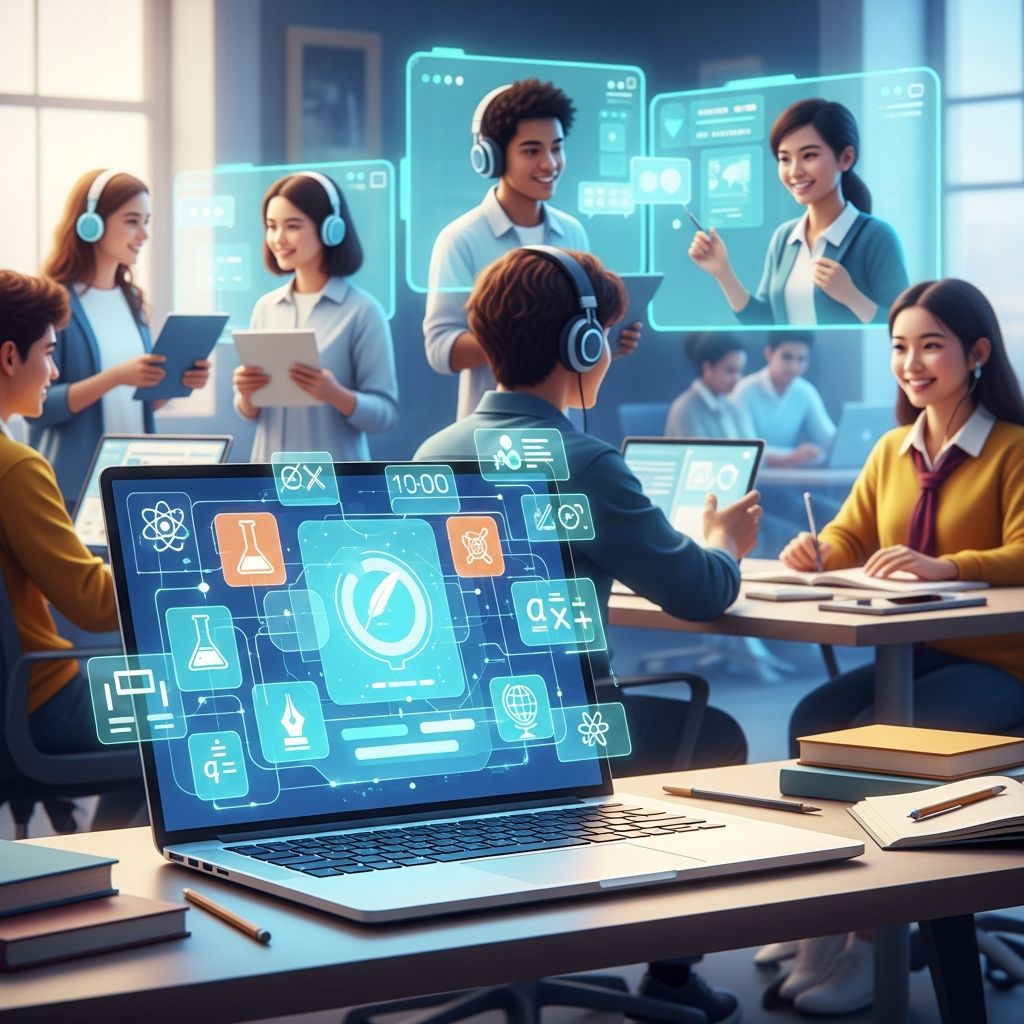
Online high school programs offer a flexible alternative to traditional schooling, allowing students to earn a diploma through structured yet adaptable curricula. These programs typically require completion of core academic subjects combined with elective options to meet graduation standards, often totaling 20-24 credits.
Core Components of Virtual High School Education
The foundation of most online high school diplomas rests on essential subjects that build critical thinking, literacy, and quantitative skills. English language arts usually spans four years, focusing on reading comprehension, writing, and literary analysis from American and world literature. Mathematics progresses from algebra to advanced topics like pre-calculus or calculus, with requirements often mandating three credits.
Science courses cover biology, chemistry, physics, and earth science, emphasizing hands-on virtual labs and real-world applications to foster scientific inquiry. Social studies includes world history, U.S. history, government, and economics, helping students understand civic responsibilities and global contexts.
| Subject Area | Typical Credits Required | Example Courses |
|---|---|---|
| English | 4 | American Literature, Rhetoric, British Literature |
| Math | 3-4 | Algebra I/II, Geometry, Pre-Calculus |
| Science | 3 | Biology, Chemistry, Physics |
| Social Studies | 3-4 | World History, U.S. Government, Economics |
This table summarizes standard requirements drawn from multiple programs, ensuring students meet state-aligned standards for graduation.
Flexible Learning Paths and Pacing
Unlike rigid classroom schedules, online high schools enable self-paced progression. Students might complete a diploma in as little as six months on a fast track or extend to two years for deeper mastery. Platforms incorporate tools like video lessons, interactive simulations, and adaptive assessments to support diverse learning styles.
- Personalized pacing allows focus on one course at a time, reducing overwhelm.
- Technology integration teaches digital literacy, including tools like Microsoft Excel and PowerPoint for data analysis and presentations.
- Goal-setting modules help students balance academics with external commitments using SMART goals.
Programs emphasize responsible online collaboration, privacy protection, and empathetic digital interactions, preparing learners for modern workplaces.
Diverse Elective Opportunities for Specialization
Electives comprise 5-7 credits, enabling customization based on interests or career goals. Options range from arts and humanities to STEM and vocational tracks.
Career-focused electives include veterinary science, healthcare basics, agriculture, and engineering introductions, bridging academics to professions. Creative pursuits offer fine arts, music appreciation, creative writing, and public speaking.
- STEM electives: 3D modeling, forensic science, anatomy & physiology, computer science.
- Liberal arts: Law & order, history of the Constitution, guitar lessons.
- Practical skills: Consumer math, Microsoft Office mastery, principles of design.
World languages enhance cultural awareness, while health and physical education promote wellness.
Advanced Placement and College Preparation
Many curricula include honors and AP courses for ambitious students, covering subjects like calculus, physics, and U.S. government. These earn college credit potential and strengthen applications.
College readiness components teach research skills, test preparation, and career exploration. Vectored instruction adapts content to individual needs, ensuring mastery before advancement.
Technology and Instructional Methods
Video-based lessons deliver content engagingly, supplemented by projects, quizzes, and discussions. Project-based learning in history and STEM immerses students in real-world scenarios.
Teachers provide one-on-one guidance, especially for challenging topics, fostering growth in weak areas while accelerating strengths.
Graduation Requirements Across Programs
Standard diplomas demand 22-24 credits, including specific non-vocational electives like arts or health. Economics and personal finance often count as one credit within social studies.
| Program Example | Total Credits | Core + Electives |
|---|---|---|
| U.S. Career Institute | 24 | Core + Career Electives |
| Penn Foster | 22 | 17 Core + 5 Electives |
| GWUOHS | Variable | Broad Foundation + AP |
These variations highlight flexibility while maintaining rigor.
Benefits of Online High School Curricula
Virtual programs eliminate geographical barriers, accommodate athletes or travelers, and support working students. Data shows higher engagement through interactive elements and personalized feedback.
Outcomes include improved graduation rates and college enrollment, as flexible structures reduce dropout risks.
Choosing the Right Online High School
Evaluate accreditation, course variety, teacher support, and alignment with state standards. Trial periods or demos help assess fit.
Frequently Asked Questions
Is an online high school diploma respected by colleges?
Yes, accredited programs produce diplomas equivalent to traditional ones, accepted by universities nationwide.
How many hours per week are needed?
Typically 20-25 hours, adjustable to individual pace.
Are there live classes?
Some offer optional sessions; most are asynchronous for flexibility.
Can students with IEPs participate?
Many provide accommodations similar to public schools.
What devices are required?
A reliable computer and internet; some supply materials.
References
References
- Online High School Curriculum | USCI – U.S. Career Institute — U.S. Career Institute. 2025. https://www.uscareerinstitute.edu/online-high-school/curriculum-program-outcomes
- Online High School Diploma Curriculum – Penn Foster — Penn Foster. 2025. https://www.pennfoster.edu/high-school/diploma/curriculum
- Accredited Online High School Program & Curriculum | GWUOHS — George Washington University Online High School. 2025. https://www.gwuohs.com/academics/high-school-program/
- High School (9-12) | Liberty University Online Academy — Liberty University. 2025. https://www.liberty.edu/online-academy/high-school/
- Online High School Curriculum Structure – Gravitas — Gravitas. 2025. https://gravitas.sbs.org/blog/structure-online-high-school-curriculum/
- Online High School Curriculum | College Prep Courses — iSchool Virtual. 2025. https://ischoolvirtual.com/our-schools/high-school-online/curriculum/
- Online High School Courses – Overview – Acellus Academy — Acellus Academy. 2025. https://www.acellusacademy.com/online-high-school/course-overview/

Medha Deb is an editor with a master's degree in Applied Linguistics from the University of Hyderabad. She believes that her qualification has helped her develop a deep understanding of language and its application in various contexts. Medha specializes in the areas of beauty, health, sports, and wellness and is committed to ensuring that the content on the website is…